Tag Archives: Christianity

Is the definition of atheism “a lack of belief in God”?

I have a key that will unlock a puzzling mystery

First, let’s see check with the Stanford University Encyclopedia of Philosophy:

‘Atheism’ means the negation of theism, the denial of the existence of God.

Stanford University is one of the top 5 universities in the United States, so that’s a solid definition. To be an atheist is to be a person who makes the claim that, as a matter of FACT, there is no intelligent agent who created the universe. Atheists think that there is no God, and theists think that there is a God. Both claims are objective claims about the way the world is out there, and so both sides must furnish forth arguments and evidence as to how they are able to know what they are each claiming.

Philosopher William Lane Craig has some thoughts on atheism, atheists and lacking belief in God in this reply to a questioner.

Question:

In my discussions with atheists, they  are using the term that they “lack belief in God”. They claim that this is different from not believing in God or from saying that God does not exist. I’m not sure how to respond to this. It seems to me that its a silly word-play and is logically the same as saying that you do not believe in God.
What would be a good response to this?
Thank you for your time,

Steven

And here is Dr. Craig’s full response:

Your atheist friends are right that there is an important logical difference between believing that there is no God and not believing that there is a God.  Compare my saying, “I believe that there is no gold on Mars” with my saying “I do not believe that there is gold on Mars.”   If I have no opinion on the matter, then I do not believe that there is gold on Mars, and I do not believe that there is no gold on Mars.  There’s a difference between saying, “I do not believe (p)” and “I believe (not-p).”   Logically where you place the negation makes a world of difference.

But where your atheist friends err is in claiming that atheism involves only not believing that there is a God rather than believing that there is no God.

There’s a history behind this.  Certain atheists in the mid-twentieth century were promoting the so-called “presumption of atheism.” At face value, this would appear to be the claim that in the absence of evidence for the existence of God, we should presume that God does not exist.  Atheism is a sort of default position, and the theist bears a special burden of proof with regard to his belief that God exists.

So understood, such an alleged presumption is clearly mistaken.  For the assertion that “There is no God” is just as much a claim to knowledge as is the assertion that “There is a God.”  Therefore, the former assertion requires justification just as the latter does.  It is the agnostic who makes no knowledge claim at all with respect to God’s existence.  He confesses that he doesn’t know whether there is a God or whether there is no God.

But when you look more closely at how protagonists of the presumption of atheism used the term “atheist,” you discover that they were defining the word in a non-standard way, synonymous with “non-theist.”  So understood the term would encompass agnostics and traditional atheists, along with those who think the question meaningless (verificationists).  As Antony Flew confesses,

the word ‘atheist’ has in the present context to be construed in an unusual way.  Nowadays it is normally taken to mean someone who explicitly denies the existence . . . of God . . . But here it has to be understood not positively but negatively, with the originally Greek prefix ‘a-’ being read in this same way in ‘atheist’ as it customarily is in . . . words as ‘amoral’ . . . . In this interpretation an atheist becomes not someone who positively asserts the non-existence of God, but someone who is simply not a theist. (A Companion to Philosophy of Religion, ed. Philip Quinn and Charles Taliaferro [Oxford:  Blackwell, 1997], s.v. “The Presumption of Atheism,” by Antony Flew)

Such a re-definition of the word “atheist” trivializes the claim of the presumption of atheism, for on this definition, atheism ceases to be a view.  It is merely a psychological state which is shared by people who hold various views or no view at all.  On this re-definition, even babies, who hold no opinion at all on the matter, count as atheists!  In fact, our cat Muff counts as an atheist on this definition, since she has (to my knowledge) no belief in God.

One would still require justification in order to know either that God exists or that He does not exist, which is the question we’re really interested in.

So why, you might wonder, would atheists be anxious to so trivialize their position?  Here I agree with you that a deceptive game is being played by many atheists.  If atheism is taken to be a view, namely the view that there is no God, then atheists must shoulder their share of the burden of proof to support this view.  But many atheists admit freely that they cannot sustain such a burden of proof.  So they try to shirk their epistemic responsibility by re-defining atheism so that it is no longer a view but just a psychological condition which as such makes no assertions.  They are really closet agnostics who want to claim the mantle of atheism without shouldering its responsibilities.

This is disingenuous and still leaves us asking, “So is there a God or not?”

So there you have it. We are interested in what both sides know and what reasons and evidence they have to justify their claim to know. We are interested in talking to people who make claims about objective reality, not about themselves, and who then go on to give reasons and evidence to support their claims about objective reality. There are atheists out there that do make an objective claim that God does not exist, and then support that claim with arguments and evidence. Those are good atheists, and we should engage in rational conversations with them. But clearly there are some atheists who are not like that. How should we deal with these “subjective atheists”?

Dealing with subjective atheists

How should theists respond to people who just want to talk about their psychological state? Well, my advice is to avoid them. They are approaching religion irrationally and non-cognitively – like the person who enters a physics class and says “I lack a belief in the gravitational force!”.  When you engage in serious discussions with people about God’s existence, you only care about what people know and what they can show to be true. We don’t care about a person’s psychology.

Dealing with persistent subjective atheists

What happens when you explain all of that to a subjective atheist who continues to insist that you listen to them repeat over and over “I lack a belief in God, I lack a belief in God”? What if you tell them to make the claim that God does not exist, and then support it with arguments and evidence, but instead they keep leaving comments on your blog telling you again and again about their subjective state of mind: “I lack a belief in cupcakes! I lack a belief in icebergs!” What if they keep e-mailing you and threatening to expose you on Twitter for refusing to listen to them, or denounce you via skywriting: “Wintery Knight won’t listen to me! I lack a belief in crickets!”. I think at this point you have to give up and stop talking to such a person.

And that’s why I moderate and filter comments on this blog. There are uneducated people out there with access to the Internet who want attention, but I am not obligated to give it to them. And neither are you. We are not obligated to listen to abusive people who don’t know what they are talking about. I do post comments from objective atheists who make factual claims about the objective world, and who support those claims with arguments and evidence. I am not obligated to post comments from people who refuse to make objective claims or who refuse to support objective claims with arguments and evidence. And I’m not obligated to engage in discussions with them, either.

Related posts

Dr. William Lane Craig answers questions about Jesus in the New York Times

William Lane Craig lecturing to university students
William Lane Craig lecturing to university students at Purdue University

Nicholas Kristof, a secular leftist writer for the New York Times, is interested in Jesus, but he doesn’t want a Jesus who can perform miracles. He decided to ask the best living philosphical theologian, Dr. William Lane Craig, some questions. As you’ll see, Dr. Craig’s answers to his questions are perfect for the secular left audience of the New York Times.

Before we start looking at the questions and answers, I want to mention one important point. When discussing Christianity, it’s very important that Christians not allow the atheist to nitpick about minor details of Christian history or Christian theology. The Christian needs to ALWAYS redirect the discussion to the question of God’s existence. There, we are strongly supported by mainstream science. Only when the skeptic accepts a Creator and Designer can we allow ourselves to be moved on to specific points of theology or history.

Like this:

  • Skeptic: was Jesus born of a virgin?
  • Christian: do you accept a Creator and Designer of the universe?
  • Skeptic: no
  • Christian: then let’s discuss the scientific evidence for that first

And again:

  • Skeptic: am I going to Hell?
  • Christian: do you accept a Creator and Designer of the universe?
  • Skeptic: no
  • Christian: then let’s discuss the scientific evidence for that first

Why is this important? It’s important because most skeptics are fundamentalists. They think that if they can refute Christianity on an edge case issue, then the core crumbles. It’s very important to frame the discussion so that the skeptic understands that there are core claims of Christianity which are important and strongly evidenced, and there are less important claims, and also claims that are not well evidenced. The goal of any discussion with a skeptic is to get them to accept the important core claims which are strongly evidenced. If they accept the core, that’s enough to get them out of atheism, and into a relationship with God, where they can continue to grow.

I wrote a whole post about this that you can read later, but let’s get to the interview with Dr. Craig.

Let’s start with the first question and answer:

Kristof: Merry Christmas, Dr. Craig! I must confess that for all my admiration for Jesus, I’m skeptical about some of the narrative we’ve inherited. Are you actually confident that Jesus was born to a virgin?

Craig: Merry Christmas to you, too, Nick! I’m reasonably confident. When I was a non-Christian, I used to struggle with this, too. But then it occurred to me that for a God who could create the entire universe, making a woman pregnant wasn’t that big a deal! Given the existence of a Creator and Designer of the universe (for which we have good evidence), an occasional miracle is child’s play. Historically speaking, the story of Jesus’ virginal conception is independently attested by Matthew and Luke and is utterly unlike anything in pagan mythology or Judaism. So what’s the problem?

Did you notice what Dr. Craig did there? Regarding the evidence from science, Dr. Craig has defended that in two separate academic books, both with Oxford University Press. (Theism, Atheism and Big Bang Cosmology and God? A Debate Between A Christian and An Atheist)

Here it is again:

Kristof: How do you account for the many contradictions within the New Testament? For example, Matthew says Judas hanged himself, while Acts says that he “burst open.” They can’t both be right, so why insist on inerrancy of Scripture?

Craig: I don’t insist on the inerrancy of Scripture. Rather, what I insist on is what C.S. Lewis called “mere Christianity,” that is to say, the core doctrines of Christianity. Harmonizing perceived contradictions in the Bible is a matter of in-house discussion amongst Christians. What really matters are questions like: Does God exist? Are there objective moral values? Was Jesus truly God and truly man? How did his death on a Roman cross serve to overcome our moral wrongdoing and estrangement from God? These are, as one philosopher puts it, the “questions that matter,” not how Judas died.

For those who are concerned by this answer, you should know Dr. Craig is the former president of the Evangelical Philosophical Society, and they do indeed sign a statement of faith that includes inerrancy. But again, an interview in the New York Times is not the place to focus on defending inerrancy. This is the place to have secular left elites contend with the core claims of Christianity.

In the next question and answer, notice how Dr. Craig refuses to yield that the skeptic is rational and evidence-driven. You should never let atheists assume that atheism is the “default” view of people who are reasonable and evidence-driven. Atheism is NOT the default view for reasonable people who are evidence-driven. Atheism is a furious retreat away from reason and evidence. In particular, it’s a refusal to bound your worldview with science and history.

More Dr. Craig:

Kristof: Over time, people have had faith in Zeus, in Shiva and Krishna, in the Chinese kitchen god, in countless other deities. We’re skeptical of all those faith traditions, so should we suspend our emphasis on science and rationality when we encounter miracles in our own tradition?

Craig: I don’t follow. Why should we suspend our emphasis on science and rationality just because of weakly evidenced, false claims in other religions? I champion a “reasonable faith” that seeks to provide a comprehensive worldview that takes into account the best evidence of the sciences, history, philosophy, logic and mathematics. Some of the arguments for God’s existence that I’ve defended, such as the arguments from the origin of the universe and the fine-tuning of the universe, appeal to the best evidence of contemporary science. I get the impression, Nick, that you think science is somehow incompatible with belief in miracles. If so, you need to give an argument for that conclusion. David Hume’s famous argument against miracles is today recognized, in the words of philosopher of science John Earman, as “an abject failure.” No one has been able to do any better.

This is the book he’s alluding to, there. Oxford University Press.

Please read the whole interview.

If you have non-Christian friends who think that all the “smart people” reject Christianity, and you don’t now how to talk to them, why not send them this article from the New York Times? There are also resources that you can use to train yourself to answer questions like he did.

Some people reading may not like Dr. Craig’s approach. That might be because you’re only able to talk about Christianity to people by quoting the Bible to them. Maybe you think that quoting the Bible to a non-Christian will cause them to become a Christian. This approach, (I call it the “magic words” approach), is popular in many churches. It will work on people who are already Christians, but it won’t work on non-Christians, since they don’t accept the Bible. It’s also not how anyone in the New Testament talked about spiritual things. (See Acts 17 for an example, or read what Jesus does to prove his claims to skeptics in the gospel of John). If you want to discuss Christianity outside the church, then I recommend Dr. Craig’s approach.

Positive arguments for Christian theism

Did the early church invent the divinity of Jesus over a long period of time?

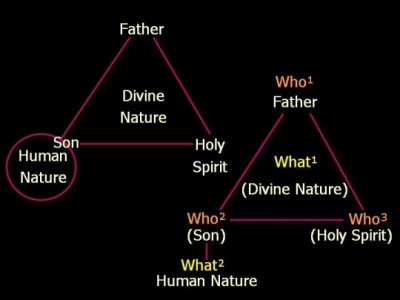
The Christian doctrine of the Trinity

How early is the doctrine of the divinity of Jesus?

When I answer this question, I only want to use the earliest, most reliable sources – so I can defend them on historical grounds using the standard rules of historiography.

The 4 sources that I would use are as follows:

  • The early creed in 1 Corinthians 15:3-8, and 1 Corinthians 1
  • A passage in Philippians 2
  • Two passages from Mark, the earliest gospel
  • A passage from Q, which is an early source of Matthew and Luke

So let’s see the passages.

1 Corinthians

I’ve written before about the early creed in 1 Corinthians 15:3-8, which skeptical scholars date to 1-3 years after the death of Jesus, for a variety of reasons I covered in the previous post. Here’s the creed which definitely makes Jesus out to be more than an ordinary man. Ordinary men don’t get resurrection bodies after they die.

Here’s the passage: (1 Cor 15:3-8)

3For what I received I passed on to you as of first importance: that Christ died for our sins according to the Scriptures,

4that he was buried, that he was raised on the third day according to the Scriptures,

5and that he appeared to Peter, and then to the Twelve.

6After that, he appeared to more than five hundred of the brothers at the same time, most of whom are still living, though some have fallen asleep.

7Then he appeared to James, then to all the apostles,

8and last of all he appeared to me also, as to one abnormally born.

Additionally, 1 Corinthians 1:21-25 talks about Jesus being “the power of God and the wisdom of God”. Paul is identifying Jesus with the divine.

21For since in the wisdom of God the world through its wisdom did not know him, God was pleased through the foolishness of what was preached to save those who believe.

22Jews demand miraculous signs and Greeks look for wisdom,

23but we preach Christ crucified: a stumbling block to Jews and foolishness to Gentiles,

24but to those whom God has called, both Jews and Greeks, Christ the power of God and the wisdom of God.

25For the foolishness of God is wiser than man’s wisdom, and the weakness of God is stronger than man’s strength.

But it gets even stronger! You all probably already know that the most important passages in the Old Testament for Jews is the famous “Shema“, which is found in Deuteronomy 6:4-9. The Shema is a strong statement of Jewish monotheism.

Here’s the passage:

4 Hear, O Israel: The LORD our God, the LORD is one.

5 Love the LORD your God with all your heart and with all your soul and with all your strength.

6 These commandments that I give you today are to be upon your hearts.

7 Impress them on your children. Talk about them when you sit at home and when you walk along the road, when you lie down and when you get up.

8 Tie them as symbols on your hands and bind them on your foreheads.

9 Write them on the doorframes of your houses and on your gates.

So how does Paul fit Jesus in with this strong statement of Jewish monotheism?

Paul alludes to the Shema in 1 Corinthians 8:4-6.

4So then, about eating food sacrificed to idols: We know that an idol is nothing at all in the world and that there is no God but one.

5For even if there are so-called gods, whether in heaven or on earth (as indeed there are many “gods” and many “lords”),

6yet for us there is but one God, the Father, from whom all things came and for whom we live; and there is but one Lord, Jesus Christ, through whom all things came and through whom we live.

Holy mackerel! How did that get in there? Paul is splitting the roles of God in the the Shema and identifying Jesus in one of the divine roles! Jesus is not an ordinary man. That passage “through whom all things came” foreshadows John identifying Jesus as “the Word of God”, which “became flesh and dwelt among us”. Holy snark – did you guys know that was all in here so early?

The date for 1 Corinthians is 55 AD. It should be noted that skeptical scholars like James Crossley accept these passages, and you can check it out in the debate audio yourself.

Philippians

Check out Philippians 2:5-11.

5Your attitude should be the same as that of Christ Jesus:

6Who, being in very nature God, did not consider equality with God something to be grasped,

7but made himself nothing, taking the very nature of a servant, being made in human likeness.

8And being found in appearance as a man, he humbled himself and became obedient to death— even death on a cross!

9Therefore God exalted him to the highest place and gave him the name that is above every name,

10that at the name of Jesus every knee should bow, in heaven and on earth and under the earth,

11and every tongue confess that Jesus Christ is Lord, to the glory of God the Father.

The date for Philippians is 60-61 AD. Still within the lifetime of the eyewitnesses, and written by an eyewitness who was in contact with the other eyewitnesses, like Peter and James, whom Paul spoke with numerous times on his journeys to Jerusalem.

Mark’s gospel

Mark’s gospel is the earliest and atheists like James Crossley date it to less than 40 AD, which is 10 years after the death of Jesus at most. When you read the gospel of Mark, you are getting the earliest and best information available about the historical Jesus, along with Paul’s epistles. So what does Mark say about Jesus? Is Jesus just a man, or is he something more?

Check out Mark 12:1-9:

1He then began to speak to them in parables: “A man planted a vineyard. He put a wall around it, dug a pit for the winepress and built a watchtower. Then he rented the vineyard to some farmers and went away on a journey.

2At harvest time he sent a servant to the tenants to collect from them some of the fruit of the vineyard.

3But they seized him, beat him and sent him away empty-handed.

4Then he sent another servant to them; they struck this man on the head and treated him shamefully.

5He sent still another, and that one they killed. He sent many others; some of them they beat, others they killed.

6“He had one left to send, a son, whom he loved. He sent him last of all, saying, ‘They will respect my son.’

7“But the tenants said to one another, ‘This is the heir. Come, let’s kill him, and the inheritance will be ours.’

8So they took him and killed him, and threw him out of the vineyard.

9“What then will the owner of the vineyard do? He will come and kill those tenants and give the vineyard to others.

And Mark 13:32, talking about the date of the final judgment.

32“No one knows about that day or hour, not even the angels in heaven, nor the Son, but only the Father.

And again, this passage is establishing a hierarchy such that Jesus is being exalted above all men and the angels, too. And the passage is embarrassing to the early church, because it makes Jesus look ignorant of something, so they would not have made this passage up. Jesus is not an ordinary man, he is above the angels – God’s unique Son.

The “Q” source for Matthew and Luke

Here’s Matthew 11:27, which is echoed in Luke 10:22:

27“All things have been committed to me by my Father. No one knows the Son except the Father, and no one knows the Father except the Son and those to whom the Son chooses to reveal him.

22“All things have been committed to me by my Father. No one knows who the Son is except the Father, and no one knows who the Father is except the Son and those to whom the Son chooses to reveal him.”

Since this passage is in both of Matthew and Luke, but not in Mark, scholars believe that it is in the earlier “Q” source used by both Matthew and Luke. Q predates both Matthew and Luke, and so it is also fairly early (maybe 67-68), although not as early as Mark and Paul. Bill Craig writes that this passage is also embarrassing because it says that no one knows Jesus.