
Tag Archives: Christianity

Jennifer Roback Morse explains how divorce laws changed marriage

Dr. Jennifer Roback Morse

When couples think that divorce is possible, it changes what marriage means. She also talks about how Christianity makes a big difference to our understanding of marriage.

The MP3 file is here.

Right Wing News posted an interview with Warren Farrell recently, and this question and answer struck me.

Excerpt:

Now thanks to people like Mark Steyn, conservatives have gotten a lot more interested in demographics over the last few years. In the Western world, you’re seeing a lot less marriage and a lot less people having children. Now you’ve written a couple of books about divorce and you’ve had a lot of experience talking about marriage. Why do you think marriage is simply less appealing to men today than it used to be a few decades ago?

I think, first of all, it’s both more appealing and less appealing. For example, when I wrote Why Men Are the Way They Are in 1986, almost invariably women would say that the first chapter that they opened up to was the chapter on why are men afraid of commitment. There was a deep interest in the ’70s and early ’80s – and for hundreds of years before that — on the part of women on how to get a man, how to get married and so on. Men were oftentimes the resisting party to that. Today, from what I can tell anecdotally and what I see in surveys, men and women are about equally interested in getting married. Having said that, there is a statistical shift that actually is in the opposite direction. Men have a greater interest, compared to women, in getting married in relation to what it used to be.

Nevertheless, there are many men whose fear of getting married is based on many things — one of which is that they see that their dad was married when he was younger, but now he lives in an apartment while their mom lives in a home. The mom got to raise the children, which they interpreted when they were younger as “Dad was just not interested,” but then as they got to be age 18 to 25, their dad eventually let them know that he was extremely interested and showed them court documents about how he fought in court to be involved with them, but how the mom resisted that involvement. So the man starts saying, “Wow, if I get married to the wrong woman, I could end up like my dad. My dad thought he was in love with my mom at the time and my mom was in love with my dad. Then my dad ended up not getting the home, not getting the children, having us feel that he hated us or was at least neglectful of us, his being depressed and disappointed and paying child support for children he couldn’t see in a home he couldn’t live in….” That gets pretty depressing for some boys that feel they could fall into the same pattern. The reason it isn’t even more depressing for many men is that when a man falls in love, he believes his woman will be different and oftentimes she is. But, sometimes she isn’t.

I think a lot of young men who have suffered through this experience are worried about it happening to them. A good start would be to realize that God wants us to have good marriage, and to ask ourselves – what are we going to do to prepare ourselves for marriage? What are we going to read? How will be train our character to be able to put others first? How will we strengthen our faith so that it can have an impact on our actions? If we just leave it up to whims and feelings, things aren’t going to work out. There has to be some sort of plan to make the marriage successful.
Responding to the objection: who are you to say?

This article is from Greg Koukl of Stand to Reason.

Excerpt:

Today I was thinking about a concept that came up in conversation, a challenge raised to Christians who offer their point of view. The challenge is: “Who are you to say?”

This question it comes up in one of two contexts. The first one is secular. You’ll hear it quite frequently when another person disagrees with your point of view, especially a moral one. They immediately challenge you with, “Who are you to say?”

Taken at face value this is an attack on you . It’s a response that focuses on the person, not the argument. Instead of dealing with a person’s point, you attack the individual in some way. This is called an ad hominem , a type of informal fallacy. An ad hominem might be when you say, “You jerk. You’re just stupid,” or, “What do you know?” or something of that order. It’s a form of name calling.

There are lots of sophisticated ways people use ad hominem that slip by us in addition to the obvious ones just mentioned. “Who are you to say?” is one of them. It’s a challenge addressed to the person and not the argument.

The challenge comes up in a second context, when Christians with positions of visibility challenge those inside the church who disagree with them. They sometimes refer to their attackers as “heresy hunters” to disparage them. (Some, I guess, might have called me that, though I don’t know specifically if I’ve been labeled in that way.) This is the same kind of comment as, “Who are you to say? Who made you in charge? What right do you have to challenge my doctrine?”

This question is completely irrelevant. Here’s why.

Click here for the rest.

I had an answer to this question before I read his article, and now I have a much better understanding of this objection. That’s what you get from Greg Koukl – clear thinking Christianity.

J. Gresham Machen on the relationship between knowledge and faith

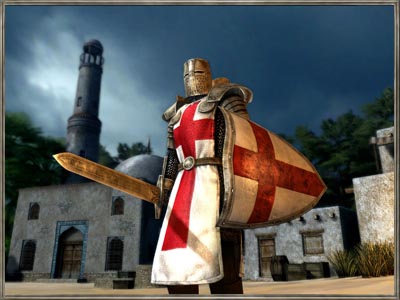
Christian scholarship is the new Crusade

Most of my readers are familiar with William Lane Craig and J.P. Moreland – they are two of the most famous Christian apologists out operating today. They both cite a person named “J. Gresham Machen”, and today I want to tell you more about this person.

William Lane Craig quotes him in this chapel address to Wheaton College students. (I am adding some context to Craig’s citation: Craig started the quote at “False ideas…” and ended it at “…harmless delusion”)

We are all agreed that at least one great function of the Church is the conversion of individual men. The missionary movement is the great religious movement of our day. Now it is perfectly true that men must be brought to Christ one by one. There are no labor-saving devices in evangelism. It is all hard-work.

And yet it would be a great mistake to suppose that all men are equally well prepared to receive the gospel. It is true that the decisive thing is the regenerative power of God. That can overcome all lack of preparation, and the absence of that makes even the best preparation useless. But as a matter of fact God usually exerts that power in connection with certain prior conditions of the human mind, and it should be ours to create, so far as we can, with the help of God, those favorable conditions for the reception of the gospel. False ideas are the greatest obstacles to the reception of the gospel. We may preach with all the fervor of a reformer and yet succeed only in winning a straggler here and there, if we permit the whole collective thought of the nation or of the world to be controlled by ideas which, by the resistless force of logic, prevent Christianity from being regarded as anything more than a harmless delusion.

I was actually in the audience when he gave this speech – I was there for the philosophy conference.

So Craig is citing J. Gresham Machen. What about Moreland?

Here’s an essay that Moreland wrote for Christian Leadership Ministries, the faculty arm of Campus Crusade for Christ.

He cites he exact same passage by J. Gresham Machen, as well, only he starts his citation at “God usually exerts…”.

So that’s Craig and Moreland. Citing the same passage, by the same writer. Interesting.

So who is this J. Gresham Machen anyway?

Here’s the bio:

J. Gresham Machen was professor of New Testament at Princeton Theological Seminary before becoming one of the founders of Westminster Theological Seminary and the Orthodox Presbyterian Church (OPC). This address on The Scientific Preparation of the Minister, was delivered September 20, 1912, at the opening of the one hundred and first session of Princeton Theological Seminary, and in substance (previously) at a meeting of the Presbyterian Ministers’ Association of Philadelphia, May 20, 1912. It was first published in The Princeton Theological Review, Vol. 11, 1913.

And Craig and Moreland are citing this essay, which you can read online for free. If you want to know what makes the Wintery Knight the Wintery Knight, this is the place to find your answers.

The essay was published in the Princeton Theological Review in 1913. The essay explains what the church should have done, but didn’t. And the only way out of the mess we are in now is to go back to the fork in the road and make the right turn this time.

You really need to read the essays I linked to by Craig, Moreland and Machen. It will open your eyes and show you how there can be so many Christians attending church on Sundays, and yet they have so little impact on the culture as a whole.

Autobiographical note

When I was a young man, I was exposed to the writings of William Lane Craig, J.P. Moreland, Walter L. Bradley, Greg Koukl, Hugh Ross, and Philip E. Johnson – and they changed my life. It really does make a big difference to young people when they are engaged at an intellectual level, with logic and evidence. I had no other connections to the church at that time. No one in my family, and none of my friends, were religiously inclined. I had no felt needs for religion. But approaching Christianity as knowledge worked for me. Before my conversion, I never attended the feminized church. And I was never told that Christianity was opposed to logic and evidence. Imagine my surprise to see what was being taught in the church compared to the public, testable claims to knowledge in the Bible, and the public, testable claims to knowledge that Christians scholars made in their books.

This passage from R.C. Sproul and John Gerstner in their otherwise useless book on Christian apologetics was formative for me, as well:

Secularism, on the other hand, is a post-Christian phenomenon carrying in its baggage, a conscious rejection of the Christian world view. It supplants the Christian consensus with its own structured view of reality. Less barbaric on the surface than paganism, secularism adopts a benevolent paternalism toward the not yet enlightened Christian who continues the practice of an anachronistic faith. Wearing a benign mask, the secularist loudly proclaims his commitment to religious tolerance on behalf of those weak-minded souls who still cannot bear to face a hostile, or worse, an indifferent universe, without the narcotic effect of ecllesiastical opium. The church is safe from vicious persecution at the hands of the secularist, as educated people have finished with stake-burning circuses and torture racks. No martyr’s blood is shed in the secularist West – so long as the church knows her place and remains quietly at peace on her modern reservation. Let the babes pray and sing and read their Bibles, continuing steadfast in their intellectual retardation; the church’s extinction will come not by sword of pillory, but by the quiet death of irrelevance. It will pass away with a whimper not a bang. But let the church step off the reservation, let her penetrate once more the culture of the day and the Janus-face of secularism will change from benign smile to savage snarl.

This is the problem we are facing today. We have changed Christianity into “faith” instead of KNOWLEDGE.