Private school choice initiatives have become increasingly common across the United States. Far from being rare and untested, private school choice policies are an integral part of the fabric of American education policy.
In the United States today, 56 different school choice policies exist in 28 states plus the District of Columbia, and the number of choice policies has approximately doubled every four years from 2000 to 2012.
The District of Columbia Opportunity Scholarship Program remains the nation’s only federally sponsored private school choice initiative. It provides scholarships worth up to $8,000 in grades K-8 and $12,000 in high school to low-income children in D.C. to attend any of more than 50 participating private schools.
When the Opportunity Scholarship Program was launched in 2004, the U.S. Department of Education’s Institute of Education Sciences selected me to lead the initial government evaluation of this pilot program in parental school choice. Demand for scholarships exceeded supply, so most applicants faced a lottery to determine if they would receive an Opportunity Scholarship, permitting us to use a “gold standard” experimental research design to determine what impact the program had on participants.
Students in our pioneering study graduated from high school at a rate 21 percentage points higher than they otherwise would have as a result of using an Opportunity Scholarship. In scientific terms, we are more than 99 percent confident that access to school choice through the Opportunity Scholarship Program was the reason students in the program graduated at these much higher rates.
But that’s just one program, how about some others?
My research team similarly found the Milwaukee Parental Choice Program significantly increased the rates of high school graduation, college enrollment and persistence in college for the low-income students participating in our nation’s oldest urban private school choice program.
Researchers at Harvard University and the Brookings Institution determined that a privately funded K-12 scholarship program in New York City significantly increased the rate at which black and immigrant students enrolled in college. Increasingly and consistently, researchers are finding that private school choice programs like the Opportunity Scholarship Program enable students to go farther in school.
It is so good for the poor, minority children if we let their parents get money for school tuition directly. We should let parents make the choice about which school is best for their child. But, Democrats oppose school choice, because they want their allies in the teacher unions to be insulated from competition from better-performing private schools.
Look how the Democrats have fought to kill the D.C. voucher program. They talk about helping poor kids, but they don’t really mean it. And note, that article is written by ultra-leftist Democrat Juan Williams, but even he cares more about poor, minority kids getting an education than the Obama administration does.
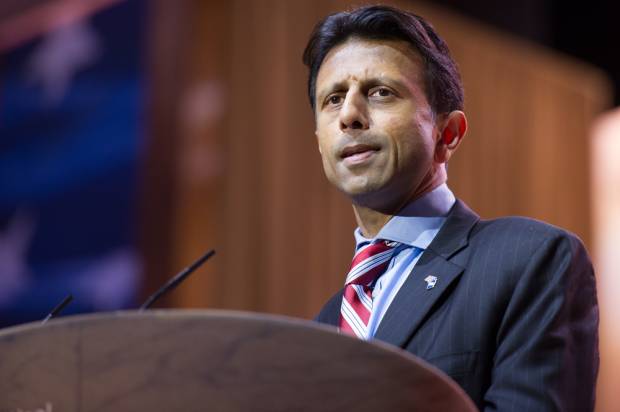
This is an editorial from the Washington Examiner, authored by school choice champion Bobby Jindal.
What is school choice?
On the most basic level, school choice represents the freedom to choose — empowering parents to select the best educational options for their sons and daughters. That could be a charter school, a private school, a religious school, home schooling, or even online learning. Governments should provide parents with the personalized and individualized tools they need to help their children excel academically.
That freedom to choose in turn will provide children with the freedom to succeed. With the right educational environment, teachers and academic training; students from all locations, income brackets and demographic groups will have better tools to compete in the global economy. We need to develop the talents of every American — no matter where he or she is from, and no matter the color of his or her skin — to maximize our country’s potential.
School choice also serves another important purpose — freeing low-income children from failing schools. No child should see his God-given talents go to waste because he is stuck in a failing school — and no parent should face the disempowerment that comes from knowing her son or daughter remains trapped in a poor school, and she lacks the financial means to move that child elsewhere. We can do better — and, by allowing parents dissatisfied with their school to move with their feet, school choice gives both high-performing and low-performing schools more incentive and motivation to improve their offerings.
Finally, school choice provides parents with freedom from the status quo — an educational-industrial complex that thinks bureaucrats, not parents, can best make decisions about the lives and futures of America’s children. It’s about pushing back when the then-head of Louisiana’s largest teachers’ union said low-income parents had “no clue” how to choose the right school for their children. And it’s even about standing up to the Attorney General of the United States, when the Department of Justice asked a court to block Louisiana’s school scholarship program on civil rights grounds — even though 90 percent of the program’s participants come from racial minority groups.
I don’t like people who talk conservative but govern liberal. I want to see the achievements.
The numbers:
For here in Louisiana, we’ve put those principles to practice. Since we removed the cap on charters in 2009, we’ve authorized almost 200 charter schools throughout the state — that’s 70,000 kids who now have a choice about where they go to school. This last year, our Recovery School District became the nation’s first school district with 100 percent charter school enrollment. And the results are dramatic: The graduation rate in New Orleans has increased from 54.4 percent before Hurricane Katrina in 2004 to 72.8 percent; the percentage of New Orleans students scoring basic and above has increased from 35 percent to 63 percent; and the percentage of failing schools in New Orleans has dropped from 67 percent in 2005 to 17 percent.
We expanded our school choice scholarship program, which was initially confined to New Orleans, statewide. Parental satisfaction with the statewide scholarship program stands at a whopping 91.9 percent. We went even further though and created a dollar for dollar rebate for donations used to fund nonpublic school scholarships low-income students through our “school tuition organizations.” Between 2008 and 2013, the percentage of students in the scholarship program who are proficient in third grade English language arts has grown by 20 percentage points and in math by 28 percentage points. Again and again, we’ve proven that giving more choice to parents is not only vital, but it gets results.
We also expanded access to online and dual enrollment courses for students across the state. This year, we’ve had over 19,000 students take advantage of our Course Choice program enrolling in advanced placement courses and career and technical courses that they otherwise wouldn’t have access to.
He’s in my top 2 for the 2016 presidential race, along with Scott Walker.
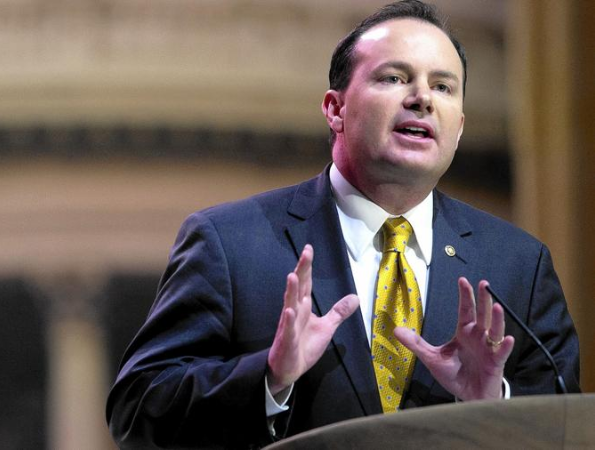
I’d like to see school choice enacted at the federal level, and fortunately, Utah Senator Mike Lee has the same idea.
I recently introduced in the Senate a bill that would empower the people most acutely committed to the quality of our education system: America’s moms and dads. My colleague on the other side of the Capitol, Rep. Luke Messer, R-Ind., has introduced a companion bill in the House.
By giving parents more power to invest in their child’s education and to choose what school best meets their needs, the Enhancing Educational Opportunities for All Act takes an important step toward restoring accountability to our public education system—something that has been missing for far too long.
Under our current system—which has remained essentially unchanged since President Lyndon B. Johnson signed the 1965 Elementary and Secondary Education Act—most parents are powerless to influence the quality of their child’s education.
What occurs in public school classrooms around the country—what teachers teach and how they teach it—is the result of a long, convoluted, bureaucratic chain of command that zigzags its way from Washington to local school districts, but never includes parents.
First, Congress passes legislation authorizing federal bureaucrats to establish rules, regulations, and standards with which states must comply in order to receive federal education funds.
Next, state officials refine—or in some cases distort—these Washington directives, writing narrower rules for their school districts, which then establish the specific policies for individual schools.
At no point in this decision-making process are parents consulted.
Instead, they are left with a “take it or leave it” choice: either accept the education offered at the local public school—no matter how bad it may be—or buy a better alternative, by moving closer to a better school or paying private school tuition.
For America’s most affluent families, this is no big deal—they can afford private schools and so have the power to choose the school that is best for their children. For everyone else, it precludes parents from making choices about their children’s education.
So our bill would expand school choice to all parents, regardless of socio-economic status or zip code, by allowing federal “Title I” K-12 support funds to follow low-income students to any public or private school of their choice.
It would also remove the contribution limits on Coverdell education savings accounts and allow “529” account funds to cover K-12 education expenses.
Our bill would give working parents more opportunities to invest in a variety of learning services and products outside the classroom, such as tutoring, online courses and textbooks.
The problem facing our public school system today is not about a lack of money—we have nearly tripled our investments in elementary and secondary students since 1970. The problem is dysfunctional government policy—however well intentioned—and a lack of accountability.
And that’s exactly what we should expect when Washington bureaucrats have more control than parents over a child’s education. We have a moral and economic obligation to flip this equation and put parents back in the driver’s seat.
For when we tolerate a system in which the quality of a child’s education depends on her parents’ zip code, we fail to live up to the ideals at the heart of American exceptionalism.
And when millions of children learn from a young age not to dream big, but to surrender to the hopelessness of low expectations, we will live in a society where upward mobility is no longer rule but the exception.
We can and we must do better.
If a school is failing – and they often are, especially in poorer areas – then shouldn’t parents have the ability to send their kids to a better school? When I want to buy something online, I know I can always do better by comparing prices and reviews. Competition between suppliers drives prices down, and raises quality up. The customer is king in the free market. It can work in education, too.
According to the group Life Dynamics out of Texas who just published a shocking report on how sexual pedophiles use abortion to cover their rapes, one rape victim was taken to three – yes three clinics who, according to Life Dynamics, failed to report the abuse.
As Life Dynamics reports, according to court documents, 40 year-old Joseph Coles (pictured right), began having sex with his stepdaughter when she was 10-years-old.
At 12, the stepdaughter became pregnant and her mother took her to the Cleveland Surgi-Center abortion clinic. The abortion was botched and the girl almost died from internal hemorrhaging.
Although not noted in the Life Dynamics report, this blogger discovered that Cleveland Surgi-Center is a National Abortion Federation (NAF) abortion clinic which claims to have funding available. Wonder if they helped pay for this victim’s abortion?
Life Dynamics points out that given that the assaults on the child resumed afterward, it is clear the clinic did not file a report.
Following the abortion, Coles persuaded the girl’s mother to put her on birth control; however, in 2004 the child again became pregnant by Coles and was taken to Planned Parenthood in Shaker Heights.
There she refused to submit to the abortion at that time but relented three days later and was taken to the Preterm Abortion Clinic in Cleveland.
As before, it is evident no report was made by either Planned Parenthood or Preterm since the assaults on the child resumed after the second abortion.
In June of the following year, police were made aware of the situation and Coles was arrested.
Oh, we are dealing with really ethical people, here, in these abortion clinics. I don’t think they need to be regulated at all, we should just let them operate freely. Look how well that worked with Gosnell.

 WINTERY KNIGHT