Tag Archives: Career

A third of Americans who have a savings plan have less than $1000 in it

National Debt and Deficit 2007-2013

Let me start with the facts from Breitbart News, and then I’ll comment on the part in bold.

Excerpt:

Study after study shows that Americans are not saving for retirement like they should, and a new survey finds that nearly one third of people who have some sort of savings plan have amassed less than $1,000 for retirement.

The survey titled “Preparing for Retirement in America,” by Employee Benefit Research Institute (EBRI) and Greenwald and Associates, finds that only 65 percent of workers have any savings for retirement, a number that fell below the 75 percent figure from 2009.

But 28 percent of workers report that they have saved less than $1,000 for retirement, and almost 6 in 10 Americans say that their financial planning needs improvement.

Additionally, 34 percent say they have made no effort at all to saving anything or make a retirement plan. Still, most say that they intend to start saving at some point.

But intentions may not be enough. “Intending one thing and doing another is human, but it’s an impulse we should all fight hard to resist,” Rebekah Barsch, vice president of planning and sales at Northwestern Mutual, said in a press statement. “Intentions only get us so far. And when the stakes are high, it’s taking action that’s critical.”

Many say that the average person needs to save one million dollars for retirement, but a recent piece by David Marotta, president of Marotta Wealth Management in Charlottesville, VA, noted that a 20-year-old in 2015 may have to amass up to $7 million to retire comfortably.

“Someone retiring now in 2014 with $1 million at age 65 can safely withdraw $43,600 a year,” Marotta wrote last May. “However, [because of inflation], today’s 20-year-olds will need over $7 million to have that same lifestyle when they retire. In 1970, they would only have needed $166,000 in retirement to have a similar purchasing power for the rest of their life.”

Many Americans save for retirement using the 401K plans provided through their employer, but according to the federal government, around 50 million Americans don’t have the ability to enroll in such a savings plan.

Here’s a helpful article from CNBC that answers the question “how much do I need to retire?”.

It says:

You can’t feel secure in retirement if you don’t have a good idea of how much money you’ll need.

But if you believe a new Legg Mason survey, you may have to save far more than you think. Investors surveyed by the global investment management firm said they will require an average of $2.5 million in retirement to enjoy the quality of life they have today.

That’s about $2.2 million more than the average balance of $385,000 those investors actually had in 401(k)s and similar retirement plans, which might help explain why only 40 percent of the 458 investors surveyed said they are “very confident” in their ability to “retire at the age I want to.” (And the investors surveyed have set more aside than the average retirement saver. At Fidelity, the nation’s largest retirement plan provider, the average 401(k) balance was $91,300 at the end of 2014.)

[…]Fidelity estimates most investors require about eight times their ending salary to increase the chances that their savings will last during a 25-year retirement. But every retirement is different. People also tend to spend lavishly in their first years of retirement before their spending declines in later years.

Health care is the wild card in retirement planning, especially as Americans live longer. Fidelity projects a 65-year-old couple retiring will need an average of $220,000 to cover medical expenses in retirement.

So, according to Fidelity’s rule, if you are single and making $50K after taxes, then you need $400,000 to retire at age 65. You’ll need more the earlier you retire. That seems about right to me. The important thing to do when planning for the future is not to imagine a higher income than you have right now, though. Imagining that things will be better than they are right now is a terrible mistake. You can’t make the world change just by imagining things that make you feel good, or by looking at cherry-picked examples from people you know who got lucky.

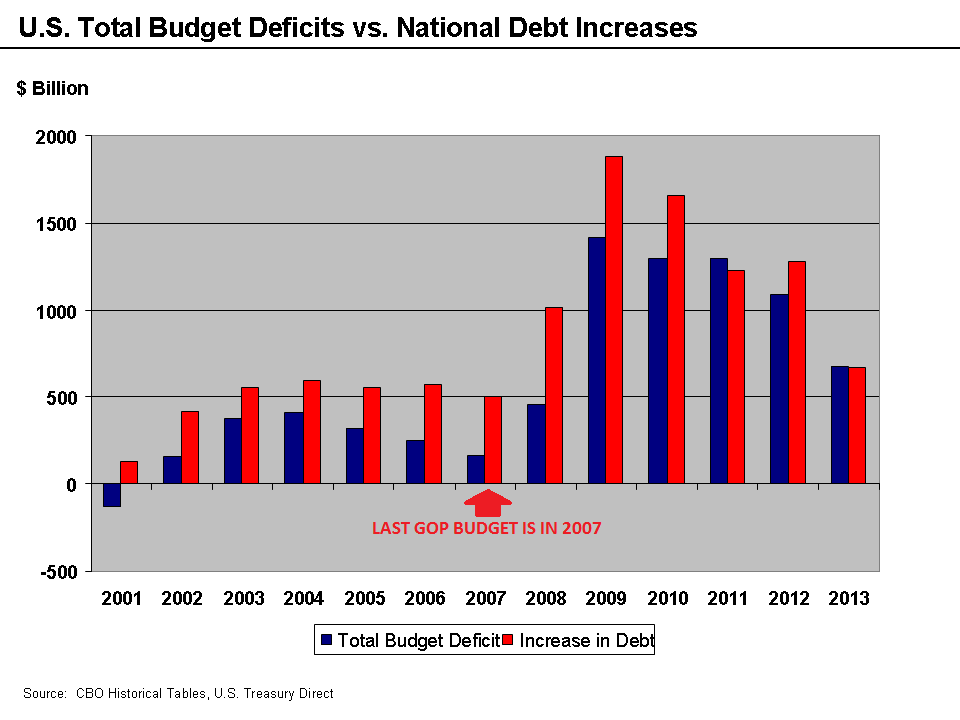
The trouble with young people today is that they think that things tomorrow will be the same as they were yesterday. They don’t see the future implications of running our national debt up to $18.5 trillion dollars. They think entitlement programs will be solvent when they are ready to retire. They aren’t aware of what’s going on in the economies of other countries that we trade with. They aren’t aware of what’s going on in Greece, and how that will affect the European Union. They aren’t aware of the demographic crisis in Europe, and especially in Japan. They aren’t thinking about the implications for future wars as America withdraws from the world stage. And so on. And since they are not aware, they are delaying making a plan to save, so they can have more fun now. Their retirement plan is all future sunshine and rainbows, but no actions are being taken right now.

If I could give young people one piece of advice, it’s this. It’s much easier to shift your life out of a position of financial security to something lighter but more meaningful in the second half of your life. It’s harder to work back to earning and saving if you have squandered your early life on fun, thrills, travel, non-STEM degrees, etc. If you’re 30 years old and don’t have any savings, you are in serious, serious trouble. You need to get focused on a regular career as soon as possible, and start saving. Get those debts paid off now. Still think that your rosy picture of the future will obtain? Usually, you can tell how good you are at strategic forecasting by looking at your past decisions. Have you been wise before, or have you chosen poorly? If you’ve chosen poorly, then it’s a good idea to defer to people who haven’t made the same mistakes. If you’re an optimistic person who is always being surprised and disappointed, that’s a good sign you need to start saving now.

New study: marrying in your mid-to-late 20s confers benefits

Marriage and family
Marriage and family

This is from moderate Brad Wilcox, writing in the leftist Washington Post.

He writes:

These days, 20something marriage has gotten a reputation for being a bad idea. That’s partly because parents, peers, and the popular culture encourage young adults to treat their twenties as a decade for exploration and getting one’s ducks in a row, not for settling down. In the immortal words of Jay-Z, “Thirty’s the new twenty.”

Indeed, the median age-at-first marriage has climbed to nearly 30 for today’s young adults, up from about 22 in 1970. Of course, there’s an upside to that. As my coauthors and I report in  Knot Yet: the Benefits and Costs of Delayed Marriage in America, women who put off marriage and starting a family earn markedly more money than their peers who marry earlier.

But if you’d like to maximize your marital happiness, your odds of having a couple of kids, and of forging common memories and family traditions, you might not want to delay marriage if the right person presents his or herself  in your mid-to-late 20s. A University of Texas study found the highest-quality unions were forged by couples who married during that period.

He then goes over some of the benefits.

Here’s one that stuck out to me:

First, you are more likely to marry someone who shares your basic values and life experiences, and less likely to marry someone with a complicated romantic or family history.  Those who marry in their twenties, for instance, are more likely to marry someone who isn’t previously married and shares their level of educational attainment as well as their religious faith. Marrying at this stage in your life also allows couples to experience early adulthood together. In the words of Elizabeth Gilbert, a 31-year-old woman who married in her mid-twenties, “My husband and I got to grow up together—not apart. We learned sacrifice, selflessness, compromise, and became better people for it.”

And:

Women who marry in their 20s generally have an easier time getting pregnant, and having more than one child, than their peers who wait to marry in their thirties.  You’ll also be around to enjoy the grandchildren for longer.

Marrying earlier is also nice because you get that “honeymoon” period before you have to start having kids. If you want to have 1-2 kids, you’ll need 3-4 years. You will want to have at least 2 years of “honeymoon” time to iron out differences and just enjoy married life. Children are challenging, and they will add more stress to the marriage. You don’t want to marry at 33 and start having kids before that 2 year settling-down period is finished. If marriage really is valuable, then it doesn’t make sense to put off building it together. The sooner your start, the more you can build. The more you can learn from each other. The more kids you can have.

Related to this study is a 15-minute TED.com lecture that talks about how people should be preparing for their marriages during their 20s instead of pursuing fun and thrills. (H/T Lindsay)

The transcript says this:

Okay, now that sounds a little flip, but make no mistake, the stakes are very high. When a lot has been pushed to your 30s, there is enormous thirtysomething pressure to jump-start a career, pick a city, partner up, and have two or three kids in a much shorter period of time. Many of these things are incompatible, and as research is just starting to show, simply harder and more stressful to do all at once in our 30s.

The post-millennial midlife crisis isn’t buying a red sports car. It’s realizing you can’t have that career you now want. It’s realizing you can’t have that child you now want, or you can’t give your child a sibling. Too many thirtysomethings and fortysomethings look at themselves, and at me, sitting across the room, and say about their 20s, “What was I doing? What was I thinking?”

[…]Here’s a story about how that can go. It’s a story about a woman named Emma. At 25, Emma came to my office because she was, in her words, having an identity crisis. She said she thought she might like to work in art or entertainment, but she hadn’t decided yet, so she’d spent the last few years waiting tables instead. Because it was cheaper, she lived with a boyfriend who displayed his temper more than his ambition.

[…]First, I told Emma to forget about having an identity crisis and get some identity capital. By “get identity capital,” I mean do something that adds value to who you are. Do something that’s an investment in who you might want to be next. I didn’t know the future of Emma’s career, and no one knows the future of work, but I do know this: Identity capital begets identity capital. So now is the time for that cross-country job, that internship, that startup you want to try. I’m not discounting twentysomething exploration here, but I am discounting exploration that’s not supposed to count, which, by the way, is not exploration. That’s procrastination. I told Emma to explore work and make it count.

I think that’s good advice. Have the goal of getting married through high school and college and the early working years. Do hard things to prepare yourself to for the hard work that marriage requires. The reason why so many people are divorcing is because they are trying to pursue happiness through their 20s, then jumping off into marriage after their lives have been wrecked by drinking, promiscuity, debts, self-centeredness and painful break-ups. That’s completely the wrong way to go about getting married.

Usually, when I meet a person who has not achieved as much as he/she wants to have done, I try to encourage the person to study hard things. Update their resume. Apply for better jobs. Start saving more money. Try to serve others. Take on more responsibilities, even if they are not fun. Usually, people understand why I am asking them to do hard things. Because the only way to develop “identity capital” is by saying “NO” to the desire for happiness, and “YES” to doing hard things. No, you can’t study philosophy. Yes, you have to study computer science. No you can’t work as a waitress. Yes, you have to apply for an office job. No, you can’t delay paying off your debts. Yes, you have to start investing $100 a month.

Structure and boundaries seem difficult to young people – like they are going to lose their ability to have fun. But in the long run, building something worthwhile is more important than short-term fun and thrills.

New study: picking a spouse who is conscientious is linked to career success

This article from the leftist Washington Post explains what young men should be looking for if they want to do well in the workplace.

Excerpt:

A new paper published recently in the journal Psychological Science found a link between an individual’s career improvement and the conscientiousness of his or her spouse.

The research examined the careers and personalities of more than 4,500 married people, using a common personality test known as the Big Five. The test measures people on five different traits: extraversion (how outgoing and sociable a person is), agreeableness (how honest and sympathetic someone is, versus suspicious and unfriendly), conscientiousness (how well someone can plan and be productive, rather than be disorganized and impulsive), neuroticism (how anxiety-prone someone is) and openness (how naturally curious and open to change a person is).

The researchers found that only one of the five traits — conscientiousness — could be linked to a partner’s career success, as measured by job satisfaction, income and promotions. “Even though your spouse doesn’t come to work with you day in and day out, their personality contributes to your job success,” says Joshua Jackson, an assistant professor at Washington University in St. Louis.

[…][W]hen it came to the effect of a spouse‘s personality traits on a person’s career, only high scores on conscientiousness had any impact, whether positive or negative. Jackson suggests two main reasons for this: One, he says, is that people often emulate their spouses’ behavior, meaning a husband’s or wife’s industriousness and organizational skills might rub off on the other.

The second reason is that when a person’s spouse is organized, efficient and hard working, they’re probably tackling the bulk of the household chores, freeing their husband or wife up to focus more on his or her job. “You’re not as stressed about certain chores or duties that need to be done while you’re at work,” Jackson says.

Now if the person you want to marry doesn’t already have this skill, or hasn’t exercised it so far in life, then that getting him or her to put it in practice should be part of the courting process – at least if you intend to be effective yourself. Don’t be looking for someone fun who makes you feel good – look for someone organized and disciplined who can get things done and deliver results.