Tag Archives: Carbon-based Life

Harvard astrophysicist backs the Rare Earth hypothesis

What is the Rare Earth hypothesis?

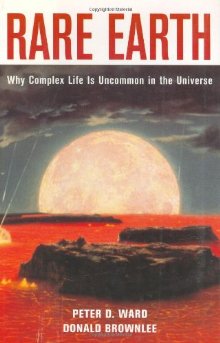
It’s the thesis of a recent book written by two scientists at the University of Washington.

Here’s the blurb:

What determines whether complex life will arise on a planet? How frequent is life in the Universe?

In this exciting new book, distinguished paleontologist Peter D. Ward and noted astronomer Donald Brownlee team up to give us a fascinating synthesis of what’s now known about the rise of life on Earth and how it sheds light on possibilities for organic life forms elsewhere in the Universe.

Life, Ward and Brownlee assert, is paradoxically both very common and almost nowhere. The conditions that foster the beginnings of life in our galaxy are plentiful. But contrary to the usual assumption that if alien life exists, it’s bound to be intelligent, the authors contend that the kind of complex life we find on Earth is unlikely to exist anywhere else; indeed it is probably unique to our planet.

With broad expertise and wonderful descriptive imagery, the authors give us a compelling argument, a splendid introduction to the emerging field of astrobiology, and a lively discussion of the remarkable findings that are being generated by new research. We learn not only about the extraordinary creatures living in conditions once though inimical to life and the latest evidence of early life on Earth, but also about the discoveries of extrasolar planets, the parts Jupiter and the Moon have played in our survival, and even the crucial role of continental drift in our existence.

Insightful, well-written, and at the cutting edge of modern scientific investigation, Rare Earth should interest anyone who wants to know about life elsewhere and gain a fresh perspective on life at home which, if the authors are right, is even more precious than we may ever have imagined.

And here’s a review by Library Journal:

“Renowned paleontologist Ward (Univ. of Washington), who has authored numerous books and articles, and Brownlee, a noted astronomer who has also researched extraterrestrial materials, combine their interests, research, and collaborative thoughts to present a startling new hypothesis: bacterial life forms may be in many galaxies, but complex life forms, like those that have evolved on Earth, are rare in the universe. Ward and Brownlee attribute Earth’s evolutionary achievements to the following critical factors: our optimal distance from the sun, the positive effects of the moon’s gravity on our climate, plate tectonics and continental drift, the right types of metals and elements, ample liquid water, maintainance of the correct amount of internal heat to keep surface temperatures within a habitable range, and a gaseous planet the size of Jupiter to shield Earth from catastrophic meteoric bombardment. Arguing that complex life is a rare event in the universe, this compelling book magnifies the significance — and tragedy — of species extinction. Highly recommended for all public and academic libraries.”

Note that Peter Ward is a militant atheist (he has debated against Stephen C. Meyer), and Donald Brownlee is an agnostic. These are not Christians, nor are they even theists. However, I have the book, I have read the book, and I recommend the book. I usually have this book on my shelf at work for show-and-tell.

Now for the latest news about the hypothesis of the book. (H/T Brian Auten of Apologetics 315)

There are always going to be optimistic predictions by scientists who need to attract research funding, but those are hopes and speculations. The data we have today says Earth is rare. The number of conditions required for complex life of any kind is too high for us to be optimistic about alien life in this galaxy, at least. And as the number of requirements for life roll in, the odds of finding alien life that can contact us get slimmer and slimmer.

From the UK Daily Mail. (H/T Peter S. Williams)

Excerpt:

Dr Howard Smith, a senior astrophysicist at Harvard University, believes there is very little hope of discovering aliens and, even if we did, it would be almost impossible to make contact.

So far astronomers have discovered a total of 500 planets in distant solar systems – known as extrasolar systems – although they believe billions of others exist.

But Dr Smith points out that many of these planets are either too close to their sun or too far away, meaning their surface temperatures are so extreme they could not support life.

Others have unusual orbits which cause vast temperature variations making it impossible for water to exist as a liquid – an essential element for life.

Dr Smith said: ‘We have found that most other planets and solar systems are wildly different from our own.

‘They are very hostile to life as we know it.’

‘The new information we are getting suggests we could effectively be alone in the universe.

‘There are very few solar systems or planets like ours. It means it is highly unlikely there are any planets with intelligent life close enough for us to make contact.’ But his controversial suggestions contradict other leading scientists – who have claimed aliens almost certainly exist.

These arguments are actually quite useful, and I include them in my standard list of scientific arguments for theism. (See below) You have to know this stuff cold. Most people believe in aliens because they watched movies made by artists. As a result, they think that humans are nothing special and that God is not interested in us in particular. Which is very convenient for them, because it means they can do whatever they want and not care what God thinks about what they are doing. If you want to defend against the idea that humans are nothing special, and that we were not placed here for a purpose, and that we are not accountable and obligated to seek and know the Creator/Designer, then you’ll need more than feelings. You’ll need science. You’ll need the best science available.

Related posts

What are galactic habitable zones and circumstellar habitable zones?

The Circumstellar Habitable Zone (CHZ)

What do you need in order to have a planet that supports complex life? First, you need liquid water at the surface of the planet. But there is only a narrow range of temperatures that can support liquid water. It turns out that the size of the star that your planet orbits around has a lot to do with whether you get liquid water or not. A heavy, metal-rich star allows you to have a habitable planet far enough from the star so  the planet can support liquid water on the planet’s surface while still being able to spin on its axis. The zone where a planet can have liquid water at the surface is called the circumstellar habitable zone (CHZ). A metal-rich star like our Sun is very massive, which moves the habitable zone out further away from the star. If our star were smaller, we would have to orbit much closer to the star in order to have liquid water at the surface. Unfortunately, if you go too close to the star, then your planet becomes tidally locked, like the moon is tidally locked to Earth. Tidally locked planets are inhospitable to life.

Circumstellar Habitable Zone

Here, watch a clip from The Privileged Planet: (Clip 4 of 12, full playlist here)

But there’s more.

The Galactic Habitable Zone (GHZ)

So, where do you get the heavy elements you need for your heavy metal-rich star?

You have to get the heavy elements for your star from supernova explosions – explosions that occur when certain types of stars die. That’s where heavy elements come from. But you can’t be TOO CLOSE to the dying stars, because you will get hit by nasty radiation and explosions. So to get the heavy elements from the dying stars, your solar system needs to be in the galactic habitable zone (GHZ) – the zone where you can pickup the heavy elements you need but not get hit by radiation and explosions. The GHZ lies between the spiral arms of a spiral galaxy. Not only do you have to be in between the arms of the spiral galaxy, but you also cannot be too close to the center of the galaxy. The center of the galaxy is too dense and you will get hit with massive radiation that will break down your life chemistry. But you also can’t be too far from the center, because you won’t get enough heavy elements because there are fewer dying stars the further out you go. You need to be in between the spiral arms, a medium distance from the center of the galaxy.

Like this:

Galactic Habitable Zone
Galactic Habitable Zone and Solar Habitable Zone

Here, watch a clip from The Privileged Planet: (Clip 10 of 12, full playlist here)

The GHZ is based on a discovery made by astronomer Guillermo Gonzalez, which made the front cover of Scientific American in 2001. That’s right, the cover of Scientific American. I actually stole the image above of the GHZ and CHZ (aka solar habitable zone) from his Scientific American article (linked above).

These are just a few of the things you need in order to get a planet that supports life.

Here are a few of the more well-known ones:

  • a solar system with a single massive Sun than can serve as a long-lived, stable source of energy
  • a terrestrial planet (non-gaseous)
  • the planet must be the right distance from the sun in order to preserve liquid water at the surface – if it’s too close, the water is burnt off in a runaway greenhouse effect, if it’s too far, the water is permanently frozen in a runaway glaciation
  • the solar system must be placed at the right place in the galaxy – not too near dangerous radiation, but close enough to other stars to be able to absorb heavy elements after neighboring stars die
  • a moon of sufficient mass to stabilize the tilt of the planet’s rotation
  • plate tectonics
  • an oxygen-rich atmosphere
  • a sweeper planet to deflect comets, etc.
  • planetary neighbors must have non-eccentric orbits

By the way, you can watch a lecture with Guillermo Gonzalez explaining his ideas further. This lecture was delivered at UC Davis in 2007. That link has a link to the playlist of the lecture, a bio of the speaker, and a summary of all the topics he discussed in the lecture. An excellent place to learn the requirements for a suitable habitat for life.

Is carbon required for complex life? Is the production of carbon fine-tuned?

Here’s an article by Fuz Rana at Reasons to Believe, talking about alternatives to carbon-based life. (H/T Tough Questions Answered)

Excerpt:

Life as we know it on Earth consists of carbon, hydrogen, oxygen, nitrogen, phosphorus, and sulfur (CHONPS). But could other elements constitute life as we don’t know it?

Not merely a discussion topic for science-fiction buffs, this question bears on origin-of-life discussions and on the search for extraterrestrial life. Carbon-based life requires a strict set of conditions. But perhaps life based on an element like silicon can exist under more extreme conditions. Few places in our solar system, and presumably beyond, can conceivably support carbon-based life. But for life built upon silicon, habitable sites may well abound throughout the universe.

However, of the 112 known chemical elements, only carbon possesses sufficiently complex chemical behavior to sustain living systems.  Carbon readily assembles into stable molecules comprised of individual and fused rings and linear and branched chains. It forms single, double, and triple bonds. Carbon also strongly bonds with itself as well as with oxygen, nitrogen, sulfur, and hydrogen.

Carbon serves as the hub of complex molecules. You can join lots of different things to it so that they stay put. But the bonds are not so strong that you can’t break things apart if you really want to. That’s what makes it suitable for making complex life, and why people talk about “carbon-based life”.

The rest of the article explains why other kinds of elements like silicon and phosphorus are not suitable for creating life.

Is carbon synthesis fine-tuned?

Here’s an article by agnostic physicist Paul Davies explaining why people think that the production of carbon in the universe is an example of fine-tuning.

Excerpt:

One of the best-known examples of this life-friendly ‘fine-tuning’ of the laws of physics concerns carbon, the element on which all known life is based. The Big Bang that kicked off the universe coughed out plenty of hydrogen and helium, but no carbon. So where did the carbon in our bodies come from? The answer was worked out in the 1950s: most of the chemical elements heavier than helium were manufactured in the cores of stars, as the product of nuclear fusion reactions. It is the energy released by these reactions that makes the Sun and stars shine.

However, while the details of stellar nuclear reactions are fairly straightforward, there is a notable exception: carbon. Most nuclear reactions in stars occur when two atomic nuclei, rushing around at tremendous speed care of the searing temperatures, collide and fuse, forming a heavier element. But carbon cannot be made this way because all the intermediate steps from helium to carbon involve highly unstable nuclei. The solution, spotted by University of Cambridge astronomer Fred Hoyle, is for carbon to form from the simultaneous collision of three helium nuclei.

THERE IS, HOWEVER, a snag. The chances that three helium nuclei will come together at the same moment are tiny. So Hoyle reasoned that a special factor must be at work to boost the rare reaction and lead to our abundance of carbon. If not, then life in general, and Fred Hoyle in particular, would not exist!

Hoyle knew that nuclear reactions can sometimes be greatly amplified by the phenomenon of resonance, similar to the way that an opera singer can shatter a glass by hitting a certain pitch. Carbon nuclei can resonate too, if the masses and energies of the colliding particles that go to form it are just right. Hoyle worked backwards — he knew the particle masses and energies, and he used them to predict the existence of a carbon resonance.

He then pestered Willy Fowler, a nuclear physicist at the California Institute of Technology, to do an experiment to test the prediction. And sure enough, Hoyle was right. Carbon has a resonant state at exactly the right energy to enable stars to manufacture abundant carbon, and thereby seed the universe with this life-encouraging substance.

Hoyle immediately realised just what a close-run thing this mechanism is. Like Baby Bear’s porridge in the story of Goldilocks, the energy of the carbon resonance has to be “just right”. Too high or too low, and the consequences for life would be catastrophic.

So what determines the carbon resonance? Ultimately it depends on the strength of the force that binds protons and neutrons together in the nucleus. That force is one of the unexplained parameters of basic physics — one of the knobs on the Designer Machine if you like. If the strength of the force that determined the carbon resonance was only a fraction stronger or weaker, it is doubtful there would be observers in the universe to worry about the distinct absence of carbon.

Hoyle himself was deeply impressed by this discovery. “It looks like a put-up job,” he quipped. “A commonsense interpretation of the facts suggests that a superintellect has monkeyed with physics,” he later wrote. A similar conclusion was reached by the Princeton physicist Freeman Dyson: “In some sense, the universe knew we were coming.”

He doesn’t accept that God is the fine-tuner though, so the article just concludes with “it could be” speculations, which is all that naturalists can offer against the standard theistic arguments. Still, what he said about the finely-tuned synthesis of carbon is accurate.