Tag Archives: Cambrian Explosion

What is the best explanation for the Cambrian fossil record?

i found an interesting video that explores a mystery in the Cambrian fossil record.

Richard Dawkins explains the mystery in his famous book “The Blind Watchmaker”.

Excerpt:

“Eldredge and Gould certainly would agree that some very important gaps really are due to imperfections in the fossil record. Very big gaps, too. For example the Cambrian strata of rocks, vintage about 600 million years, are the oldest ones in which we find most of the major invertebrate groups. And we find many of them already in an advanced state of evolution, the very first time they appear. It is as though they were just planted there, without any evolutionary history.” (Dawkins, Richard [zoologist and Professor for the Public Understanding of Science, Oxford University], “The Blind Watchmaker,” [1986], Penguin: London, 1991, reprint, p.229)

He’s referring to prominent paleontologists Niles Eldredge and Stephen Jay Gould.

Now let’s watch the video.

Part 1 of 2: (41 minutes)

Part 2 of 2: (33 minutes)

This documentary has a mix of scholars who accept the standard naturalistic explanation for the Cambrian explosion, and some who are skeptical of the standard explanation. The first three scholars in the list below are considered to be world-renown experts in the Cambrian era fossils.

List of scholars:

Simon Conway Morris is Professor of Palaeobiology at the University of Cambridge and one of the world’s leading evolutionary paleontologists. He is noted in particular for his contributions to the understanding of the Cambrian Explosion and the fossils found in the Burgess Shale. Elected as a Fellow of the Royal Society (United Kingdom) in 1990, he also has been awarded the Walcott Medal of the National Academy of Sciences (United States). Dr. Conway Morris is author of the noted books The Crucible of Creation: The Burgess Shale and the Rise of Animals (1998) and Life’s Solution: Inevitable Humans in a Lonely Universe (2003). His views about the extent as well as the limits of Neo-Darwinism can be found in his article “Darwin was right. Up to a point.”

James Valentine is Emeritus Professor in the Department of Integrative Biology at the University of California, Berkeley, where he is also affiliated with the Museum of Paleontology and the Center for Integrative Genomics. He is one of the world’s leading experts on the Cambrian Explosion, and is the author of numerous technical articles on the subject, as well as author of the books On the Origin of Phyla and Evolutionary Paleoecology of the Marine Biosphere, co-author of Evolution and Evolving, and editor of Phanerozoic Diversity Patterns: Profiles in Macroevolution.

Paul Chien is a Professor in the Department of Biology at the University of San Francisco. A marine biologist, Dr. Chien received his Ph.D. in Biology from the University of California at Irvine, and he was a postdoctoral fellow at the California Institute of Technology (Caltech). Dr. Chien’s work has been published in over fifty technical journals, and he has spoken internationally, and on numerous occasions, from Brazil to mainland China—where he has also been involved in cooperative research programs. Dr. Chien has done research in the renowned fossil beds of Chengjiang, China.

Jonathan Wells is currently a Senior Research Biologist at the Discovery Institute. He holds two Ph.D.s, one in Molecular and Cell Biology from the University of California at Berkeley, and one in Religious Studies from Yale University. He has worked as a postdoctoral research biologist at the University of California at Berkeley and the supervisor of a medical laboratory in Fairfield, California, and he has taught biology at California State University in Hayward. Dr. Wells has published articles in numerous journals, and he is author of Icons of Evolution: Why much of what we teach about evolution is wrong and The Politically-Incorrect Guide to Darwinism and Intelligent Design, and co-author of The Design of Life.

Richard Sternberg is a Research Scientist at the Biologic Institute and a Research Collaborator at the Smithsonian’s National Museum of Natural History. He is an evolutionary biologist with interests in the relation between genes and morphological homologies, and the nature of genomic “information.” He holds a Ph.D. in Biology (Molecular Evolution) from Florida International University and a Ph.D. in Systems Science (Theoretical Biology) from Binghamton University. From 2001-2007, he served as a staff scientist at the National Center for Biotechnology Information, and from 2001-2007 he was a Research Associate at the Smithsonian’s National Museum of Natural History. Dr. Sternberg’s website can be visited here.

Douglas Axe is Director of Biologic Institute. His research uses both experiments and computer simulations to examine the functional and structural constraints on the evolution of proteins and protein systems. After earning his Ph.D. at the California Institute of Technology, Dr. Axe held postdoctoral and research scientist positions at the University of Cambridge, the Cambridge Medical Research Council Centre, and the Babraham Institute in Cambridge. His work has been reviewed in Nature and featured in a number of books, magazines and newspaper articles, including Life’s Solution by Simon Conway Morris, The Edge of Evolution by Michael Behe, and Signature in the Cell by Stephen Meyer.

Paul Nelson is a philosopher of biology, specializing in evolutionary developmental biology (evo-devo). He earned his Ph.D. from the University of Chicago in 1998, and he is presently an Adjunct Professor in the M.A. Program in Science & Religion at Biola University. He has published articles in such journals as Biology & Philosophy and Zygon and has contributed essays to numerous anthologies.

Stephen Meyer is Director of the Center for Science and Culture at Discovery Institute. Formerly a geophysicist with Atlantic Richfield Company (ARCO), Dr. Meyer earned his Ph.D. in the history and philosophy of science at Cambridge University as a Rotary International Scholar. From 1990-2002, he was on the faculty of Whitworth College. Dr. Meyer is author of peer-reviewed publications in technical, scientific, philosophical and other books and journals. His latest book is Signature in the Cell: DNA and the Evidence for Intelligent Design. His other books include Darwinism, Design and Public Education and Explore Evolution. Dr. Meyer’s website can be visited here.

If you like the video, you can buy the DVD here.

Related videos
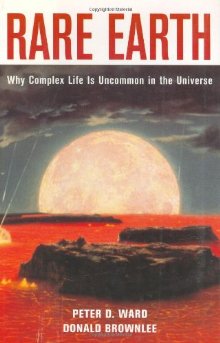
Harvard astrophysicist backs the Rare Earth hypothesis

What is the Rare Earth hypothesis?

It’s the thesis of a recent book written by two scientists at the University of Washington.

Here’s the blurb:

What determines whether complex life will arise on a planet? How frequent is life in the Universe?

In this exciting new book, distinguished paleontologist Peter D. Ward and noted astronomer Donald Brownlee team up to give us a fascinating synthesis of what’s now known about the rise of life on Earth and how it sheds light on possibilities for organic life forms elsewhere in the Universe.

Life, Ward and Brownlee assert, is paradoxically both very common and almost nowhere. The conditions that foster the beginnings of life in our galaxy are plentiful. But contrary to the usual assumption that if alien life exists, it’s bound to be intelligent, the authors contend that the kind of complex life we find on Earth is unlikely to exist anywhere else; indeed it is probably unique to our planet.

With broad expertise and wonderful descriptive imagery, the authors give us a compelling argument, a splendid introduction to the emerging field of astrobiology, and a lively discussion of the remarkable findings that are being generated by new research. We learn not only about the extraordinary creatures living in conditions once though inimical to life and the latest evidence of early life on Earth, but also about the discoveries of extrasolar planets, the parts Jupiter and the Moon have played in our survival, and even the crucial role of continental drift in our existence.

Insightful, well-written, and at the cutting edge of modern scientific investigation, Rare Earth should interest anyone who wants to know about life elsewhere and gain a fresh perspective on life at home which, if the authors are right, is even more precious than we may ever have imagined.

And here’s a review by Library Journal:

“Renowned paleontologist Ward (Univ. of Washington), who has authored numerous books and articles, and Brownlee, a noted astronomer who has also researched extraterrestrial materials, combine their interests, research, and collaborative thoughts to present a startling new hypothesis: bacterial life forms may be in many galaxies, but complex life forms, like those that have evolved on Earth, are rare in the universe. Ward and Brownlee attribute Earth’s evolutionary achievements to the following critical factors: our optimal distance from the sun, the positive effects of the moon’s gravity on our climate, plate tectonics and continental drift, the right types of metals and elements, ample liquid water, maintainance of the correct amount of internal heat to keep surface temperatures within a habitable range, and a gaseous planet the size of Jupiter to shield Earth from catastrophic meteoric bombardment. Arguing that complex life is a rare event in the universe, this compelling book magnifies the significance — and tragedy — of species extinction. Highly recommended for all public and academic libraries.”

Note that Peter Ward is a militant atheist (he has debated against Stephen C. Meyer), and Donald Brownlee is an agnostic. These are not Christians, nor are they even theists. However, I have the book, I have read the book, and I recommend the book. I usually have this book on my shelf at work for show-and-tell.

Now for the latest news about the hypothesis of the book. (H/T Brian Auten of Apologetics 315)

There are always going to be optimistic predictions by scientists who need to attract research funding, but those are hopes and speculations. The data we have today says Earth is rare. The number of conditions required for complex life of any kind is too high for us to be optimistic about alien life in this galaxy, at least. And as the number of requirements for life roll in, the odds of finding alien life that can contact us get slimmer and slimmer.

From the UK Daily Mail. (H/T Peter S. Williams)

Excerpt:

Dr Howard Smith, a senior astrophysicist at Harvard University, believes there is very little hope of discovering aliens and, even if we did, it would be almost impossible to make contact.

So far astronomers have discovered a total of 500 planets in distant solar systems – known as extrasolar systems – although they believe billions of others exist.

But Dr Smith points out that many of these planets are either too close to their sun or too far away, meaning their surface temperatures are so extreme they could not support life.

Others have unusual orbits which cause vast temperature variations making it impossible for water to exist as a liquid – an essential element for life.

Dr Smith said: ‘We have found that most other planets and solar systems are wildly different from our own.

‘They are very hostile to life as we know it.’

‘The new information we are getting suggests we could effectively be alone in the universe.

‘There are very few solar systems or planets like ours. It means it is highly unlikely there are any planets with intelligent life close enough for us to make contact.’ But his controversial suggestions contradict other leading scientists – who have claimed aliens almost certainly exist.

These arguments are actually quite useful, and I include them in my standard list of scientific arguments for theism. (See below) You have to know this stuff cold. Most people believe in aliens because they watched movies made by artists. As a result, they think that humans are nothing special and that God is not interested in us in particular. Which is very convenient for them, because it means they can do whatever they want and not care what God thinks about what they are doing. If you want to defend against the idea that humans are nothing special, and that we were not placed here for a purpose, and that we are not accountable and obligated to seek and know the Creator/Designer, then you’ll need more than feelings. You’ll need science. You’ll need the best science available.

Related posts

Access Research Network’s top 10 science stories of 2009

Here’s the list from ARN, one of my favorite sites on intelligent design.

Here’s my summary:

15. Gene regulatory networks in cell nuclei are similar to cloud computing networks

14. Molecular motors in the cell operate in a coordinated manner

13. White blood cells use legs for gripping, moving and reading distress signals

12. A failed attempt to defeat the argument for irreducible complexity

11. Rapid formation of early galaxies

10. Reverse-engineering of designs in biology for use in human inventions

9. Peppered moths go back to light-gray from black

8. The deflated excitement over Ardi

7. The deflated excitement over Ida

6. The Cambrian explosion defies materialist explanation

5. The edge of evolution confirmed by experiment

4. Genomics destroys the modern sythesis hypothesis

3. The emergence of holisitic explanations in biology

2. Signature in the Cell is released to high acclaim

1. New peer-reviewed paper on ID by Dembski and Marks

Podcasts!

ID the Future has three podcasts going over the stories, if you prefer to listen instead of read.