Tag Archives: Bobby Jindal

Louisiana governor Bobby Jindal unveils education reform plan

Here are the details on Bobby Jindal’s new education plan, from New Orleans Online Access.

Excerpt:

 Gov. Bobby Jindal on Tuesday outlined a far-reaching set of proposals aimed at improving education in Louisiana, including a state-wide voucher program for low-income students, an expansion of autonomous charter schools and steps to link a teachers’ classroom performance to their job protections and their compensation. The governor has been promising for months now to make education reform the centerpiece of his second-term agenda.

[…]The voucher program may prove the most controversial aspect of the plan. Jindal is proposing to help pay tuition at private and parochial schools for any child of a low-income family who attends a school that receives a letter grade of C, D or F.

More than 70 percent of Louisiana’s public schools would fall into that category, opening up districts across the state to competition for public funding from private institutions. Parents who opt out of those public schools would be able to take the public funding set aside for their child with them to pay for tuition.

Voucher opponents argue that offering private school tuition siphons money away from public education, but the governor is framing the idea as a way to put decision-making in the hands of parents.

Also toward that end, Jindal is proposing to fast-track the approval of new charter schools for proven charter operators. Charters are publicly funded but privately managed and typically overseen by nonprofit boards. They compete with traditional public schools in their area for students.

Jindal is also proposing to end regular annual pay increases for teachers based on years in the classroom, ban the use of seniority in all personnel decisions and weaken the power that local school boards have in hiring and firing decisions in favor of superintendents.

Teachers coming into the classroom for the first time would also see major changes under Jindal’s plan: districts would have greater flexibility to establish their own pay scales for new teachers and tenure would be set aside only for those who earn high ratings on evaluations five years in a row.

I thought it might be helpful to also post this quick introduction to the issue of school choice, from the Cato Institute.

I don’t agree with the Cato Institute on everything, but they’re right on this issue. The Heritage Foundation also has 3 small videos explaining school choice – with cartoons!

There’s an even longer video narrated by John Stossel that you can watch, that really explains the why school reform matters – and why it’s a conservative issue. Like the sex-selection abortion issue that I blogged about here before, this is an issue that conservatives need to seize on. Here, we can really let our compassionate side show by helping the poorest students, especially those in visible minorities, who simply cannot get a quality education in a public school monopoly that is not responsive to the needs of parents, or their children. This is an issue where we can win – the only losers are the educational bureaucrats and the teacher unions. But the kids are more important.
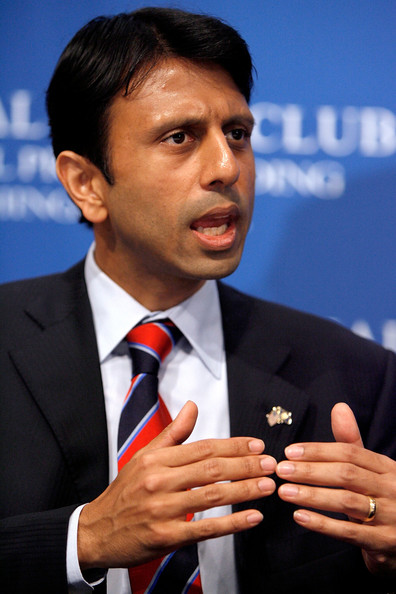
Bobby Jindal cuts Louisiana budget by 25%… and gets re-elected in landslide?

Gov. Bobby Jindal
Gov. Bobby Jindal

From the Philadelphia Inquirer.

Excerpt:

One gubernatorial election ended early this fall, when Louisiana Gov. Bobby Jindal won the state’s blanket primary Oct. 22. Under Louisiana’s system, all candidates of all parties are listed on the ballot, and if no one gets 50 percent, the top two finishers go to a runoff. Jindal blew past the threshold with 66 percent.

Jindal’s reelection was unusual in several respects. The only previous time the state has not had a runoff was his election in 2007. He is only the fourth Republican governor in the last 125 years in Louisiana, and one of those four switched over from the Democrats in office. Jindal’s best-known challenger this year was a schoolteacher, who raised less than 1 percent of the incumbent’s campaign treasury. The Democratic State Central Committee declined to endorse any candidate running on its party label.

But perhaps most unbelievable is that Jindal faced no serious competition after cutting state spending more than 25 percent. In January 2008, the state had a budget of $34.3 billion. This summer, Jindal signed into law a budget spending $25 billion. As governors from Harrisburg to Trenton to Columbus to Madison have learned, cutting a state’s budget is difficult enough; doing so without a significant backlash seems a politically impossible task.

A key part of Jindal’s story is recognizing that he took the helm of a state that had hit bottom: Decades of mismanagement and corruption had taken their toll even before Hurricane Katrina wreaked such devastation and exposed such colossal unresponsiveness in state government. The state, recognizing the bitter fruit of its traditions of colorful corruption, was ready to take a chance on a then-37-year-old Indian American congressman who speaks roughly 100 words per minute. The state was willing to try a new approach to governing; how much worse could it be?

Privatization played a big role in Jindal’s reinvention of state government, with private contractors taking over state-run operations for a lesser cost. The companies often hired the state workers who would often be the centerpiece of opponents’ criticism.

His administration privatized the state’s Office of Risk Management. Then the state’s Division of Administration privatized claims management and loss prevention in the self-insurance program, saving $20 million over five years. The Department of Health and Hospitals privatized six inpatient, residential-treatment programs around the state, saving $2.5 million. Separately, patients were moved from state-operated institutions that cost $600 or more per patient per day to community-based services and private group homes that average $191 per day, saving an additional $23.8 million.

Consolidation was another key element: The state’s Department of Revenue shrank from eight offices statewide to three. The Department of Children and Family Services consolidated its offices from 157 to 90, saving a total of $2.7 million.

But some of Jindal’s cuts are the old-fashioned kind. The state sold 1,300 vehicles from its fleet of automobiles. Louisiana’s Transportation Department shut down a ferry that was used by only 7,200 drivers per year, saving the state roughly three-quarters of a million dollars.

In fiscal 2011, Louisiana eliminated more than 3,500 full-time government positions. Add the 6,363 previous reductions during Jindal’s term, and that means a total of almost 9,900 full-time positions reduced since he took the oath, a savings of almost $600 million. Louisiana now has the lowest level of full-time state government employees in almost 20 years.

“You change people’s expectations and you make structural changes,” Jindal said, while racing around the state about three weeks before the election. “The most important is this cultural change, to say government is not the answer to everything. In a weird way, I want the office of governor to be less important than it is. What I mean by that is, there was an old joke that kids in Louisiana don’t grow up wanting to be president; they grow up wanting to be governor. You should want them to want to business leaders or doctors or teachers.”

Some cuts were more noticeable to the public, but Louisianans found shorter hours and workweeks at state facilities more palatable than complete shutdowns or higher taxes: Historic sites are now open five days a week instead of seven, pools at a half dozen state parks were closed on Mondays and Tuesdays this summer, and entrance stations at all state parks had shorter hours. Finally, 54,000 rank-and-file state workers are going without a raise for the second consecutive year.

Jindal’s first term was marked by several high-profile crises he successfully managed – Hurricane Gustav and the response to the BP oil spill, along with the Obama administration’s six-month moratorium on all drilling in the Gulf of Mexico – but the state’s economy has generally chugged along: Louisiana’s unemployment rate is 7.1 percent, two percentage points lower than the national average, and a comparably booming economy makes cuts in state spending much easier to take.

“If you have a good-paying job with benefits, you wouldn’t need the state to do so many things for you,” Jindal says. “You become less dependent, and that diminishes the role of the state and so you need fewer state employees, and it’s a virtuous cycle. You can lower taxes and lower government spending.”

Louisiana is a swing state. If Bobby Jindal can cut government spending in a swing state and get re-elected with 66% of the vote, then we do have hope that the American people will do the right thing. Maybe we just need to hit bottom with Obama so that we realize that competence does matter after all. We have a deep, deep bullpen for future elections. Governors like Scott Walker (Wisconsin), Rick Scott (Florida) and John Kasich (Ohio)would be excellent presidential candidates.  And of course we have Marco Rubio and soon-to-be senators Josh Mandel and Ted Cruz waiting in the wings.

Muslim Conservative MP says that Christians should be proud of their faith

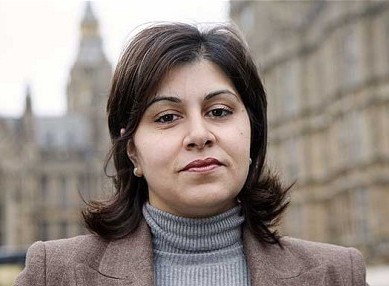
Conservative MP Sayeeda Warsi

From the UK Telegraph.

Excerpt:

First, it is a mistake to assume that you compromise your identity the more you try to understand others. The stronger your understanding of your neighbour, the stronger your own religious identity becomes. For many years, I have been saying that the stronger we are as a Christian nation, the more understanding we will be of other faiths. That is why, a year ago, I went to a bishops’ conference and said that this Government would “do God”. It is why the Pope’s visit was so important for our country. And it is why I am proud that this year, for the first time, the Prime Minister held an Easter reception in Downing Street.

We need to create a country in which people can be unashamedly proud of their faith – where they don’t feel that they have to leave religion at the door. That means being proud of Christianity, not downgrading it. It means encouraging people to say that their faith inspires what they do. It means supporting religious charities in delivering public services in schools, hospices and rehabilitation.

[…]We also need to take the lead internationally. That means pressing other governments to safeguard religious minorities – be it the Copts in Egypt or Christians and other minorities in Pakistan. It means raising problems of persecution at the highest level, as the Archbishop of Canterbury recently did in Zimbabwe. Above all, it means all of us – as communities and individuals, believers and non-believers – taking inspiration from Shahbaz and Paul Bhatti, and giving all minorities in every country the courage and freedom to believe and worship in peace.

And here’s another Conservative MP.

Conservative MP Priti Patel

Here’s an article from IB Times about Hindu Conservative MP, Priti Patel.

Excerpt:

Priti Patel is one of the most fascinating (and controversial) politicians in contemporary Britain. The 39-year-old Conservative MP is not only blessed with stunning good looks, but she is also of Asian Indian descent – somewhat of a rarity among Tory lawmakers.

Moreover, Patel (whose Indian Gujarati parents fled Idi Amin’s Uganda for Britain in the early 1970s) has hewed to a hard-right line on many political issues, including the death penalty, illegal immigration, labor unions and the UK’s integration with Europe.

Regarding the death penalty, Patel recently told a television news affairs program: “I would actually support the re-introduction of capital punishment to serve as a deterrent. I have no issue on having a debate — I think far too many politicians do run away from debating issues like this.”

She is frequently described in the British press as a “rising star” in the Conservative Party and some believe she might one day become the first Asian Prime Minister of the U.K.

Indeed, Patel might even be considered a “British” version of Nikki Haley, the very telegenic young governor of South Carolina in the U.S., who is not only of Indian Sikh descent, but also a darling of the right-wing Tea Party and hailed as a potential future Vice President or even Presidential candidate.

I like to beat up on the UK, but they do have some MPs who take bold conservative positions on certain issues. I like Iain Duncan-Smith the best, for example.

In other news, I noticed that the Indian-American governor of Louisiana Bobby Jindal recently won  re-election with 66% of the vote.  He has a 63% approval rating. He is a Republican, of course – just like the Indian-American governor of South Carolina, Nikki Haley.