Is the God of the Old Testament violent and bloodthirsty? Did God really command genocide? Why did Israel attack the Canaanites? These are just a few of the tough questions I tackle in this episode of the think Christianly podcast. Learn how to respond to one of the most challenging and emotional objections to Christianity in under 10 minutes.
Summary:
quotes Richard Dawkins to set up the objection
response: does God have the authority to give and take life?
response: after the Fall, things in the world are not the way they are supposed to be
response: Old Testament commands for the Jews to judge other nations are specific to them in that time
response: “genocide” and “ethnic cleansing” are not accurate descriptions of the attack on Canaan
response: the attack on the Cannanites takes place in the context of redeeming the whole world
Here is the Christian Post article he was interviewed for, where he had to answer:
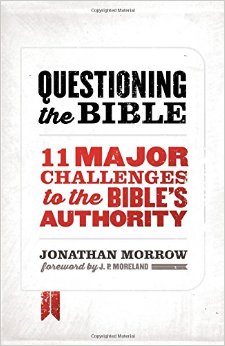
Jonathan Morrow, author of Questioning the Bible: 11 Major Challenges to the Bible’s Authority, says readers are often perplexed by Old Testament scripture because “sometimes we just picture a God where anger and love can’t co-exist.” Yet he explains, “We all have seen people who have been taken advantage of and that makes us angry [because] we love them. So those emotions can co-exist.”
[…]Along that same line, Morrow clarifies that God’s instructions to the Israelite army in Deuteronomy 20 to destroy the people occupying the land of Canaan is “about judgment, not genocide.”
“The Bible teaches clearly that all people are sinful and in rebellion, kind of living in open rebellion against God, and God is just to judge anyone,” says Morrow. “But in this particular case with the Canaanites, there’s several things going on there, but one of those things was the wickedness of the people which was well documented – child sacrifices to Moloch and others, and bestiality and a lot wickedness.”
He says this judgment was necessary because “Israel’s national survival was crucial so that the Messiah – we would know Jesus as the Messiah – and God’s saving purposes of redemption to the world could one day be born because if the Messiah was supposed to come through the lineage of Israel and Israel co-mingled with this wicked people and was ultimately destroyed, that promise of hope and blessing to the whole world could not have been realized.”
[…]Morrow recognizes that Old Testament questions are particularly challenging. “We live in a sound bite culture and so this is one of those questions where it kind of gets thrown out for people, why does God command genocide, and that’s really easy to say and then it takes some time to respond to because there’s some context.”
Morrow says his sound bite answer is: “These passages are about judgment; they’re not about genocide.”
However, he encourages believers to find out the asker’s real interest in this question. “I would ask them, you know, it sounds like this is a pretty emotional question for you, why is that. Let them talk about it some so you can better understand because that’s the goal. We’re not just trying to win an argument; we’re trying to understand and help people.”
It the asker is after truth, Morrow advises Christians to “ask them … are you interested in kind of walking through and getting kind of messy about looking at the evidence for this because I’d love to share that with you, and sometimes they’ll go, ‘yeah, that’ll be great.'”
Other times, Morrow says, the asker is simply looking for “space and distance from God and this question allows them to put space between them and God.”
By the way, Morrow and McDowell’s basic apologetics book – “Is God Just a Human Invention?” – is my first pick when mentoring new people in apologetics.
Sherlock Holmes and John Watson are going to take a look at the data
So, everyone from left to right accepts the early creed in 1 Corinthians 15:3-7 being dated to 1-3 years after the death of Jesus, even atheists like Crossley, Ludemann and Crossan. The thing is, some people are not sure that the appearances of Jesus to individuals, groups, and skeptics really were physical appearances. They say “well, Paul’s appearance was non-physical, so the other ones must have been, too”.
Let’s take a look.
Here’s a paragraph from my friend Eric Chabot, from his blog Think Apologetics. He explains why Paul’s use of the word “resurrection” to describe what the other witnesses saw means bodily resurrection.
He writes:
If Paul did have a vision then the term “vision” is vague and must be defined. As Licona points out, visions are either objective (i.e., something that is seen without the use of our natural senses) or subjective (i.e., a product of our minds). The real problem is with the vision hypothesis is that it doesn’t explain Paul’s use of resurrection to explain what had happened to Jesus. The two words are used for resurrection in the New Testament “anastasis” (rising up) and “egersis” (waking up), both imply a physical body. Furthermore, the use of the word “opethe” (the Greek word for appeared) shows the Gospel writers did believe that Jesus appeared physically. “There you will see (opethe) him” (Matt. 28:7); “The Lord has risen and has appeared (opethe) to Simon” (Luke 24:24). When they used “opethe” here, it means that He appeared physically to them.
So when Paul gives his list of appearances in 1 Cor. 15, the issues becomes whether the appearance to him is the same as it was to the disciples. There is no doubt the post resurrection body of Jesus (after the ascension) had to be somewhat different than the body the disciples saw. Also, whenever the New Testament mentions the word body, in the context of referring to an individual human being, the Greek word “soma” always refers to a literal, physical body.Greek specialist Robert Gundry says “the consistent and exclusive use of soma for the physical body in anthropological contexts resists dematerialization of the resurrection, whether by idealism or by existentialism.” [9] Furthermore, in N.T. Wright’s The Resurrection of the Son of God shows that the Greek word for resurrection which is “anastasis” was used by ancient Jews, pagans, and Christians as bodily in nature.
Now, I think my view on this, and I’m not sure if Eric would correct me, is that Paul got an objective but non-physical vision of Jesus. There was something there that everyone else could see and hear, in my view. But in my view Paul’s “veridical” vision was post-ascension, and so non-physical. Paul uses the word resurrection to describe what the other eyewitnesses saw (and he met them at least twice, according to Gal 1 and Gal 2), and that means physical resurrected body.
Here we see whatever happened, this was after the ascension. Hence, to say Paul saw the exact same Jesus before he ascended is hard to infer from the text. There simply isn’t enough information here. The Bible says, “they heard” the same voice Paul did ” (Acts 9: 7). But they “did not see anyone ” (Acts 9: 7). Notice Paul was physically blinded by the brightness of the light. One way or the other, the experience involved something that was external to Paul. It wasn’t something that was the same thing as a vision that Paul talks about in 2 Cor. 12:1. Furthermore, the phrase “he let himself be seen’” (ōphthē , aorist passive, ), is the word Paul uses in 1 Cor. 15:7 to describe of his own resurrection appearance as the other ones in the creed. As Paul Barnett says:
“It is sometimes claimed that the word appeared (ōphthē) means a mystical seeing, as of a vision, and that since this was what Paul “saw” it was what the other apostles “saw.” In other words, after death, Jesus was taken directly to heaven whence he “appeared” to various people, mystically, as it were. This however, is not all the meaning of Paul’s words. First, the word ōphthē, “appeared” is not limited to visionary seeing it is also used for physical seeing. Moreover, the verb raise used in the phrase ‘raised on the third day” is used elsewhere in combination with the words “from the dead” which literally means “from among the corpses.” Thus raised preceding appeared gives the latter a physical not a mystical meaning. Christ, as “raised from the dead” ….appeared.” Furthermore, when Paul asks “ Am I not free? Am I not an apostle? Have I not seen Jesus our Lord?”(1 Cor. 9: 1), he is using the ordinary word horan, “to see” for physical sight. If “seeing” the Lord “raised from the dead” qualified others to be apostles, then Paul is, indeed, an apostle. It was no mere subjective vision that arrested Paul en route to Damascus. (8) .
In the end, word studies can’t entirely resolve this issue. We need to remember theetymological fallacy as well. We would have to look at all the texts that speak of resurrection (including the entire 1 Cor. 15 chapter in their entire context as well as the anthropology of the New Testament. We also need to study the resurrection in light of the Second Temple Jewish period. See our reading list here for some resources that may help.
But conservative ancient historian Gary Habermas seems to think that Paul got the physical body as well.
Now, I said before in 1 Corinthians 15, Paul could have chosen to only use the word pneuma. He doesn’t. He does say “spiritual,” but he’s got an adjective there. He also says, soma, “body.” What did Paul mean?
Philippians Chapter 3. It’s a short chapter. There are 21 verses, but Paul says three things in one chapter that indicate he’s talking about a physical resurrection. In the opening verses he says, “I was a Hebrew of the Hebrews” and “as touching the law,” he says, “I was a Pharisee.” Now, it’s very well known that the Pharisee believed in a bodily resurrection. In fact, according to Acts 23, as Paul was being taken captive by the Romans to prevent his being killed, he shouted out to the group of people and said, “Why are you taking me? Because I believe in the resurrection of the dead?” He meant a literal resurrection.
When the Pharisees heard that, they said there’s nothing wrong with this guy. But the Sadducees [who didn’t believe in the Resurrection] didn’t like it. So as a Pharisee, he’s agreeing with the Pharisees.
So, the first evidence is from Philippians 3. As a Pharisee, Paul believes in a physical resurrection.
Secondly, in verse 11 he says, “That I may attain the resurrection of the dead.” Now, the normal Greek word for resurrection is anastasis, but in this passage, Philippians 3:11, he puts a prefix on there, ek anastasis. Ekanastasis, according to all Greek scholars that I know of, is translated in this passage: “The out resurrection from among the dead.” Paul said, “I want to attain the out resurrection.”
Now, to a Jew, “out resurrection” means “what goes down is what comes up.” You come out from death. And then just a few verses later, Philippians 3:20,21, he said, “From Heaven, we look for Jesus who will change our vile soma (body) to be like unto His glorious soma (or body),” when he should have said pneuma, according to this other view.
So he’s a Pharisee who believes in a physical resurrection. Ek anastasis—“resurrection from out among the dead ones.”
Thirdly, Paul says, “He Jesus will change my body to be like His body.”
So right there in Philippians 3 alone, I think the picture of Jesus being some wispy spirit that appeared to him on the road to Damascus doesn’t fit Paul’s own data.
Yes, that’s why Philippians is my favorite book. You can get so much useful theology out of it. Something about the resurrection in Phil 3, something about Jesus’ divinity in Phil 2, and loads of practical advice on stewardship, charity, fellowship, endurance and practical love for others throughout. Some of it takes a little digging, but that’s what commentaries are for, am I right? But I digress.
If you want to read something a little more challenging, I found a paper from the Evangelical Theological Society (ETS) from their journal, where it talks more about soma and anastasis. If you want a bit of a challenge, download the PDF and read it. It’s by Kirk R. MacGregor and the title is “1 Corinthians 15:3B–6A, 7 And The Bodily Resurrection Of Jesus”.
I am tempted to say that this is the best podcast I have ever heard on the Unbelievable show. Do anything you have to do in order to listen to this podcast.
Details:
Prof Robert Gagnon has become a well-known voice advocating the traditional biblical view on sexuality. In a highly charged show he debates the scriptural issues on sexuality with Jayne Ozanne, the director of Accepting Evangelicals who came out as gay earlier this year.
If you can only listen for 15 minutes, then start at 49 minutes in and listen from there.
The following summary is rated MUP for made-up paraphrase. Reader discretion is advised.
Summary:
Intro:
Speaker introductions
Gagnon: scholars who support gay marriage agree that the Bible doesn’t support it
Gagnon: scholars who support gay marriage agree Jesus taught male-female marriage
Ozanne: I went to the hospital because I was sick from trying to suppress my gay desires
Ozanne: Doctors told me that I would die if I didn’t act on my gay desires
Ozanne: I decided to reinterpret the Bible to fit with my gay desires
Ozanne: According to my new interpretation, Jesus actually supports my gay desires
Segment 1: Genesis
Ozanne: In Genesis the Bible says that Adam needs a woman to complete him
Ozanne: I reinterpret this to mean that Adam needed a “complementarian human being”
Ozanne: Genesis doesn’t say whether Eve was complemented by Adam in that chapter
Ozanne: It’s not critical that men are complemented by women, a man could complement a man
Ozanne: Genesis 2 doesn’t talk about children, it’s all about adult needs from a relationship
Gagnon: Genesis 2 has never been interpreted that way in all of history
Gagnon: Genesis 2 language specifically implies a human being who is opposite/different
Gagnon: Genesis 2 language translates to complement or counterpart
Gagnon: Genesis as a whole teaches that the sexuality is for male and female natures
Gagnon: The extraction of something from the man that is given to the woman is complementarian
Ozanne: I think that people can be complementary outside of male-female Genesis language
Ozanne: I don’t want to discuss specific words and texts and Greek meanings
Gagnon: the text has always been read and interpreted to support male/female complementarity
Gagnon: the male-female nature argument is made because the two natures are complementary
Ozanne: the text was interpreted by patriarchal males who treated women like property, it’s biased
Ozanne: what is important to me is how Christ interprets Genesis (?? how does she know that?)
Ozanne: I am passionate about my interpretation of Scripture which supports my gay desires
Gagnon: just because a person is passionate about their interpretation it doesn’t make it right
Gagnon: I am not arguing for the male-female view based on passion, but on scholarship, evidence and history
Ozanne: both sides are equally passionate about their interpretations (?? so both are equally warranted?)
Ozanne: the real question is why God “allowed” two different interpretations of Scripture
Segment 2: Is homosexuality a sin?
Gagnon: Jesus affirmed traditional sexual morality, which forbids homosexuality
Gagnon: Jesus teaches that marriage is male-female, and limited to two people
Gagnon: No one in history has interpreted the Bible to say that homosexuality was not immoral
Ozanne: Jesus came to bring life, and that means he supports homosexuality
Ozanne: I was dying, and embracing my gay desires allowed me to live, so Jesus approves of me
Ozanne: God says “I am who I am” and that means he approves of me doing whatever I want
Ozanne: There is an imperative to be who I am, and that means embracing my gay desires
Gagnon: Jesus argued that the twoness of the sexual bond is based on the twoness of the sexes
Gagnon: Jesus did not come to gratify people’s innate desires, he called people to repent of sin
Gagnon: Jesus did reach out to sinners but he never condoned the sins they committed
Gagnon: Jesus’ outreach to tax collectors collecting too much and sexual sinners is the same: STOP SINNING
Ozanne: I don’t think that Romans 1 is talking about homosexuality
Ozanne: I think it’s talking about sexual addiction, not loving, committed gay relationships
Ozanne: Paul was condemning pederasty in Romans 1, not loving, long-term, consensual sexual relationships between gay adults
Gagnon: nothing in the passage limits the condemnation to pederasty
Gagnon: the passage was never interpreted to be limited to pederasty in history
Gagnon: rabbis and church fathers knew about committed two-adult same-sex relationships, and said they were wrong
Gagnon: the argument for marriage is based on the broad two-nature argument, with no exceptions
Gagnon: the condemnation is not limited to exploitative / coercive / lustful / uncommitted relationships
Gagnon: even pro-gay scholars agree the passage cannot be interpreted Ozanne’s way (he names two)
Segment 3: The showdown (49:00)
Ozanne: I don’t care how many pages people have written on this
Ozanne: God says that “the wisdom of the wise I will frustrate” so you can’t use scholars, even pro-gay scholars, to argue against my passionate interpretation
Ozanne: I am not interested in the text or history or scholarship or even pro-gay scholars who agree with you
Ozanne: what decides the issue for me is my mystical feelings about God’s love which makes my sexual desires moral
Ozanne: you are certain that this is wrong, but your view does not “give life” to people
Ozanne: your scholarship and historical analysis is “a message of death” that causes teenagers to commit suicide (= you are evil and a meany, Robert)
Ozanne: “I pray for you and your soul” (= opposing me will land you in Hell) and “I hope that listeners will listen with their hearts” (?? instead of their minds?)
Ozanne: you can prove anything you want with research, even two mutually exclusive conclusions, so you shouldn’t rely on scholarship and research since it could be used to prove my view as well
Ozanne: instead of relying on research, you should rely on your heart and your feelings about God’s love to decide what the Bible teaches about sexual morality
Gagnon: you are distorting the gospel in order to make your case
Gagnon: attacking my “certainty” is an ad hominem attack to cover your dismissmal of the scholarship and history
Gagnon: you distort the gospel to make it seem like Christ just wants us to get what we want, when we want it, with who we want it with
Gagnon: Christ calls us to take up our cross, to lose our lives and to deny ourselves
Gagnon: you have a notion of what “fullness of life” is, but it’s not reflective of the gospel
Gagnon: Paul’s life was much more troubling than yours, mine or anyone else around here
Gagnon: Paul was beaten, whipped, stoned, poorly sheltered, poorly clothed, poorly fed, shipwrecked, and anxious for his churches
Gagnon: on your view, he should have been miserable and angry with God all the time
Gagnon: but instead Paul was constantly thankful and rejoicing to be able to suffer with Jesus and look forward to the resurrection
Gagnon: I have suffered too, but the suffering we go through never provides us with a license to violate the commandments of God
Ozanne: “the ultimate thing is what people feel God has called them to”
Ozanne: My goal right now is to tell young people that homosexuality is fine so they don’t commit suicide
Ozanne: the view that homosexuality is wrong is “evil and misguided”
Gagnon: the greater rates of harm in the gay community are intrinsic to homosexual unions, not caused by external disapproval of homosexuality
Segment 4: Concluding statements
Gagnon: gay male relationships on average have more sex partners and more STDs
Gagnon: female relationships on average have shorter-length relationships and more mental issues
Gagnon: the greater rates of harm are because there is no complementarity / balance in the relationships
Gagnon: everyone has some disappointment or suffering in their lives that hurts them, and that they are tempted to break the rules to fix, but we should not break the rules in order to be happy
Ozanne: both sides are passionate, so no one can be right, and evidence proves nothing
Ozanne: only feelings about “what God is doing” can allow us to decide what counts as sin or not
Ozanne: the main thing that is at stake here is to make people like us, not to decide what the Bible says about sin
Ozanne: my message to people is to do whatever you want, and ignore mean people who don’t affirm you
Ozanne: we should be more opposed to mean people who make non-Christians feel unloved than about doing what the Bible says



 WINTERY KNIGHT