Tag Archives: Bible Study

Wayne Grudem debates Richard Glover on the Bible, poverty and foreign aid

Two horses fight it out, may the best horse win!

A great episode of the Unbelievable podcast. This is a great debate. I really enjoyed it. All three speakers were excellent putting forward their points. It’s nice to hear an American voice, a British voice and an Australian voice debating an important issue. HIGHLY RECOMMENDED.

Details:

Wayne Grudem is a theologian known for his conservative approach to both doctrine and economics. His new book “The Poverty of Nations: A Sustainable Solution” (co-authored with economist Barry Asmus) makes the case that pouring aid into developing countries is a failed strategy. Grudem debates whether the Bible supports free market, capitalist economics with Australian economist and theologian Richard Glover who wrote a critique of the book for the Australian Bible Society.

 The MP3 file is here.

Summary:

Grudem:

  • The Bible speaks to all of life, including economics, stewardship, government
  • The study of economics helps us to understand how to take care of the poor
  • My job is to apply the teachings of the Bible to all of life

Brierley:

  • What’s your thesis in the book?

Grudem:

  • A good system is one where the poor have the opportunity to earn and save from their labor
  • Book is a response to a Kenyan couple Grudem met at a London conference on business and Christianity
  • Book is not concerned with how individuals and groups can do charity to help the poor
  • Our church already does that and we support individuals and groups doing charity
  • The book is concerned with how should nations be transformed in order to grow economically
  • What should the laws, policies and cultural beliefs of a nation be in order for it to not be poor?
  • The book lists factors that have moved nations from poverty to prosperity in different times and places
  • The thesis of the book is this: government should set their people free to be able to produce more
  • We advocate freedom in economics: freedom to work, freedom to save, freedom to start businesses
  • We believe that this free enterprise view is consistent with the Bible in a number of places
  • E.g. – private property is good for prosperity (thou shall not steal) but forbidden by communism

Brierley:

  • What about the church sharing in communities in Acts 2 and Acts 4?

Grudem:

  • That is not redistribution of wealth among individuals and businesses by a secular government
  • Those passages showed that there was voluntary sharing among Christians, which is not communism

Brierley:

  • What’s wrong with Grudem’s book?

Glover:

  • The book emphasizes the Bible and the goal is to help the poor in poor countries
  • Criticism 1: the book doesn’t engage with non-free-market perspectives on economics
  • Criticism 2: the book doesn’t survey all that the Bible says about economics

Brierly:

  • For 1) what is one of the views that is not considered?

Glover:

  • Jeffrey Sachs says that nations need a leg up before they can grow economically
  • Ha-Joon Chang says that free enterprise was not how the wealthy nations became wealthy

Grudem:

  • We do engage with other points of view, especially Jeffrey Sachs in the book
  • The trouble with leftist views on economic development is that it does not work in practice
  • NO COUNTRY has even been lifted out of poverty by foreign aid
  • He says we don’t cite enough from the wisdom literature: we have 64 citations in the index
  • He says we don’t cite enough from the gospels: we have 42 citations in the index
  • He says we don’t cite enough from the epistles: we cite 22 of 27 epistles in the index
  • Some economists won’t criticize cultural and moral values that hurt prosperity
  • As Christians, we think that moral and cultural values are part of the problem that needs solving

Brierley:

  • What about foreign aid?

Grudem:

  • Foreign aid doesn’t help: a lot of the money goes into government and rulers can be corrupt
  • Instead of encouraging people to start businesses, it tells people to go into government to get aid money
  • Economists (lists 3) are saying that foreign aid entrenches corrupt government in power, does no good

Brierley:

  • If it’s not working, should we keep doing it?

Glover:

  • When there is an immediate need, we should do it, even if it is not a long-term solution: we need both

Brierley:

  • Should we stop foreign aid completely?

Grudem:

  • Voluntary charitable giving from individuals and churches to help poor countries is good
  • Me and my co-author are both active on our church board that helps poor countries with urgent needs
  • Food and doctors are urgent needs, and we should help, but it doesn’t lift countries out of poverty
  • We need a long-term solution that helps poor countries produce their own food and doctors
  • We are criticizing 1) government to government aid and 2) IMF/World bank to government aid
  • We have had pushback because 500,000 people make a living from this foreign aid industry
  • No country has ever been lifted out of poverty into sustainable prosperity
  • That’s the definition of insanity: continuing to do the same thing that has never worked

Brierley:

  • Does the Bible support free enterprise as a way of creating sustainable prosperity?

Glover:

  • When I said the Bible was absent from his book, absent was a bad choice of words
  • But the hundreds of references he listed were not dealth with *in depth*
  • In the Scriptures, God is the one who provides (e.g. – in Ephesians, Sermon on the Mount)
  • The Bible is less focused on his people making money, and more focus on sharing basics, like food
  • Secular governments should just take it from people who have food and give it to hungry people
  • In 2 Cor 8-9, Paul talks about voluntary sharing so everyone will be equal

Brierley:

  • Does 2 Cor 8-9 undermine the free enterprise system you champion in the book?

Grudem:

  • The sharing in the Bible solves cases of urgent need, it does not lift countries from poverty to sustainable prosperity
  • Some older translations say “equality” in 2 Cor 8:13-14, but newer translations (e.g. – ESV) say “fairness”
  • The Greek word is translated as “fairly” the only other place it appears in the NT (Col 4:1), in every translation
  • God uses the means of human work and productivity to provide (daily bread is baked, doesn’t just fall from Heaven)
  • In general, there’s no provision in Scripture for a person to be dependent on donations for their entire lives
  • God promises Israel fields and mountains to tend and mine, but prosperity is from work, not depending on others

Brierley:

  • Does the Bible support this focus on work?

Grudem:

  • Working is highly praised in Scripture, (lists Bible passages that favor work over dependency)
  • Countries that were exposed to this notion of work and productivity have been more prosperous

Glover:

  • Jeffrey Sachs and other development economists don’t say you can be prosperous through dependence
  • They say that it is a necessary part of leading to nations out of poverty into poverty

Grudem:

  • It’s never worked. What nation has become prosperous through foreign aid?

Glover:

  • There are lots of nations, especially in Africa, where foreign aid has helped lift them out of poverty

Grudem:

  • Name one country in Africa where foreign aud has lifted them out of poverty into sustainable prosperity

Glover:

  • I can’t think of one right now.

Grudem:

  • Our book contains a map of Africa and we looked at every nation’s per capita income
  • No nation has been able to rise out of poverty through dependence on foreign aid
  • The only close one is Botswana, but they have abundant freedoms, Christian morals, less corrupt government
  • So Botswana is the best case and they became prosperous through becoming productive, not foreign aid

Brierley:

  • Is he right to say that charity is a short-term solution, but that it’s not good long-term for prosperity?

Glover:

  • Yes, and work is a very important focus in the Scriptures as he says.
  • But since the Fall work has been much harder, and may not have the outcomes that we would like

Grudem:

  • I also believe in emergency aid for when catastrophies happen, like floods and famines
  • But dependence on foreign aid enriches corrupt rulers and does not create the productivity that leads to sustained prosperity

Brierley:

  • Can foreign aid be used to give poor nations a leg up on becoming prosperous?

Grudem:

  • Dambisa Moyo, Oxford-educated economist from Zambia, says stop the aid, it’s doing more harm than good
  • Jeffrey Sachs’ view is that foreign aid hasn’t worked yet, but just keep trying a bit more
  • What works: limited government, rule of law, fair courts, documented property rights, low taxes, stable currency
  • People are creative and want to work, we just have to get government out of the way and let people work, earn and save

Brierley:

  • Is this free enterprise system supported by the Bible?

Glover:

  • The wealthy nations of the world did not become wealthy through productive work and free enterprise policies
  • Ha-Joon Chang: free enterprise policies have never brought a country from poverty to wealth
  • E.g. – wealth is created through tariffs (not by innovating and by economic freedom?)

Grudem:

  • I’ve read Ha-Joon Chang’s book, and his examples are very selective and limited
  • Index of Economic Freedom: the freest countries are the most prosperous, the least free countries are the most poor
  • When you look at macro data, instead of very selective examples, the free enterprise system is best for prosperity

Glover:

  • The book doesn’t do enough to engage with leftist economists (he doesn’t say which ones)
  • Just because nations who are free are rich, doesn’t mean freedom causes productivity
  • There are parts of the Bible that doesn’t support the free enterprise system (he names none)

Grudem:

  • The Bible is focused on work not dependency, and charity not government redistribution
  • The best way to help the poor in other countries is by encouraging work and productivity

Bible study: what difference does the resurrection of Jesus make?

Bible study that hits the spot

Here’s an article from Bible.org, written by famous New Testament manuscript expert Dan Wallace. (H/T Eric Chabot, Ratio Christi OSU)

There is a lot in this article, but I’ll just snip out one that I think is interesting.

First, what does the Old Testament say about the doctrine of the resurrection in Judaism?

The resurrection of the dead was not plainly revealed in the OT until very late in salvation history. It was not until the Jews were taken in captivity, in the sixth century BC, that this was clearly articulated. Daniel 12:1-2 is the principal text: it speaks of the resurrection of both the righteous and the unrighteous:

At that time shall arise Michael, the great prince who has charge of your people. And there shall be a time of trouble, such as never has been since there was a nation till that time; but at that time your people shall be delivered, every one whose name shall be found written in the book. And many of those who sleep in the dust of the earth shall awake, some to everlasting life, and some to shame and everlasting contempt. (RSV)

Why was it not clearly revealed till then? It was not revealed until there was a felt need for it. When the Jews had no present (because of the captivity) they had to look to the future. The revelation of the resurrection came at precisely the time when the people of God needed hope for the future.

What is significant about this is how masterful are God’s insights into human nature. In the NT era, one religious group in Palestine did not embrace the resurrection as a true doctrine: the Sadducees (cf. Mark 12:18)–that is why they were “sad, you see!” The Sadducees were in charge of the temple. They derived their income from the sacrifices. In a sense, they were the precursors to modern TV evangelists. They had it good! They were the rich aristocracy that ran the place.

Those who have it good in this life don’t often long for the next. The Sadducees illustrate this. The resurrection is a truth especially precious to those who are poor and those who are hopeless. It is precious to those who long for heaven enough that earth holds no sway over them.

This means something to me. I didn’t grow up with parents who had any plan for me. I had to figure out what I was supposed to be doing with my life on my own, because they were both too busy doing their own things. This is true even to this day. After I became a Christian, there were many things that I wanted to achieve in this life. But for a variety of reasons, those most of those things never happened. I wanted to do great things for God, like getting married, having a family, getting a PhD and teaching computer science in a secular university. But things that I had intended to do for God just didn’t happen the way I had hoped.

I often find myself thinking of Heaven, and having that eternal perspective on this life. One of the things that is the hardest to accept is that being a Christian makes many things I’d like to do a lot harder. It certainly didn’t open any doors at school, or now, at work. I’m glad my salvation doesn’t depend on achieving anything in particular. And I’m especially glad that my salvation doesn’t depend on what anyone thinks of me. I find it almost impossible in this culture to get any respect by doing the things that I think are really important.

I think if a person were really successful at what they tried to do, then it would be really hard for them to give up living and go to be with Jesus. That’s not a problem for me, though. If fact, if the resurrection were not true, then I wouldn’t be able to say that my life was a very good life, measuring success the way people do.

The resurrection teaches correct apologetics methodology

Did you know that Jesus provided the resurrection as evidence for those who were skeptical of his claims to be God stepping into history?

Here’s an article from Got Questions? on the “Sign of Jonah”, which appears in the gospels of Matthew and Luke.

It says:

The phrase “sign of Jonah” was used by Jesus as a typological metaphor for His future crucifixion, burial, and resurrection. Jesus answered with this expression when asked by the Pharisees for miraculous proof the He was indeed the Messiah. The Pharisees remained unconvinced of Jesus’ claims about Himself, despite His having just cured a demon-possessed man who was both blind and mute. Shortly after the Pharisees accused Jesus of driving out demons by the power of Satan, they said to Him, “Teacher, we want to see a sign from you.” He answered, “A wicked and adulterous generation asks for a sign! But none will be given it except the sign of the prophet Jonah. For as Jonah was three days and three nights in the belly of a huge fish, so the Son of Man will be three days and three nights in the heart of the earth. The men of Nineveh will stand up at the judgment with this generation and condemn it; for they repented at the preaching of Jonah, and now something greater than Jonah is here” (Matthew 12:38–41).

To fully appreciate the answer that Jesus gave, we must go to the Old Testament book of Jonah. In its first chapter, we read that God commanded the prophet Jonah to go to the city of Nineveh and warn its people that He was going to destroy it for its wickedness. Jonah disobediently ran from the Lord and headed for the city of Tarshish by boat. The Lord then sent a severe storm that caused the crew of the ship to fear for their lives. Jonah was soon thrown overboard and swallowed by a great fish where he remained for “three days and three nights” (Jonah 1:15–17). After the three-day period, the Lord caused the great fish to vomit Jonah out onto dry land (Jonah 2:10).

It is this three days that Jesus was referring to when He spoke of the sign of Jonah.

I often bring up the Sign of Jonah when I am dealing with Christians who don’t want to learn how to explain their faith to non-Christians persuasively. I’m glad that story is in there!

The resurrection is a very important part of the life of the Christian. I argued in this post that it makes a difference to your feelings about your own life, and it makes a difference to your case-making with non-Christians.

Did the early church invent the divinity of Jesus over a long period of time?

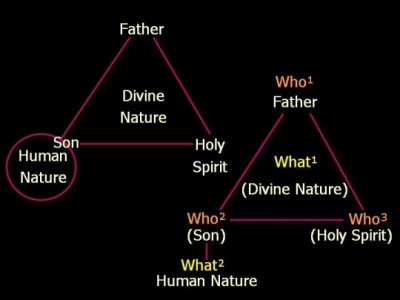
The Christian doctrine of the Trinity

How early is the doctrine of the divinity of Jesus?

When I answer this question, I only want to use the earliest, most reliable sources – so I can defend them on historical grounds using the standard rules of historiography.

The 4 sources that I would use are as follows:

  • The early creed in 1 Corinthians 15:3-8, and 1 Corinthians 1
  • A passage in Philippians 2
  • Two passages from Mark, the earliest gospel
  • A passage from Q, which is an early source of Matthew and Luke

So let’s see the passages.

1 Corinthians

I’ve written before about the early creed in 1 Corinthians 15:3-8, which skeptical scholars date to 1-3 years after the death of Jesus, for a variety of reasons I covered in the previous post. Here’s the creed which definitely makes Jesus out to be more than an ordinary man. Ordinary men don’t get resurrection bodies after they die.

Here’s the passage: (1 Cor 15:3-8)

3For what I received I passed on to you as of first importance: that Christ died for our sins according to the Scriptures,

4that he was buried, that he was raised on the third day according to the Scriptures,

5and that he appeared to Peter, and then to the Twelve.

6After that, he appeared to more than five hundred of the brothers at the same time, most of whom are still living, though some have fallen asleep.

7Then he appeared to James, then to all the apostles,

8and last of all he appeared to me also, as to one abnormally born.

Additionally, 1 Corinthians 1:21-25 talks about Jesus being “the power of God and the wisdom of God”. Paul is identifying Jesus with the divine.

21For since in the wisdom of God the world through its wisdom did not know him, God was pleased through the foolishness of what was preached to save those who believe.

22Jews demand miraculous signs and Greeks look for wisdom,

23but we preach Christ crucified: a stumbling block to Jews and foolishness to Gentiles,

24but to those whom God has called, both Jews and Greeks, Christ the power of God and the wisdom of God.

25For the foolishness of God is wiser than man’s wisdom, and the weakness of God is stronger than man’s strength.

But it gets even stronger! You all probably already know that the most important passages in the Old Testament for Jews is the famous “Shema“, which is found in Deuteronomy 6:4-9. The Shema is a strong statement of Jewish monotheism.

Here’s the passage:

4 Hear, O Israel: The LORD our God, the LORD is one.

5 Love the LORD your God with all your heart and with all your soul and with all your strength.

6 These commandments that I give you today are to be upon your hearts.

7 Impress them on your children. Talk about them when you sit at home and when you walk along the road, when you lie down and when you get up.

8 Tie them as symbols on your hands and bind them on your foreheads.

9 Write them on the doorframes of your houses and on your gates.

So how does Paul fit Jesus in with this strong statement of Jewish monotheism?

Paul alludes to the Shema in 1 Corinthians 8:4-6.

4So then, about eating food sacrificed to idols: We know that an idol is nothing at all in the world and that there is no God but one.

5For even if there are so-called gods, whether in heaven or on earth (as indeed there are many “gods” and many “lords”),

6yet for us there is but one God, the Father, from whom all things came and for whom we live; and there is but one Lord, Jesus Christ, through whom all things came and through whom we live.

Holy mackerel! How did that get in there? Paul is splitting the roles of God in the the Shema and identifying Jesus in one of the divine roles! Jesus is not an ordinary man. That passage “through whom all things came” foreshadows John identifying Jesus as “the Word of God”, which “became flesh and dwelt among us”. Holy snark – did you guys know that was all in here so early?

The date for 1 Corinthians is 55 AD. It should be noted that skeptical scholars like James Crossley accept these passages, and you can check it out in the debate audio yourself.

Philippians

Check out Philippians 2:5-11.

5Your attitude should be the same as that of Christ Jesus:

6Who, being in very nature God, did not consider equality with God something to be grasped,

7but made himself nothing, taking the very nature of a servant, being made in human likeness.

8And being found in appearance as a man, he humbled himself and became obedient to death— even death on a cross!

9Therefore God exalted him to the highest place and gave him the name that is above every name,

10that at the name of Jesus every knee should bow, in heaven and on earth and under the earth,

11and every tongue confess that Jesus Christ is Lord, to the glory of God the Father.

The date for Philippians is 60-61 AD. Still within the lifetime of the eyewitnesses, and written by an eyewitness who was in contact with the other eyewitnesses, like Peter and James, whom Paul spoke with numerous times on his journeys to Jerusalem.

Mark’s gospel

Mark’s gospel is the earliest and atheists like James Crossley date it to less than 40 AD, which is 10 years after the death of Jesus at most. When you read the gospel of Mark, you are getting the earliest and best information available about the historical Jesus, along with Paul’s epistles. So what does Mark say about Jesus? Is Jesus just a man, or is he something more?

Check out Mark 12:1-9:

1He then began to speak to them in parables: “A man planted a vineyard. He put a wall around it, dug a pit for the winepress and built a watchtower. Then he rented the vineyard to some farmers and went away on a journey.

2At harvest time he sent a servant to the tenants to collect from them some of the fruit of the vineyard.

3But they seized him, beat him and sent him away empty-handed.

4Then he sent another servant to them; they struck this man on the head and treated him shamefully.

5He sent still another, and that one they killed. He sent many others; some of them they beat, others they killed.

6“He had one left to send, a son, whom he loved. He sent him last of all, saying, ‘They will respect my son.’

7“But the tenants said to one another, ‘This is the heir. Come, let’s kill him, and the inheritance will be ours.’

8So they took him and killed him, and threw him out of the vineyard.

9“What then will the owner of the vineyard do? He will come and kill those tenants and give the vineyard to others.

And Mark 13:32, talking about the date of the final judgment.

32“No one knows about that day or hour, not even the angels in heaven, nor the Son, but only the Father.

And again, this passage is establishing a hierarchy such that Jesus is being exalted above all men and the angels, too. And the passage is embarrassing to the early church, because it makes Jesus look ignorant of something, so they would not have made this passage up. Jesus is not an ordinary man, he is above the angels – God’s unique Son.

The “Q” source for Matthew and Luke

Here’s Matthew 11:27, which is echoed in Luke 10:22:

27“All things have been committed to me by my Father. No one knows the Son except the Father, and no one knows the Father except the Son and those to whom the Son chooses to reveal him.

22“All things have been committed to me by my Father. No one knows who the Son is except the Father, and no one knows who the Father is except the Son and those to whom the Son chooses to reveal him.”

Since this passage is in both of Matthew and Luke, but not in Mark, scholars believe that it is in the earlier “Q” source used by both Matthew and Luke. Q predates both Matthew and Luke, and so it is also fairly early (maybe 67-68), although not as early as Mark and Paul. Bill Craig writes that this passage is also embarrassing because it says that no one knows Jesus.