An amazing, must-read article from Arthur C. Brooks, president of the American Enterprise Institute. He writes about the national debt problem.
Excerpt:
The practical answer to this problem involves common sense. What do most of America’s families do when they find they are overspending? They don’t send the kids out to get part-time jobs in order to increase family revenues–they cut back on their spending. Why? Because that’s what works to solve the problem.
The government can learn from families. In fact, the data show that when countries are trying to find their way out of a debt crisis, the more they rely on tax increases as opposed to spending cuts, the more likely they are to fail. My colleagues Kevin Hassett, Andrew Biggs, and Matt Jensen studied 21 developed countries that have attempted fiscal consolidation over the last 37 years. Some succeeded and returned to economic health; -others failed.
On average, failed attempts to close budget gaps relied 53 percent on tax increases and 47 percent on spending cuts. Successful consolidations averaged 85 percent spending cuts and 15 percent tax increases. Some of the most successful financial comebacks–like Finland’s in the late 1990s–involved more than 100 percent spending cuts, so that taxes could be lowered. The spending cuts by the successful countries centered on entitlements and government personnel.
Now let’s look at the moral argument against raising taxes. Why does the president want to increase America’s tax burden? You may think it’s just a way to increase revenues and reduce the deficit. But even the president knows he can’t solve the fiscal crisis by helping himself to bigger and bigger chunks of the income of America’s most successful people. Even if individuals earning more than $200,000 were taxed at a 100 percent marginal rate–and we confiscated their passports so they could not flee–the take would come to $1.27 trillion, or just 77 percent of this year’s deficit.
For the administration, it’s not about the money–as we have heard again and again, it’s about “fairness.” The president believes that we will be a better nation if we redistribute more money from those who have more to those who have less. How much more do we need to redistribute until our system is fair?
As you ponder this question, remember the facts: The wealthiest 5 percent of Americans already account for 59 percent of federal income taxes. Nearly half of our citizens pay no federal income taxes at all–yet two-thirds of us believe that everybody should at least pay something, even if just to remind ourselves that government isn’t free. The Tax Foundation reports that the percentage of Americans who are net takers from the tax system is nearing 70 percent.
Arthur C. Brooks is an expert in making moral arguments for the free market. He is a Christian, and has debated against Jim Wallis on Christianity and economics. I think we have to take his advice (elsewhere in the article) where
Solyndra, Inc. was supposed to have showcased the effectiveness of the Obama administration’s stimulus and green jobs initiatives, but instead it has become the center of congressional attention for waste, fraud and abuse of such programs.
According to a Feb. 17 letter signed by Energy and Commerce Committee Chairman Fred Upton, Michigan Republican, and Oversight Subcommittee Chairman Cliff Stearns, Florida Republican, to Energy Secretary Steven Chu, the Fremont, Calif.-based solar panel manufacturer should never have received a $535 million loan guarantee from the stimulus.*
The company became the first recipient of an Energy Department loan guarantee under the stimulus in March 2009, which was intended to “finance construction of the first phase of the company’s new manufacturing facility” for photovoltaic solar panels.
The Energy Department estimated in a March 20, 2009 press release that the loan guarantee would create 3,000 construction jobs and a further 1,000 jobs after the plant opened.
And President Barack Obama and Vice President Joseph Biden each personally showcased Solyndra as an example of how stimulus dollars were at work creating jobs, during appearances at the company over the course of the following year.
Biden personally announced the closure of Solyndra’s $535 million loan guarantee in a Sept. 9, 2009 speech, delivered via closed-circuit television, on the occasion of the groundbreaking of the plant.
The vice president justified the federal government’s investment in Solyndra in front of employees and other dignitaries, including Secretary Chu and former Calif. Gov. Arnold Schwartzenegger, saying the jobs the company intended to create would “serve as a foundation for a stronger American economy.”
“These jobs are the jobs that are going to define the 21st century that will allow America to compete and to lead like we did in the 20th century,” Biden said.
According to Biden’s speech, the $535 million loan guarantee was a smaller part of the $30 billion of stimulus money the administration planned to spend as part of its Green Jobs Initiative.
Obama made similar claims in a May 26, 2010 speech at the plant, but the 1,000 jobs he and Biden touted in their respective speeches failed to materialize.
Instead, Solyndra announced on Nov. 3 it planned to postpone expanding the plant, which put the taxpayers on the hook to the tune of $390.5 million taxpayers**, or 73 percent of the total loan guarantee, according to the Wall Street Journal.
It also announced that it no longer planned to hire the 1,000 workers that Obama and Biden had touted in their speeches and that it planned to close one of its older factories and planned to lay-off 135 temporary or contract workers and 40 full-time employees.
A closer look at the company shows it has never turned a profit since it was founded in 2005, according to its Securities and Exchange Commission (SEC) filings.
And Solyndra’s auditor declared that “the company has suffered recurring losses, negative cash flows since inception and has a net stockholders’ deficit that, among other factors, [that] raise substantial doubt about its ability to continue as a growing concern” in a March 2010 amendment to its SEC registration statement.
“While we understand the purpose of the Loan Guarantee Program is to help private companies engaging in clean energy products to obtain financing by providing loan guarantees, subsequent events raise questions about Solyndra was the right candidate to receive a loan guarantee in excess of half a billion dollars,” Upton and Stearns wrote.
A June 2010 Wall Street Journal report indicating that Solyndra’s majority owner, Oklahoma billionaire George Kaiser, was a major fundraiser for the 2008 Obama-Biden campaign has stimulus opponents such as Citizens Against Government Waste crying foul.
What did we get for spending nearly a trillion dollars on stimulus? We got 9% unemployment. But Obama’s political cronies got a big raise.
Economics in One Lesson
Perhaps it is time to review Henry Hazlitt’s Economics in One Lesson, chapter 4, entitled “Public Works Mean Taxes”.
Excerpt:
Therefore, for every public job created by the bridge project a private job has been destroyed somewhere else. We can see the men employed on the bridge. We can watch them at work. The employment argument of the government spenders becomes vivid, and probably for most people convincing. But there are other things that we do not see, because, alas, they have never been permitted to come into existence. They are the jobs destroyed by the $10 million taken from the taxpayers. All that has happened, at best, is that there has been a diversion of jobs because of the project. More bridge builders; fewer automobile workers, television technicians, clothing workers, farmers.
And consider Chapter 5 as well, entitled “Taxes Discourage Production”.
In our modern world there is never the same percentage of income tax levied on everybody. The great burden of income taxes is imposed on a minor percentage of the nation’s income; and these income taxes have to be supplemented by taxes of other kinds. These taxes inevitably affect the actions and incentives of those from whom they are taken. When a corporation loses a hundred cents of every dollar it loses, and is permitted to keep only fifty-two cents of every dollar it gains, and when it cannot adequately offset its years of losses against its years of gains, its policies are affected. It does not expand its operations, or it expands only those attended with a minimum of risk. People who recognize this situation are deterred from starting new enterprises. Thus old employers do not give more employment, or not as much more as they might have; and others decide not to become employers at all. Improved machinery and better-equipped factories come into existence much more slowly than they otherwise would. The result in the long run is that consumers are prevented from getting better and cheaper products to the extent that they otherwise would, and that real wages are held down, compared with what they might have been.
There is a similar effect when personal incomes are taxed 50, 60 or 70 percent. People begin to ask themselves why they should work six, eight or nine months of the entire year for the government, and only six, four or three months for themselves and their families. If they lose the whole dollar when they lose, but can keep only a fraction of it when they win, they decide that it is foolish to take risks with their capital. In addition, the capital available for risk-taking itself shrinks enormously. It is being taxed away before it can be accumulated. In brief, capital to provide new private jobs is first prevented from coming into existence, and the part that does come into existence is then discouraged from starting new enterprises. The government spenders create the very problem of unemployment that they profess to solve.
George W. Bush cut taxes in his first term and created 1 million NEW JOBS. Obama transfered BILLIONS from the private sector to the public sector, where government waste is rampant. Government spending is a job killer. Obama might be a nice man, but he is just wrong on economics and business. What we should have done is elected someone who doesn’t repeat the mistakes made in other countries, like in Japan where massive government spending failed to stimulate the economy. And we shouldn’t enact single-payer health care, because it’s not working in Canada. The wait times to see doctors in Canada are increasing. We should only imitate the successes of other countries, like the free trade agreements in Chile or the flat tax in Lithuania or the private retirement accounts in Chile or the low tax rates of Hong Kong. We have to decide, as a nation, whether we want jobs and prosperity, or rhetoric and feelings.
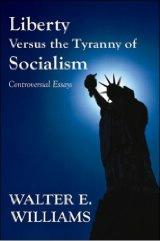
Ms. Bachmann is best known for her conservative activism on issues like abortion, but what I want to talk about today is economics. When I ask who she reads on the subject, she responds that she admires the late Milton Friedman as well as Thomas Sowell and Walter Williams. “I’m also an Art Laffer fiend—we’re very close,” she adds. “And [Ludwig] von Mises. I love von Mises,” getting excited and rattling off some of his classics like “Human Action” and “Bureaucracy.” “When I go on vacation and I lay on the beach, I bring von Mises.”
Picture of a book Michele Bachmann reads on the hot beach
The Wall Street Journal explains more:
As we rush from her first-floor digs in the Cannon House Office Building to the House floor so she can vote, I ask for her explanation of the 2008 financial meltdown. “There were a lot of bad actors involved, but it started with the Community Reinvestment Act under Jimmy Carter and then the enhanced amendments that Bill Clinton made to force, in effect, banks to make loans to people who lacked creditworthiness. If you want to come down to a bottom line of ‘How did we get in the mess?’ I think it was a reduction in standards.”
She continues: “Nobody wanted to say, ‘No.’ The implicit and then the explicit guarantees of Fannie Mae and Freddie Mac were sopping up the losses. Being on the Financial Services Committee, I can assure you, all roads lead to Freddie and Fannie.”
Photo of a book Michelle Bachman reads on the hot beach
The Wall Street Journal explains more:
Ms. Bachmann voted against the Troubled Asset Relief Program (TARP) “both times,” she boasts, and she has no regrets since Congress “just gave the Treasury a $700 billion blank check.” She complains that no one bothered to ask about the constitutionality of these extraordinary interventions into the financial markets. “During a recent hearing I asked Secretary [Timothy] Geithner three times where the constitution authorized the Treasury’s actions, and his response was, ‘Well, Congress passed the law.'”
Insufficient focus on constitutional limits to federal power is a Bachmann pet peeve. “It’s like when you come up to a stop sign and you’re driving. Some people have it in their mind that the stop sign is optional. The Constitution is government’s stop sign. It says, you—the three branches of government—can go so far and no farther. With TARP, the government blew through the Constitutional stop sign and decided ‘Whatever it takes, that’s what we’re going to do.'”
Does this mean she would have favored allowing the banks to fail? “I would have. People think when you have a, quote, ‘bank failure,’ that that is the end of the bank. And it isn’t necessarily. A normal way that the American free market system has worked is that we have a process of unwinding. It’s called bankruptcy. It doesn’t mean, necessarily, that the industry is eclipsed or that it’s gone. Often times, the phoenix rises out of the ashes.”
Pics of a book Michelle Bauchman reads on the hot beach
The Wall Street Journal explains more:
“For one, I believe my policies prior to ’08 would have been much different from [President Bush’s]. I wouldn’t have spent so much money,” she says, pointing in particular at the Department of Education and the Medicare prescription drug bill. “I would have advocated for greater reductions in the corporate tax rate and reductions in the capital gains rate—even more so than what the president did.” Mr. Bush cut the capital gains rate to 15% from 20% in 2003.
She’s also no fan of the Federal Reserve’s decade-long policy of flooding the U.S. economy with cheap money. “I love a lowered interest rate like anyone else. But clearly the Fed has had competing goals and objectives. One is the soundness of money and then the other is jobs. The two different objectives are hard to reconcile. What has gotten us into deep trouble and has people so perturbed is the debasing of the currency.”
That’s why, if she were president, she wouldn’t renominate Ben Bernanke as Fed chairman: “I think that it’s very important to demonstrate to the American people that the Federal Reserve will have a new sheriff” to keep the dollar strong and stable.
[…]Ms. Bachmann attributes many of her views, especially on economics, to her middle-class upbringing in 1960s Iowa and Minnesota. She talks with almost religious fervor about the virtues of living frugally, working hard and long hours, and avoiding debt. When she was growing up, she recalls admiringly, Iowa dairy farmers worked from 5 a.m. to 10 p.m.
Her political opponents on the left portray her as a “she-devil,” in her words, a caricature at odds with her life accomplishments. She’s a mother of five, and she and her husband helped raise 23 teenage foster children in their home, as many as four at a time. They succeeded in getting all 23 through high school and later founded a charter school.
Michele Bachman is actually willing to pass a lower corporate tax rate than even Tim Pawlenty’s 15% rate:
If she were to take her shot, she’d run on an economic package reminiscent of Jack Kemp, the late congressman who championed supply-side economics and was the GOP vice presidential nominee in 1996. “In my perfect world,” she explains, “we’d take the 35% corporate tax rate down to nine so that we’re the most competitive in the industrialized world. Zero out capital gains. Zero out the alternative minimum tax. Zero out the death tax.”
The 3.8 million-word U.S. tax code may be irreparable, she says, a view she’s held since working as a tax attorney at the IRS 20 years ago. “I love the FAIR tax. If we were starting over from scratch, I would favor a national sales tax.” But she’s not a sponsor of the FAIR tax bill because she fears that enacting it won’t end the income tax, and “we would end up with a dual tax, a national sales tax and an income tax.”
Her main goal is to get tax rates down with a broad-based income tax that everyone pays and that “gets rid of all the deductions.” A system in which 47% of Americans don’t pay any tax is ruinous for a democracy, she says, “because there is no tie to the government benefits that people demand. I think everyone should have to pay something.”
On the stump she emphasizes an “America-centered energy policy” based on “drilling and mining for our rich resources here.” And she believes that repealing ObamaCare is a precondition to restoring a prosperous economy.
[…]Ms. Bachmann also voted for the Republican Study Committee budget that cuts deeper and faster than even Mr. Ryan would. “We do have an obligation with Social Security and Medicare, and we have to recognize that” for those who are already retired, she says. But after that, it’s Katy bar the door: “Everything else is expendable to bring spending down,” and she’d ax “whole departments” including the Department of Education.



 WINTERY KNIGHT