
Tag Archives: Atheism

Pew survey: evangelical Christians least likely to believe superstitious nonsense

The Pew Research survey is here.

They are trying to see which groups believe in superstitions and new age mysticism.

Here are the parts that I found interesting:

Click for full image.

Click for full image.

Notice the numbers for Republicans vs Democrats, conservatives vs. liberals, and church-attending vs non church-attending. The least superstitious people are conservative evangelical Republicans, while the most superstitious people are Democrat liberals who don’t attend church. I think there is something to be learned from that. It’s consistent with the results of a Gallup survey that showed that evangelical Christians are the most rational people on the planet.

Here’s the Wall Street Journal article about the Gallup survey entitled “Look Who’s Irrational Now“.

Excerpt:

The reality is that the New Atheist campaign, by discouraging religion, won’t create a new group of intelligent, skeptical, enlightened beings. Far from it: It might actually encourage new levels of mass superstition. And that’s not a conclusion to take on faith — it’s what the empirical data tell us.

“What Americans Really Believe,” a comprehensive new study released by Baylor University yesterday, shows that traditional Christian religion greatly decreases belief in everything from the efficacy of palm readers to the usefulness of astrology. It also shows that the irreligious and the members of more liberal Protestant denominations, far from being resistant to superstition, tend to be much more likely to believe in the paranormal and in pseudoscience than evangelical Christians.

The Gallup Organization, under contract to Baylor’s Institute for Studies of Religion, asked American adults a series of questions to gauge credulity.

[…]The answers were added up to create an index of belief in occult and the paranormal. While 31% of people who never worship expressed strong belief in these things, only 8% of people who attend a house of worship more than once a week did.

Even among Christians, there were disparities. While 36% of those belonging to the United Church of Christ, Sen. Barack Obama’s former denomination, expressed strong beliefs in the paranormal, only 14% of those belonging to the Assemblies of God, Sarah Palin’s former denomination, did. In fact, the more traditional and evangelical the respondent, the less likely he was to believe in, for instance, the possibility of communicating with people who are dead.

When I think of the “weird” things that evangelical Christians believe, I think of the origin of the universe, the cosmic fine-tuning, the origin of life and the sudden origin of animal body plans in the Cambrian. All of this is superstition to an atheist, and yet all of it is rooted in mainstream science. Not just that, but they’ve grown stronger as science has progressed. I can accept the fact that an atheist may be ignorant of the science that defeats his atheism, but that’s something that has to be remedied with more studying of the evidence, not less. If you generate a worldview by 1) your desire to dispense with moral judgment and/or 2) your desire to prefer Star Trek and Star Wars to mainstream science, then of course you are going to have an irrational worldview. I’m not saying that all atheists do this, surely someone like Peter Millican does not. But for rank-and-file Dawkins acolytes, I think this is pretty accurate, and it’s why we get the survey results that we do.

Is Sam Harris successful at rationally grounding objective moral values and duties?

I just wanted to put out a few snips from this layperson-level article on the Reasonable Faith web site. The article is about atheist scholar Sam Harris, and his attempt to provide a basis for morality on atheism.

Here’s the Harris project:

The question then is, what is the best foundation for the existence of objective moral values and duties? What grounds them? What makes certain actions good or evil, right or wrong? Traditionally, God has been the highest Good (summum bonum) and His commandments constitutive of our moral duties. But if God does not exist, what foundation remains for objective moral values and duties?

Dr. Craig is able to show why Harris’ attempt to ground the objective moral value of humans in “human flourishing” fails, by using the law of identity to show that Harris’ rule doesn’t account for the possibility that those who do evil could possibly flourish and be happy. If Harris is right that objective morality is identical to human flourishing, then it cannot even be possible that this be the case. This can be a bit confusing to non-philosophers, though, so I’ll focus on Dr. Craig’s argument against Harris’ attempt to ground objective moral duties.

Dr. Craig writes:

That takes us to a second question: Does atheism provide a sound foundation for objective moral duties? Duty has to do with moral obligation and prohibition, what I ought or ought not to do. Here reviewers of The Moral Landscape have been merciless in pounding Harris’ attempt to provide a naturalistic account of moral obligation. Two problems stand out.

First: Natural science tells us only what is, not what ought to be, the case. As philosopher Jerry Fodor has written, “Science is about facts, not norms; it might tell us how we are, but it wouldn’t tell us what is wrong with how we are.” In particular it cannot tell us that we have a moral obligation to take actions that are conducive to human flourishing.

So if there is no God, what foundation remains for objective moral duties? On the naturalistic view, human beings are just animals, and animals have no moral obligations to one another. When a lion kills a zebra, it kills the zebra, but it does not murder the zebra. When a great white shark forcibly copulates with a female, it forcibly copulates with her but it does not rape her — for there is no moral dimension to these actions. They are neither prohibited nor obligatory.

So if God does not exist, why think we have any moral obligations to do anything? Who or what imposes these moral duties on us? Where do they come from? It is hard to see why they would be anything more than a subjective impression ingrained into us by societal and parental conditioning.

So we might feel morally obligated to do something, maybe what our herd expects of us in this time and place we live in. But on atheism those feelings are arbitrary. After all, societies have evolved where feelings of obligation are felt by people to perform suicide bombings against civilians. On atheism, those feelings are as valid and grounded as any other “duties” because they emerge from the same process in other times and places. Obligations change between time and place – they are not objectively real. But that means that our moral duties are not objective, they are arbitrary – if atheism is true. The same “socio-biological evolution” is generating opposite moral duties in different times and places. This is not “objective”.

And the second objection is even more lethal:

Second: “ought” implies “can.” A person is not morally responsible for an action he is unable to avoid. For example, if somebody shoves you into another person, you are not to blame for bumping into this person. You had no choice. But Harris believes that all of our actions are causally determined and that there is no free will. Harris rejects not only libertarian accounts of freedom but also compatibilistic accounts of freedom. But if there is no free will, no one is morally responsible for anything. In the end, Harris admits this, though it’s tucked away in his endnotes. Moral responsibility, he says, “is a social construct,” not an objective reality: “in neuroscientific terms no person is more or less responsible than any other” for the actions they perform. His thoroughgoing determinism spells the end of any hope or possibility of objective moral duties on his worldview because we have no control over what we do.

Harris recognizes that “determinism really does threaten free will and responsibility as we intuitively understand them.” But not to worry! “The illusion of free will is itself an illusion.” The point, I take it, is that we do not really have the illusion of free will. Not only is such a claim patently false phenomenologically, as any of us can attest, but it is also irrelevant. The fact remains that whether we experience the illusion of free will or not, on Harris’ view we are thoroughly determined in all that we think and do and can therefore have no moral responsibilities.

On Harris’ view, human beings are computers made out of meat. But if you cannot freely make moral choices, then you cannot choose to perform moral duties or not. What is amazing to me is why he wants to deny free will in the first place. He is surely very well aware of his own experience of free will, and his own consciousness, for that matter. Before we even start to look at evidences like the origin of the universe, the fine-tuning, the origin of life, the Cambrian explosion, etc. we have evidence within ourselves that naturalism is false. I mean – has no one ever loved this man enough to point out the self-deception to him? I know people want to believe that no one will hold them accountable for their selfish, immoral actions, but surely some logical contradictions are so obvious that the atheist has to step back from it and say “enough! I am not going to commit intellectual suicide”.

Not just aborting babies with Down’s syndrome – Dawkins supports infanticide

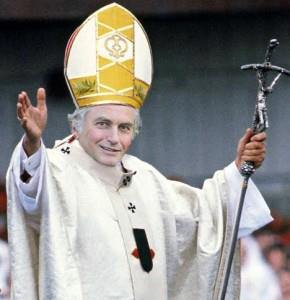
Listen up you atheists, the Pope has spoken

The UK Telegraph reports on the latest Dawkins blunder.

Excerpt:

Richard Dawkins, the atheist writer, has claimed it is “immoral” to allow unborn babies with Down’s syndrome to live.

The Oxford professor posted a message on Twitter saying would-be parents who learn their child has the condition have an ethical responsibility to “abort it and try again”.

His comments were dismissed by charities and prompted fury online from opponents but he insisted his stance was “very civilised” because foetuses do not have “human feelings”.

He claimed that the important question in the abortion debate is not “is it ‘human’?” but “can it suffer?” and insisted that people have no right to object to abortion if they eat meat.

[…]Anti-abortion campaigners describe the practice of aborting foetuses on physical grounds as a form of “eugenics”.

But Prof Dawkins strongly defended its as simply standard practice and ridiculed his critics as portraying him as “a horrid monster”.

The row erupted during a debate on Twitter about calls for further changes to Ireland’s abortion laws in the wake of the case of a rape victim who was forced to carry the child until she could deliver by caesarean section.

One participant said they would suffer a real ethical dilemma if they were carrying a child with the condition.

Prof Dawkins replied: “Abort it and try again. It would be immoral to bring it into the world if you have the choice.”

Another pointed to recent figures asking: “994 human beings with Down’s Syndrome deliberately killed before birth in England and Wales in 2012 – is that civilised?”

He responded: “Yes, it is very civilised. These are foetuses, diagnosed before they have human feelings.”

I’m really not sure why anyone is surprised by this. Dawkins is an atheist and as such, he has no rational grounding for objective moral values and duties. He also does not have any rational grounding for free will, which is required for making moral choices and bearing moral responsibility. To an atheist, what people ought to do is decided by conventions and customs that vary by time and place. There is no objective moral standard for the way humans ought to be. Dawkins is an evolutionist. He believes in survival of the fittest. The unfit should die – if necessary, directly at the hands of the fit.

Listen to what he writes in his book:

In a universe of blind physical forces and genetic replication, some people are going to get hurt, other people are going to get lucky, and you won’t find any rhyme or reason in it, or any justice. The universe that we observe has precisely the properties we should expect if there is, at bottom, no design, no purpose, no evil and no good, nothing but blind, pitiless indifference… DNA neither knows nor cares. DNA just is. And we dance to its music.

–Richard Dawkins, (River Out of Eden: A Darwinian View of Life (1995))

I’m not misrepresenting him – the man is a very consistent atheist, and there is no room for morality on atheism. It’s not rationally grounded.

Here’s how far Dawkins takes his view that there is no evil and no good:

Richard Dawkins explains morality on atheism

But wait!

He goes even further than mere abortion – he also supports infanticide:

Richard Dawkins even advocates for adultery. So I’m really not sure why people are so fascinated by atheism, when this is the kind of person it produces.I am not saying that every atheist is going to treat morality as all personal preference and social convention. Just the ones who really understand it, and are consistent with it. Real atheists don’t have any rational grounding for morality in their worldview. This man has 1 million twitter followers. He is their spokesman because he reflects their views.

And finally, in the past, Dawkins has expressed that his goal is to destroy Christianity. Is this the same kind of destruction of Christianity that his fellow atheist Stalin wanted? Given Dawkins views on murdering innocent unborn and born children, I think we can infer what he means by “destroy Christianity”.

By the way, Nick Peters has also written about Dawkins’ comments, and I stole the image of Pope Dawkins from his post.