
New study: 1 in 8 divorces is caused by student loan debt

I like to make plans in advance and calculate everything out before I try to do anything. This is the curse of being a software engineer. We’re taught to take a test-first approach to design. So, when I think about marriage, I naturally think about what tests marriage is supposed to pass, and work backwards from there to requirements for each of the spouses.

Here’s some research from CNBC that might help young people to avoid a divorce, if they respect the research in their choices.

Excerpt:

When it comes to student loan debt, “for richer, for poorer” doesn’t quite cut it.

In general, finances are the leading cause of stress in a relationship, according to a study by SunTrust Bank, but student debt takes a particularly hard toll on a marriage.

More than a third of borrowers said college loans and other money factors contributed to their divorce, according to a recent report from Student Loan Hero, a website for managing education debt.

In fact, 13 percent of divorcees blame student loans specifically for ending their relationship, the report found. Student Loan Hero surveyed more than 800 divorced adults in June.

Here is a link to the full study from Student Loan Hero.

I think in general, you can’t just do whatever you want before marrying and jump into it unprepared. Marriage involves specific requirements in order to work, such as being faithful to your spouse, and buying things that you need for the marriage enterprise, like a home, and baby stuff. It doesn’t make any sense to say “I want to get married” and then not prepare for marriage by being careful about preparing for the behaviors marriage that requires of you. Being debt-free is one of those behaviors that marriage requires of you.

So how can we be debt-free, so that the marriage will be stable? Well, one way to be debt-free is to find a way to learn skills that will allow you to get a job without going to college, like being a self-taught software engineer. One of my friends actually did that, and now he’s with a very good software company as a remote worker. But if you’re going to go to college, you can avoid debt by studying something that will get you a high-paying job when you graduate.

This 2017 article from Harvard Business Review is interesting.

It says:

Examining 46,934 resumes shared on Glassdoor by people who graduated between 2010 and 2017, the researchers looked at each person’s college major and their post-college jobs in the five years after graduation. They then estimated the median pay for each of those jobs (also using Glassdoor data) for employees with five years of experience or less. Their key finding: “Many college majors that lead to high-paying roles in tech and engineering are male dominated, while majors that lead to lower-paying roles in social sciences and liberal arts tend to be female dominated, placing men in higher-paying career pathways, on average.”

Here’s the plot, and you can click it to expand it:

Starting salaries by major, broken out by gender
Median salaries by major, broken out by gender – don’t study things at the bottom!

As you can see from the graph, it’s especially important to share the message about choosing a major, salaries and student loan debt with WOMEN, because as the graph shows, they tend to choose the wrong majors, if the goal is to pay off student loans and avoid divorce. Everyone who wants marriage to go smoothly needs to choose majors that are near the top of the graph, like nursing, chemical engineering, computer science, or mechanical engineering. It doesn’t make sense to go to college if you aren’t going to graduate in one of these high-paying fields.

As you might expect from the graph, women hold the majority of student loan debt, according to the Boston Globe, and that’s because women tend to choose majors that don’t result in good-paying jobs. And we already saw how this becomes a risk factor for divorce.

Student loans delay marriage and children

Another interesting piece of data, reported by The Consumerist, is that people with student loans tend to delay marriage, which means the couple has fewer children:

As consumers navigate life’s financial journey, they are faced with major financial milestones, like buying a home. But student loans are also delaying consumers from reaching these goals.

Survey respondents report delaying homeownership (23 percent), buying or leasing a car (23 percent), having children (10 percent) and getting married (9 percent) because of their student loan burdens.

So, it’s not just that there is an increased risk of divorce from student loans, but there’s also fewer children, which means a diminished legacy. I can’t speak for how others would see this, but for myself, I want to pass on my beliefs to as many effective, influential Christian children as I can.

Anyway, I feel obligated to post a relevant Dave Ramsey video, just to remind everyone that stewardship of money is a Christian virtue, and that being forgiven by Jesus for your sins doesn’t automatically make you good with money. It takes planning and stewardship.

This one from 2014: (H/T Robb)


When I was in high school, I was far more interested in becoming an English teacher than I was in becoming a software engineer. It was my Dad who overruled my choice of college major when I was still in high school. He had me take a first-year English course at a local university. When I saw how politicized and useless it was (they were studying all sorts of politically correct postmodern relativist stuff, instead of the Great Works, and they weren’t trying to learn any wisdom from any of it), I chose computer science. I did what was likely to avoid divorce, and likely to support having many children.

Report: Pinterest demotes and/or censors pro-life, conservative, and Christian content

Pinterest censors Christians, conservatives, and pro-lifers
Report: Pinterest censors Christians, conservatives, and pro-lifers

Well, Project Veritas has done it again! This time, they made contact with a whistleblower inside Pinterest, who produced documentation showing how Pinterest censors content that is opposed to the Democrat party. It’s not just fringe content: they’re censoring Ben Shapiro, Live Action, Bible verses, and undercover videos of Planned Parenthood organ harvesting operations.

Here’s the press release from Project Veritas:

Project Veritas has received and published documents from an insider at Pinterest. The documents, which include product code, Slack messages, and internal policies, reveal terms and websites that Pinterest apparently censors.

In an interview, the Pinterest insider who leaked the documents explains how the company censors pro-life and Christian content on the website.

Live Action, PJ Media, TeaParty.org all blocked:

“I was pretty surprised,” said the Pinterest insider in an interview, when s/he discovered that pro-life group LiveAction.org was added to a “porn domain block list.” The insider explained that the “block list” was intended to be  a collection of pornographic websites that Pinterest uses in order ensure that pornography cannot be posted. LiveAction.org is not a pornographic website, instead it is the web domain of a prominent pro-life advocacy group.

The insider explained that websites on a “domain block list” cannot be linked in posts made by users. While investigating, Project Veritas tried to post the LiveAction.org link on Pinterest and failed to do so, receiving an error message that read, “Sorry! Your request could not be completed.” Project Veritas reviewed the list of websites from the “porn domain block list” and was able to confirm that along with LiveAction.org, websites like zerohedge.com, pjmedia.com, teaparty.org and other various conservative websites were also listed. The majority of the document lists pornographic websites.

They actually suspended Live Action’s account after the report of bias came out. Project Veritas revealed that the blocking of Live Action was requested by employee Megan McClellan. Her name was on the block request.

Notice that these sites that were blocked are all critical of the Democrat party.

Let’s see some more evidence from the report.

Bible verses, Easter are marked “Brand Unsafe”:

Project Veritas also received a large text file titled “Sensitive Terms List.” The insider said the file contains search terms that Pinterest considers “sensitive,” and that the terms are modified in search results according to different value assignments. According to the insider and supporting documents, terms are assigned an “abusive,” “sensitive,” and “brand unsafe” value.

Some of the actions that can be taken on search terms include: blocking auto-complete results in the search bar, providing an advisory message when a term is searched for, removing the term from recommended or trending feeds, and blocking email or push notifications. Search results are also modified based on the values that are applied to terms.

Project Veritas reviewed the “Sensitive Terms List” and discovered that Christianity-related terms like “christian easter” and “bible verses” were marked as “brand unsafe.” The insider explained to Project Veritas in an interview that such terms are removed from auto-complete search results.

For me, the most interesting part was the censoring of the Planned Parenthood undercover videos. These videos were investigated and found to be undoctored. So there is nothing unreliable about them. But they are harmful to the Democrat party, so maybe Pinterest thought that they could help Democrats by altering their products and services to censor anti-Democrat content.

The censoring of Harvard-Law graduate Ben Shapiro was also interesting, as you can see him on all sorts of television shows on any given night, from far-left CNN to centrist Fox News, and everything in between. Why would Pinterest classify a well-educated, popular and respected conservative pundit as worthy of censorship? One of the documents released by Project Veritas cited a 26-year-old Pinterest employee calling this famous Orthodox Jew a “white supremacist”, despite the fact that he was the number one target of white supremacist threats in a prior year.

Newsbusters notes:

Jewish conservative Ben Shapiro has been labelled by Pinterest Public Policy/Social Impact employee Ifeoma Ozuma as a “white supremacist.” According to the anonymous whistleblower, this took place during an internal war room discussion where “policymakers were making decisions about content.” Any mention of Shapiro discussing Islam was added to the sensitive terms watchlist.

I looked up this employee on LinkedIn, and she didn’t seem to be very well informed about anything. Maybe Pinterest just hires unqualified people, solely based on their political allegiance to the Democrat party?

But this employee is just one example of a company-wide bias against Christians and conservatives. I was trying to guess why they have this bias. Maybe it’s because they are allied with the Democrat party, so they just censor content that makes Democrats look bad?

They certainly have no bias against content that supports the Democrat party on their platform.

Newsbusters noted:

When researchers tried to pin images from pro-abortion giant Planned Parenthood, they faced no such censorship. Similarly, while they faced no problem searching for “Muslim” or “Jewish” content, the search bar included no references to “Christian” imagery. In fact users had to use codes to work around the system so they could try to share Christian content.

[…]Curiously, where people had to workaround the programming of the autocomplete bar to find Christian content, searching “atheist” immediately led to jokes and memes at the expense of religious believers, especially Christians. This writer immediately came across an image of a crucifix made entirely out of the word “lies” and one featuring an image of Mary holding the infant Christ captioned “If there has been DNA testing 2000 years ago, we wouldn’t have this fairytale today.”

But Pinterest isn’t the only one accused of censorship.

This blog has suffered from all sorts of censorship since Trump won the 2016 election. Our Google traffic referrals are down over 90%, reducing our daily page visits by about 66%. Our Twitter followers has increased by 100 in the past year, but in previous years, it went up about 2000 per year. Are big tech companies that intent on punishing Christian conservatives? If they are hell-bent on censoring Christians and conservatives, then maybe we should have a federal investigation into their business to see if they’ve broken any laws.

William Lane Craig lectures on the evidence for the resurrection of Jesus

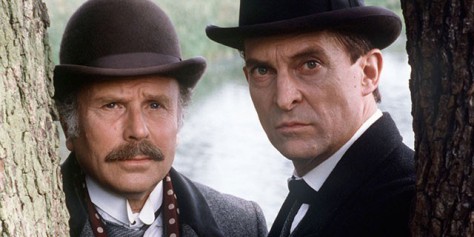
Sherlock Holmes and John Watson: let's take a look at the facts
Sherlock Holmes and John Watson: let’s take a look at the facts

Here is Dr. William Lane Craig giving a long-form argument for the historical event of the resurrection of Jesus, and taking questions from the audience.

The speaker introduction goes for 6 minutes, then Dr. Craig speaks for 35 minutes, then it’s a period of questions and answers with the audience. The total length is 93 minutes, so quite a long period of Q&A. The questions in the Q&A period are quite good.

Introduction:

  • Many people who are willing to accept God’s existence are not willing to accept the God of Christianity
  • Christians need to be ready to show that Jesus rose from the dead as a historical event
  • Private faith is fine for individuals, but when dealing with the public you have to have evidence
  • When making the case, you cannot assume that your audience accepts the Bible as inerrant
  • You must use the New Testament like any other ancient historical document
  • Most historians, Christian and not, accept the basic minimal facts supporting the resurrection of Jesus

Fact #1: the burial of Jesus following his crucifixion

  • Fact #1 is supported by the early creed found in Paul’s first letter to the Corinthians (1 Cor 15)
  • Fact #1 is supported by the early Passion narrative which was a source for Mark’s gospel
  • Fact #1 passes the criterion of enemy attestation, since it praises one of the Sanhedrin
  • Fact #1 is not opposed by any competing burial narratives

Fact #2: on the Sunday following his crucifixion, Jesus’ tomb was found empty by some women

  • Fact #2 is supported by the early Passion narrative which was a source for Mark’s gospel
  • Fact #2 is implied by the early creed found in Paul’s first letter to the Corinthians (1 Cor 15)
  • Fact #2 is simple and lacks legendary embellishment, which argues for an early dating
  • Fact #2 passes the criterion of embarrassment, because it has female, not male, witnesses
  • Fact #2 passes the criterion of enemy attestation, since it is reported by the Jewish leaders

Fact #3: Jesus appeared to various people in various circumstances after his death

  • Fact #3 is supported by the early creed found in Paul’s first letter to the Corinthians (1 Cor 15)
  • Fact #3 is supported by multiple, independent reports of the events from all four gospels
  • Fact #3 explains other historical facts, like the conversion of Jesus’ skeptical brother James

Fact #4: the earliest Christians proclaimed their belief in the resurrection of Jesus

  • Fact #4 explains why the earliest Christians continued to identify Jesus as the Messiah
  • Fact #4 explains why the earliest Christians were suddenly so unconcerned about being killed

Dr. Craig then asks which hypothesis explains all four of these facts. He surveys a number of naturalistic hypotheses, such as the hallucination theory or various conspiracy theories. All of these theories deny one or more of the minimal facts that have been established and accepted by the broad spectrum of historians. In order to reject the resurrection hypothesis, a skeptic would have to deny one of the four facts or propose an explanation that explains those facts better than the resurrection hypothesis.

I listened to the Q&A period while doing housekeeping and I heard lots of good questions. Dr. Craig gives very long answers to the questions. One person asked why we should trust the claim that the Jewish leaders really did say that the disciples stole the body. Another one asked why we should take the resurrection as proof that Jesus was divine. Another asks about the earthquake in Matthewand whether it is intended to be historical or apocalyptic imagery. Dr. Craig is also asked about the Jewish scholar Geza Vermes, and how many of the minimal facts he accepts. Another questioner asked about the ascension.

If you are looking for a good book to read on this topic, the best introductory book on the resurrection is “The Case for the Resurrection of Jesus” and the best comprehensive book is “The Resurrection of Jesus“.