
Have you ever read the Bible in order to find out what God thinks?

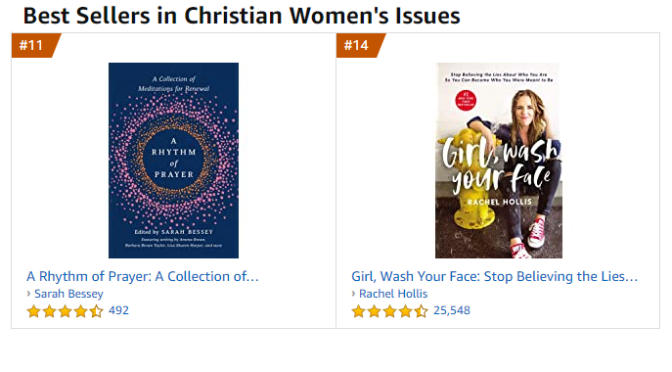
Two authors came to my attention while browsing tweets this week. The first is Rachel Hollis, who presents herself as a Christian but who isn’t (see below). The second is by Sarah Bessey, whose book contains a chapter where the author urges God to help her to hate a certain group of people solely because of their skin color. What is causing people who claim to be Christian to buy these books?

I found this list of progressive Christians on Alisa Childers’ blog. Childers is very reliable, having written a detail-filled book about attempts by progressives to distort the gospel.

She writes this about Jen Hatmaker, a progressive:

Since its launch in 2017, Hatmaker’s podcast has been a veritable “who’s who” of progressive Christian leaders such as Sarah Bessey, Rachel Held Evans, Pete Enns, Nadia Bolz-Weber, Richard Rohr, Jeff Chu, Mike McHargue (“Science Mike”), Barbara Brown Taylor, Austin Channing Brown, Lisa Sharon Harper, Rachel Hollis, and Glennon Doyle.

I want to talk about Sarah Bessey and Rachel Hollis. Are these authors working from within a Christian worldview?

Hollis:

Anne Kennedy was bemused to find Rachel Hollis’ best-selling book, Girl, Wash Your Face, in the Christian living section of the bookstore next to the Bibles. Hollis describes herself as a Christian but her self-help advice is anything but Christian, Kennedy believes.

“She does mention Christianity and her faith in Jesus but in terms of the book itself, there’s really nothing that would distinguish it from any other kind of self-help thing that’s on the market and there’s lots of them. She quotes some Bible verses but she doesn’t really rely on a Christian worldview at all to motivate behavior,” Kennedy… said on a recent Christian Research Institute podcast.

[…]“I don’t think she’s a Christian at all,” she commented.

[…]“Her worldview is in no way representative of classical Christianity. She’s inclusive, affirming of LGBT, all religions are fine, doesn’t have any even vague understanding of what redemption and the cross and faith in Jesus were to actually look like. She invokes the name of Jesus periodically, she quotes some verses but nothing that she says at all represents a Christian worldview. So it is interesting to me that she is marketed as a Christian.”

And the Bessey devotion book has this:

“Dear God,

Please help me to hate wh1te people. Or at least to want to hate them. At least, I want to stop caring about them, individually and collectively. I want to stop caring about their misguided, racist souls, to stop believing that they can be better, that they can stop being racist.”

[…]”Lord, if it be your will, harden my heart. Stop me from striving to see the best in people. Stop me from being hopeful that White people can do and be better.

[…]”Let me see them as hopelessly unrepentant, reprobate bigots who have blasphemed the Holy Spirit and who need to be handed over to the evil one.”

Why are these books so popular? I think that the problem is that we’re not reading our Bibles to get the author’s intended meaning. Instead, we’re selecting the parts of the Bible that affirm what makes us feel good and look good to others.

Consider this post from Alan Shlemon of Stand to Reason:

You never open the email, skip the first three pages, and read just one line on the fourth page. No one, in fact, takes that approach with their mail. By skipping the context of the email and ignoring the flow of thought, you wouldn’t know what that line meant on the fourth page. If it’s wrong to read your friend’s mail that way, then why do we read God’s mail that way?

We open the letter to the Philippians, skip the first three chapters, and read verse 13: “I can do all things through Christ who strengthens me.” Message received. Close the letter. We’re done here!

We even plaster that verse on a mug, publicizing our mistake. I call this “Coffee Cup Christianity,” and it’s killing our biblical literacy. We’ve become accustomed to seeing isolated Bible verses and presume we know their meaning. Too often, however, we merely insert our own meaning into a Bible verse, thereby overwriting what God was trying to tell us.

[…]Sadly, Coffee Cup Christianity violates one of the most basic and well-known principles of interpretation: context. It’s a principle known not only among Bible readers. Many people in our culture understand it. Tragically, we apply it when reading man’s word but neglect it when reading God’s word. Coffee Cup Christianity leads to three dangerous problems.

Here are the problems:

  • Coffee Cup Christianity overwrites God’s intended meaning with your own
  • Coffee Cup Christianity leads to missing important lessons from God
  • Coffee Cup Christianity models bad interpretive methods

So, here’s what I recommend. My Bible study partner and I are going through New Testament letters. Our goal is to find out what God wants us to be doing by reading the advice given to early church Christians. We’re trying to learn how to recognize life situations that God has an interest in, and make decisions that respect his values and goals. We want to put ourselves second in those situations. And we’re holding each other accountable to the author’s intent in those books of the Bible.

For each book, we always pick out a good commentary. For 1 Peter, we’re using Joel B. Green’s “1 Peter“, which we got free from Logos Bible study. We read the full chapter, then the commentary, prepare our points in advance. Then meet to compare. We always pray first, and often afterwards. Here’s what we did for 1 Peter 1.

So, that’s our approach. If your Bible study just has people showing up without reading anything, without preparing anything, and then twisting the text to make them feel good or look good, then I think you need to get out of that Bible study. Do better.

Robert Gagnon debates gay activist Jayne Ozanne on Bible vs homosexuality

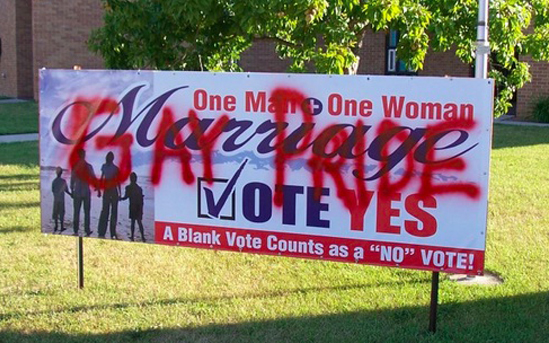
Gay activist vandalizes pro-marriage sign

I am tempted to say that this is the best podcast I have ever heard on the Unbelievable show. Do anything you have to do in order to listen to this podcast.

Details:

Prof Robert Gagnon has become a well-known voice advocating the traditional biblical view on sexuality. In a highly charged show he debates the scriptural issues on sexuality with Jayne Ozanne, the director of Accepting Evangelicals who came out as gay earlier this year.

The MP3 file is here.

If you can only listen for 15 minutes, then start at 49 minutes in and listen from there.

The following summary is rated MUP for made-up paraphrase. Reader discretion is advised.

Summary:
Intro:

  • Speaker introductions
  • Gagnon: scholars who support gay marriage agree that the Bible doesn’t support it
  • Gagnon: scholars who support gay marriage agree Jesus taught male-female marriage
  • Ozanne: I went to the hospital because I was sick from trying to suppress my gay desires
  • Ozanne: Doctors told me that I would die if I didn’t act on my gay desires
  • Ozanne: I decided to reinterpret the Bible to fit with my gay desires
  • Ozanne: According to my new interpretation, Jesus actually supports my gay desires

Segment 1: Genesis

  • Ozanne: In Genesis the Bible says that Adam needs a woman to complete him
  • Ozanne: I reinterpret this to mean that Adam needed a “complementarian human being”
  • Ozanne: Genesis doesn’t say whether Eve was complemented by Adam in that chapter
  • Ozanne: It’s not critical that men are complemented by women, a man could complement a man
  • Ozanne: Genesis 2 doesn’t talk about children, it’s all about adult needs from a relationship
  • Gagnon: Genesis 2 has never been interpreted that way in all of history
  • Gagnon: Genesis 2 language specifically implies a human being who is opposite/different
  • Gagnon: Genesis 2 language translates to complement or counterpart
  • Gagnon: Genesis as a whole teaches that the sexuality is for male and female natures
  • Gagnon: The extraction of something from the man that is given to the woman is complementarian
  • Ozanne: I think that people can be complementary outside of male-female Genesis language
  • Ozanne: I don’t want to discuss specific words and texts and Greek meanings
  • Gagnon: the text has always been read and interpreted to support male/female complementarity
  • Gagnon: the male-female nature argument is made because the two natures are complementary
  • Ozanne: the text was interpreted by patriarchal males who treated women like property, it’s biased
  • Ozanne: what is important to me is how Christ interprets Genesis (?? how does she know that?)
  • Ozanne: I am passionate about my interpretation of Scripture which supports my gay desires
  • Gagnon: just because a person is passionate about their interpretation it doesn’t make it right
  • Gagnon: I am not arguing for the male-female view based on passion, but on scholarship, evidence and history
  • Ozanne: both sides are equally passionate about their interpretations (?? so both are equally warranted?)
  • Ozanne: the real question is why God “allowed” two different interpretations of Scripture

Segment 2: Is homosexuality a sin?

  • Gagnon: Jesus affirmed traditional sexual morality, which forbids homosexuality
  • Gagnon: Jesus teaches that marriage is male-female, and limited to two people
  • Gagnon: No one in history has interpreted the Bible to say that homosexuality was not immoral
  • Ozanne: Jesus came to bring life, and that means he supports homosexuality
  • Ozanne: I was dying, and embracing my gay desires allowed me to live, so Jesus approves of me
  • Ozanne: God says “I am who I am” and that means he approves of me doing whatever I want
  • Ozanne: There is an imperative to be who I am, and that means embracing my gay desires
  • Gagnon: Jesus argued that the twoness of the sexual bond is based on the twoness of the sexes
  • Gagnon: Jesus did not come to gratify people’s innate desires, he called people to repent of sin
  • Gagnon: Jesus did reach out to sinners but he never condoned the sins they committed
  • Gagnon: Jesus’ outreach to tax collectors collecting too much and sexual sinners is the same: STOP SINNING
  • Ozanne: I don’t think that Romans 1 is talking about homosexuality
  • Ozanne: I think it’s talking about sexual addiction, not loving, committed gay relationships
  • Ozanne: Paul was condemning pederasty in Romans 1, not loving, long-term, consensual sexual relationships between gay adults
  • Gagnon: nothing in the passage limits the condemnation to pederasty
  • Gagnon: the passage was never interpreted to be limited to pederasty in history
  • Gagnon: rabbis and church fathers knew about committed two-adult same-sex relationships, and said they were wrong
  • Gagnon: the argument for marriage is based on the broad two-nature argument, with no exceptions
  • Gagnon: the condemnation is not limited to exploitative / coercive / lustful / uncommitted relationships
  • Gagnon: even pro-gay scholars agree the passage cannot be interpreted Ozanne’s way (he names two)

Segment 3: The showdown (49:00)

  • Ozanne: I don’t care how many pages people have written on this
  • Ozanne: God says that “the wisdom of the wise I will frustrate” so you can’t use scholars, even pro-gay scholars, to argue against my passionate interpretation
  • Ozanne: I am not interested in the text or history or scholarship or even pro-gay scholars who agree with you
  • Ozanne: what decides the issue for me is my mystical feelings about God’s love which makes my sexual desires moral
  • Ozanne: you are certain that this is wrong, but your view does not “give life” to people
  • Ozanne: your scholarship and historical analysis is “a message of death” that causes teenagers to commit suicide (= you are evil and a meany, Robert)
  • Ozanne: “I pray for you and your soul” (= opposing me will land you in Hell) and “I hope that listeners will listen with their hearts” (?? instead of their minds?)
  • Ozanne: you can prove anything you want with research, even two mutually exclusive conclusions, so you shouldn’t rely on scholarship and research since it could be used to prove my view as well
  • Ozanne: instead of relying on research, you should rely on your heart and your feelings about God’s love to decide what the Bible teaches about sexual morality
  • Gagnon: you are distorting the gospel in order to make your case
  • Gagnon: attacking my “certainty” is an ad hominem attack to cover your dismissmal of the scholarship and history
  • Gagnon: you distort the gospel to make it seem like Christ just wants us to get what we want, when we want it, with who we want it with
  • Gagnon: Christ calls us to take up our cross, to lose our lives and to deny ourselves
  • Gagnon: you have a notion of what “fullness of life” is, but it’s not reflective of the gospel
  • Gagnon: Paul’s life was much more troubling than yours, mine or anyone else around here
  • Gagnon: Paul was beaten, whipped, stoned, poorly sheltered, poorly clothed, poorly fed, shipwrecked, and anxious for his churches
  • Gagnon: on your view, he should have been miserable and angry with God all the time
  • Gagnon: but instead Paul was constantly thankful and rejoicing to be able to suffer with Jesus and look forward to the resurrection
  • Gagnon: I have suffered too, but the suffering we go through never provides us with a license to violate the commandments of God
  • Ozanne: “the ultimate thing is what people feel God has called them to”
  • Ozanne: My goal right now is to tell young people that homosexuality is fine so they don’t commit suicide
  • Ozanne: the view that homosexuality is wrong is “evil and misguided”
  • Gagnon: the greater rates of harm in the gay community are intrinsic to homosexual unions, not caused by external disapproval of homosexuality

Segment 4: Concluding statements

  • Gagnon: gay male relationships on average have more sex partners and more STDs
  • Gagnon: female relationships on average have shorter-length relationships and more mental issues
  • Gagnon: the greater rates of harm are because there is no complementarity / balance in the relationships
  • Gagnon: everyone has some disappointment or suffering in their lives that hurts them, and that they are tempted to break the rules to fix, but we should not break the rules in order to be happy
  • Ozanne: both sides are passionate, so no one can be right, and evidence proves nothing
  • Ozanne: only feelings about “what God is doing” can allow us to decide what counts as sin or not
  • Ozanne: the main thing that is at stake here is to make people like us, not to decide what the Bible says about sin
  • Ozanne: my message to people is to do whatever you want, and ignore mean people who don’t affirm you
  • Ozanne: we should be more opposed to mean people who make non-Christians feel unloved than about doing what the Bible says

New study: homeschool produces healthier, happier and more virtuous kids

So, I’ve noticed that lately, many Christian, conservatives express Christian and conservative convictions when they are in a Christian, conservative audience. But when they are in the company of secularists, feminists and socialists, they keep quiet. In this post, I’ll explain why I think that using evidence from studies helps us to be bolder, then we’ll see a study about homeschooling.

Well, I can only explain why I am so inclined to fight. Just because I have an alias online, that doesn’t mean that I don’t fight for what I believe in under my real name in person. I take every opportunity to push for authentic Christian (not woke) truth claims and values in person. It’s especially important for Christians and conservatives of color to do this, in the current culture.

But how can you fight with people? I recently faced off against a bully in my company at a large company meeting. I had heard that this guy was a yeller, and had previously yelled at other employees. And that he was extremely progressive, and in a liberal echo chamber where he never heard any intellectual conservatives or Christians. I attacked him on two issues: socialized medicine and gun control. By using studies to explain how I changed my mind, I was able to escape his caricature of Christian conservatives as stupid fundamentalists who don’t think critically.

With that said, here is a report from the Wall Street Journal about a new study that you might be able to use to be bold with people who oppose homeschooling. (Full text of the article here)

It says:

Elizabeth Bartholet, a Harvard Law School professor, sparked debate in May 2020 by calling for a presumptive ban on home schooling. Home-schooled children, Ms. Bartholet asserted, are less likely than their school-attending peers to receive a “meaningful education” and more likely to be subject to physical abuse or indoctrination by “extreme religious ideologues.”

[…]Ms. Bartholet criticized home schooling for both diminishing children’s educational attainment and undermining their physical and mental health. One of us (Ms. Chen) recently examined how school type affected adolescents on a range of long-term outcomes into young adulthood, including educational attainment, mental health and social integration. Looking at data on more than 12,000 children of nurses (mostly white and mostly well-off) surveyed from 1999 to 2010, we estimated the effects of school type independently from other factors such as socioeconomic status, race and region.

To the extent that college graduation is a fair proxy for having received a “meaningful education,” Ms. Bartholet was right to point to a disadvantage for home schooling: The home-schoolers in our sample were 23% less likely to attend college than public-school students. This may reflect lower attainment in learning or less interest in attending college, but it may also be a result of admissions policies at some U.S. universities that disadvantage home-schooled students.

Parents want their kids to be well-educated and professionally successful, but they also want them to be healthy, happy and virtuous. By this broader measure of success, home schooling has advantages. Among the students we examined, home-schoolers were 33% more likely to volunteer, 31% more forgiving and 51% more likely to attend religious services in young adulthood than those who attended public school. (“Levels of forgiveness” were measured on a self-reported four-point scale, which other research has shown predicts some subsequent health and well-being outcomes.) The difference in religious participation has public-health implications, since those who attend services regularly have substantially lower risks of alcohol and drug abuse, depression and suicide. They also have a lower risk of premature death for any reason than those who never attend.

The picture of the home-schooled student that emerges from the data doesn’t resemble the socially awkward and ignorant stereotype to which Ms. Bartholet and others appeal. Rather, home-schooled children generally develop into well-adjusted, responsible and socially engaged young adults.

The libertarians at the Foundation for Economic Education (FEE) reached out to the researchers, and they got more information about that concern about lower rates of university attendance:

I reached out to Case and Chen for additional comments on their study’s findings, including how they think the homeschooling data and outcomes might have changed since 2010, when their data set ended.

“We are also glad to see that some colleges, including some top-tier colleges, have become more flexible in their admission policies for homeschoolers over the past years,” Chen responded.

Indeed, more colleges and universities have implemented clearer guidelines and policies for homeschooled students in recent years, and many are now eager to attract homeschooled applicants. In 2015, Business Insider noted that homeschooling is the “new path to Harvard,” and in 2018 the university profiled several of its homeschooled students.

The researchers also suspect that the well-being gap between homeschoolers and public school students has widened over the past decade, with homeschoolers faring even better.

“For instance, social media apps have come to smartphones over the past few years, leading to their widespread adoption by teenagers and even younger children,” Chen told me this week. “Some prior studies suggested that such increasing smartphone use may have contributed to the recent huge spikes in adolescent depression, anxiety, and school loneliness. Cyberbullying, sexting and ‘phubbing’ have also become more common in children’s daily lives, especially in school settings. We might expect that these issues may be less common among homeschoolers than their public school peers.”

I think if you are going to do homeschooling, it will have to be very practical. I think the world is too dangerous right now. We need to focus on learning practical skills that pay. So, don’t focus on things classics and Latin early on. I love the classics, but only the classics that teach something practical should be relied on. Instead, math and computer science should be the most important subjects, along with economics. Or choose the hard sciences like biology, chemistry, physics, etc. Get your STEM degrees, get your private sector work experience, then homeschool your kids with a focus on STEM.

I do think that after you get a job, then you should go back and work on the classics, literature and philosophy. But the financial situation we are in – with so much government debt, so many people in debt, and so many people on welfare – suggests that we should make sure that we are independent of the government and debt-free as quickly as possible.

(Image source: NHERI.org)