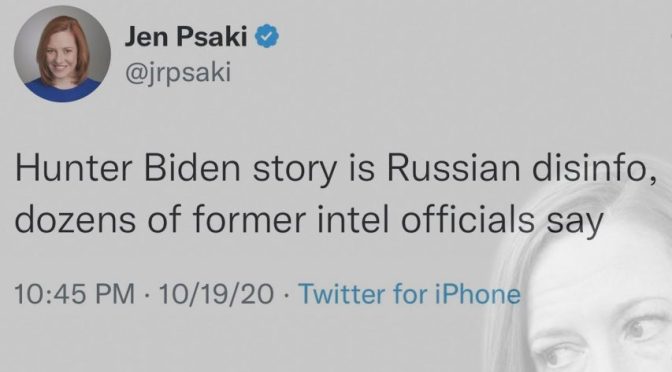
CBS News admits Hunter Biden laptop is authentic 2 years after New York Post broke the story

Before the 2020 election happened, the New York Post broke a story about Hunter Biden’s laptop that cast candidate Joe Biden in an extremely negative light. Biden supporters like Jen Psaki claimed that the laptop was Russian disinformation. Dozens of former intel officials agreed. And Twitter and Facebook both shut the story down, claiming that the laptop could not possible be authentic.

Well, guess what? CBS News is now reporting that Hunter Biden’s laptop WAS authentic… 5 minutes after the mid-term elections. I guess the Democrat elites really don’t want Joe Biden running against Ron DeSantis in 2024.

New York Post reports:

It only took them 769 days.

CBS News said Monday that it confirmed the authenticity of data from Hunter Biden’s former laptop — more than two years after The Post first revealed its contents ahead of the 2020 presidential election — as the first son’s lawyer complained that he didn’t “consent” to the release.

The laptop links President Biden to his son and brother James Biden’s overseas influence-peddling, but high-ranking former US intelligence officials initially claimed it was likely Russian disinformation and the story was censored by Twitter and Facebook before the election.

And what about the 10% of Hunter’s business deals for his father? FACT:

Herridge did not specifically say which documents from the laptop were determined to be authenticated, including an infamous May 2017 email that described a 10% cut for the “big guy” as part of her reporting — but said that two sources confirmed to her that Joe Biden was the person identified as the “big guy.”

Ukraine:

The first document reported by The Post from Hunter Biden’s laptop described Joe Biden’s attendance at a 2015 dinner at DC’s Cafe Milano to which his son invited an array of associates — including a representative of the Ukrainian gas company Burisma, which paid Hunter Biden up to $1 million pear year while his father led the Obama administration’s Ukraine policy.

Russia:

Documents on the laptop show Hunter Biden also invited to that dinner a trio of Kazakhstani businessmen and Russian billionaire Yelena Baturina and her husband, ex-Moscow mayor Yury Luzhkov.

Baturina allegedly paid $3.5 million in 2014 to a firm associated with Hunter Biden and remains one of just a handful of Russian billionaires not to face US sanctions in response to this year’s Russian invasion of Ukraine.

China:

Online business records also indicate Hunter still holds a 10% stake in BHR Partners, a Chinese state-backed private equity firm that manages $2.1 billion in assets and takes a prominent role in acquiring overseas assets.

Hunter Biden co-founded BHR Partners in 2013 within weeks of joining then-Vice President Joe Biden aboard Air Force Two on an official trip to Beijing, according to the Wall Street Journal. Hunter introduced his dad to incoming BHR CEO Jonathan Li in a hotel lobby and Joe Biden later wrote college recommendation letters for Li’s children.

In the separate Chinese venture that made mention of the “big guy” getting a cut, Hunter and James Biden earned $4.8 million from CEFC China Energy — an arm of Beijing’s foreign-influence “Belt and Road” initiative — in 2017 and 2018, according to the Washington Post.

I remember watching 60 Minutes “journalist” Lesley Stahl telling her viewers that the Hunter Biden laptop “can’t be verified”. I wish more people would understand that if you are relying on the corporate news media to report the news accurately, then you’re going to be disappointed. They work for the Democrats. Especially right before a big election.
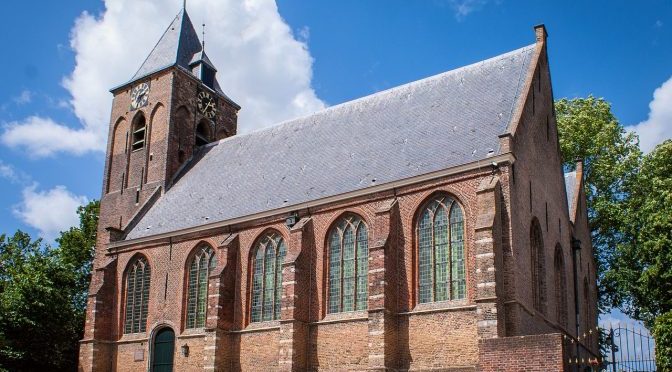
My new pastor had a slide about the Candace Cameron Bure story in his sermon yesterday

So, I’m trying out a new church that has held apologetics conferences in back to back years, featuring real old-Earth evidential Christian apologists! Yesterday was my first time going to the service. I was impressed. Not only did the pastor have slides about current events, but he actually quoted from books by non-Christians: Andrew Doyle and Douglas Murray.

I took a picture of the slide and then found the story in The Federalist.

Here’s what it says:

Candace Cameron Bure, the Hallmark Channel queen who rose to fame as D.J. Tanner on “Full House,” just wants to make Christmas movies that spread the joy and wholesomeness of Christmas and of her Christian faith. To that end, she recently moved from Hallmark to Great American Family, a new, smaller channel “that is positioning itself as the God-and-country alternative for holiday entertainment.”

For the crime of wanting to make a product that aligns better with her Christian faith, Bure is getting slammed as a bigot. But instead of apologizing for her convictions, Bure’s words and actions indicate she’s more interested in spreading the love of Christ than appeasing her Hollywood haters.

This is the part my new pastor mentioned:

Prompted by a question about whether same-sex relationships will be central features of her films, Bure said in her interview with the Journal, “I think that Great American Family will keep traditional marriage at the core.”

For that line, Bure was chastised by former Hallmark colleagues and other fellow stars from JoJo Siwa to Maren Morris, Chrishell Stause, and even Bure’s former “Full House” costar Jodie Sweetin, who commented her support for Siwa’s post slamming Bure.

I thought this was interesting, because Rose and I just did an episode of Knight and Rose Show to help Christians get better at defending traditional marriage, and it’s already one of our most popular episodes.

(If you like audio podcasts better than YouTube, you can find everything here)

In our episode, we covered a whole bunch of research showing why a male-female household is better for raising children. And we answered a bunch of objections against traditional marriage. Instead of arguing from any religious premises, we argued from natural law and peer-reviewed research. If you missed the episode, download it and have a listen. It was only 40 minutes long.

Church

As everyone knows, I’m very picky about churches. I refuse to attend churches that aren’t doing anything to oppose feminism, socialism and secularism. Many people in my life pick on me for not going to church, but when I tell them why, they don’t listen. Instead of trying to find me a church that has demonstrated ability in the areas where Christianity is under attack, they just say “go to church”. One woman even admitted to me that the reason I have to go to church is so that I’ll get married, because I am supposedly depriving some woman by not handing her the results of my education, career and finances.

What I want to say to the “go to church” people is that it’s not up to me to go to churches that aren’t doing anything other than pressuring men to marry women. The churches have to be doing something about the things that men care about. Then the men will show up to the churches. It’s supple-side economics. Innovation comes from the supplier, not the consumer. Every time people say “go to church” without solving the problem, it just makes me go to church less.

What actually worked was when my  practical, ex-military pro-life advocate friend Nathan sent me a screenshot of the apologetics conference, with the heads of two of my favorite Christian apologists in it. I know that one of those speakers is publicly conservative, and the other is secretly conservative. And both of them are evidentialists. I decided to give this church a try, because they hosted two apologetics conferences. I also found out from the pastor that they refused to mask up or lock down during COVID. The pastor is clearly opposed to “social justice”. He must have mentioned that phrase a dozen times in the sermon. I told a few of the guys in my office about the speakers at the apologetics conference, and they wanted to try church too.

Sadly, the church has very loud music. But they do have free ear plugs! So, I just used ear plugs to keep the music out. I was even able to sing one of the hymns, because it was classical. I love classical hymns. Everything new sucks! Still, it’s the sermons that matter to me, so I’m going to keep going. So far, so good. I’m not picky about music, I just care that the pastor fights where the secular left is pushing against Christianity.

Is the Bible’s definition of faith opposed to logic and evidence?

Probably the biggest misconception that I encounter when defending the faith is the mistaken notion of what faith is. Today we are going to get to the bottom of what the Bible says faith is, once and for all. This post will be useful to Christians and atheists, alike.

What is faith according to the Bible?

I am going to reference this article from apologist Greg Koukl of Stand to Reason in my explanation.

Koukl cites three Biblical examples to support the idea that faith is not blind leap-of-faith wishing, but is based on evidence.

  1. Moses went out into the wilderness and he had that first encounter with the burning bush, and God gave him the directive to go back to Egypt and let his people go. Moses said, Yeah, right. What’s going to happen when they say, why should we believe you, Moses?God said, See that staff? Throw it down.Moses threw it down and it turned into a serpent.God said, See that serpent? Pick it up.And he picked it up and it turned back into a staff.God said, Now you take that and do that before the Jewish people and you do that before Pharaoh. And you do this number with the hail, and the frogs, and turning the Nile River into blood. You put the sun out. You do a bunch of other tricks to get their attention.And then comes this phrase: “So that they might know that there is a God in Israel.”
  2. [I]n Mark 2 you see Jesus preaching in a house, and you know the story where they take the roof off and let the paralytic down through the roof. Jesus said, “Your sins are forgiven.” And people get bugged because how can anyone forgive sins but God alone?Jesus understood what they were thinking and He said this: What’s harder to say, your sins are forgiven, or to rise, take up your pallet and go home?Now, I’ll tell you what would be harder for me to say : Arise, take up your pallet and go home. I can walk into any Bible study and say your sins are forgiven and nobody is going to know if I know what I am talking about or not. But if I lay hands on somebody in a wheelchair and I say, Take up your wheelchair and go home, and they sit there, I look pretty dumb because everyone knows nothing happened.But Jesus adds this. He says, “In order that you may know that the Son of Man has the power and authority to forgive sins, I say to you, arise, take up your pallet and go home.” And he got up and he got out. Notice the phrase “In order that you may know”. Same message, right?
  3. Move over to the Book of Acts. First sermon after Pentecost. Peter was up in front of this massive crowd. He was talking about the resurrection to which he was an eyewitness. He talked about fulfilled prophecy. He talked about the miraculous tongues and the miraculous manifestation of being able to speak in a language you don’t know. Do you think this is physical evidence to those people? I think so. Pretty powerful.Peter tells them, These men are not drunk as it seems, but rather this is a fulfillment of prophecy. David spoke of this. Jesus got out of the grave, and we saw him, and we proclaim this to you.Do you know how he ends his sermon? It’s really great. Acts 2:36. I’ve been a Christian 20 years and I didn’t see this until about a year ago. This is for all of those who think that if you can know it for sure, you can’t exercise faith in it. Here is what Peter said. Acts 2:36, “Therefore let all the house of Israel know for certain that God has made him both Lord and Christ, Messiah, this Jesus whom you crucified.” There it is again. “Know for certain.”

What is faith according to Bible-based theologians?

I am going to reference this article from theologian C. Michael Patton of Parchment and Pen in my explanation.

Patton explains that according to Reformation (conservative, Bible-based) theologians, faith has 3 parts:

  1. notitia – This is the basic informational foundation of our faith. It is best expressed by the word content. Faith, according to the Reformers must have content. You cannot have faith in nothing. There must be some referential propositional truth to which the faith points. The proposition “Christ rose from the grave,” for example, is a necessary information base that Christians must have.
  2. assensus – This is the assent or confidence that we have that the notitia is correct… This involves evidence which leads to the conviction of the truthfulness of the proposition… This involves intellectual assent and persuasion based upon critical thought… assensus… says, “I am persuaded to believe that Christ rose from the grave.”
  3. fiducia – This is the “resting” in the information based upon a conviction of its truthfulness. Fiducia is best expressed by the English word “trust.”… Fiducia is the personal subjective act of the will to take the final step. It is important to note that while fiducia goes beyond or transcends the intellect, it is built upon its foundation.

So, Biblical faith is really trust. Trust(3) can only occur after intellectual assent(2), based on evidence and thought. Intellectual assent(2) can only occur after the propositional information(1) is known.

The church today accepts 1 and 3, but denies 2. I call this “fideism” or “blind faith”. Ironically, activist atheists, (the New Atheists), also believe that faith is blind. The postmodern “emergent church” denies 1 and 2. A person could accept 1 and 2 but deny 3 by not re-prioritizing their life based on what they know to be true.

How do beliefs form, according to Christian philosophers?

I am going to reference a portion of chapter 3 of J.P. Moreland’s “Love Your God With All Your Mind” (i.e. – LYGWYM).

J.P. Moreland explains how beliefs form and how you can change them.

  1. Today, people are inclined to think that the sincerity and fervency of one’s beliefs are more important than the content… Nothing could be further from the truth… As far as reality is concerned, what matters is not whether I like a belief or how sincere I am in believing it but whether or not the belief is true. I am responsible for what I believe and, I might add, for what I refuse to believe because the content of what I do or do not believe makes a tremendous difference to what I become and how I act.
  2. A belief’s strength is the degree to which you are convinced the belief is true. As you gain ,evidence and support for a belief, its strength grows for you… The more certain you are of a belief… the more you rely on it as a basis for action.

But the most important point of the article is that your beliefs are not under the control of your will.

…Scripture holds us responsible for our beliefs since it commands us to embrace certain beliefs and warns us of the consequences of accepting other beliefs. On the other hand, experience teaches us that we cannot choose or change our beliefs by direct effort.

For example, if someone offered you $10,000 to believe right now that a pink elephant was sitting next to you, you could not really choose to believe this… If I want to change my beliefs about something, I can embark on a course of study in which I choose to think regularly about certain things, read certain pieces of evidence and argument, and try to find problems with evidence raised against the belief in question.

…by choosing to undertake a course of study… I can put myself in a position to undergo a change in… my beliefs… And… my character and behavior… will be transformed by these belief changes.

I think definition of faith is important, because atheists seemed to want to substitute their own definition of faith as blind belief for this Biblical definition, but there is no evidence for their view that faith is belief without evidence. I think this might be another case of projection by atheists. Blind faith is how they arrive at their views, so they are trying to push it onto us. But the Bible is clearly opposed to it.

Positive arguments for Christian theism