Is the Bible’s definition of faith opposed to logic and evidence?

Probably the biggest misconception that I encounter when defending the faith is the mistaken notion of what faith is. Today we are going to get to the bottom of what the Bible says faith is, once and for all. This post will be useful to Christians and atheists, alike.

What is faith according to the Bible?

I am going to reference this article from apologist Greg Koukl of Stand to Reason in my explanation.

Koukl cites three Biblical examples to support the idea that faith is not blind leap-of-faith wishing, but is based on evidence.

  1. Moses went out into the wilderness and he had that first encounter with the burning bush, and God gave him the directive to go back to Egypt and let his people go. Moses said, Yeah, right. What’s going to happen when they say, why should we believe you, Moses?God said, See that staff? Throw it down.Moses threw it down and it turned into a serpent.God said, See that serpent? Pick it up.And he picked it up and it turned back into a staff.God said, Now you take that and do that before the Jewish people and you do that before Pharaoh. And you do this number with the hail, and the frogs, and turning the Nile River into blood. You put the sun out. You do a bunch of other tricks to get their attention.And then comes this phrase: “So that they might know that there is a God in Israel.”
  2. [I]n Mark 2 you see Jesus preaching in a house, and you know the story where they take the roof off and let the paralytic down through the roof. Jesus said, “Your sins are forgiven.” And people get bugged because how can anyone forgive sins but God alone?Jesus understood what they were thinking and He said this: What’s harder to say, your sins are forgiven, or to rise, take up your pallet and go home?Now, I’ll tell you what would be harder for me to say : Arise, take up your pallet and go home. I can walk into any Bible study and say your sins are forgiven and nobody is going to know if I know what I am talking about or not. But if I lay hands on somebody in a wheelchair and I say, Take up your wheelchair and go home, and they sit there, I look pretty dumb because everyone knows nothing happened.But Jesus adds this. He says, “In order that you may know that the Son of Man has the power and authority to forgive sins, I say to you, arise, take up your pallet and go home.” And he got up and he got out. Notice the phrase “In order that you may know”. Same message, right?
  3. Move over to the Book of Acts. First sermon after Pentecost. Peter was up in front of this massive crowd. He was talking about the resurrection to which he was an eyewitness. He talked about fulfilled prophecy. He talked about the miraculous tongues and the miraculous manifestation of being able to speak in a language you don’t know. Do you think this is physical evidence to those people? I think so. Pretty powerful.Peter tells them, These men are not drunk as it seems, but rather this is a fulfillment of prophecy. David spoke of this. Jesus got out of the grave, and we saw him, and we proclaim this to you.Do you know how he ends his sermon? It’s really great. Acts 2:36. I’ve been a Christian 20 years and I didn’t see this until about a year ago. This is for all of those who think that if you can know it for sure, you can’t exercise faith in it. Here is what Peter said. Acts 2:36, “Therefore let all the house of Israel know for certain that God has made him both Lord and Christ, Messiah, this Jesus whom you crucified.” There it is again. “Know for certain.”

What is faith according to Bible-based theologians?

I am going to reference this article from theologian C. Michael Patton of Parchment and Pen in my explanation.

Patton explains that according to Reformation (conservative, Bible-based) theologians, faith has 3 parts:

  1. notitia – This is the basic informational foundation of our faith. It is best expressed by the word content. Faith, according to the Reformers must have content. You cannot have faith in nothing. There must be some referential propositional truth to which the faith points. The proposition “Christ rose from the grave,” for example, is a necessary information base that Christians must have.
  2. assensus – This is the assent or confidence that we have that the notitia is correct… This involves evidence which leads to the conviction of the truthfulness of the proposition… This involves intellectual assent and persuasion based upon critical thought… assensus… says, “I am persuaded to believe that Christ rose from the grave.”
  3. fiducia – This is the “resting” in the information based upon a conviction of its truthfulness. Fiducia is best expressed by the English word “trust.”… Fiducia is the personal subjective act of the will to take the final step. It is important to note that while fiducia goes beyond or transcends the intellect, it is built upon its foundation.

So, Biblical faith is really trust. Trust(3) can only occur after intellectual assent(2), based on evidence and thought. Intellectual assent(2) can only occur after the propositional information(1) is known.

The church today accepts 1 and 3, but denies 2. I call this “fideism” or “blind faith”. Ironically, activist atheists, (the New Atheists), also believe that faith is blind. The postmodern “emergent church” denies 1 and 2. A person could accept 1 and 2 but deny 3 by not re-prioritizing their life based on what they know to be true.

How do beliefs form, according to Christian philosophers?

I am going to reference a portion of chapter 3 of J.P. Moreland’s “Love Your God With All Your Mind” (i.e. – LYGWYM).

J.P. Moreland explains how beliefs form and how you can change them.

  1. Today, people are inclined to think that the sincerity and fervency of one’s beliefs are more important than the content… Nothing could be further from the truth… As far as reality is concerned, what matters is not whether I like a belief or how sincere I am in believing it but whether or not the belief is true. I am responsible for what I believe and, I might add, for what I refuse to believe because the content of what I do or do not believe makes a tremendous difference to what I become and how I act.
  2. A belief’s strength is the degree to which you are convinced the belief is true. As you gain ,evidence and support for a belief, its strength grows for you… The more certain you are of a belief… the more you rely on it as a basis for action.

But the most important point of the article is that your beliefs are not under the control of your will.

…Scripture holds us responsible for our beliefs since it commands us to embrace certain beliefs and warns us of the consequences of accepting other beliefs. On the other hand, experience teaches us that we cannot choose or change our beliefs by direct effort.

For example, if someone offered you $10,000 to believe right now that a pink elephant was sitting next to you, you could not really choose to believe this… If I want to change my beliefs about something, I can embark on a course of study in which I choose to think regularly about certain things, read certain pieces of evidence and argument, and try to find problems with evidence raised against the belief in question.

…by choosing to undertake a course of study… I can put myself in a position to undergo a change in… my beliefs… And… my character and behavior… will be transformed by these belief changes.

I think definition of faith is important, because atheists seemed to want to substitute their own definition of faith as blind belief for this Biblical definition, but there is no evidence for their view that faith is belief without evidence. I think this might be another case of projection by atheists. Blind faith is how they arrive at their views, so they are trying to push it onto us. But the Bible is clearly opposed to it.
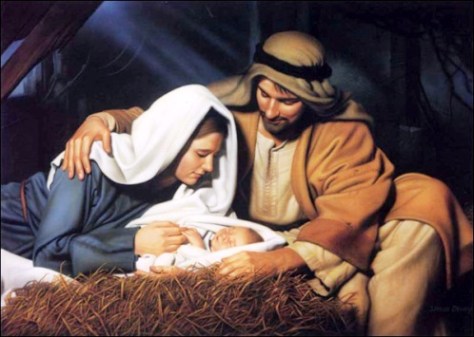
What is the meaning and significance of Christmas for Christians?

It’s the time of year when we explain what Christianity is about.

God exists

Basically, we know from a variety of scientific arguments that the universe was created and fine-tuned for life by an intelligent agent that existed causally prior to the beginning of the universe, because this agent brought the universe into being. Our purpose as humans is to enter into a two-way loving relationship with this Creator/Designer of the universe. This is the only way that we can ultimately be happy and fulfilled.

We avoid God

Now, when you look at human experience, none of us is interested in finding out about the character of this Creator/Designer, because we are afraid that if we find out too much about him then we will have our freedom to do as we please constrained by the demands of a relationship with an all-powerful, all-good being. Just knowing that such a person exists and has a character distinct from our own is enough to cause us to flee from him so that we can stay autonomous from the obligations of the moral law that he expects us to follow.

Christians believe that this universal desire to avoid an all-powerful, all-good God who will judge us is a result of bad behaviors inherited by us from the very first rebellion against God by our ancestors. Ever since that rebellion, the capability for relating to God has been lost, because we no longer have the ability to stop our rebellion against God. Christians call the first rebellion of our ancestors “The Fall of Man”.

What does this rebellion look like for us today? Well, we want to do whatever we want, in order to be happy, and to ignore God’s demands. We want to have happy feelings, including security, community and being morally good, all without a relationship with God. We want to acquire and rearrange matter for our selfish ends without acknowledging and honoring the Creator/Designer of that matter. And, of course, we would like other people to affirm, voluntarily or involuntarily, that our rebellion against God is really the height of moral goodness.

Additionally, some people imagine that God, if he exists at all, must desire our happiness. And of course when their needs are not met by this invented God, then they become even more bitter at God, and eventually decide that God could not really exist since their selfish needs are not being met by him. It never seems to occur to us humans that some pain and suffering may be permitted by God in order to turn our attention away from pleasure and security in this life, and back towards a relationship with him.

This is the mess we find ourselves in. This propensity for turning away from God and trying to pursue selfish happiness and security apart from a relationship with God is what the Bible calls “sin”. Every single one of us deserves severe punishment for refusing to pursue a genuine two-way love relationship with the God who is there. That is the mess we are in before Jesus appears to address this problem.

Jesus saves the day

I cannot say much about how Jesus solves the problem of rebellion against God, because that is really the story of Easter, and today we are dealing with the story of Christmas. But I can say that the solution to the problem requires that God step into history to communicate with his creatures and to perform actions in order to be reconciled with them. That is the message of Christmas: God is stepping into history to do something to end our rebellion. Easter is the story of what he does.

This is talked about in the Bible in John 1, for example.

John 1:1-5:

1In the beginning was the Word, and the Word was with God, and the Word was God.

2He was with God in the beginning.

3Through him all things were made; without him nothing was made that has been made.

4In him was life, and that life was the light of men.

5The light shines in the darkness, but the darkness has not understood it.

You can substitute the word “Word” there for Logos, which really means logic or reason or wisdom. This is a person with a divine nature, identified with the eternal being of God, who exists causally prior to the creation of the universe, who is going to take on an additional human nature, including a human body. (Christians believe that there is one divine “what” being and three divine “who” persons). Software engineers, you can think of Jesus having two natures as multiple inheritance in C++.

And it continues in John 1:10-14:

10He was in the world, and though the world was made through him, the world did not recognize him.

11He came to that which was his own, but his own did not receive him.

12Yet to all who received him, to those who believed in his name, he gave the right to become children of God—

13children born not of natural descent, nor of human decision or a husband’s will, but born of God.

14The Word became flesh and made his dwelling among us. We have seen his glory, the glory of the One and Only, who came from the Father, full of grace and truth.

Here the word grace doesn’t mean like a graceful ballet dancer. It means an instance of mercy received from a superior. A person (a “who”) identified with the divine being (a “what”) has decided to make us a top-down offer of mercy.

The same message of God stepping into history is found in the Christmas carols that people sing at Christmas.

Christmas carols

Here’s the best one, “O, Holy Night“, and it says:

O holy night! The stars are brightly shining.
It is the night of the dear Savior’s birth.
Long lay the world in sin and error pining,
Till He appeared and the soul felt its worth.

When we were in rebellion, we had lost our most valuable capacity – the capacity of being in a direct relationship with God. And if the newborn baby Jesus can accomplish his mission (and he did), then we are going to regain that capacity for a direct relationship with God.

Now look at “Hark! The Herald Angels Sing“, which one of my favorites:

Hark! The herald angels sing,
“Glory to the newborn King!
Peace on earth and mercy mild,
God and sinners reconciled.”

Basically, as I often say, there are only two kinds of people in the world. There are people who are willing to respond to the offer of a relationship with God, with all the little sacrifices and compromises that a relationship entails, and then there are people who are not willing to respond. For the people who are willing to respond, the appearance of Jesus is the best thing that could possibly happen, because now we are finally going to have a chance to deal directly with God, face-to-face, to find out what he is like, and change ourselves to be more like him, with his help.

And that is why people celebrate Christmas. It’s the anniversary of the birth of Jesus. It is the story of God stepping into history to be reconciled with his rebellious creatures. It’s the story of the divine Logos subjecting himself to the life of a creature in order to rescue us from our sinful, self-destructive rebellion. This love for undeserving creatures is above and beyond the call of duty. We didn’t love him, but instead he loved us first, and he loved us enough to come down here and suffer with us so that we could be reconciled with God.

MERRY CHRISTMAS!

Is the story of the woman being stoned for adultery in John 7-8 authentic?

Here’s the leading conservative New Testament scholar Daniel Wallace to explain.

Excerpt:

One hundred and forty years ago, conservative biblical scholar and Dean of Canterbury, Henry Alford, advocated a new translation to replace the King James Bible. One of his reasons was the inferior textual basis of the KJV. Alford argued that “a translator of Holy Scripture must be…ready to sacrifice the choicest text, and the plainest proof of doctrine, if the words are not those of what he is constrained in his conscience to receive as God’s testimony.” He was speaking about the Trinitarian formula found in the KJV rendering of 1 John 5:7–8. Twenty years later, two Cambridge scholars came to the firm conclusion that John 7:53–8:11 also was not part of the original text of scripture. But Westcott and Hort’s view has not had nearly the impact that Alford’s did.

For a long time, biblical scholars have recognized the poor textual credentials of the story of the woman caught in adultery (John 7:53–8:11). The evidence against its authenticity is overwhelming: The earliest manuscripts with substantial portions of John’s Gospel (P66 and P75) lack these verses. They skip from John 7:52to 8:12. The oldest large codices of the Bible also lack these verses: codex Sinaiticus and Vaticanus, both from the fourth century, are normally considered to be the most important biblical manuscripts of the NT extant today. Neither of them has these verses. Codex Alexandrinus, from the fifth century, lacks several leaves in the middle of John. But because of the consistency of the letter size, width of lines, and lines per page, the evidence is conclusive that this manuscript also lacked the pericope adulterae. Codex Ephraemi Rescriptusalso from the fifth century, apparently lacked these verses as well (it is similar to Alexandrinus in that some leaves are missing). The earliest extant manuscript to have these verses is codex Bezae, an eccentric text once in the possession of Theodore Beza. He gave this manuscript to the University of Cambridge in 1581 as a gift, telling the school that he was confident that the scholars there would be able to figure out its significance. He washed his hands of the document. Bezae is indeed the most eccentric NT manuscript extant today, yet it is the chief representative of the Western text-type (the text-form that became dominant in Rome and the Latin West).

When P66, P75, Sinaiticus, and Vaticanus agree, their combined testimony is overwhelmingly strong that a particular reading is not authentic. But it is not only the early Greek manuscripts that lack this text. The great majority of Greek manuscripts through the first eight centuries lack this pericope. And except for Bezae (or codex D), virtually all of the most important Greek witnesses through the first eight centuries do not have the verses. Of the three most important early versions of the New Testament (Coptic, Latin, Syriac), two of them lack the story in their earliest and best witnesses. The Latin alone has the story in its best early witnesses.

Even patristic writers seemed to overlook this text. Bruce Metzger, arguably the greatest textual critic of the twentieth century, argued that “No Greek Church Father prior to Euthymius Zigabenus (twelfth century) comments on the passage, and Euthymius declares that the accurate copies of the Gospel do not contain it” (Textual Commentary, 2nd ed., loc. cit.).

It is an important point to note that although the story of the woman caught in adultery is found in most of our printed Bibles today, the evidence suggests that the majority of Bibles during the first eight centuries of the Christian faith did not contain the story. Externally, most scholars would say that the evidence for it not being an authentic part of John’s Gospel is rock solid.

But textual criticism is not based on external evidence alone; there is also the internal evidence to consider. This is comprised of two parts: intrinsic evidence has to do with what an author is likely to have written;transcriptional evidence has to do with how and why a scribe would have changed the text.

Intrinsically, the vocabulary, syntax, and style look far more like Luke than they do John. There is almost nothing in these twelve verses that has a Johannine flavor. And transcriptionally, scribes were almost always prone to add material rather than omit it—especially a big block of text such as this, rich in its description of Jesus’ mercy. One of the remarkable things about this passage, in fact, is that it is found in multiple locations. Most manuscripts that have it place it in its now traditional location: between John 7:52 and 8:12. But an entire family of manuscripts has the passage at the end of Luke 21, while another family places it at the end of John’s Gospel. Other manuscripts place it at the end of Luke or in various places in John 7.

The pericope adulterae has all the earmarks of a pericope that was looking for a home. It took up permanent residence, in the ninth century, in the middle of the fourth gospel.

Wallace teaches at the ultra-conservative fundamentalist Dallas Theological Seminary, and is the foremost evangelical manuscript expert in the world.

Why is this important? I think it is important because this story is very prominent for a great many Christians, especially Christian women, who use this to justify a variety of positions that are inconsistent with the rest of the Bible. These Christians do not like the idea of anyone being judged and so they are naturally inclined to blow this disputed passage into an entire theology that repudiates making moral judgments on such things as capital punishment. In fact, in another post, I was accused of being the equivalent of one of the people who wanted to stone the woman taken for adultery because I oppose fornication and single motherhood. That’s how far this has gone, where some Christians, especially Christian feminists, have leveraged this passage to redefine the Bible so that women are no longer responsible to the Bible’s moral rules and can never be blamed for acting irresponsibly.