Cold Case Christianity podcast on the lack of authenticity in the church

On Saturday, I got a chance to listen to the latest episode of the Cold Case Christianity podcast, and the whole thing was solid. This is one you definitely do not want to miss. I wanted to summarize the first topic of three because it’s something that’s been coming up a lot lately, but topics 2 and 3 are worth listening to, as well.

You can grab the MP3 file here.

Topic #1: Why are young people leaving church?

  • problem: not convinced Christianity is true
  • problem: apparent conflict with science
  • problem: unanswered questions
  • problem: difficulties inside the church
  • problem: the church’s (correct) position on same-sex marriage

Jim’s claim: if people do not think that the Bible is accurate and divinely inspired, then they are going to be tempted to pick and choose what to believe and what not to believe

Jim reads a blog post from a young lady who attends church, and here are her top problems with the church:

  1. you can’t ask questions
  2. you can’t voice your doubts
  3. you can’t explain your struggles
  4. you can’t confess your sins
  5. you can’t confide your fears

And she wants the leadership to be real and open about these things as well.

Wallace says that there here are two main problems that teens run into at college:

  1. intellectual skepticism
  2. selfish desires, especially in sexual areas

It’s aggravated by the hostile university setting (skeptical professors), and a culture of drinking and sex.

The university culture is offering you a worldview that makes your selfish desires more permissible and normal. Unless people have a compelling reason not to reject that, they won’t reject it. It’s the path of least resistance to conform to the expectations of your peers and professors. Our aim should be to provide young people with evidence before they face the skepticism in college.

Another major problem facing young people is the Christian position on homosexuality and gay marriage. Christian teachings on sexuality in general are viewed with suspicion, and these things are not discussed or debated in the church. One way to respond to this is to defend the reliability of Scripture. (Note: I think another way to respond is to give secular reasons for what the Bible teaches, and to help young people link their decisions about sexuality with their larger life plan).

Topic 2 was about objective vs cultural moral standards, and topic 3 was about whether different denominations differ in essentials or in peripheral issues.

My thoughts on topic #1

If you are dealing with young people, it might be a good idea to not gloss over these problems and keep everything at the surface level. Talk to them about what a Christian life should look like and the struggles you had trying to live it out. Talk to them about their plans, and how different decisions are going to affect those plans. Talk to them about their grades. Talk to them about their future profession. Talk to them about apologetics. Talk to them about politics and economics, so they know how to vote for their futures. Basically, they should have the idea that you are interested in whether Christianity is true or not, and that you are interested in them make some sort of plan to serve God and making the decisions they need to get there. You should tell young people your plan and how you are funding it and working on it, in order to prod them to make their own plan.

So if the problem is perceived lack of authenticity, then the solution is to talk to young people like grown ups and give them insight. This is my plan to serve God. This is my plan for my marriage. This is why I think Christianity is true. This is what I want my kids to end up like. This is what I want my wife to do. This is how I intend to fund all this. These are the laws/public policies that help/hurt my plan. These are the problems and struggles I’ve had implementing my plan. Here is an area where my sinfulness is really messing up my plan. When I talk to other Christians, we talk about these issues relevant to my plan.

Speaking frankly about what you are trying to do and the challenges you are facing trying to do it that helps young people to get serious about their beliefs. Don’t reduce the whole religion to rituals and feelings – it’s a mistake.

American Sniper thrills audiences – in Baghdad, Iraq!

Chris Kyle, Navy SEAL

This is a very funny story from the Washington Times.

Excerpt:

Clint Eastwood’s “American Sniper” has wowed American audiences, but for one short week it also thrilled crowds in Baghdad.

Iraq’s upscale Mansour Mall played the film for one week before the controversy surrounding the film prompted management to end showings.

“Some people watching were just concentrating, but others were screaming ‘[expletive], shoot him! He has an IED, don’t wait for permission!’” said moviegoer Gaith Mohammed, the Global Post reported Wednesday. “I love watching war movies because especially now they give me the strength to face [the Islamic State].”

[…]Mr. Mohammed, asked by the newspaper if he agreed with some Western reviews that labeled the movie racist, replied, “No, why? The sniper was killing terrorists, the only thing that bothered me was when he said he didn’t know anything about the Koran!”

A government ministry employee told the Post he didn’t enjoy the film, taking umbrage with the first scene and what he considered the movie’s overall anti-Muslim overtones.

“The sniper, he has a chance to hit the child and his mother in their foot or anywhere without killing them, but he didn’t because he’s bloodthirsty like all the American troops,” said Wael, who declined to give his last name, the newspaper reported. Wael added that he had seen the film three times.

“American Sniper,” which stars Bradley Cooper, has made $257 million worldwide in two weeks of release. The film, which has garnered six Oscar nominations, including Best Picture, was made on a budget of $58 million.

Hilarious that Iraqis are less consumed by race than leftists on an American university campus.

I do have a point to make about this. I wonder if people realize that the reason why so many Muslim countries don’t like us is because they are forming their impressions from anti-morality made by immoral Hollywood secular leftists? If you put out a decent movie that looks realistic and shows Americans taking care of evildoers, people in other countries are going to like us a lot more.

If you haven’t seen American Sniper, what are you waiting for? Go see it!

Bobby Jindal and Mike Lee on school choice / education reform

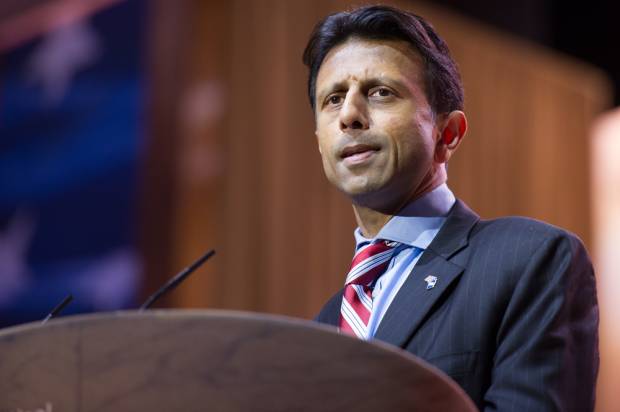
Lousiana Governor Bobby Jindal
Louisiana Governor Bobby Jindal

This is an editorial from the Washington Examiner, authored by school choice champion Bobby Jindal.

What is school choice?

On the most basic level, school choice represents the freedom to choose — empowering parents to select the best educational options for their sons and daughters. That could be a charter school, a private school, a religious school, home schooling, or even online learning. Governments should provide parents with the personalized and individualized tools they need to help their children excel academically.

That freedom to choose in turn will provide children with the freedom to succeed. With the right educational environment, teachers and academic training; students from all locations, income brackets and demographic groups will have better tools to compete in the global economy. We need to develop the talents of every American — no matter where he or she is from, and no matter the color of his or her skin — to maximize our country’s potential.

School choice also serves another important purpose — freeing low-income children from failing schools. No child should see his God-given talents go to waste because he is stuck in a failing school — and no parent should face the disempowerment that comes from knowing her son or daughter remains trapped in a poor school, and she lacks the financial means to move that child elsewhere. We can do better — and, by allowing parents dissatisfied with their school to move with their feet, school choice gives both high-performing and low-performing schools more incentive and motivation to improve their offerings.

Finally, school choice provides parents with freedom from the status quo — an educational-industrial complex that thinks bureaucrats, not parents, can best make decisions about the lives and futures of America’s children. It’s about pushing back when the then-head of Louisiana’s largest teachers’ union said low-income parents had “no clue” how to choose the right school for their children. And it’s even about standing up to the Attorney General of the United States, when the Department of Justice asked a court to block Louisiana’s school scholarship program on civil rights grounds — even though 90 percent of the program’s participants come from racial minority groups.

I don’t like people who talk conservative but govern liberal. I want to see the achievements.

The numbers:

For here in Louisiana, we’ve put those principles to practice. Since we removed the cap on charters in 2009, we’ve authorized almost 200 charter schools throughout the state — that’s 70,000 kids who now have a choice about where they go to school. This last year, our Recovery School District became the nation’s first school district with 100 percent charter school enrollment. And the results are dramatic: The graduation rate in New Orleans has increased from 54.4 percent before Hurricane Katrina in 2004 to 72.8 percent; the percentage of New Orleans students scoring basic and above has increased from 35 percent to 63 percent; and the percentage of failing schools in New Orleans has dropped from 67 percent in 2005 to 17 percent.

We expanded our school choice scholarship program, which was initially confined to New Orleans, statewide. Parental satisfaction with the statewide scholarship program stands at a whopping 91.9 percent. We went even further though and created a dollar for dollar rebate for donations used to fund nonpublic school scholarships low-income students through our “school tuition organizations.” Between 2008 and 2013, the percentage of students in the scholarship program who are proficient in third grade English language arts has grown by 20 percentage points and in math by 28 percentage points. Again and again, we’ve proven that giving more choice to parents is not only vital, but it gets results.

We also expanded access to online and dual enrollment courses for students across the state. This year, we’ve had over 19,000 students take advantage of our Course Choice program enrolling in advanced placement courses and career and technical courses that they otherwise wouldn’t have access to.

He’s in my top 2 for the 2016 presidential race, along with Scott Walker.

I’d like to see school choice enacted at the federal level, and fortunately, Utah Senator Mike Lee has the same idea.

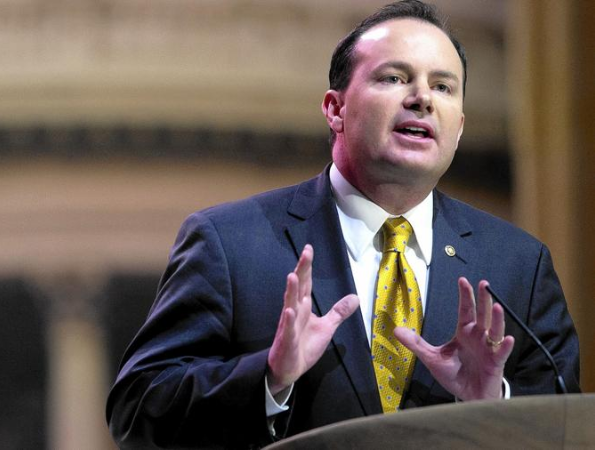
Utah Senator Mike Lee

The Daily Signal reports:

I recently introduced in the Senate a bill that would empower the people most acutely committed to the quality of our education system: America’s moms and dads. My colleague on the other side of the Capitol, Rep. Luke Messer, R-Ind., has introduced a companion bill in the House.

By giving parents more power to invest in their child’s education and to choose what school best meets their needs, the Enhancing Educational Opportunities for All Act takes an important step toward restoring accountability to our public education system—something that has been missing for far too long.

Under our current system—which has remained essentially unchanged since President Lyndon B. Johnson signed the 1965 Elementary and Secondary Education Act—most parents are powerless to influence the quality of their child’s education.

What occurs in public school classrooms around the country—what teachers teach and how they teach it—is the result of a long, convoluted, bureaucratic chain of command that zigzags its way from Washington to local school districts, but never includes parents.

First, Congress passes legislation authorizing federal bureaucrats to establish rules, regulations, and standards with which states must comply in order to receive federal education funds.

Next, state officials refine—or in some cases distort—these Washington directives, writing narrower rules for their school districts, which then establish the specific policies for individual schools.

At no point in this decision-making process are parents consulted.

Instead, they are left with a “take it or leave it” choice: either accept the education offered at the local public school—no matter how bad it may be—or buy a better alternative, by moving closer to a better school or paying private school tuition.

For America’s most affluent families, this is no big deal—they can afford private schools and so have the power to choose the school that is best for their children. For everyone else, it precludes parents from making choices about their children’s education.

So our bill would expand school choice to all parents, regardless of socio-economic status or zip code, by allowing federal “Title I” K-12 support funds to follow low-income students to any public or private school of their choice.

It would also remove the contribution limits on Coverdell education savings accounts and allow “529” account funds to cover K-12 education expenses.

Our bill would give working parents more opportunities to invest in a variety of learning services and products outside the classroom, such as tutoring, online courses and textbooks.

The problem facing our public school system today is not about a lack of money—we have nearly tripled our investments in elementary and secondary students since 1970. The problem is dysfunctional government policy—however well intentioned—and a lack of accountability.

And that’s exactly what we should expect when Washington bureaucrats have more control than parents over a child’s education. We have a moral and economic obligation to flip this equation and put parents back in the driver’s seat.

For when we tolerate a system in which the quality of a child’s education depends on her parents’ zip code, we fail to live up to the ideals at the heart of American exceptionalism.

And when millions of children learn from a young age not to dream big, but to surrender to the hopelessness of low expectations, we will live in a society where upward mobility is no longer rule but the exception.

We can and we must do better.

If a school is failing – and they often are, especially in poorer areas – then shouldn’t parents have the ability to send their kids to a better school? When I want to buy something online, I know I can always do better by comparing prices and reviews. Competition between suppliers drives prices down, and raises quality up. The customer is king in the free market. It can work in education, too.

Related posts