
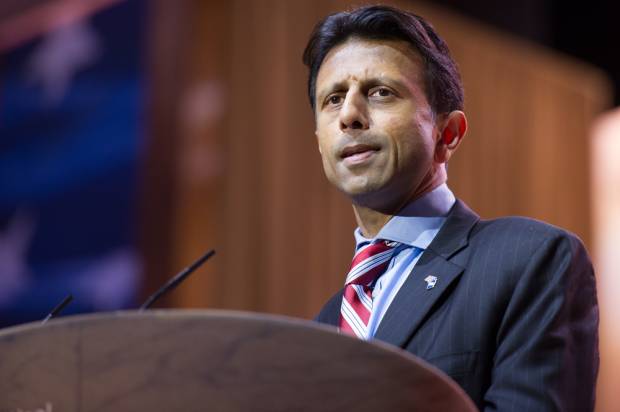
For the fifth year in a row, Bobby Jindal’s state of Louisiana declared “most pro-life”

Louisiana Governor Bobby Jindal

Here’s my other “first pick” in the GOP primary.

Life News reports:

In January, for the fifth year in a row, Louisiana was declared the most pro-life state in the nation by American’s United for Life (AUL). Since pro-life Governor Bobby Jindal has been in office for the past six years, it would be fair to say his leadership, at least in part, has created a more pro-life Louisiana.

After AUL made their announcement, Jindal said, “Louisiana was named the most pro-life state for the fifth year in a row. In Louisiana, we promote a culture of life and protect the weakest and most vulnerable among us.”

During Jindal’s time in office he’s signed countless pieces of pro-life legislation as well as limited Obamacare by prohibiting the coverage of elective abortion in health care plans. This is exactly why many pro-life advocates and Republican voters would be thrilled if Jindal ran for president in 2016. In the Decatur Daily, journalist Cal Thomas reported that Jindal said he’d decide in “two to three months” whether to run for president.

The pro-life legislation Jindal’s signed include everything from bills that ban abortion at 20-weeks and stop coerced abortions— to legislation that requires abortion facilities to provide ultrasounds prior to an abortion and ensures that medical professionals don’t have to participate in abortion.

In 2014, Jindal signed Louisiana Right to Life’s flagship legislation, the Unsafe Abortion Protection Act (HB 388), which could close three of the five abortion clinics in the state. HB 388 requires that abortion providers have admitting privileges within 30 miles of a local hospital; clarifies that informed consent protections apply to both surgical abortion, as well as to RU-486 chemical abortions; and that facilities that perform more than five abortions maintain proper licensing. After the passage of the HB 388 through the Louisiana Legislation, Gov. Jindal said, “This bill will give women the health and safety protections they deserve.”

Earlier this year, The Washington Times reported that Jindal blasted U.S. House Republicans after they pulled a bill that bans abortions after 20 weeks of pregnancy. He said, “The American people elected a Republican majority to support the pro-life movement and champion conservative principles. I hope they reconsider.”

In January, the Louisiana Department of Health and Hospitals, which serves under Jindal’s administration, announced that they are blocking abortions at an abortion facility Planned Parenthood is building in New Orleans. Originally, their facility was supposed to open by the end of 2014; however, due to opposition from pro-life Louisianans, including Louisiana Right to Life, the Jindal administration and the Archdiocese of New Orleans, their efforts have been stalled.

The Executive Director of Louisiana Right to Life, Benjamin Clapper, told the Washington Post more about Jindal’s commitment to protecting unborn life. He said, “He’s not just been pro-life behind closed doors. He’s also been proudly pro-life across our state.” American’s United for Life also told the Post that during Jindal’s time in office, Louisiana has been the most pro-life it has ever been.

Remarkably, Jindal has always been completely honest about his pro-life views.

In 2003, he said, “In my first race in 2003, at one of my first fundraisers, my first question was from a fairly liberal woman who asked me my position on abortion. I told her I was pro-life. I remember thinking I was going to have to return all the money I had raised! But amazingly, she became a financial supporter despite our differences over abortion. It turns out she already knew I was pro-life; she just wanted to see if I would be honest about my position or if I would waffle in order to get her money.”

According to the National Right to Life Committee, Jindal had a 100-percent voting record during three years as member of the U.S. House of Representatives. Additionally, Louisiana Right to Life has honored Gov. Jindal on numerous occasions for his pro-life stand in the Pelican State. In January, as Jindal left the stage after speaking at their annual pro-life rally Clapper said, “Bobby Jindal is the most pro-life governor in the history of Louisiana.”

My other “first pick” Scott Walker is now leading his competitors by 14% in the latest Iowa poll. He has 24% of the votes.

If I were going to compare the two of them, I would say that Walker is pro-life, was leader of a pro-life club in college, got some pro-life laws passed, and that those pro-life laws definitely reduced the number of abortions in his state. However, I think his focus is on taking on the big groups on the left like the public sector unions, the welfare collectors, the secular leftists at the public universities who go after conservatives. Walker is in a blue state, so he basically runs as a fiscal conservative, and then when he wins, which he always does, he brings his social conservatism with him, and does the best he can. But he wins because he is 1) a fighter and 2) competent at all things fiscal. The knock on Walker right now is his immigration plan – he is very vague about what he would do, and conservatives want to know where he stands.

Jindal is different. Not only is he better educated than Walker (Rhodes scholar at Oxford), but he is a policy expert in education and health care policy. He is also very outspoken on foreign policy and social issues. I think his ability to stick to his convictions no matter what is the same as Walker, but he is much more open about his full range of views, instead of just presenting himself as a policy expert and a guy who can get the job done. Jindal is heavily into consumer-driven health care and school choice. The knock on Jindal right now is his budget deficit and high disapproval rating in his home state – he hasn’t gotten together the fiscal record right now to stack up against Scott Walker. For a man like Bobby Jindal, though, every crisis is an opportunity. This is his chance to define himself by cutting spending and waste.

We should know by the end of February what Governor Jindal intends to do to close that $1.6 billion shortfall.
New study: EPA carbon emission regulations eliminate 586,000 manufacturing jobs

Why don’t we build anything in America any more?

Well, we do build many things, but if the question is changed to “why aren’t we building more?” then the answer is that the costs of building things in America are much higher than building them elsewhere. One reason is that we have the highest corporate tax rate in the world. Another reason is that we pass regulations that make it expensive to make anything here.

Here is a report from the Daily Signal about a new study by the Heritage Foundation.

They write:

A new study predicts that more than a half million manufacturing jobs will be eliminated from the U.S. economy as a result of the Obama administration’s proposed regulations to curb carbon dioxide emissions.

“Every state would experience overwhelming negative impacts as a result of these regulations, but especially those with higher-than-average employment in manufacturing and mining,” said Nick Loris, a co-author of study, which was completed by energy experts at The Heritage Foundation—the parent organization of The Daily Signal.

The researchers projected how many manufacturing jobs would be eliminated in each state and congressional district as a consequence of the carbon plan, which is the centerpiece of President Obama’s effort to combat climate change.

The results show that 34 states would lose three to four percent of manufacturing jobs by 2023, and nine other states would lose more.

In Ohio alone, 31,747 jobs would be lost.

The study predicts that the Midwest would be hit the hardest, with Illinois, Indiana, Michigan, Ohio and Wisconsin losing more than 20,000 jobs each.

[…]The analysis comes just months before the Environmental Protection Agency is set to finalize its carbon regulations covering new, existing and modified/reconstructed power plants by mid summer of 2015.

Heritage’s study looked at the totality of the Obama administration’s efforts to limit carbon dioxide emissions—from motor vehicles and power plants, both new and existing.

The EPA’s plan forces states to cut power-industry emissions by 30 percent in 2030 from 2005 levels.

We have to save the planet!!!1!!

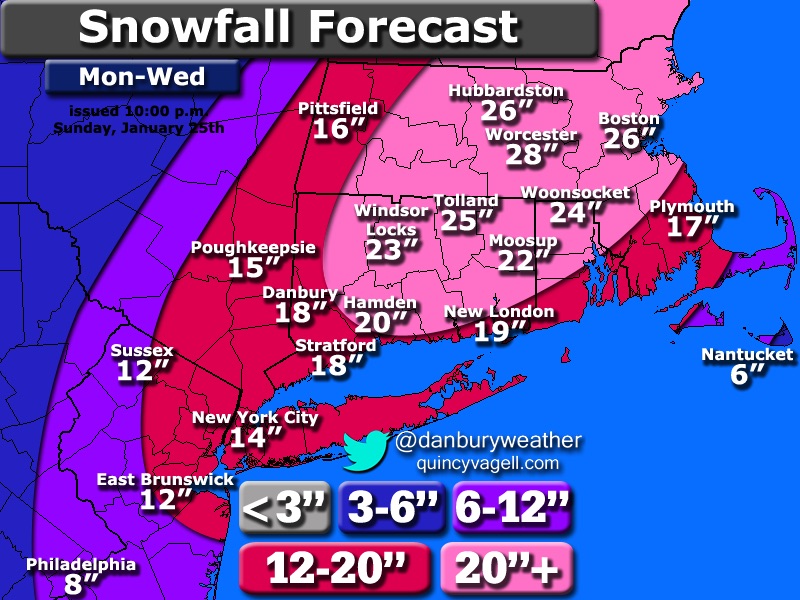
Meanwhile, in Boston:

It's global warming! The EPA must save us!
It’s global warming! The EPA must save us!

So, the next time anyone asks you why we don’t build anything anymore, tell them it’s because they voted for Democrats, and how this resulted in higher taxes and more burdensome regulations. Higher taxes and more regulation causes companies to close down here at home and move elsewhere, or they just scale back here and expand elsewhere. Democrats cause American jobs to go overseas, raising the unemployment rate. That’s why our labor force participation hasn’t been this low for decades. It’s basic economics.

The many meanings of the word “evolution”

This is from an essay by Stephen C. Meyer and Mike Keas. (H/T Justin Taylor)

Meyer and Keas caution people about answering questions about evolution until the term is clearly defined.

Here are their 6 meanings of the word:

  1. Evolution as Change Over Time
  2. Evolution as Gene Frequency Change
  3. Evolution as Limited Common Descent
  4. Evolution as a Mechanism that Produces Limited Change or Descent with Modification
  5. Evolution as Universal Common Descent
  6. Evolution as the “Blind Watchmaker” Thesis

Here is one that everyone accepts:

2. Evolution as Gene Frequency Change

Population geneticists study changes in the frequencies of alleles in gene pools. This very specific sense of evolution, though not without theoretical significance, is closely tied to a large collection of precise observations. The melanism studies of peppered moths, though currently contested, are among the most celebrated examples of such studies in microevolution. For the geneticist, gene frequency change is “evolution in action.”

And one that is controversial:

6. Evolution as the “Blind Watchmaker” Thesis

The “blind watchmaker” thesis, to appropriate Richard Dawkins’s clever term, stands for the Darwinian idea that all new living forms arose as the product of unguided, purposeless, material mechanisms, chiefly natural selection acting on random variation or mutation. Evolution in this sense implies that the Darwinian mechanism of natural selection acting on random variations (and other equally naturalistic processes) completely suffices to explain the origin of novel biological forms and the appearance of design in complex organisms. Although Darwinists and neo-Darwinists admit that living organisms appear designed for a purpose, they insist that such “design” is only apparent, not real, precisely because they also affirm the complete sufficiency of unintelligent natural mechanisms (that can mimic the activity of a designing intelligence) of morphogenesis. In Darwinism, the variation/selection mechanism functions as a kind of “designer substitute.” As Dawkins summarizes the blind watchmaker thesis: “Natural selection, the blind, unconscious, automatic process which Darwin discovered and which we now know is the explanation for the existence and apparently purposeful form of all life, has no purpose in mind. It has no mind and no mind’s eye.”

For discussion purposes, I accept 1-4, which I think are consistent with the evidence. I deny 5 and 6 because they are inconsistent with the evidence.

It’s a good article to read to prepare yourself to discuss this with someone who is antagonistic to design. They may offer evidence for one definition of evolution that everyone accepts, then take it to be proof of a much more controversial definition of evolution. You have to get the definition clear first.

One last piece of advice. If you ever get asked this “do you believe in evolution” question – say, by a secular leftist anxious to label you as a moron – then you might consider going on the offensive, using this list of alternate science-related questions that actually affect public policy from David Harsanyi. Put your questioner on the defensive.