

U.S. millennials perform horribly on technology tests compared to other countries

Education spending has tripled since 1970

This is from the leftist Washington Post.

Excerpt:

There was this test. And it was daunting. It was like the SAT or ACT — which many American millennials are no doubt familiar with, as they are on track to be the best educated generation in history — except this test was not about getting into college. This exam, given in 23 countries, assessed the thinking abilities and workplace skills of adults. It focused on literacy, math and technological problem-solving. The goal was to figure out how prepared people are to work in a complex, modern society.

And U.S. millennials performed horribly.

That might even be an understatement, given the extent of the American shortcomings. No matter how you sliced the data – by class, by race, by education – young Americans were laggards compared to their international peers. In every subject, U.S. millennials ranked at the bottom or very close to it, according to a new study by testing company ETS.

“We were taken aback,” said ETS researcher Anita Sands. “We tend to think millennials are really savvy in this area. But that’s not what we are seeing.”

The test is called the PIAAC test. It was developed by the Organization for Economic Co-operation and Development, better known as the OECD. The test was meant to assess adult skill levels. It was administered worldwide to people ages 16 to 65. The results came out two years ago and barely caused a ripple. But recently ETS went back and delved into the data to look at how  millennials did as a group. After all, they’re the future – and, in America, they’re poised to claim the title of largest generation from the baby boomers.

U.S. millennials, defined as people 16 to 34 years old, were supposed to be different. They’re digital natives. They get it. High achievement is part of their makeup. But the ETS study found signs of trouble, with its authors warning that the nation was at a crossroads: “We can decide to accept the current levels of mediocrity and inequality or we can decide to address the skills challenge head on.”

The challenge is that, in literacy, U.S. millennials scored higher than only three countries.

In math, Americans ranked last.

In technical problem-saving, they were second from the bottom.

“Abysmal,” noted ETS researcher Madeline Goodman. “There was just no place where we performed well.”

Nope. U.S. millennials with master’s degrees and doctorates did better than their peers in only three countries, Ireland, Poland and Spain. Those in Finland, Sweden and Japan seemed to be on a different planet.

Top-scoring U.S. millennials – the 90th percentile on the PIAAC test – were at the bottom internationally, ranking higher only than their peers in Spain. The bottom percentile (10th percentile) also lagged behind their peers.

Now the problem can’t be to spend more money on education – we already spend more money than all the other countries.

Excerpt:

The United States spent more than $11,000 per elementary student in 2010 and more than $12,000 per high school student. When researchers factored in the cost for programs after high school education such as college or vocational training, the United States spent $15,171 on each young person in the system — more than any other nation covered in the report.

That sum inched past some developed countries and far surpassed others. Switzerland’s total spending per student was $14,922 while Mexico averaged $2,993 in 2010. The average OECD nation spent $9,313 per young person.

So the solution has to be something else. What could it be? Previously, I linked to some ideas from Bobby Jindal. I think that’s the direction that we need to go in if we are to solve the problem. It’s pretty clear that raising taxes and throwing more money at teachers who can never be fired no matter how badly they perform is not the answer. It’s probably a good idea for kids to focus less on indoctrinating kids in leftist ideology, e.g. – sex education, postmodern skepticism and moral relativism. It’s probably a better idea for parents to take more responsibility for raising their kids and making sure that they do their homework and develop a love of learning. But that would require that we teach children as projects and have goals for them that we push them towards.
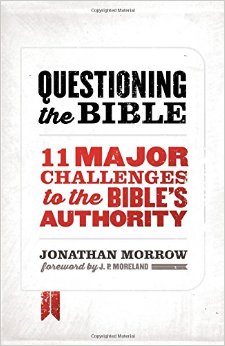
What if you only had four minutes to defend Israel’s attack on the Canaanites?

Questioning the Bible by Jonathan Morrow
“Questioning the Bible” by Jonathan Morrow

Jonathan Morrow is giving you just four minutes to respond to a well-known challenge to belief in the Christian God.

Can you handle it?

If not, here is a podcast to help you get ready.

Description:

Is the God of the Old Testament violent and bloodthirsty? Did God really command genocide? Why did Israel attack the Canaanites? These are just a few of the tough questions I tackle in this episode of the think Christianly podcast. Learn how to respond to one of the most challenging and emotional objections to Christianity in under 10 minutes.

Summary:

  • quotes Richard Dawkins to set up the objection
  • response: does God have the authority to give and take life?
  • response: after the Fall, things in the world are not the way they are supposed to be
  • response: Old Testament commands for the Jews to judge other nations are specific to them in that time
  • response: “genocide” and “ethnic cleansing” are not accurate descriptions of the attack on Canaan
  • response: the attack on the Cannanites takes place in the context of redeeming the whole world

Here is the Christian Post article he was interviewed for, where he had to answer:

Jonathan Morrow, author of Questioning the Bible: 11 Major Challenges to the Bible’s Authority, says readers are often perplexed by Old Testament scripture because “sometimes we just picture a God where anger and love can’t co-exist.” Yet he explains, “We all have seen people who have been taken advantage of and that makes us angry [because] we love them. So those emotions can co-exist.”

[…]Along that same line, Morrow clarifies that God’s instructions to the Israelite army in Deuteronomy 20 to destroy the people occupying the land of Canaan is “about judgment, not genocide.”

“The Bible teaches clearly that all people are sinful and in rebellion, kind of living in open rebellion against God, and God is just to judge anyone,” says Morrow. “But in this particular case with the Canaanites, there’s several things going on there, but one of those things was the wickedness of the people which was well documented – child sacrifices to Moloch and others, and bestiality and a lot wickedness.”

He says this judgment was necessary because “Israel’s national survival was crucial so that the Messiah – we would know Jesus as the Messiah – and God’s saving purposes of redemption to the world could one day be born because if the Messiah was supposed to come through the lineage of Israel and Israel co-mingled with this wicked people and was ultimately destroyed, that promise of hope and blessing to the whole world could not have been realized.”

[…]Morrow recognizes that Old Testament questions are particularly challenging. “We live in a sound bite culture and so this is one of those questions where it kind of gets thrown out for people, why does God command genocide, and that’s really easy to say and then it takes some time to respond to because there’s some context.”

Morrow says his sound bite answer is: “These passages are about judgment; they’re not about genocide.”

However, he encourages believers to find out the asker’s real interest in this question. “I would ask them, you know, it sounds like this is a pretty emotional question for you, why is that. Let them talk about it some so you can better understand because that’s the goal. We’re not just trying to win an argument; we’re trying to understand and help people.”

It the asker is after truth, Morrow advises Christians to “ask them … are you interested in kind of walking through and getting kind of messy about looking at the evidence for this because I’d love to share that with you, and sometimes they’ll go, ‘yeah, that’ll be great.'”

Other times, Morrow says, the asker is simply looking for “space and distance from God and this question allows them to put space between them and God.”

By the way, Morrow and McDowell’s basic apologetics book – “Is God Just a Human Invention?” – is my first pick when mentoring new people in apologetics.

UPDATE: J.W. Wartick has reviewed the 11 Questions book on his blog.

Atheist struggles with the problem of rationally grounding moral values and duties

Which worldview rationally grounds morality?

An atheist named John Gray wrote a piece in the radically leftist UK Guardian that’s been getting a lot of attention from Christians.

Here’s Gray:

Awkwardly for these atheists, Nietzsche understood that modern liberalism was a secular incarnation of these religious traditions. [. . .]  Nietzsche was clear that the chief sources of liberalism were in Jewish and Christian theism: that is why he was so bitterly hostile to these religions. He was an atheist in large part because he rejected liberal values. To be sure, evangelical unbelievers adamantly deny that liberalism needs any support from theism. If they are philosophers, they will wheel out their rusty intellectual equipment and assert that those who think liberalism relies on ideas and beliefs inherited from religion are guilty of a genetic fallacy. Canonical liberal thinkers such as John Locke and Immanuel Kant may have been steeped in theism; but ideas are not falsified because they originate in errors. The far-reaching claims these thinkers have made for liberal values can be detached from their theistic beginnings; a liberal morality that applies to all human beings can be formulated without any mention of religion. Or so we are continually being told. The trouble is that it’s hard to make any sense of the idea of a universal morality without invoking an understanding of what it is to be human that has been borrowed from theism.

Here’s Maverick Philosopher to explain why the atheist has this intuition:

Consider equality.  As a matter of empirical fact, we are not equal, not physically, mentally, morally, spiritually, socially, politically, economically.  By no empirical measure are people equal.  We are naturally unequal.  And yet we are supposedly equal as persons.  This equality as persons we take as requiring equality of treatment.  Kant, for example, insists that every human being, and indeed very rational being human or not, exists as an end in himself and therefore must never be treated as a means to an end.  A person is not a thing in nature to be used as we see fit.  For this reason, slavery is a grave moral evil.  A person is a rational being and must be accorded respect just in virtue of being a person.  And this regardless of inevitable empirical differences among persons.   Thus in his third formulation of the Categorical Imperative in his 1785 Foundations of the Metaphysics of Morals, Kant writes:

Act so that you treat humanity, whether in your own person or in that of another, always as an end and never as a means only.  (Grundlegung 429)

In connection with this supreme practical injunction, Kant distinguishes between price and dignity. (435)  “Whatever has a price can be replaced by something else as its equivalent; on the other hand, whatever is above all price, and therefore admits of no equivalent, has dignity.”  Dignity is intrinsic moral worth.  Each rational being, each person, is thus irreplaceably and intrinsically valuable with a value that is both infinite — in that no price can be placed upon it — and the same for all. The irreplaceability of persons is a very rich theme, one we must return to in subsequent posts.

These are beautiful and lofty thoughts, no doubt, and most of us in the West (and not just in the West) accept them in some more or less confused form.  But what do these pieties have to do with reality?  Especially if reality is exhausted by space-time-matter?

Again, we are not equal by any empirical measure.  We are not equal as animals or even as rational animals. (Rationality might just be an evolutionary adaptation.)  We are supposedly equal as persons, as subjects of experience, as free agents.  But what could a person be if not just a living human animal (or a living ‘Martian’ animal).  And given how bloody many of these human animals there are, why should they be regarded as infinitely precious?  Are they not just highly complex physical systems?  Surely you won’t say that complexity confers value, let alone infinite value.  Why should the more complex be more valuable than the less complex?  And surely you are not a species-chauvinist who believes that h. sapiens is the crown of ‘creation’ because we happen to be these critters.

If we are unequal as animals and equal as persons, then a person is not an animal.  What then is a person?  And what makes them equal in dignity and equal in rights and infinite in worth?

When it comes to discussing morality, we aren’t interested in what people can do if they feel like it. We are not interested in feelings at all. We are interested in whether a worldview provides a rational grounding for the moral value of human beings, and the moral duties we have towards other human beings.

In the past, I’ve written that morality can only be rationally grounded by a worldview that includes the following 5 concepts:

1) Objective moral values

There needs to be a way to distinguish what is good from what is bad. For example, the moral standard might specify that being kind to children is good, but torturing them for fun is bad. If the standard is purely subjective, then people could believe anything and each person would be justified in doing right in their own eyes. Even a “social contract” is just based on people’s opinions. So we need a standard that applies regardless of what people’s individual and collective opinions are.

2) Objective moral duties

Moral duties (moral obligations) refer to the actions that are obligatory based on the moral values defined in 1). Suppose we spot you 1) as an atheist. Why are you obligated to do the good thing, rather than the bad thing? To whom is this obligation owed? Why is rational for you to limit your actions based upon this obligation when it is against your self-interest? Why let other people’s expectations decide what is good for you, especially if you can avoid the consequences of their disapproval?

3) Moral accountability

Suppose we spot you 1) and 2) as an atheist. What difference does it make to you if you just go ahead and disregard your moral obligations to whomever? Is there any reward or punishment for your choice to do right or do wrong? What’s in it for you?

4) Free will

In order for agents to make free moral choices, they must be able to act or abstain from acting by exercising their free will. If there is no free will, then moral choices are impossible. If there are no moral choices, then no one can be held responsible for anything they do. If there is no moral responsibility, then there can be no praise and blame. But then it becomes impossible to praise any action as good or evil.

5) Ultimate significance

Finally, beyond the concept of reward and punishment in 3), we can also ask the question “what does it matter?”. Suppose you do live a good life and you get a reward: 1000 chocolate sundaes. And when you’ve finished eating them, you die for real and that’s the end. In other words, the reward is satisfying, but not really meaningful, ultimately. It’s hard to see how moral actions can be meaningful, ultimately, unless their consequences last on into the future.

Atheism can ground none of these. Christian theism grounds all five of them.

And it’s because of this fact that people look on atheism as a flight from morality, rather than a serious grappling with the moral life. When Christian theists hear about stories like Dr. Richard Carrier announcing that he’s been cheating on his wife, who supported his atheistic ministry for years while he did essentially nothing productive, we are not surprised. He’s only following the advice of Dr. Richard Dawkins, who is a big advocate for adultery. And then there is atheist apologist John Loftus – adultery is what got him started in atheism.

Self-sacrificial, incumbent morality makes as much sense on atheism as astrophysics makes to fishes. It’s a complete reduction of the question “what ought I to do in order to be good?” to “what pleasurable things can I get away with doing in this time and place?” Anything. Goes.