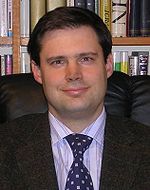
WARNING: This lecture is a very sharp and pointed critique of Calvinist theology. Viewer discretion is advised.
In Protestant Christianity, there is a division between people who accept Calvinist doctrines and those who don’t. Both groups think that the other group are genuine Christians, but the debate has more to do with the human free will, human responsibility and who God loves.
Dr. Walls is Protestant (like me). He is a substance dualist (like me). And he believes in a real eternal Hell (like me). And he is very, very assertive. Definitely no confidence problems here. And you’re not going to have a problem keeping your attention on this lecture!
Note that I do not agree with or endorse Dr. Walls on all of his views.
Who determines what each person will desire on Calvinism?
Who does God love on Calvinism?
The law of non-contradiction
Does God make a genuine offer of salvation to all people on Calvinism?
Does God love “the elect” differently than the “non-elect” on Calvinism?
He quotes at least a half-dozen Calvinist theologians in this lecture, including John Piper, J.I. Packer and D.A. Carson. And he also mentions 3 videos at the end of the lecture where he goes over specific Bible verses that seem to support Calvinism (part 4, part 5, part 6 are the ones he mentioned).
This lecture is very strong stuff, and I think that he could have been nicer when presenting it, but he hit on every single objection that I have to Calvinism, and he worked through my reasoning too! So I really liked that he validated all of my concerns about Calvinism. I’m not as bothered about the problems with Calvinism as he is, though. I don’t think it’s a big divisive issue. I almost always read Calvinist theologians when I am reading theology. I just conjoin Calvinism with middle knowledge and resistible grace, and it’s fine. Calvinists are some of the best theologians, they are just wrong on the things he discusses in his lecture.
Peter J. Williams is the Warden (CEO) of Tyndale House and a member of the Faculty of Divinity in the University of Cambridge. He received his MA, MPhil and PhD, in the study of ancient languages related to the Bible from Cambridge University. After his PhD, he was on staff in the Faculty of Divinity, Cambridge University (1997–1998), and thereafter taught Hebrew and Old Testament there as Affiliated Lecturer in Hebrew and Aramaic and as Research Fellow in Old Testament at Tyndale House, Cambridge (1998–2003). From 2003 to 2007 he was on the faculty of the University of Aberdeen, Scotland, where he became a Senior Lecturer in New Testament and Deputy Head of the School of Divinity, History and Philosophy. In July 2007 he became the youngest Warden in the history of Tyndale House. He also retains his position as an honorary Senior Lecturer in Biblical Studies at the University of Aberdeen.
Summary of the lecture:
What if the stories about Jesus are legendary?
were the gospels transmitted accurately?
were the gospels written in the same place as where the events happened?
do the gospel authors know the customs and locations where the events happened?
do the gospels use the right names for the time and place where the events took place?
do the gospels disambiguate people’s names depending on how common those names were?
how do the New Testament gospels compare to the later gnostic gospels?
how do the gospels refer to the main character? How non-Biblical sources refer to Jesus?
how does Jesus refer to himself in the gospels? do the later Christians refer to him that way?
how does Jesus teach? do later Christians teach the same way?
why didn’t Jesus say anything about early conflicts in the church (the Gentiles, church services)?
did the writers of the gospels know the places where the events took place?
how many places are named in the gospels? how about in the later gnostic gospels?
are the botanical details mentioned in the gospels accurate? how about the later gnostic gospels?
And here are the questions from the audience:
how what about the discrepancies in the resurrection narratives that Bart Ehrman is obsessed with?
what do you think of the new 2011 NIV translation (Peter is on the ESV translation committee)?
how did untrained, ordinary men produce complex, sophisticated documents like the gospels?
is oral tradition a strong enough bridge between the events and the writers who interviewed the eyewitnesses?
what does the name John mean?
why did the gospel writers wait so long before writing their gospels?
do you think that Matthew and Luke used a hypothetical source which historians call “Q”?
which gospel do critical historians trust the least and why?
I really enjoyed watching this lecture. He’s getting some of this material from Richard Bauckham’s awesome book “Jesus and the Eyewitnesses”, so if you aren’t familiar with it, you can get an idea of what’s in it. Peter Williams is a lot of fun to listen to – an excellent speaker.
And you can listen to the Peter Williams vs Bart Ehrman debate. That link contains a link to the audio of the debate as well as my snarky summary. It’s very snarky.
Whether this weekend finds you blowing two feet of snow off the driveway or counting the hours until “Downton Abbey,” make time to watch the video of Dr. Ben Carson speaking to the White House prayer breakfast this week.
Seated in view to his right are Senator Jeff Sessions and President Obama. One doesn’t look happy. You know something’s coming when Dr. Carson says, “It’s not my intention to offend anyone. But it’s hard not to. The PC police are out in force everywhere.”
Dr. Carson tossed over the PC police years ago. Raised by a single mother in inner-city Detroit, he was as he tells it “a horrible student with a horrible temper.” Today he’s director of pediatric neurosurgery at Johns Hopkins and probably the most renowned specialist in his field.
Late in his talk he dropped two very un-PC ideas. The first is an unusual case for a flat tax: “What we need to do is come up with something simple. And when I pick up my Bible, you know what I see? I see the fairest individual in the universe, God, and he’s given us a system. It’s called a tithe.
“We don’t necessarily have to do 10% but it’s the principle. He didn’t say if your crops fail, don’t give me any tithe or if you have a bumper crop, give me triple tithe. So there must be something inherently fair about proportionality. You make $10 billion, you put in a billion. You make $10 you put in one. Of course you’ve got to get rid of the loopholes. Some people say, ‘Well that’s not fair because it doesn’t hurt the guy who made $10 billion as much as the guy who made 10.’ Where does it say you’ve got to hurt the guy? He just put a billion dollars in the pot. We don’t need to hurt him. It’s that kind of thinking that has resulted in 602 banks in the Cayman Islands. That money needs to be back here building our infrastructure and creating jobs.”
Not surprisingly, a practicing physician has un-PC thoughts on health care:
“Here’s my solution: When a person is born, give him a birth certificate, an electronic medical record, and a health savings account to which money can be contributed—pretax—from the time you’re born ’til the time you die. If you die, you can pass it on to your family members, and there’s nobody talking about death panels. We can make contributions for people who are indigent. Instead of sending all this money to some bureaucracy, let’s put it in their HSAs. Now they have some control over their own health care. And very quickly they’re gong to learn how to be responsible.”
The Johns Hopkins neurosurgeon may not be politically correct, but he’s closer to correct than we’ve heard in years.
One of the more unique speeches delivered at this morning’s National Prayer Breakfast came from Dr. Benjamin S. Carson, a world-renowned pediatric neurosurgeon at Johns Hopkins Hospital. Taking the stage before President Barack Obama’s faith-filled address, Carson spoke for more than 25 minutes, tackling issues ranging from education to personal responsibility. His keynote, while predicated upon the theme of Jesus Christ as his ultimate role model, also took a starkly political tone, advocating against some of the very policies the president has implemented.
At the beginning of his speech, Carson shared an intense disdain for political correctness. Without getting too specific on the issue front, he said that Americans should stop being afraid to speak up and defend their beliefs; he also encouraged people to respect the individuals they disagree with. Carson held little back, condemning political correctness as “a horrible thing” that is “dangerous,” as it hampers freedom of thought and expression.
“We’ve reached a point where people are actually afraid to talk about what they want to say, because somebody might be offended,” Carson said, noting the example of people refraining from saying “Merry Christmas.” “We’ve got to get over this sensitivity and it keeps people from saying what they really believe.”
Carson encouraged discussion about societal issues, also pointing out education as an essential conundrum the country needs to confront. He highlighted his own path from poverty to success, sharing very personal details about his parents and early family life and subsequently described the importance of helping students seeking to advance academically through his Carson Scholars Fund.
The speech took an interesting turn when the doctor cautioned that moral decay and fiscal irresponsibility can have dire consequences — even for powerful countries like America. Here, he became even more pointed and impassioned.
“I think particularly about ancient Rome. Very powerful — nobody could even challenge them militarily…they destroyed themselves from within,” Carson continued. “Moral decay. Fiscal irresponsibility.”
While he said America’s issues are dire, he was positive that the nation can fix its ways, as there are bright and innovative people who simply need to come together to address the problems at hand.
“And one of our big problems right now…our deficit is a big problem,” he said, as Obama watched him intently. ”Think about it — and our national debt — $16 and a half trillion dollars.”
I blogged about the Darwinish Inquisition and Ben Carson before. He has faced persecutions from the Darwinists because he has scientific concerns about evolution. If you need something to watch on a Saturday night, this is the speech for you.