Category Archives: Podcasts

J. Warner Wallace: six reasons why you should believe in non-physical minds

(Podcast uploaded, with permission, by ReligioPolitical Talk)

This podcast is a must-listen. Please take the time to download this podcast and listen to it. I guarantee that you will love this podcast. I even recommended it to my Dad and I almost never do that.

Details:

In this podcast, J. Warner examines the evidence for the existence of the mind (and inferentially, the soul) as he looks at six classic philosophical arguments. Jim also briefly discusses Thomas Nagel’s book, Mind and Cosmos and discusses the limitations of physicalism.

The MP3 file is here. (67 MB, 72 minutes)

Topics:

  • Atheist Thomas Nagel’s latest book “Mind and Cosmos” makes the case that materialism cannot account for the evidence of mental phenomena
  • Nagel writes in this recent New York Times article that materialism cannot account for the reality of consciousness, meaning, intention and purpose
  • Quote from the Nagel article:

Even though the theistic outlook, in some versions, is consistent with the available scientific evidence, I don’t believe it, and am drawn instead to a naturalistic, though non-materialist, alternative. Mind, I suspect, is not an inexplicable accident or a divine and anomalous gift but a basic aspect of nature that we will not understand until we transcend the built-in limits of contemporary scientific orthodoxy.

  • When looking at this question, it’s important to not have our conclusions pre-determined by presupposing materialism or atheism
  • If your mind/soul doesn’t exist and you are a purely physical being then that is a defeater for Christianity, so we need to respond
  • Traditionally, Christians have been committed to a view of human nature called “dualism” – human beings are souls who have bodies
  • The best way* to argue for the existence of the soul is using philosophical arguments

The case:

  • The law of identity says that if A = B’ if A and B have the exact same properties
  • If A = the mind and B = the brain, then is A identical to B?
  • Wallace will present 6 arguments to show that A is not identical to B because they have different properties

Not everyone of the arguments below might make sense to you, but you will probably find one or two that strike you as correct. Some of the points are more illustrative than persuasive, like #2. However, I do find #3, #5 and #6 persuasive.

1) First-person access to mental properties

  • Thought experiment: Imagine your dream car, and picture it clearly in your mind
  • If we invited an artist to come and sketch out your dream car, then we could see your dream car’s shape on paper
  • This concept of your dream car is not something that people can see by looking at your brain structure
  • Physical properties can be physically accessed, but the properties of your dream care and privately accessed

2) Our experience of consciousness implies that we are not our bodies

  • Common sense notion of personhood is that we own our bodies, but we are not our bodies

3) Persistent self-identity through time

  • Thought experiment: replacing a new car with an old car one piece at a time
  • When you change even the smallest part of a physical object, it changes the identity of that object
  • Similarly, your body is undergoing changes constantly over time
  • Every cell in your body is different from the body you had 10 years ago
  • Even your brain cells undergo changes (see this from New Scientist – WK)
  • If you are the same person you were 10 years ago, then you are not your physical body

4) Mental properties cannot be measured like physical objects

  • Physical objects can be measured (e.g. – use physical measurements to measure weight, size, etc.)
  • Mental properties cannot be measured

5) Intentionality or About-ness

  • Mental entities can refer to realities that are physical, something outside of themselves
  • A tree is not about anything, it just is a physical object
  • But you can have thoughts about the tree out there in the garden that needs water

6) Free will and personal responsibility

  • If humans are purely physical, then all our actions are determined by sensory inputs and genetic programming
  • Biological determinism is not compatible with free will, and free will is required for personal responsibility
  • Our experience of moral choices and moral responsibility requires free will, and free will requires minds/souls

He spends the last 10 minutes of the podcast responding to naturalistic objections to the mind/soul hypothesis.

*Now in the podcast, Wallace does say that scientific evidence is not the best kind of evidence to use when discussing this issue of body/soul and mind/brain. But I did blog yesterday about two pieces of evidence that I think are relevant to this discussion: corroborated near-death experiences and mental effort.

You might remember that Dr. Craig brought up the issue of substance dualism, and the argument from intentionality (“aboutness”), in his debate with the naturalist philosopher Alex Rosenberg, so this argument about dualism is battle-ready. You can add it to your list of arguments for Christian theism along with all the other arguments like the Big Bang, the fine-tuning, the origin of life, stellar habitability, galactic habitability, irreducible complexity, molecular machines, the Cambrian explosion, the moral argument, the resurrection, biological convergence, and so on.
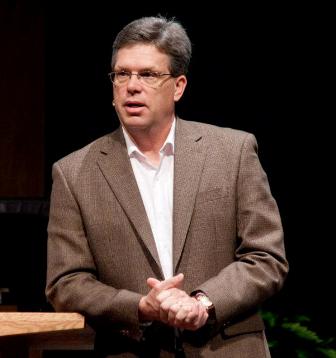
Chris Sinkinson debates John Hick on religious pluralism and salvation

Looks like Justin Brierley on the Unbelievable radio show found a pastor with a Ph.D in philosophy, and he can really whip some ass.

The players:

John Hick is a noted philosopher and theologian who is a proponent of a pluralist view of religion – that there is one light (God) but many lampshades (religious expressions).

Chris Sinkinson is a pastor and Bible tutor who has critiqued Hick’s work.  He says that pluralism empties Christianity of any content and in its own way disrespects other religions more than his own exclusivist stance.

The MP3 file is here.

Justin does a great job as moderator of this debate. He said what I was thinking of saying a number of times during the debate.

Anyway, here is my snarky summary. I creatively paraphrase some of the things that Hick says to make it more clear. And funny.

—-

Hick:
– had an experience looking at the buildings of other religions
– other religions have buildings, so all religions are equal
– I spent some time in the East, and met nice Eastern people
– since Eastern people are nice that means all religions are equal

Justin:
– isn’t Jesus’ claim to be the exclusive path to salvation offensive?

Sinkinson:
– all religions that are exclusive and have to deal with religious pluralism
– even John Hick writes polemically in favor of his own view
– even John Hick thinks that religions that are exclusive are false

Justin:
– what about the blind man and the elephant?
– the story seems to say that other people have a partial grasp?
– but the story-teller himself has the privileged view
– so isn’t the religious pluralist just as arrogant as exclusivists?

Hick:
– well, it’s not arrogant to claim to have the right answer
– Jesus never made the claim to be God incarnate
– Jesus never made the claim to be the exclusive path to God
– historians don’t think that John’s gospel is reliable because it is late
– the proclamation of exclusivity was added by evangelists much later

Sinkinson:
– the historians who doubt the high Christology are radical skeptics
– the mainstream of historical scholarship accepts a high Christology
– the EARLIEST history about Jesus has the highest Christology

Hick:
– the moderate scholars do think Jesus was divine but that he didn’t think he was divine
– the phrase “Son of God” was used to describe any remarkable person
– only later did the early church turn the generic term into “God the Son”

Sinkinson:
– there is reflection on Jesus’ identity and developments, but not invention
– Jesus and his followers were in trouble precisely for linking him to deity
– why else would Jesus get into trouble and get crucified?

Hick:
– the Romans crucified him because people were saying he was the Messiah
– but the Messiah was not identified as being divine, but political
– and that’s why the Romans crucified him

Justin:
– do you (Sinkinson) think that people in other religions can be saved?

Sinkinson:
– the traditional view is exclusivism
– the other world religions are logically contradictory with Christianity
– you have to respect their differences – they are not the same as Christianity
– exclusivists allow that people can be saved by responding to natural theology
– and there are also other cases where non-Christians are saved, like old testament saints and babies who die in infancy

Hick:
– but people’s religions are based on where they are born
– so it’s not fair for God to expect people to be saved in one religion only

Sinkinson:
– the plurality of religions grouped by location doesn’t make christianity false
– that would be the genetic fallacy – rejecting an idea because of its origin
– the real question to consider is whether it is true
– and even the objection assumes that God is a God of love, who should be fair
– but how do you know that God is loving? that is an exclusive view
– how can the “blob” ultimate of religious pluralism be “loving” and “fair”

Hick:
– the ultimate reality is loving or not loving depending on each person’s religion

Sinkinson:
– but some religions and theistic and some are atheistic
– how can those God exist and not exist?

Hick:
– God is beyond everyone’s understanding, except mine
– God is beyond all definitions, except mine
– God is beyond all human understanding, except mine
– i’m not contradicting myself, it’s a mystery! a mystery!
– as long as you don’t look to closely, they’re all the same!
– allow me to tell you about God, which no one can do but me

Justin:
– doesn’t your religious pluralism mean that Christianity is false?

Hick:
– well, Christianity can’t be true, because it disagrees with other religions
– Christianity can’t falsify other religions, that would be mean to them
– other religions are just as “profound” as Christianity – and that’s what matters – not whether a religion makes true claims
– some religions are older than Christianity, that means they can’t be disagreed with
– we can’t let Christianity be true, because then some people will feel bad
– if people feel bad, then they don’t like me and then I feel bad
– if there’s one thing I know about the unknowable ultimate reality, it’s that it wants me to be liked by lots of people

Sinkinson:
– your view seems to be agnosticism – that nothing can be known about the “ultimate real”
– if we can’t express in words what God is like, then why are you saying what God is like?

Hick:
– the indescribable ultimate is described (falsely, but interestingly) by various tradition

Sinkinson:
– does the “ultimate real” exist?

Hick:
– no

Justin:
– are all the exclusive religions wrong, and only you are right?

Hick:
– all propositions about God in all the religions are false
– the experience of being deluded and having feelings about your delusions is “valid” in all religions
– all religions are equally good ways to believe false things and to have feelings about your false beliefs
– only my propositions about God are true
– everyone who disagrees with me is wrong

Sinkinson:
– so all the propositions of all the religions are wrong
– but all the experiences and feelings are “right”

Hick:
– yes
– all propositions about God are humanly constructed, and so false
– except mine – mine are true!

Sinkinson:
– so everything distinctive about Christianity are literally false?

Hick:
– yes, Christian doctrines are all false
– because if they were true, other religions would be false, and they would feel bad
– and we can’t have that, because everyone has to like me
– only things that don’t offend people in other religions can be true

Sinkinson:
– so do we have to then treat all religions as non-propositional?

Hick:
– well just don’t ask people about the content of their beliefs
– just treat their religion as non-cognitive rituals, feelings and experiences
– don’t inquire too deeply into it, because all religions are all nonsense
– i’m very respectful and tolerant of different religions!

Sinkinson:
– but Muslims, for example, think their religion is making truth claims

Hick:
– but there can be tolerance as long as you treat religions as non-propositional nonsense

Sinkinson:
– um, I have a higher respect for religions than you do
– I actually consider that the claims of other religions could be true
– I think that other religions make truth claims and not nonsense claims

Hick:
– well they are all useful because they are all false
– I don’t emphasize beliefs, I emphasize living, experiences and feelings
– as long as everyone accepts my view and rejects their religion, we’ll all be tolerant

Justin:
– erm, isn’t that an exclusive claim?
– you’re trying to say that your view of what religion is is right, and everyone else is wrong

Hick:
– I’m not arrogant, I just think that all the religions of the worlds are false
– only my statements about religion are true – everyone else is wrong
– I’m tolerant, and Christians are arrogant

Justin:
– but you think Sinkinson’s view is wrong
– why should we accept your view and deny his view?

Hick:
– His view of salvation is false, and mine is true

Sinkinson:
– you use words with set meanings, but you mean completely different things
– when I say salvation, I mean deliverance from sins through Jesus

Hick:
– I get to decide what salvation means for everyone, you intolerant bigot

Sinkinson:
– but that word has a specific meaning that has held true in all of Christian history
– but what you mean by salvation is people having subjective delusions that are not true

Hick:
– I don’t like using the word salvation

Sinkinson:
– but you just used it!
– and you think that it is present in different world religions, but it isn’t

Hick:
– God is unknowable and indescribable
– God isn’t a wrathful God though
– and the Christian description of God is false
– Evangelical Christians are mean
– I had experiences with people of other faiths
– and these experiences taught me that religions that think that the universe is eternal are true
– as long as you reduce religion to behaviors and not truth, then religions are all good at producing behaviors
– if you just treat all religions as clothing fashion and food customs, they are all valid
– the main point of religion is for people to agree on cultural conventions and stick to them
– never mind the propositional statements of religions… who cares about truth? not me!
– but Christianity is definitely false

Sinkinson:
– the Judeo-Christian God is different – he reveals himself to humans
– he is distinct from the other religions
– he is personal, and is loving but also angry at sin

Hick:
– But God isn’t a person, and he isn’t a non-person
– I can’t say what he is – I’ll offend someone if I say anything at all!
– except Christians – I can offend them because they are arrogant bigots
– I’m also very spiritual – I meditate on my breathing

Sinkinson:
– you can’t assess a religion by the experiences that people have
– people who have weird experiences do all kinds of evil things
– so the real question has to be about truth – is the New Testament reliable?, etc.

Scott Klusendorf responds to atheist P.Z. Myers on the Issues, Etc. show

Scott Klusendorf, Life Training Institute

About Scott:

Scott Klusendorf travels throughout the United States and Canada training pro-life advocates to persuasively defend their views in the public square. He contends that the pro-life message can compete in the marketplace of ideas if properly understood and properly articulated.

[…]Scott has participated in numerous debates at the collegiate level. His debate opponents have included Nadine Strossen, President of the ACLU (1991-2008) – Kathyrn Kolbert, an attorney that has argued for abortion rights in a United States Supreme Court case – and Kathy Kneer, President of Planned Parenthood of California.

Scott has debated or lectured to student groups at over 70 colleges and universities, including Stanford, USC, UCLA, Johns Hopkins, Loyola Marymount Law School, West Virginia Medical School, MIT, U.S. Air Force Academy, Cal-Tech, and University of North Carolina.

Each year thousands of students at Protestant and Catholic high schools are trained by Scott to make a persuasive case for life as part of their worldview training prior to college. He’s provided that same training to students at Summit Ministries and Focus on the Family Institute.

Scott is the author of The Case for Life: Equipping Christians to Engage the Culture, released in March 2009 by Crossway Books. Scott has also published articles on pro-life apologetics in The Christian Research Journal, Clear Thinking, Focus on the FamilyCitizen, and The Conservative Theological Journal.

Chuck Colson, founder and Chairman of the Board of Prison Fellowship, says: “Scott first grabbed my attention when Focus on the Family featured one of his presentations on its national broadcast. I was struck by his ability to communicate truth so clearly and insightfully. I’ve heard many speakers who deliver excellent content, but few who can actually equip people to communicate their pro-life convictions to a secular culture. In fact, I was so impressed with Scott’s talk that I phoned him directly to learn more about his work. After that, I scheduled him as a keynote speaker for our own Breakpoint conference.”

Scott is a graduate of UCLA with honors and holds a Masters Degree in Christian Apologetics from Biola University.

The MP3 file is here.

Topics:

  • Myers: I could imagine a culture where a child doesn’t have the right to life until they are 5-years old
  • Moderator: Myers is an atheist. He believes that standards of conduct are variable depending on what is dominant in a culture. Since cultures  vary by time and place, and none is objectively right or wrong, then a 5-year limit for personhood is as valid as any other standard that might evolve. There is no way to judge between cultures against some objective standard
  • Moderator (to Klusendorf): Myers says that the unborn is a “piece of meat”. It’s not a person until well after birth. Do only atheists believe this?
  • Klusendorf: No others hold them. But what is more interesting is that he just asserts his views, he never argues for them. He says that pro-lifers lie when debating this issue
  • Moderator: (to Myers) What is the unborn?
  • Myers: It’s a piece of tissue that will develop into a human being over time
  • Moderator: (to Myers) What is it 5 minutes before it’s born?
  • Myers: It’s fetus, it’s not a baby
  • Klusendorf: The development stages of a human are all stages of development of the same entity, as even Peter Singer and David Boonin admit
  • Moderator: He made a distinction between before birth and after birth
  • Klusendorf: Yes, and that contradicts what he says later when he says there are no sharp boundaries
  • Klusendorf: Myers is confusing parts with wholes. The skin cells on my hand are part of a larger human being. The embryo is not part of a larger human being, they are a whole human being, directing its own development
  • Klusendorf: Myers also makes the claim that embryos are constructed piece by piece from the outside. But the science of embryology is clear – the embryo develops itself.
  • Moderator (to Myers): Is the unborn a person?
  • Myers: Personhood develops gradually. A newborn baby is not a person. A baby’s brain is still forming so it’s not a person. There is no specific moment when a baby becomes a person. It is culturally determined. Our society says it’s birth. Some people say viability. Either of those are acceptable to me
  • Moderator: (to Myers): So drawing the line between unborn and born is arbitrary?
  • Myers: Yes it is
  • Klusendorf: He is separating human beings into classes: persons and non-persons. This has resulted in injustices, historically speaking. E.g. – with American Indians

(Break until 15:00)

  • Klusendorf: He says that a human being becomes a person when their brain is fully developed, but even teens don’t have fully developed brains
  • Klusendorf: Look at this scientific evidence from PBS about NIH research which shows that brains still developing in teens and it causes them to make poor decisions
  • Klusendorf: If development gives us value, then those with more of it have more of a right to life than those with less
  • Klusendorf: This point was made by Lincoln in his debates about slavery, when he warned his opponent that someone with lighter skin could enslave him
  • Moderator (to Myers): How do you decide these life issues?
  • Myers: We use the notion of “greater good”
  • Moderator (to Myers): that’s a culturally determined notion?
  • Myers: Yes. The greater good here is that we maximize the security and happiness of most people in the society. Women are persons, so we favor their rights.
  • Klusendorf: His response begs the question. He is assuming that the unborn are not human persons. He talks about the need for women’s rights. Are unborn women included in those who have rights?
  • Klusendorf: If cultures decide who is and who is not a person, then he cannot oppose cultures that say that Jews are not persons, or that women are not persons
  • Klusendorf: He admits that he cannot oppose cultures that think that children of age 5 are not persons, and can be killed
  • Moderator (to Myers): You call that kind of society “brutal”, why do you say that?
  • Myers: It’s my personal preference because I like my own kids
  • Moderator (to Klusendorf): Respond to that
  • Klusendorf: He has no argument, just his own opinion. He cannot oppose any society that things that it is OK to traffic, kill, etc. 5-year-olds
  • Klusendorf: He says that he has a personal preference. That is an interesting fact about his psychology, but he has no argument
  • Klusendorf: In an atheistic worldview, human beings at any stage are cosmic accidents
  • Klusendorf: How do we get any kind of intrinsic value and human rights out of an atheist worldview? I don’t see how you can
  • Klusendorf: Even a woman’s absolute right to an abortion is not grounded by atheism
  • Moderator (to Myers): What do you think of the pro-life movement?
  • Myers: I’m a developmental biologist. The pro-life movement is lying to people. An embryo is not a person. “Personhood implies much more than being a piece of meat with the right number of chromosomes in it”. The primary issue in abortion is women’s autonomy. It is entirely the woman’s decision
  • Klusendorf: You have to present arguments to prove that pro-lifers are lying. There are pro-abortion scholars who have arguments, he isn’t one. He only has assertions, opinions and preferences.
  • Klusendorf: What if a woman gets pregnant solely in order to take a drug during pregnancy in order to have a deformed child. Myers has no argument against that

Myers also has no argument against sex-selection abortions. So much for “women’s rights”.

I just want to mention that the Life Training Institute is one of the ministries I recommend to people. They are the only pro-life group I support, because they are apologists all the way. If they’re not debating, they’re training others to debate. If you like Christians who have battlefield experience on the pro-life issue, this is your organization.

You can get Scott’s book on pro-life apologetics here on Amazon.com. It’s the best introductory book on pro-life apologetics out there. And he has another book about making a pro-life case on campus.

UPDATE: P.Z. Myers responds to this post here. Reader discretion is advised.