
Category Archives: News

Millennials who elected Obama will face high taxes, poverty and unemployment

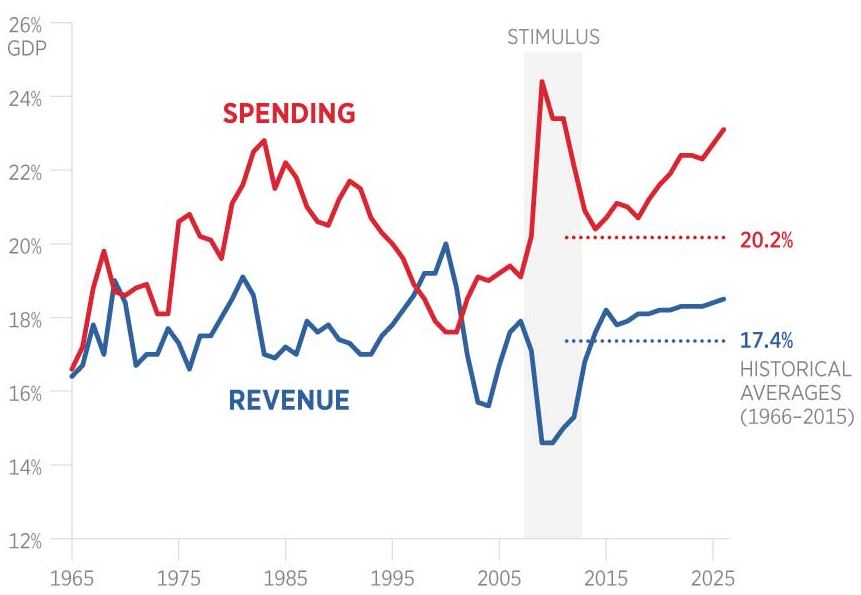
We can't raise taxes enough to fix this overspending
We can’t raise taxes high enough to fix this much overspending

My regular readers have probably noticed that I have stopped blogging about day-to-day politics, ever since the Republican primary candidates with conservative records (Cruz, Jindal, Walker) were eliminated from the GOP primary. I have heard though that the mainstream media is going all in to elect Hillary Clinton. My concern is that many people rely on television news and will never think about two really important issues. First, Obama has been the worst President in the history of the country and has destroyed the economy for decades to come. Second, his disregard for national security and weak foreign policy has emboldened the enemies of Western democracies, e.g.  Russia, Iran, etc. We will see the consequences of this (wars and terrorism) for years to come. Those are the real challenges we face as a nation.

This Hoover Institute article by Victor Davis Hanson explains the big picture that the mainstream media doesn’t care about.

Excerpt:

Consider the $20-trillion national debt. Most Americans accept that current annual $500 billion budget deficits are not sustainable—but they also see them as less extreme than the recently more normal $1 trillion in annual red ink. Americans also accept that the Obama administration doubled the national debt on the expectation of permanent near-zero interest rates, which cannot continue. When interest rates return to more normal historical levels of 4-5% per annum, the costs of servicing the debt—along with unsustainable Social Security and Medicare entitlement costs—will begin to undermine the entire budget.

Count up current local, state and federal income taxes, payroll taxes, property and sales taxes, and new health care taxes, and it will be hard to find the necessary additional revenue from a strapped and overtaxed middle class, much less from the forty-seven percent of Americans who currently pay no federal income taxes. The Obama administration has tried to reduce the budget by issuing defense cuts and tax hikes—but it has refused to touch entitlement spending, where the real gains could be made. The result is more debt, even as, paradoxically, our military was weakened, taxes rose, revenue increased, and economic growth remained anemic at well below 2% per annum.

The national debt is one ticking time bomb, but there are others. Illegal immigration and Muslim refugees create additional financial problems for the next generation of entrepreneurs and workers:

Illegal immigration poses a similar dilemma. No nation can remain stable when 10-20 million foreign nationals have crashed through what has become an open border and reside unlawfully in the United States—any more than a homeowner can have neighbors traipsing through and camping in his unfenced yard.

Likewise, there are few multiracial societies of the past that have avoided descending into destructive ethnic chauvinism and tribalism once assimilation and integration were replaced by salad-bowl identity politics. Common words and phrases such as “illegal alien” or “deportation” are now considered taboo, while “sanctuary city” is a euphemism for a neo-Confederate nullification of federal immigration laws by renegade states and municipalities.

Illegal immigration, like the deficits, must cease, but stopping it would be too politically incorrect and painful even to ponder. The mess in Europe—millions of indigent and illegal immigrants who have fled their own failed states to become dependent on the largess of their generous adopted countries, but without any desire to embrace their hosts’ culture—is apparently America’s future.

Progressive Christians and  left-leaning Republicans join Democrats in imposing costs on the next generation of taxpayers with open borders immigration policies. The bill for importing people who take more in welfare than they pay in taxes has to be paid by someone. Not only will taxes on individuals go up, but taxes on businesses will cause them to create fewer jobs, or move their production to countries that have lower taxes on business.

The rest of the article talks about more ticking time bombs created by young leftist voters. Obama’s anti-police rhetoric has created a crime crisis that will require more police, more incarceration and higher insurance premiums. Obama’s anti-school-choice policies have made it harder for the next generation to get the education they will need to offer value to employers. Without skills, you won’t have a job, and you will be poor – poorer than your parents’ generation.

Although most young leftists are ignorant about foreign policy, that did not stop them from voting to cause crises that will harm our economy, and may also draw us into war. Territorial disputes involving strong countries like Russia and China could easily lead to war. Sponsors of terrorism like North Korea and Iran have gained strength during Obama’s reign of stupidity. Wars that impact trading partners or allies will cost taxpayers money. And millennials are the ones who are going to get the bill for a failed foreign policy.

The article doesn’t mention other crises like the trillion dollar student loan bubble, or the next mortgage lending crisis, or the unfunded pension programs crisis, or Medicare going bankrupt, and then Social Security shortly after, etc. No one in the mainstream media mentions these things, and the millennials aren’t aware of these problems. It’s not in their culture to put financial concerns above having a good time. But closing your eyes doesn’t make a threat disappear. Millennials can’t study English in college, rack up student loans, spend all their money on alcohol, work minimum wage jobs, then travel to Europe in their 20s, and expect everything to work out when they get serious about career and savings at age 30. These crises – which millennials voted for – are going to make their lives harder than their parents’ lives ever were.


Jay Richards: eight common myths about wealth, poverty and the free market

I have a key that will unlock a puzzling mystery

Have you read Jay Richards’ book “Money, Greed and God?” Because if you haven’t, he’s written a series of articles that summarize the main points of the book.

The index post is here.

Here are the posts in the series:

  • Part 1: The Eight Most Common Myths about Wealth, Poverty, and Free Enterprise
  • Part 2: Can’t We Build A Just Society?
  • Part 3: The Piety Myth
  • Part 4: The Myth of the Zero Sum Game
  • Part 5: Is Wealth Created or Transferred?
  • Part 6: Is Free Enterprise Based on Greed?
  • Part 7: Hasn’t Christianity Always Opposed Free Enterprise?
  • Part 8: Does Free Enterprise Lead to An Ugly Consumerist Culture?
  • Part 9: Will We Use Up All Our Resources?
  • Part 10: Are Markets An Example of Providence?

Parts 4 and 5 are my favorites. It’s so hard to choose one to excerpt, but I must. I will choose… Part 4.

Here’s the problem:

Myth #3: The Zero Sum Game Myth – believing that trade requires a winner and a loser. 

One reason people believe this myth is because they misunderstand how economic value is determined. Economic thinkers with views as diverse as Adam Smith and Karl Marx believed economic value was determined by the labor theory of value. This theory stipulates that the cost to produce an object determines its economic value.

According to this theory, if you build a house that costs you $500,000 to build, that house is worth $500,000. But what if no one can or wants to buy the house? Then what is it worth?

Medieval church scholars put forth a very different theory, one derived from human nature: economic value is in the eye of the beholder. The economic value of an object is determined by how much someone is willing to give up to get that object. This is the subjective theory of value.

And here’s an example of how to avoid the problem:

How you determine economic value affects whether you view free enterprise as a zero-sum game, or a win-win game in which both participants benefit.

Let’s return to the example of the $500,000 house. As the developer of the house, you hire workers to build the house. You then sell it for more than $500,000. According to the labor theory of value, you have taken more than the good is actually worth. You’ve exploited the buyer and your workers by taking this surplus value. You win, they lose.

Yet this situation looks different according to the subjective theory of value. Here, everybody wins. You market and sell the house for more than it cost to produce, but not more than customers will freely pay. The buyer is not forced to pay a cost he doesn’t agree to. You are rewarded for your entrepreneurial effort. Your workers benefit, because you paid them the wages they agreed to when you hired them.

This illustration brings up a couple important points about free enterprise that are often overlooked:

1. Free exchange is a win-win game.

In win-win games, some players may end up better off than others, but everyone ends up better off than they were at the beginning. As the developer, you might make more than your workers. Yet the workers determined they would be better off by freely exchanging their labor for wages, than if they didn’t have the job at all.

A free market doesn’t guarantee that everyone wins in every competition. Rather, it allows many more win-win encounters than any other alternative.

2. The game is win-win because of rules set-up beforehand. 

A free market is not a free-for-all in which everybody can do what they want. Any exchange must be free on both sides. Rule of law, contracts, and property rights are needed to ensure exchanges are conducted rightly. As the developer of the house, you’d be held accountable if you broke your contract and failed to pay workers what you promised.

An exchange that is free on both sides, in which no one is forced or tricked into participating, is a win-win game.

On this view, what you really need to fear as a consumer is government intervention that restricts your choices in the marketplace, or makes some choices more expensive than they need to be (tariffs).

If you care about poverty, it’s often tempting to think that it can only be solved one way – by transferring wealth from the rich to the poor. But that is a very mistaken view, as any economist will tell you. The right way to create prosperity is by creating laws and policies that unleash individual creativity. Letting individuals create innovative products and services, letting them keep what they earn, making sure that the law doesn’t punish entrepreneurs – that incentivizes wealth creation. Fixing poverty does not mean transferring wealth, it means giving people more freedom to create wealth on their own. Free trade between nations is an important way that we encourage people to create better products and services that what they have available in their own countries.

Economists agree on the benefits of free trade

Who could possibly disagree with free trade? Well, many people on the left do. But economists across the spectrum of ideology (university and private sector and public sector) agree on the benefits of free trade.

Harvard economist Greg Mankiw explains what most professional economists agree on.

Excerpt:

Here is the list, together with the percentage of economists who agree:

  1. A ceiling on rents reduces the quantity and quality of housing available. (93%)
  2. Tariffs and import quotas usually reduce general economic welfare. (93%)
  3. Flexible and floating exchange rates offer an effective international monetary arrangement. (90%)
  4. Fiscal policy (e.g., tax cut and/or government expenditure increase) has a significant stimulative impact on a less than fully employed economy. (90%)
  5. The United States should not restrict employers from outsourcing work to foreign countries. (90%)
  6. The United States should eliminate agricultural subsidies. (85%)
  7. Local and state governments should eliminate subsidies to professional sports franchises. (85%)
  8. If the federal budget is to be balanced, it should be done over the business cycle rather than yearly. (85%)
  9. The gap between Social Security funds and expenditures will become unsustainably large within the next fifty years if current policies remain unchanged. (85%)
  10. Cash payments increase the welfare of recipients to a greater degree than do transfers-in-kind of equal cash value. (84%)
  11. A large federal budget deficit has an adverse effect on the economy. (83%)
  12. A minimum wage increases unemployment among young and unskilled workers. (79%)
  13. The government should restructure the welfare system along the lines of a “negative income tax.” (79%)
  14. Effluent taxes and marketable pollution permits represent a better approach to pollution control than imposition of pollution ceilings. (78%)

Socialist economic policies don’t work because they are making policies that are based on economic myths. We know that these myths are myths because of economics is a mathematical science, and because we have tried good and bad policies in different times and places. We have calculations and we have experience to know what works and what doesn’t work. If you want to help the poor, you have to respect what economists know about how wealth is created. The solution is not to “spread the wealth around”, it’s to encourage people to create more wealth by inventing things that people freely choose to buy.

Bible study: Esther as an example of bravery and God’s providence

Bible study that hits the spot

I’ve been listening to this FREE two-volume series on the book of Esther featuring pastor Alistair Begg. A whole bunch of interesting things stuck out to me, so I’ll write about one of them today.

First, Esther is a Jewish woman whose father or mother died when she was young. She was adopted by Mordecai, another Jew. She was very beautiful, so she was picked to be part of the Persian King’s harem. In fact, she is so beautiful that the King chooses her to be the Queen.

Now there is an enemy of the Jews in the King’s court named Haman, and he manages to get the King to create an edict that says that all the Jews will be killed. Mordecai calls Esther to tell her that she has to stop the King from ordering this edict.

But Esther is out of favor with the King, and hasn’t been asked to come in to visit him for some time. To go in and see the King without being summoned is a capital offense. Unless the King gives permission, she would be killed for intruding on the King. But in the end, she agrees to speak up and say something.

It all gets resolved in Esther chapter 4.

Esther 4:1-17:

1 When Mordecai learned all that had been done, he tore his clothes, put on sackcloth and ashes, and went out into the midst of the city and wailed loudly and bitterly.

2 He went as far as the king’s gate, for no one was to enter the king’s gate clothed in sackcloth.

3 In each and every province where the command and decree of the king came, there was great mourning among the Jews, with fasting, weeping and wailing; and many lay on sackcloth and ashes.

4 Then Esther’s maidens and her eunuchs came and told her, and the queen writhed in great anguish. And she sent garments to clothe Mordecai that he might remove his sackcloth from him, but he did not accept them.

5 Then Esther summoned Hathach from the king’s eunuchs, whom the king had appointed to attend her, and ordered himto go to Mordecai to learn what this was and why it was.

6 So Hathach went out to Mordecai to the city square in front of the king’s gate.

7 Mordecai told him all that had happened to him, and the exact amount of money that Haman had promised to pay to the king’s treasuries for the destruction of the Jews.

8 He also gave him a copy of the text of the edict which had been issued in Susa for their destruction, that he might show Esther and inform her, and to order her to go in to the king to implore his favor and to plead with him for her people.

9 Hathach came back and related Mordecai’s words to Esther.

10 Then Esther spoke to Hathach and ordered him to reply to Mordecai:

11 “All the king’s servants and the people of the king’s provinces know that for any man or woman who comes to the king to the inner court who is not summoned, he has but one law, that he be put to death, unless the king holds out to him the golden scepter so that he may live. And I have not been summoned to come to the king for these thirty days.”

12 They related Esther’s words to Mordecai.

13 Then Mordecai told them to reply to Esther, “Do not imagine that you in the king’s palace can escape any more than all the Jews.

14 For if you remain silent at this time, relief and deliverance will arise for the Jews from another place and you and your father’s house will perish. And who knows whether you have not attained royalty for such a time as this?”

15 Then Esther told them to reply to Mordecai,

16 “Go, assemble all the Jews who are found in Susa, and fast for me; do not eat or drink for three days, night or day. I and my maidens also will fast in the same way. And thus I will go in to the king, which is not according to the law; and if I perish, I perish.”

17 So Mordecai went away and did just as Esther had commanded him.

What Mordecai is saying here is that God is sovereign over the events that are taking place, and that even if Esther makes a free decision to not intercede to save her people, then God will do something else. Somehow, telling her that makes her agree to take the risk and go in to see the King. Even though it is illegal to go in to see the King, she is going to risk her life and do it. And the message there is that God made her beautiful, and placed her in the palace, for exactly this purpose. Her beauty has a purpose.

Before then, she may not have been the most morally pure Jew, nor the most faithful Jew, nor some great authority on theology or apologetics. She was probably keeping her faith pretty hidden. But in that one moment, she rises above being an orphan, above being a harem girl, and above being just a pretty face. God can use anyone – even a silly girl who spends all day in front of a mirror playing with cosmetics – to achieve his ends. She is not Daniel. But today she is getting the call, anyway. It’s on her.

What is the lesson here? The lesson is that even a woman with terrible marksmanship is dignified when she accepts a duel. One minute, she is Jew in name only, hiding her faith, living in a palace, sleeping with a pagan King. The next minute, she is the hero. Win, lose or draw, she is the hero. God can use anybody. It doesn’t mean that you shouldn’t be moral, study theology, and study apologetics, and keep your character clean so you have self-control. It means that any believer is just one step away from glory, no matter what they did in the past. That’s how God rolls.

Further study

If you are interested in the story of Esther, then you should listen to the entire series by Alistair Begg.

The point I am making in this post is in this lecture.

Esther is about two themes: 1) how should a believer in God live in a society where believers are a minority? and 2) even when things look really out of control, God is in control, and is never more than one step away from saving his people.

I have a lot of Christian apologist friends who struggle to go to church, and struggle to read the Bible. The links above will take you to some great preaching on one of the most interesting books of the Bible. Go there, grab the MP3s, and listen to them with no distractions.