

Category Archives: News

Leftist news media furious that conservatives noticed murder by 14-time repeat offender

By now, everyone has heard about the murder of the 23-year-old lady by a 14-time repeat offender. The lady was just riding a light train in Charlotte, NC, and the criminal attacked her from behind and stabbed her many times with a knife. Two things are interesting about the story. First, the judiciary workers who released the criminal. Second, the reaction from corporate news media.

So, first, the facts of the case from Meg Basham at Daily Wire:

The victim, Iryna Zarutska, came to the United States in 2022. She was returning from her job at a local pizzeria when Decarlos Brown stabbed her repeatedly in the neck.

And this is the key part – in a Democrat-run city, the criminal was released FOURTEEN TIMES.

Brown had a lengthy criminal history, including at least 14 prior arrests for offenses such as armed robbery and assault with a deadly weapon. Despite serving five years for the robbery, most of his other cases resulted in time served, probation, or community service.

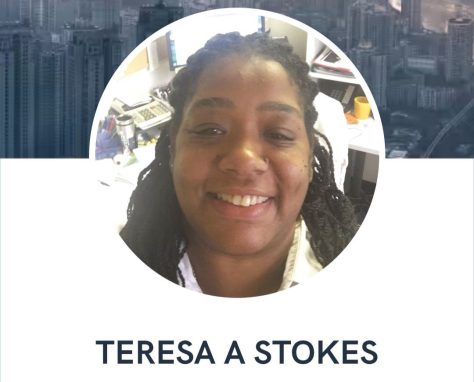
His most recent arrest in January was for misusing 911, yet Judge Teresa Stokes granted him pretrial release despite his violent record. In 2024 alone, Brown had three encounters with the Charlotte-Mecklenburg Police Department’s (CMPD) community policing team, each time receiving referrals to resources and fines rather than jail time.

According to Grok, here are the qualifications for her position:

Under North Carolina law (N.C.G.S. § 7A-171), magistrates are appointed judicial officials, not judges, and do not require a law degree or bar admission.

Requirements include:

  • A four-year college degree, or a two-year associate degree with at least four years of experience in a related field (e.g., court administration, social services).
  • Completion of a 40-hour basic training course within six months of appointment, covering civil and criminal duties.
  • Annual continuing education through the North Carolina Administrative Office of the Courts (NCAOC) and UNC School of Government.

Grok also mentioned to me that she is married to a woman, Ayanna Ballard. Can you imagine choosing to live in a place like Charlotte, seeing the violent crime rates go higher and higher because of the failures of the district attorney and the others to deal with criminals and protect taxpayers? Why do people do it?
Anyway, the corporate news media was very upset… not with the murder, but with people noticing the murder.

Here’s Daily Signal:

Instead of focusing on the terrible and enraging crime that took place, it became one of their “conservatives pounce” spin jobs.

Axios put up a post on X, saying, “The gruesome video of the fatal knife attack on Iryna Zarutska on a light-rail car in Charlotte is drawing attention from MAGA influencers seeking to elevate the issue of violent urban crime—and accuse mainstream media of under-covering shocking cases.”

That wasn’t the only one, Politico was also concerned by the “political messaging war”, not by the actual murder of an innocent girl. Did you know that Democrats are the party of women’s rights? Yes, here is more of the Democrat party’s women’s-rightsing.

Here’s a gruesome story from September 9th, 2025, reported in the Daily Caller:

A Louisiana man reportedly may face chemical castration or the death penalty after he allegedly raped a four-year-girl on Aug. 1 and gave her Chlamydia.

Anthony James Jelks, 25, allegedly suggested that he raped the child on Aug. 1 at a Baton Rouge, Louisiana, residence, according to arrest documents obtained by WAFB.

[…]“Mr. Jelks, we have arrested six times over the past six years,” Baton Rouge Police Chief TJ Morse said. “He has everything from firearm charges to domestic violence battery, violation of protective orders, and is currently on probation.”

From May 2025, reported in New York Post:

College coed Logan Federico, 22, of Waxhaw, NC, was visiting friends in Columbia, SC, on May 3 when a prowler broke into a rental house, swiped her credit cards and gunned her down, the Columbia Police Department said in a press conference.

[…]Alexander Dickey, 30, a career criminal with 40 prior charges, allegedly broke into the rental home where Federico was staying and opened fire with a stolen gun after stealing from the house.

And here’s another one from December 2023, also reported in New York Post:

A troubled vagrant randomly stabbed two teenage girls enjoying a Christmas morning meal with their parents at a Grand Central Terminal restaurant — after ranting that he wanted “all white people dead,” authorities said.

[…]Hutcherson has 17 prior arrests on his rap sheet, sources said.

It’s hard for me to write about this. I am so upset by the attacks that are going on in Europe against young women, and then even now, here in the United States. And why? Because people vote for the secular left politicians. Secular leftists are dominated by irrational emotions. They have a real problem with moral judgments and punishments. For them, the important thing is to show great compassion with their non-judgement. They want to make a world in which no one can judge them for their evil.

In Europe, women’s groups are so concerned with prioritizing feeling good and looking good with virtue signaling, that they won’t even condemn crimes committed by unskilled immigrants from misogynistic countries against women.

The UK Daily Mirror explains:

More than 100 women’s rights groups have warned “racist” attempts to link sexual violence with immigration are putting victims at increased risk.

Rape Crisis England and Wales, the End Violence Against Women Coalition and Refuge are among the organisations warning anti-migrant groups and politicans are “hijacking” survivors’ trauma. They have signed a letter to Keir Starmer and Home Secretary Yvette Cooper warning that sexual abuse must not be used for political gain – and those who spread misinformation must be held to account.

Who pays the price for the “don’t judge” atttitude of the secular leftists? The victims of the criminals that they don’t punish pay the price. The real misogyny comes from the secular left. That’s why you should never vote for a secular leftist. They don’t have the ability to ground moral judgments and that’s why they need to be kept out of political power by wise voters.


Study: galactic habitable zone depends on fine-tuning of cosmological constant

This is going to be old news to readers of this blog who are familiar with the Michael Strauss, Walter Bradley and Guillermo Gonzalez lectures on habitability and fine-tuning. But, it’s nice to see these ideas show up in one of the most prestigious peer-reviewed science journals in the world (if not the most prestigious).

Here’s the article from Science.

It says:

Scientists have known for several years now that stars, galaxies, and almost everything in the universe is moving away from us (and from everything else) at a faster and faster pace. Now, it turns out that the unknown forces behind the rate of this accelerating expansion—a mathematical value called the cosmological constant—may play a previously unexplored role in creating the right conditions for life.

That’s the conclusion of a group of physicists who studied the effects of massive cosmic explosions, called gamma ray bursts, on planets. They found that when it comes to growing life, it’s better to be far away from your neighbors—and the cosmological constant helps thin out the neighborhood.

“In dense environments, you have many explosions, and you’re too close to them,” says cosmologist and theoretical physicist Raul Jimenez of the University of Barcelona in Spain and an author on the new study. “It’s best to be in the outskirts, or in regions that have not been highly populated by small galaxies—and that’s exactly where the Milky Way is.”

Jimenez and his team had previously shown that gamma ray bursts could cause mass extinctions or make planets inhospitable to life by zapping them with radiation and destroying their ozone layer. The bursts channel the radiation into tight beams so powerful that one of them sweeping through a star system could wipe out planets in another galaxy. For their latest work, published this month in Physical Review Letters, they wanted to apply those findings on a broader scale and determine what type of universe would be most likely to support life.

The research is the latest investigation to touch on the so-called anthropic principle: the idea that in some sense the universe is tuned for the emergence of intelligent life. If the forces of nature were much stronger or weaker than physicists observe, proponents note, crucial building blocks of life—such fundamental particles, atoms, or the long-chain molecules needed for the chemistry of life—might not have formed, resulting in a sterile or even completely chaotic universe.

Basically, the best place for a galaxy that permits complex, embodied life to exist is one where you can pick up enough heavy elements from dying stars nearby, but not be in an area that is so crowded by stars that you will be wiped out by intense gamma radiation when they die. So, you want to be between the “arms” of a spiral galaxy, close enough to the areas with a lot of stars, and not too far away. But you can only get that pattern of stars if the universe is expanding at the right rate.

More:

As it turns out, our universe seems to get it just about right. The existing cosmological constant means the rate of expansion is large enough that it minimizes planets’ exposure to gamma ray bursts, but small enough to form lots of hydrogen-burning stars around which life can exist. (A faster expansion rate would make it hard for gas clouds to collapse into stars.)

Jimenez says the expansion of the universe played a bigger role in creating habitable worlds than he expected. “It was surprising to me that you do need the cosmological constant to clear out the region and make it more suburbanlike,” he says.

Remember, this is only one of many characteristics that must obtain in order for a have a location in the universe that can support complex, embodied life of any conceivable kind.

The galactic habitable zone (GHZ) is shown in green against a spiral galaxy

Let’s review the big picture

Time for me to list out some of the things that are required for a galaxy, solar system and planet to support complex embodied life. Not just life as we know it, but life of any conceivable kind given these laws of physics.

  • a solar system with a single massive Sun than can serve as a long-lived, stable source of energy
  • a terrestrial planet (non-gaseous)
  • the planet must be the right distance from the sun in order to preserve liquid water at the surface – if it’s too close, the water is burnt off in a runaway greenhouse effect, if it’s too far, the water is permanently frozen in a runaway glaciation
  • the solar system must be placed at the right place in the galaxy – not too near dangerous radiation, but close enough to other stars to be able to absorb heavy elements after neighboring stars die
  • a moon of sufficient mass to stabilize the tilt of the planet’s rotation
  • plate tectonics
  • an oxygen-rich atmosphere
  • a sweeper planet to deflect comets, etc.
  • planetary neighbors must have non-eccentric orbits

And remember, these requirements for a habitable planet are downstream from the cosmic fine-tuning of constants and quantities that occurs at the Big Bang. No point in talking about the need for plate tectonics if you only have hydrogen in your universe. The habitability requirements are a further problem that comes after the fine-tuning problem.

The author of the books of Luke and Acts was an eyewitness to the life of Paul

I was listening to a friend give a talk on the book of Acts on the weekend. He had a number of interesting points, but the most interesting was from chapter 16. His point will help everyone who likes to answer questions about the historical basis for Christian faith. It has to do with the author of Acts, and why historians think that he was in contact with eyewitnesses to the life of Jesus.

Let’s take a look at the passage from Acts 16:1-10 (NASB), and notice how Luke is talking about what Paul and his helper Timothy are doing:

1 Now Paul also came to Derbe and to Lystra. And a disciple was there, named Timothy, the son of a Jewish woman who was a believer, but his father was a Greek,

2 and he was well spoken of by the brothers and sisters who were in Lystra and Iconium.

3 Paul wanted this man to leave with him; and he took him and circumcised him because of the Jews who were in those parts, for they all knew that his father was a Greek.

4 Now while they were passing through the cities, they were delivering the ordinances for them to follow which had been determined by the apostles and elders in Jerusalem.

5 So the churches were being strengthened in the faith, and were increasing in number daily.

6 They passed through the Phrygian and Galatian region, after being forbidden by the Holy Spirit to speak the word in Asia;

7 and after they came to Mysia, they were trying to go into Bithynia, and the Spirit of Jesus did not allow them;

8 and passing by Mysia, they went down to Troas.

9 And a vision appeared to Paul in the night: a man of Macedonia was standing and pleading with him, and saying, “Come over to Macedonia and help us.”

10 When he had seen the vision, we immediately sought to leave for Macedonia, concluding that God had called us to preach the gospel to them.

Now something interesting happens in the next few verses. Read them closely and see if you catch it:

11 So after setting sail from Troas, we ran a straight course to Samothrace, and on the following day to Neapolis;

12 and from there to Philippi, which is a leading city of the district of Macedonia, a Roman colony; and we were spending some days in this city.

13 And on the Sabbath day we went outside the gate to a riverside, where we were thinking that there was a place of prayer; and we sat down and began speaking to the women who had assembled.

Did you catch it? The narrator switches from the third-person (“they”) to the first-person (“we”). And there are several more “we” passages in the book:

  • Acts 16:10-17: The first “we passage” occurs during Paul’s second missionary journey, starting with the departure for Macedonia and ending after the events in Philippi.
  • Acts 20:5-15: The “we” perspective resumes during Paul’s journey from Philippi to Miletus.
  • Acts 21:1-18: The “we” narrative continues as Paul travels to Jerusalem.
  • Acts 27:1-28:16: The final “we passage” covers Paul’s sea voyage to Rome.

Now, for the apologetic significance of this, let’s turn to William Lane Craig:

The most obvious explanation is that the author had joined Paul on his evangelistic tour of the Mediterranean cities. In chapter 21 he accompanies Paul back to Palestine and finally to Jerusalem. What this means is that the author of Luke-Acts was in fact in first hand contact with the eyewitnesses of Jesus’s life and ministry in Jerusalem.

[…]There is no avoiding the conclusion that Luke-Acts was written by a traveling companion of Paul who had the opportunity to interview eyewitnesses to Jesus’s life while in Jerusalem. Who were some of these eyewitnesses? Perhaps we can get some clue by subtracting from the Gospel of Luke everything found in the other gospels and seeing what is peculiar to Luke. What you discover is that many of Luke’s peculiar narratives are connected to women who followed Jesus: people like Joanna and Susanna, and significantly, Mary, Jesus’s mother.

So, the author of Acts was an eyewitness to the life of Paul, and he was able to interview eyewitnesses to the life of Jesus.

But the best part of all is testability. My friend who gave the talk on Acts mentioned that many details that Luke recorded can be tested by archaeologists. And what do the archaeologists find?

Dr. Craig says:

Was the author reliable in getting the facts straight? The book of Acts enables us to answer that question decisively. The book of Acts overlaps significantly with secular history of the ancient world, and the historical accuracy of Acts is indisputable. This has recently been demonstrated anew by Colin Hemer, a classical scholar who turned to New Testament studies, in his book The Book of Acts in the Setting of Hellenistic History. Hemer goes through the book of Acts with a fine-toothed comb, pulling out a wealth of historical knowledge, ranging from what would have been common knowledge down to details which only a local person would know. Again and again Luke’s accuracy is demonstrated: from the sailings of the Alexandrian corn fleet to the coastal terrain of the Mediterranean islands to the peculiar titles of local officials, Luke gets it right.

According to Professor Sherwin-White, “For Acts the confirmation of historicity is overwhelming. Any attempt to reject its basic historicity even in matters of detail must now appear absurd.” The judgement of Sir William Ramsay, the world-famous archaeologist, still stands: “Luke is a historian of the first rank. This author should be placed along with the very greatest of historians.” Given Luke’s care and demonstrated reliability as well as his contact with eyewitnesses within the first generation after the events, this author is trustworthy.

I asked Grok about the accuracy of Luke, and Grok listed out the confirmed details, and concluded:

While archaeology cannot confirm every detail in Luke and Acts, numerous findings—such as inscriptions, structures, and artifacts—corroborate the historical, geographical, and cultural settings described in these texts. The accuracy of Luke’s references to officials, places, and events lends credibility to his accounts, though some specifics remain debated.

It’s important to understand that the gospels are not trying to make people feel good and have community. They’re trying to tell you who God is and what God really did in history. It’s a bit scary to think “oh my, all this really happened”, but it really did, and we have to come to terms with it and adjust our goals and priorities.