
Category Archives: Commentary

What are the consequences of insuring customers with pre-existing conditions?

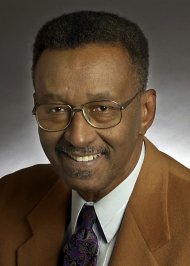
Walter Williams

Investors Business Daily

What would happen if Obama succeeds in passing a law to force insurance companies to accept customers with pre-existing conditions at the same price as everyone else who doesn’t have pre-existing conditions?

Read this IBD editorial by George Mason University economist Walter Williams. (my second favorite economist)

Excerpt:

Sen. John Rockefeller, D-W.Va., chairman of the Senate Finance Subcommittee on Health Care, and Rep. Joe Courtney, D-Conn., a member of the House Education and Labor Committee, have introduced the Pre-existing Condition Patient Protection Act, which would eliminate pre-existing condition exclusions in all insurance markets. That’s an Obama administration priority.

I wonder whether President Obama and his congressional supporters would go a step further and protect not just patients, but everyone against pre-existing condition exclusions by insurance companies. Let’s look at the benefits of such a law.

A person might save quite a bit of money on fire insurance. He could wait until his home is ablaze and then walk into Nationwide and say, “Sell me a fire insurance policy so I can have my house repaired.” The Nationwide salesman says, “That’s lunacy!” But the person replies, “Congress says you cannot deny me insurance because of a pre-existing condition.”

This mandate against insurance company discrimination would not only apply to home insurance, but auto insurance and life insurance as well. Instead of a wife wasting money on costly life insurance premiums, she could spend that money on jewelry, cosmetics and massages and then wait until her husband kicked the bucket to buy life insurance on him.

Insurance companies don’t stay in business and prosper by being stupid. If Congress were to enact a law eliminating pre-existing condition exclusions, what might be expected?

Yeah, that’s why Walter Williams is awesome. And you must read the rest to see how it would apply to medical insurance. Everything sounds good to those who do not ask the most important question in economics: “and then what happens?” And that question cannot be answered with “then I feel good about myself and people like me because I care about the poor”. That question needs to be asked for the forgotten man. The nameless man who is hog-tied into supplying the wealth that gets redistributed by demagogues desperately seeking adulation from the covetous masses.

The problem is that people don’t understand how insurance works. If you have to pay guaranteed claims from people with pre-existing conditions, then the premiums of all those people who don’t have pre-existing conditions will be increased to pay for those claims. Think. Beyond. Stage. One.

The Cato Institute

Consider this podcast from the libertarian Cato Institute, which explains a little more from the point of view of the medical insurance company.

The MP3 file is here.

Here a summary of what happens after stage one, to the forgotten man. Medical care costs money to produce. Forcing medical insurance companies to sell care for a pre-existing condition far below the actual cost of providing it will force insurers to drop coverage for those pre-existing conditions. (Or they may drop the doctors who treat those conditions from their network). That is worse for the people with pre-existing conditions. And this is how economic ignorance hurts the very people that the secular leftist do-gooders are trying to help.

Believe me when I tell you that this happens all the time with leftist economic policies. It’s the law of unintended consequences. They think they are helping their preferred victims, they feel better about themselves, but they actually hurt the very people they are trying to help. And by “help” I mean they steal someone else’s money/product/liberty and transfer it to their preferred victims in order to buy votes.

National Review

Now, take a look at this article that ECM sent me from National Review, which talks about Obama’s promise that you will be able to keep the medical coverage you have. Is Obama telling the truth? Can pigs really fly just by sheer belief and pixie dust?

Excerpt:

Obamacare would forbid insurers from basing rates on the individual health of their customers in any community. It also would force issuers to cover people who refuse to buy insurance until they get sick. These and Obamacare’s other complexities and contradictions would make insurance pricier, as would a $149.1 billion, 40 percent excise tax on high-value “Cadillac plans.” Thus, some employers would save money by paying fines after de-insuring employees. Workers who cherish their health plans then would find themselves dumped into the government-run Health Insurance Exchange.

“Some smaller employers would be inclined to terminate their existing coverage,” explained a December 10 memorandum by Medicare’s chief actuary, Richard S. Foster. He added: “The per-worker penalties assessed on non-participating employers are very low compared to prevailing health insurance costs. As a result, the penalties would not be a significant deterrent to dropping or foregoing coverage. We estimate such actions would collectively reduce the number of people with employer-sponsored health coverage by about 17 million.”

Even more ominously, Obamacare would require employers to provide federally approved coverage. Obama considers “meaningful” plans those at least as generous as the Federal Employees Health Benefits Program.

“Obama’s definition of ‘meaningful’ coverage could eliminate the health plans that now cover as many as half of the 159 million Americans with employer-sponsored insurance, plus more than half of the roughly 18 million Americans in the individual market,” says Cato Institute policy analyst Michael Cannon. “This could compel close to 90 million Americans to switch to more comprehensive health plans with higher premiums, whether they value the added coverage or not.”

It’s not just elective abortions that we’re going to be paying for whether we want them or not. In some countries with socialized health care you can pay for breast enlargements (UK), sex changes (Canada), in vitro fertilization (Canada), etc. And these elective surgeries take up money from the other vital services. Obama can make it such that every plan has to offer those coverages.

So, those who don’t use such elective services end up encouraging them, even if they have moral objections to those services. When the government subsidizes something, more people choose it. Won’t Planned Parenthood be pleased with all that new revenue? I’m sure they’ll think of something to do with all that money. Maybe a nice political donation?

How secular leftists restrict free speech on college campuses

This long article from Reason magazine is must reading. (H/T ECM)

The author, Greg Lukianoff,  is the the president of FIRE (Foundation for individual Rights in Education).

Here are some of the scariest parts:

Other codes promise a pain-free world, such as Texas Southern University’s ban on attempting to cause “emotional,” “mental,” or “verbal harm,” which includes “embarrassing, degrading or damaging information, assumptions, implications, [and] remarks” (emphasis added). The code at Texas A&M prohibits violating others’ “rights” to “respect for personal feelings” and “freedom from indignity of any type.”

[…]Fordham, for example, prohibits using any email message to “insult” or “embarrass,” while Northeastern University tells students they may not send any message that “in the sole judgment of the University” is “annoying” or “offensive.”

[…]The University of Idaho bans “communication” that is “insensitive.” New York University prohibits “insulting, teasing, mocking, degrading, or ridiculing another person or group,” as well as “inappropriate…comments, questions, [and] jokes.” Davidson College’s sexual harassment policy still prohibits the use of “patronizing remarks,” including referring to an adult as “girl,” “boy,” “hunk,” “doll,” “honey,” or “sweetie.” It also bars “comments or inquiries about dating.”

[…]Until 2007 Western Michigan University’s harassment policy banned “sexism,” which it defined as “the perception and treatment of any person, not as an individual, but as a member of a category based on sex.” I am unfamiliar with any other attempt by a public institution to ban a perception, let alone perceiving that a person is a man or woman. Even public restrooms violate this rule, which may help explain why the university finally abandoned it.

[…]In fall 2008, a professor at Central Connecticut State University called the police on students who gave a presentation in his speech class arguing for the safety value of concealed carry.

And the conclusion is worth citing in full:

With all these examples of authoritarian bullying and systemic miseducation about rights, we shouldn’t be surprised to discover that students are learning not only to accept censorship but to censor each other. Just before I completed this article, more than 10,000 copies of the official student newspaper for the University of Arizona were stolen and dumped by students who were upset about an article.

Newspaper theft is common on college campuses, with the most chilling examples culminating in public burnings. Students have burned other students’ newspapers at schools as prestigious as Cornell, Boston College, Dartmouth, and the University of Wisconsin. In 2008 multiple incidents were reported in which students destroyed pro-life students’ protest displays, including an incident at Missouri State University in which students smashed dozens of Popsicle-stick crosses and another at the University of Wisconsin-Stevens Point in which a member of the student government tore up the crosses one by one in broad daylight. His defense: “Since [abortion] is a right, you don’t have the right to challenge it.”

When students come to believe that censoring rival points of view is not only permissible but laudable, the potential damage goes far beyond campus. Our colleges and universities produce our scientists, our business leaders, our lawyers, and our legislators. The habits formed in college inevitably seep into the other major social institutions.

In 1957 the U.S. Supreme Court said of the nation’s colleges, “Teachers and students must always remain free to inquire, to study and to evaluate, to gain new maturity and understanding; otherwise our civilization will stagnate and die.” The Court was right. The next generation needs to learn the practices of a free people. If it doesn’t, we shouldn’t be surprised if, when it takes its turn to run our republic, values such as free speech and tolerance are treated like rusty, battered antiques: quaint, mysterious, and best kept in the basement.

FIRE is an important organization that I respect, and you should know about their work.

MUST-READ: How the media’s secular bias affects their news coverage

Here is a magnificent post up at Big Journalism, Andrew Breitbart’s new web site. (H/T ECM)

First, he talks about different journalists are from the rest of America:

The modern secular newsroom lacks the ideological know-how to truly understand religion.  Perhaps Terry Mattingly best exlplained the media’s “diversity problem”. According to Mattingly, “While there’s been heavy gender and racial diversity … there’s a lack of cultural diversity in journalism…”  It is this lack of diversity that leads to major misconceptions and the media’s inability to adequately tell stories that are rooted, themselves, in religious themes.

The lack of diversity may lie in the journalists themselves, as personal faith plays a role in the ability to understand and thus illustrate religious themes.  Just how religious are journalists?  According to USA Today, “the Pew Research Center for the People and the Press reported in 2007 that 8% of journalists surveyed at national media outlets said they attended church or synagogue weekly.”  Additionally, 29% reported never attending church services, with an additional 39% stating that they go a few times each year.  In sum: Not very religious – especially when compared to America as a whole.

Later on, he talks about how rigid conformity to secular presuppositions creates bias:

In covering the American Religious Identification Survey that was conducted in March 2009, the Pew Research Center wrote,

“A comment on the blog Matters of Faith declared, “The media’s tendency to give inordinate attention to religious dimwits and crackpots has seriously damaged the credibility of religious leaders. You rarely read or hear of the miraculously generous work of faith communities in caring for the poor and infirm around the globe. But let someone suggest that the Virgin Mary has appeared in a plate of refried beans and the bulletins circle the globe in minutes.”

This commentary targets one of the media’s main malfunctions when it comes to covering religion in general and Christianity in particular.  As is the case with most stories covered by the mainstream media, the more outlandish, the more the story is pursued.  In practice, this creates a climate of coverage strewn with the “dimwits and crackpots” mentioned above, as journalists lack the understanding or desire to seek a wide array of theological viewpoints.  Meanwhile, thousands of Christian missionaries risk their lives both domestically and internationally to make lasting spiritual and physical change in the lives of those in need.  Yet their stories go widely unnoticed.

Here is an example of news coverage that you will never see in the mainstream news.

The secular leftist media will run stories about Sarah Palin’s children, and the Duke Lacrosse non-rape, because even though the stories later turn out to be fraudulent, they want to send the right message. They view their work as propaganda designed to effect political change. And I think it is sometimes useful to reflect on the story in the video above and ask why such stories are not covered. And the answer is because the media doesn’t tell people about news that doesn’t fit their rigid ideological stereotypes.

I was chatting with ECM about this post, and he informed me about The New Yorker’s movie critic Pauline Kael, who was surprised by Republicans’ 49-state landslide victory in the 1972 federal election.

She said:

“How could that be? I don’t know a single person who voted for Nixon.”

And that’s the news media today. They are not informed about views different from their own. They do not question their own fundamentalist assumptions by seeking out debates. Everything they need to know about religious people they learned from watching “Inherit the Wind” and “Jesus Camp” and such propaganda that allows them to demonize anyone who disagrees with their worldview. You would think that their ignorance of the best arguments on the other side would make them cautious, but it doesn’t.