
Category Archives: Commentary

The pilgrims experiment with communism before the second Thanksgiving

The First Thanksgiving
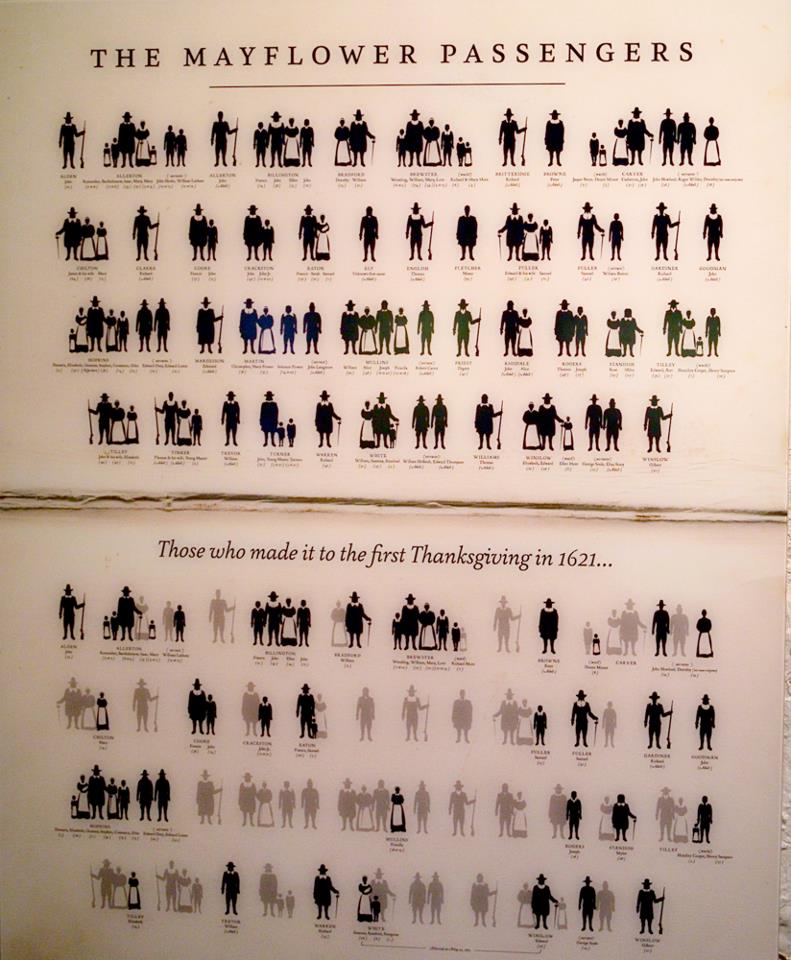
Less than half the original pilgrims made it to the the first Thanksgiving

Here’s an article from The Stream about the second Thanksgiving, by Dante Witt. I like this article because it tells us so much about the character of the United States of America. Why are we so conservative about economics?

She briefly retells the story of how the pilgrims were helped by Squanto, which I blogged about in a previous Thanksgiving Day post, then she talks about the troubles they had next.

Excerpt:

Although Squanto’s farming techniques worked better than their old ones, the pilgrims still could not produce enough food. Was it bad luck? Bad soil? No. The Mayflower pilgrims were part of a joint stock company which stipulated that the pilgrims would pool their resources, and receive a share of the profit.

The strategy turned out to be deeply misguided, working about as well as various communist economic schemes hundreds of years later. The sad state of the colony after two years of communism, wrote William Bradford, “may well evidence the vanity of that conceit of Plato’s and the other ancients applauded by some of later times; that the taking away of property and the bringing of community into a commonwealth would make them happy and flourishing; as if they were wiser than God” (p. 121).

So the pilgrims amended their contract so that each family was now responsible for its own provision. The difference was stark. Bradford explained:

This had good success, for it made all hands very industrious, so that more corn was planted than could have been by any other means the Governor could use, and saved him a great deal of trouble, and gave far better content. The women now went willingly into the field, and took their little ones with them to set corn; which before would allege weakness and inability; whom to have compelled would have been thought great tyranny and oppression.

In fact, it’s estimated the colonists planted about six times the crops they would have planted otherwise.

That shows where Americans get their views of economics, but what about the praying and the gratitude?

More:

With new farming techniques and an amended government, the pilgrims did all they humanly could to ward off starvation. But they could not control the weather. A drought settled on the colony and threatened to kill the corn before the harvest. Recognizing with the Psalmist that “except the Lord build the house, they labor in vain that build it,” the colonists turned to God. According to Bradford, they “set apart a solemn day of humiliation to seek the Lord by humble & fervent prayer, in this great distress.” What was the outcome?

And he was pleased to give them a gracious & speedy answer, both to their own & the Indians admiration, that lived amongst them. For all the morning, and greatest part of the day, it was clear weather & very hot, and not a cloud or any sign of rain to be seen, yet toward evening it began to overcast, and shortly after to rain, with such sweet and gentle showers, as gave them cause of rejoicing, & blessing God. It came, without either wind, or thunder, or any violence, and by degrees in that abundance, as that the earth was thoroughly wet and soaked therewith. Which did so apparently revive & quicken the decayed corn & other fruits, as was wonderful to see, and made the Indians astonished to behold. (p. 131)

Seeing the speedy results of the Puritans’ prayers, an Indian named Hobanak said, “Now I see that the Englishman’s God is a good God, for he hath heard you, and sent you rain, and that without storms and tempests and thunder, which usually we have with our rain, which breaks down our corn, but yours stands whole and good still; surely your God is a good God.” (pp. 64-5)

Then William Bradford again proclaimed a day of Thanksgiving to God, the forerunner of the American tradition of Thanksgiving.

So, this story explains why the United States has this character that values the free enterprise system, hard work, individual achievement, prayer, and gratitude. These are the values that make us American, that made us into such a great nation.

Making monergism make sense: reconciling divine sovereignty and free will

Lets take a closer look at a puzzle

This article at Free Thinking Ministries was written by my friend Tim Stratton. In it, presents a view of God’s sovereignty over salvation without falling into the error of double-predestination.

Excerpt: (links removed)

Many reformed folks (freely?) choose to reject Molinism because they contend that this theological view “smells of synergism.” What is this stench that reportedly makes John Calvin turn over in his grave? Simply put, synergism is the view that man plays at least a small part in his own salvation process. Monergism, on the other hand, is the view that God is the author of salvation from beginning to end.

Since Molinism affirms that man is free to choose to reject God’s saving grace or not, many Calvinists jump to the conclusion and assume that Molinism must be synergistic. This does not necessarily follow.[1] Consider one possible model:

1- God, by nature, is a volitional unmoved mover who is free to choose between options in accord with His nature. (This is supported via the Kalam and the Argument from Time).

2- By God’s grace, humans are created in the “image of God.” By nature, then, we are free to choose between options in accord with our nature. (This is supported via the Freethinking Argument).

3- Adam & Eve freely chose to disobey God and this sin completely separates humanity from God. This is what it means to have a “totally depraved sin nature.” (Every aspect of man is separated from God).

4- In this state of depraved separation from God (sin nature), humans do not even know God exists if merely left to our own devices.

5- If humans do not even know God exists, then, left to our own devices and apart from God’s grace, it would be impossible to choose to love and follow God (thus, Pelagianism is impossible on this view).

6- God, in His love for all people, provides amazing prevenient grace to all people (Romans 1:20), writing the law on the human heart (Romans 2:15), conviction of the Holy Spirit (John 16:8-9), and draws all men (John 12:32). This is commonly referred to as “common grace.”

7- Therefore, by God’s grace, human nature has changed from a “totally separated from God nature” to a nature that has now experienced enough divine revelation (influences) allowing all mankind to start making some free and volitional choices in accord with our new nature; namely, to choose to resist God’s grace and revelation, or not.[2] Mankind is without excuse because we do not have to resist what God has made clear (Romans 1:18-20).[3]

[Note: According to Calvinist, Matt Slick (albeit inadvertently), Mark 4:10-12 implies that if an unregenerate person gets access to clear and accurate information, then they possess the ability to become Christians!]

8- If one does not reject or continually resist the grace and revelation God provides them, then God will continually provide more and more until the person reaches the point of “no return” and will become saved.

Thus, God does ALL the work in salvation from beginning to end on this Molinistic model; all the human can do is freely resist God’s grace and revelation, but he or she does not have to! The human does nothing to gain salvation apart from God’s grace on this Monergistic Model of Molinism.

I think that Stratton’s formulation above does indeed keep God as the sole initiator of salvation. And that’s good. But it also makes sure that human who resist God’s leading are responsible for their choice to resist God, and that’s good. We want salvation to be 100% by faith alone in Christ alone. But we don’t want God to be the cause of people not being saved. On Stratton’s view, God wants everyone to be saved. If anyone is saved, it’s because God did ALL THE WORK to lead them and secure their salvation with the death of Jesus on the cross. But, on Stratton’s view, humans do get a choice – the choice to trust God or not. And so, if a person is not saved, then it’s their fault – not God’s. This works.

Read his whole post, and see what you think about it.

A Harvard University student explains how evidence changed her mind about God

Harvard University student discovers apologetics

Here’s a must-read article  about the effectiveness of apologetics on college campuses in Christianity Today.

Excerpt:

I don’t know when I first became a skeptic. It must have been around age 4, when my mother found me arguing with another child at a birthday party: “But how do you know what the Bible says is true?” By age 11, my atheism was so widely known in my middle school that a Christian boy threatened to come to my house and “shoot all the atheists.” My Christian friends in high school avoided talking to me about religion because they anticipated that I would tear down their poorly constructed arguments. And I did.

As I set off in 2008 to begin my freshman year studying government at Harvard (whose motto is Veritas, “Truth”), I could never have expected the change that awaited me.

It was a brisk November when I met John Joseph Porter. Our conversations initially revolved around conservative politics, but soon gravitated toward religion. He wrote an essay for the Ichthus, Harvard’s Christian journal, defending God’s existence. I critiqued it. On campus, we’d argue into the wee hours; when apart, we’d take our arguments to e-mail. Never before had I met a Christian who could respond to my most basic philosophical questions: How does one understand the Bible’s contradictions? Could an omnipotent God make a stone he could not lift? What about the Euthyphro dilemma: Is something good because God declared it so, or does God merely identify the good? To someone like me, with no Christian background, resorting to an answer like “It takes faith” could only be intellectual cowardice. Joseph didn’t do that.

And he did something else: He prodded me on how inconsistent I was as an atheist who nonetheless believed in right and wrong as objective, universal categories. Defenseless, I decided to take a seminar on meta-ethics. After all, atheists had been developing ethical systems for 200-some years. In what I now see as providential, my atheist professor assigned a paper by C. S. Lewis that resolved the Euthyphro dilemma, declaring, “God is not merely good, but goodness; goodness is not merely divine, but God.”

Joseph also pushed me on the origins of the universe. I had always believed in the Big Bang. But I was blissfully unaware that the man who first proposed it, Georges Lemaître, was a Catholic priest. And I’d happily ignored the rabbit trail of a problem of what caused the Big Bang, and what caused that cause, and so on.

By Valentine’s Day, I began to believe in God. There was no intellectual shame in being a deist, after all, as I joined the respectable ranks of Thomas Jefferson and other Founding Fathers.

I wouldn’t stay a deist for long. A Catholic friend gave me J. Budziszewski’s book Ask Me Anything, which included the Christian teaching that “love is a commitment of the will to the true good of the other person.” This theme—of love as sacrifice for true good—struck me. The Cross no longer seemed a grotesque symbol of divine sadism, but a remarkable act of love. And Christianity began to look less strangely mythical and more cosmically beautiful.

Now, I’m going to get into a lot of trouble for saying this, but I think that if you are a Christian and you are in a secular university, then you really need to have put in the effort to study the areas of science, history and philosophy that are relevant to the Christian faith. This is regardless of your personal abilities or field of study. We must all make an effort regardless of how comfortable we are with things that are hard for us to learn.

Granted, most people today are not interested in truth, because we just have this cultural preoccupation with having fun and feeling good and doing whatever we want to do whenever we want to do it. Most atheists I’ve met are like that, but some are more honest, open-minded, and they just have never encountered any good reasons or evidence to think that God exists and that Jesus is anything other than a man. There are a lot of atheists like that who are just waiting to hear some decent evidence. Our job is to prepare for them and then engage them, if they are willing to be engaged.

I think that definition of love she cited – self-sacrifice for the true good of another person – is important. I don’t think that ordinary Christians like you or me spends time on apologetics because we “like” it. I know lots of Christians who are in tough, expensive academic programs trying to get the skills they need to defend truth in areas that matter. They do this because they know that there are people out there who are interested in truth, and who are willing to re-prioritize their lives if the truth is made clear to them. We need to be willing to serve God by doing hard things that work.

Positive arguments for Christian theism