
All posts by Wintery Knight

https://winteryknight.com/

Study: non-STEM college programs make students less religious

Lets take a closer look at a puzzle

Why do students turn away from Christianity in college? It might have something to do with what they choose to study.

Rice University reports on a new study conducted by sociologist Elaine Howard Ecklund.

Excerpt:

The public’s view that science and religion can’t work in collaboration is a misconception that stunts progress, according to a new survey of more than 10,000 Americans, scientists and evangelical Protestants. The study by Rice University also found that scientists and the general public are surprisingly similar in their religious practices.

The study, “Religious Understandings of Science (RUS),” was conducted by sociologist Elaine Howard Ecklund and presented today in Chicago during the annual American Association for the Advancement of Science (AAAS) conference. Ecklund is the Autrey Professor of Sociology and director of Rice’s Religion and Public Life Program.

“We found that nearly 50 percent of evangelicals believe that science and religion can work together and support one another,” Ecklund said. “That’s in contrast to the fact that only 38 percent of Americans feel that science and religion can work in collaboration.”

The study also found that 18 percent of scientists attended weekly religious services, compared with 20 percent of the general U.S. population; 15 percent consider themselves very religious (versus 19 percent of the general U.S. population); 13.5 percent read religious texts weekly (compared with 17 percent of the U.S. population); and 19 percent pray several times a day (versus 26 percent of the U.S. population).

[…]RUS is the largest study of American views on religion and science.

Meanwhile, Reasonable Faith has a podcast about the study, and what they discuss is how students who go into non-STEM university programs lose their interest in religion at a much higher rate than people who study STEM.

Here is the MP3 file.

And the relevant portion of the transcript:

DR. CRAIG: Right. If you look at their chart they give, where it shows the changes in religiosity by college major, it shows that in biology, engineering, and physical science and math they were mixed. The overall effect was neither negative nor positive. For some it was positive, some negative. But those majors did not seem to have a very significant effect upon the person’s religious behavior. The majors that had a very positive impact on religiosity were education, vocational or clerical education, business, and what is classified as “other.” All of those majors – whatever those are – have an overall positive impact upon students’ religiosity.

KEVIN HARRIS: And attendance as well – attendance to church services.

DR. CRAIG: Yes.

KEVIN HARRIS: The big fly in the ointment here is that “both the Humanities and the Social Sciences see dramatic declines in attendance and even more in religious beliefs.” It lowers church attendance, synagogue attendance, and even more in religious beliefs. What do we mean by the humanities and the social sciences?

DR. CRAIG: Humanities would include your non-scientific areas; for example, literature (hence the title of the article), politics.[3] I don’t know if they would include economics in this or not. Religious studies. In the social sciences are things like anthropology and sociology would be included there.

KEVIN HARRIS: The study of art?

DR. CRAIG: Yes, I suppose the arts would be in the humanities – that would be music and graphic arts. It is a big, big catch-all category.

And why does Dr. Craig think this is happening?

DR. CRAIG: […]It could well be that it is because it is in the humanities that the radicals of the 1960s were able to find a place in the university and become ensconced as professors with the relativism that they were championing. In areas like anthropology and sociology you find tremendous relativism where you simply study these cultures and societies without making any sort of judgment as to truth with regard to what they believe. This leads to the belief that it is all relative; there isn’t anything that is objectively true. John Searle is a very prominent philosopher at the University of California, Berkeley. Searle says that he believes that because of the commitment to the objectivity of truth and logic and the scientific method the hard sciences were barred to these radicals of the 1960s – getting into them and influencing them. But where they found an opening was in things like the Women’s Studies Department, Religious Studies, Anthropology, Sociology. These soft sciences. He says the professors in these disciplines are the children of the 1960s that have carried into it their relativistic views of truth. I noticed here the conclusion by the researchers of the University of Michigan (apparently who did this study), “Our results suggest that it is Postmodernism, not Science, that is the bête noir [the black beast or the hated thing] of religiosity.” The enemy of religiosity is postmodernism, not science.

KEVIN HARRIS: Postmodernism, as you’ve pointed out, was mainly a thing confined to literature and the soft sciences.

DR. CRAIG: Right. Women’s Studies, Religious Studies is rampant with Postmodernist perspectives. That has a real ring of truth to it, and could be the reason behind these statistics.

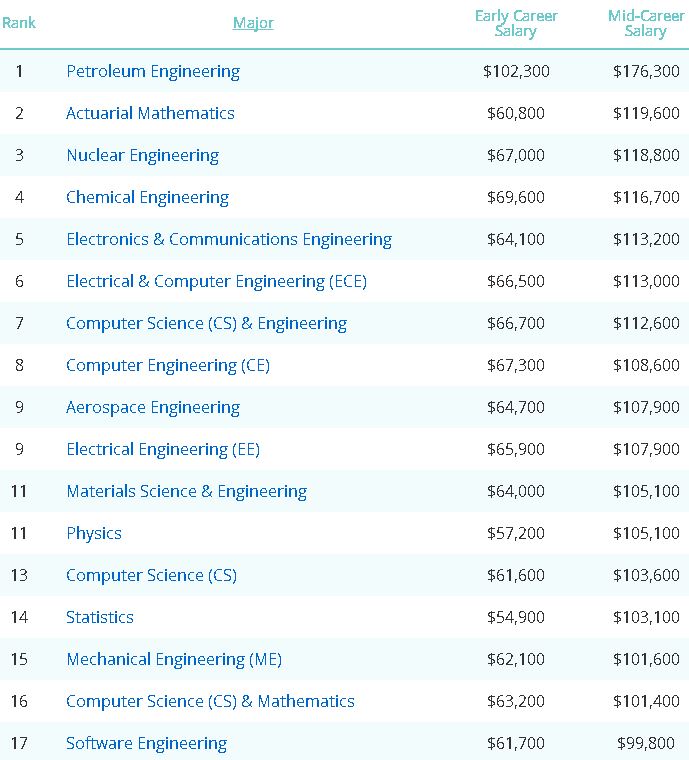
And this is why I recommend that people not drop math in high school, and pick a STEM field to study in college (or a trade in trade school). You are wasting your money when you let people in non-STEM areas indoctrinate you in fact-free irrationality. By the way, I love business administration as a major, for those who do not want to do the lab work. It attracts a lot of conservatives and entrepreneurs.

If you’re not worried about your faith, then you should at least be worried about your wallet:
Should you study philosophy?
STEM degrees are good for your finances as well

It’s much easier to have an influence as a Christian if you get your financial house in order. Having a degree that leads to a good paying job is certainly a good way to fund your life plan. Money also helps you to not worry too much about what the secular left can do to you. It’s good for offense and defense, in short.

New study: unborn child’s heartbeat is detectable at 16 days

I'm Scheming Unborn Baby, and I approve this study
I’m Scheming Unborn Baby, and I approve this study

A new study conducted by University of Oxford was published in the journal eLife. (H/T Dad)

Here is the report from the Oxford University website:

When does our heart first start to beat? Until now, researchers thought that the first time our heart muscle contracted to beat was at eight days after conception in mice, which equates to around day 21 of a human pregnancy.

Now, a team funded by the British Heart Foundation (BHF) at the University of Oxford has demonstrated earlier beating of the heart in mouse embryos which, if extrapolated to the human heart, suggests beating as early as 16 days after conception.

In the study, published in the journal eLife, researchers looked at the developing mouse heart and found that the muscle started to contract as soon as it formed the cardiac crescent – an early stage in heart development. In mice, this crescent forms 7.5 days after conception, which is equivalent to day 16 in the human embryo. Previously, it was thought that the heart started to contract a stage later, when the heart appears as a linear tube.

Here’s how they did it:

By adding fluorescent markers to calcium molecules within the mouse embryo, the team was able to see at exactly which point in time the calcium tells our heart muscle cells to contract and then become coordinated enough to produce a heartbeat.

The team also found that this initiation of beating was essential for the heart to develop properly at an early stage and that a protein called NCX1 plays a key role in the generation of the calcium signals needed to produce the beating action of the heart.

The heart is the first organ to form during pregnancy and is critical in providing oxygen and nutrients to the developing embryo. The process of heart development is highly conserved between mammalian species, meaning that these findings may add considerably to our understanding of how the human heart develops.

Abortion is another one of those issues where conservatives are determined to abide by what the progress of science reveals, while liberals are determined to block out what science reveals.

Here is a nice video that shows how unborn children develop in the womb:

From the moment of conception, a new set of human DNA is formed, different from the mother, different from the father. And already the little unborn child is in relationship with his or her mother. He or she is depending on her to honor her obligation to him or her, because it was she who chose to have sex, and who chose the man to have sex with, and who chose when in the relationship to have sex with him.

Those of us who are Christians have always believed that abortion was morally wrong, going write back to the beginning of the Christian faith.

This is from Birds of the Air.

Summary:

Recently I came across a reading of the Didache. “The what?” you may ask. The Didache is a book written somewhere in the first or second century. For a long time it was up for consideration as Scripture. It was believed to be the Teaching of the Twelve Apostles. Eventually it was agreed that the book was an excellent book, but not inspired Scripture. So I was pleased to be able to download this admirable book containing good teachings from the early Church fathers.

The book seemed to be largely a lot of quotes from Scripture. You’ll learn the basic rules of Christianity — “First, you shall love God who made you; second, love your neighbor as yourself.” You’ll learn that “grave sins” are forbidden, like adultery, murder, fornication, and so on. (They specifically include pederasty in the list.) There are instructions regarding teachers, prophets, Christian assembly, and so on. Lots of the normal, good stuff. But, since this was written sometime prior to 200 AD, I was somewhat surprised at this instruction: “You shall not murder a child by abortion” (Didache, Ch 2).

Christians really would benefit from looking at the moral values of the early church. These days, we tend to decide what is right and wrong based on our feelings, including the feelings we have when other people like us or don’t like us. But deciding things based on your feelings was not real popular with the earliest Christians. They decided what to do based on what was morally right, and they always protected the weak rather than favoring the selfishness and hedonism of the strong.

New study: children of divorced parents are less likely to be religious

A family praying and reading the Bible

This is from the leftist Washington Post, of all places.

Excerpt:

Two widely recognized trends in American society might have something to do with each other.

Divorce rates climbed to the highest levels ever in the 1980s, when about half of all marriages ended in divorce.

And in the present day, Americans are rapidly becoming less religious. Since 1972, the share of Americans who say they do not adhere to any particular religion has increased from 5 percent of the population to 25 percent.

Could those two trends be related? A new study from the Public Religion Research Institute says yes. The children of divorced parents have grown up to be adults of no religion.

People whose parents divorced when they were children are significantly more likely to grow up not to be religious as adults, the study found. Thirty-five percent of the children of divorced parents told pollsters they are now nonreligious, compared with 23 percent of people whose parents were married when they were children.

[…]Cox said his team found that even children of divorced parents who are religious are less religious than their peers. Thirty-one percent of them go to services every week, compared with 43 percent of religious people whose parents were married when they were growing up.

This part about Protestant pastors wimping out of thorny issues is very interesting:

Andrew Root, a professor at Luther Seminary who has written a book about the spiritual consequences of divorce for children, was not surprised to hear about the study’s findings.

“Everything in a divorce gets divided. Literally everything. Parents’ friends get divided. Relatives get divided. Everyone takes sides,” Root said. “Even religion takes sides. The church gets divided. Dad leaves Mom’s faith, or vice versa. Negotiating those worlds becomes difficult.”

Root said churches are not doing enough to speak directly to the concerns of children in those situations, so the kids lose faith in the ability of the church to help them. He said that when the divorce rate climbed in the 1980s, many members of the clergy, especially mainline Protestant pastors, stopped speaking out against divorce so as not to alienate struggling congregants. But by going silent on the subject, they didn’t offer any comfort to the kids.

As adults, Root said, those same people do not believe the church will respond to their adult problems. “They’re now thinking, ‘I’m dealing with depression.’ Or, ‘I’m dealing with my own marital troubles.’ The church must not have anything to say to me, because when I was 8 and dealing with divorce, my Sunday-school teacher didn’t even say, ‘Man, Amanda, that must be really complicated for you’,” Root said.

I get e-mails all the time from people who are suffering from the effects of the Sexual Revolution, which was put in place by selfish adults so they could do whatever they wanted. Children suffered a lot from this. Obviously, the painful of experience of their parents divorcing hurt their view of God. But divorce also hurts a child’s ability to know what a man loving a woman in a stable commitment looks like, and what a woman loving a man in a stable commitment looks like. I mean – what does love between sexes look like when the “in love” feeling has worn off, and all that remains is the commitment to build something together? I think that a lot is riding on the stability of the relationship between the child’s mother and father.