
All posts by Wintery Knight

https://winteryknight.com/

We shouldn’t be surprised by evidence of fascism in the Obama administration

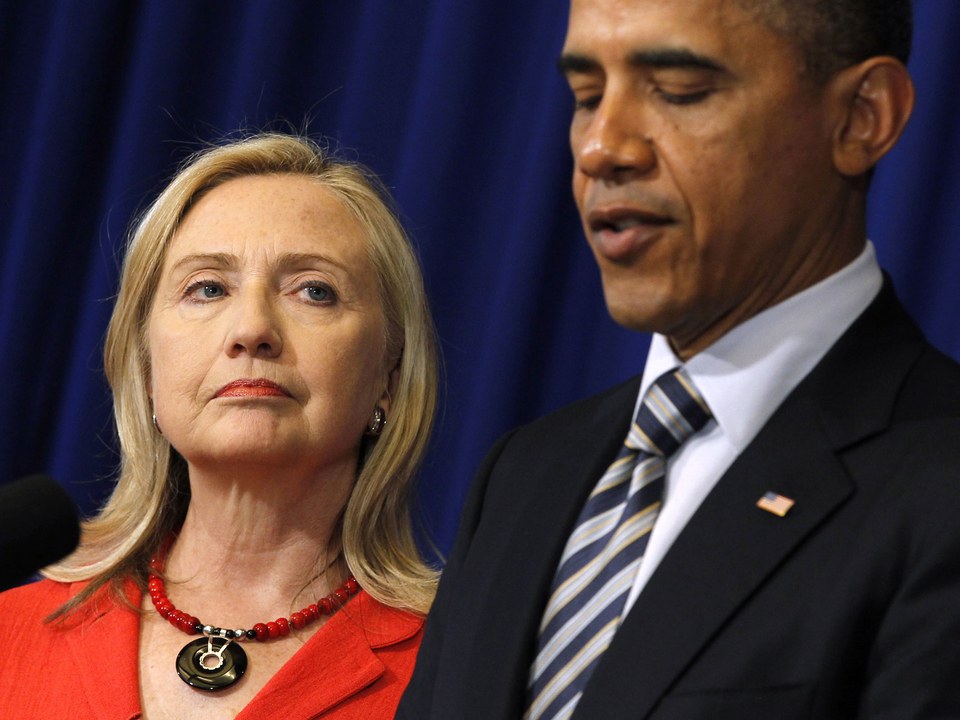
Hillary Clinton and Barack Obama

There were plenty of signs that Obama was a pretty typical leftist authoritarian. Everything we knew about his ideology before he was elected should have told us that he was in favor of big government, and opposed to private businesses and families. If there was a conflict between liberty and government overreach, then Obama could be counted on to come down on the side of big government.

Here’s a reminder from The Federalist about why we shouldn’t be surprised by what was revealed in the House Intelligence Committee memo.

Excerpt:

Remember Frank VanderSloot? He was one of eight Mitt Romney donors that an Obama campaign website targeted in April 2012, listing each by name and condemning them for the crime of having donated to Obama’s opponent. The post described VanderSloot as a “wealthy individual” with a “less-then-reputable record.”

It didn’t stop with this public shaming of a private citizen. As the Wall Street Journal’s Kim Strassel later noted, the Obama campaign’s site was a clear signal to harass and intimidate Romney donors, which is exactly what happened:

Twelve days later, a man working for a political opposition-research firm called an Idaho courthouse for Mr. VanderSloot’s divorce records. In June, the IRS informed Mr. VanderSloot and his wife of an audit of two years of their taxes. In July, the Department of Labor informed him of an audit of the guest workers on his Idaho cattle ranch. In September, the IRS informed him of a second audit, of one of his businesses. Mr. VanderSloot, who had never been audited before, was subject to three in the four months after Mr. Obama teed him up for such scrutiny.

The last of these audits was only concluded in recent weeks. Not one resulted in a fine or penalty. But Mr. VanderSloot has been waiting more than 20 months for a sizable refund and estimates his legal bills are $80,000. That figure doesn’t account for what the president’s vilification has done to his business and reputation.

Using the IRS to target political enemies was nothing new for the Obama administration in 2012. In Obama’s January 2010 State of the Union address, he infamously disparaged the U.S. Supreme Court—to the justices’ faces—for its ruling in Citizens United. He claimed the ruling would “open the floodgates for special interests” to influence elections—by which he meant conservative groups. He returned to this theme again and again in subsequent speeches, warning that Citizens United would enable shadowy organizations, maybe even foreign-controlled corporations, to infiltrate our politics with “dark money.”

Obama’s message was clear: these conservative advocacy groups should be targeted. The IRS got the message, and from 2010 to 2013 it systematically targeted conservative nonprofits applying for tax-exempt status. If your group had “tea party” or “patriots” in its name, the IRS came after you. Hundreds of individuals and groups, mostly comprised of private citizens with moderate means, were subjected to exhaustive and expensive IRS audits. The feds demanded detailed donor and member information, reading lists, and in some cases the contents of prayers offered at meetings. The applications were held up for years.

Last October, the IRS signed a consent decree in federal court admitting that it targeted conservative groups. But of course nothing ever happened to those responsible. The IRS official at the heart of the targeting scandal, Lois Lerner, retired with a full pension and no disciplinary action was ever taken against any IRS employee. When the scandal broke in 2013, Obama feigned outrage, calling the agency’s behavior “outrageous” and assuring the public that the IRS should be “held fully accountable.”

But of course the IRS was simply responding to Obama’s openly expressed suggestion that these groups were suspicious and improperly engaged in campaigning. Obama didn’t have to issue a direct order to get the IRS to do his political dirty work, he just had to make himself clear.

And it wasn’t just the IRS persecuting conservative groups. The Obama administration also went after religious people – people of moral character and conscience.

More:

The same sort of politicization and abuse of power unfolded throughout the executive branch under Obama. Consider the contraceptive mandate. The Affordable Care Act invested the U.S. secretary of Health and Human Services with enormous power over the country’s health insurance markets, including the ability to define what sort of contraceptive coverage employers had to provide. Employers with strong religious objections to contraception and related abortifacients, like Hobby Lobby and the Little Sisters of the Poor (an order of Catholic nuns who care for the poor elderly), were effectively told by the Obama administration to shut up and violate their faith.

In both of those cases, Obama’s Justice Department went all the way to the Supreme Court to try to force those employers to comply with the dictates of the HHS secretary. That Obama’s Justice Department failed in both cases shouldn’t diminish the fact that both HHS and DOJ carried on a highly politicized campaign against religious conservatives who refused to go along with federal rules stemming from Obama’s signature legislative accomplishment.

On this blog, I wrote many times about the fascist activities of the Holder DOJ and then the Lynch DOJ, after his departure. Basically, the Obama administration thought that it was perfectly reasonable to weaponize the entire federal government – from IRS, to EPA, to HHS, and beyond – against their political opposition. Both the Republican party, and also private citizens, private businesses and private charities.

Study: raising children without a father causes harm to the children

Lets take a closer look at a puzzle

I thought it might be a good idea to take a look at a recent research paper on father absence. My purpose in posting this study is to remind people to think about what children need when making relationship decisions. Fathers are more of a necessity for children than a nice-to-have.

The paper about a large-scale study was posted at NCBI NIH.

The abstract says:

The literature on father absence is frequently criticized for its use of cross-sectional data and methods that fail to take account of possible omitted variable bias and reverse causality. We review studies that have responded to this critique by employing a variety of innovative research designs to identify the causal effect of father absence, including studies using lagged dependent variable models, growth curve models, individual fixed effects models, sibling fixed effects models, natural experiments, and propensity score matching models. Our assessment is that studies using more rigorous designs continue to find negative effects of father absence on offspring well-being, although the magnitude of these effects is smaller than what is found using traditional cross-sectional designs. The evidence is strongest and most consistent for outcomes such as high school graduation, children’s social-emotional adjustment, and adult mental health.

I was curious to see what specific problems fatherlessness causes for children, according to this redo of previous studies.

The conclusion explains:

The body of knowledge about the causal effects of father absence on child well-being has grown during the early twenty-first century as researchers have increasingly adopted innovative methodological approaches to isolate causal effects. We reviewed 47 such articles and find that, on the whole, articles that take one of the more rigorous approaches to handling the problems of omitted variable bias and reverse causality continue to document negative effects of father absence on child well-being, though these effects are stronger during certain stages of the life course and for certain outcomes.

We find strong evidence that father absence negatively affects children’s social-emotional development, particularly by increasing externalizing behavior. These effects may be more pronounced if father absence occurs during early childhood than during middle childhood, and they may be more pronounced for boys than for girls. There is weaker evidence of an effect of father absence on children’s cognitive ability.

Effects on social-emotional development persist into adolescence, for which we find strong evidence that father absence increases adolescents’ risky behavior, such as smoking or early childbearing. The evidence of an effect on adolescent cognitive ability continues to be weaker, but we do find strong and consistent negative effects of father absence on high school graduation. The latter finding suggests that the effects on educational attainment operate by increasing problem behaviors rather than by impairing cognitive ability.

The research base examining the longer-term effects of father absence on adult outcomes is considerably smaller, but here too we see the strongest evidence for a causal effect on adult mental health, suggesting that the psychological harms of father absence experienced during childhood persist throughout the life course. The evidence that father absence affects adult economic or family outcomes is much weaker. A handful of studies find negative effects on employment in adulthood, but there is little consistent evidence of negative effects on marriage or divorce, on income or earnings, or on college education.

Despite the robust evidence that father absence affects social-emotional outcomes throughout the life course, these studies also clearly show a role for selection in the relationship between family structure and child outcomes. In general, estimates from IFE, SFE, and PSM models are smaller than those from conventional models that do not control for selection bias. Similarly, studies that compare parental death and divorce often find that even if both have significant effects on well-being, the estimates of the effect of divorce are larger than those of parental death, which can also be read as evidence of partial selection.

Right now, we’re living in a time where people think that it’s ok to do whatever they feel like doing. People seem to treat relationships as if they are meant to provide the grown-ups with satisfaction, and the needs of the children are often neglected. Any kind of warning or appeal to evidence is dismissed by those who want to bend and break the rules.

Well, when you take a look at the studies, you actually find that there are rules about how to go about relationships in order to achieve results. It seems to me that children’s needs ought to be an important consideration when making relationship decisions. Men shouldn’t have babies with bad mothers, and women shouldn’t have babies with bad fathers. It ought to be an important criterion for choosing a mate and conducting a relationship: are we making decisions protecting children and giving them what they need?

And it turns out that there are studies that tell you how to prepare for making a stable commitment, too. Like this one, which found that the number of premarital sex partners reduces relationship stability and quality. This is just an example, there are many more studies that provide a lot more information about how to do things right.

I think today, people want to make decisions about what to do based on feelings. If it feels good, do it. But this approach doesn’t work anywhere in life. It doesn’t work when choosing a major, when choosing a job, when choosing how to spend money. It just never works. Nothing useful is ever achieved by putting feelings above reason and evidence.

People shouldn’t be surprised when they break the rules and then get negative outcomes. It just takes a little reading first to find out what is likely to work and what isn’t. There are real victims to bad decisions. There are mistakes that can’t be fixed with happy talk and a positive attitude. We seem to have gotten addicted to the idea that every damaging mistake can be fixed by making everyone around say happy words about the mistake. But the truth is that when you make bad decisions, the damage exists independently of what people say about it.

It’s not the mean people making moral judgments that causes fatherless kids to have higher anxiety or be more violent or get pregnant earlier or abuse drugs. It’s the fatherlessness. The only hope that children have to avoid the consequences of bad decisions by parents is for the moral people to set boundaries and teach moral wisdom with evidence.

William Lane Craig lectures on the evidence for the resurrection of Jesus

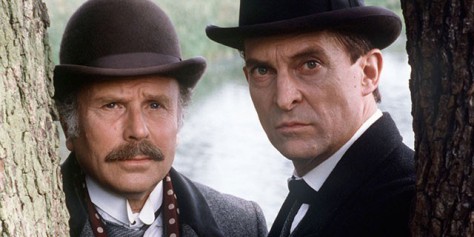
Sherlock Holmes and John Watson: let's take a look at the facts
Sherlock Holmes and John Watson: let’s take a look at the facts

Here is Dr. William Lane Craig giving a long-form argument for the historical event of the resurrection of Jesus, and taking questions from the audience.

The speaker introduction goes for 6 minutes, then Dr. Craig speaks for 35 minutes, then it’s a period of questions and answers with the audience. The total length is 93 minutes, so quite a long period of Q&A. The questions in the Q&A period are quite good.

Introduction:

  • Many people who are willing to accept God’s existence are not willing to accept the God of Christianity
  • Christians need to be ready to show that Jesus rose from the dead as a historical event
  • Private faith is fine for individuals, but when dealing with the public you have to have evidence
  • When making the case, you cannot assume that your audience accepts the Bible as inerrant
  • You must use the New Testament like any other ancient historical document
  • Most historians, Christian and not, accept the basic minimal facts supporting the resurrection of Jesus

Fact #1: the burial of Jesus following his crucifixion

  • Fact #1 is supported by the early creed found in Paul’s first letter to the Corinthians (1 Cor 15)
  • Fact #1 is supported by the early Passion narrative which was a source for Mark’s gospel
  • Fact #1 passes the criterion of enemy attestation, since it praises one of the Sanhedrin
  • Fact #1 is not opposed by any competing burial narratives

Fact #2: on the Sunday following his crucifixion, Jesus’ tomb was found empty by some women

  • Fact #2 is supported by the early Passion narrative which was a source for Mark’s gospel
  • Fact #2 is implied by the early creed found in Paul’s first letter to the Corinthians (1 Cor 15)
  • Fact #2 is simple and lacks legendary embellishment, which argues for an early dating
  • Fact #2 passes the criterion of embarrassment, because it has female, not male, witnesses
  • Fact #2 passes the criterion of enemy attestation, since it is reported by the Jewish leaders

Fact #3: Jesus appeared to various people in various circumstances after his death

  • Fact #3 is supported by the early creed found in Paul’s first letter to the Corinthians (1 Cor 15)
  • Fact #3 is supported by multiple, independent reports of the events from all four gospels
  • Fact #3 explains other historical facts, like the conversion of Jesus’ skeptical brother James

Fact #4: the earliest Christians proclaimed their belief in the resurrection of Jesus

  • Fact #4 explains why the earliest Christians continued to identify Jesus as the Messiah
  • Fact #4 explains why the earliest Christians were suddenly so unconcerned about being killed

Dr. Craig then asks which hypothesis explains all four of these facts. He surveys a number of naturalistic hypotheses, such as the hallucination theory or various conspiracy theories. All of these theories deny one or more of the minimal facts that have been established and accepted by the broad spectrum of historians. In order to reject the resurrection hypothesis, a skeptic would have to deny one of the four facts or propose an explanation that explains those facts better than the resurrection hypothesis.

I listened to the Q&A period while doing housekeeping and I heard lots of good questions. Dr. Craig gives very long answers to the questions. One person asked why we should trust the claim that the Jewish leaders really did say that the disciples stole the body. Another one asked why we should take the resurrection as proof that Jesus was divine. Another asks about the earthquake in Matthewand whether it is intended to be historical or apocalyptic imagery. Dr. Craig is also asked about the Jewish scholar Geza Vermes, and how many of the minimal facts he accepts. Another questioner asked about the ascension.

If you are looking for a good book to read on this topic, the best introductory book on the resurrection is “The Case for the Resurrection of Jesus” and the best comprehensive book is “The Resurrection of Jesus“.