
All posts by Wintery Knight

https://winteryknight.com/

Do Christian pastors think that premarital sex is morally wrong?

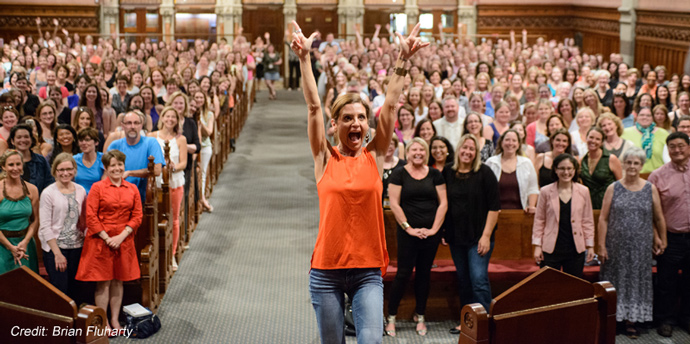
Glennon Doyle Melton in a church
Lesbian Glennon Doyle Melton in a church, surrounded by female Christian fans

My friend Wes posted an article from Dalrock’s blog about how Spain is trying to get people to make babies after repeated laws punishing men for marrying and having children, such as forcing men to do housework, assuming that men are guilty of domestic violence without any evidence, making no-fault divorce more unfair for men, and now allowing children to sue their parents for maintenance throughout their 20s. Spain is feminist, and no sane, intelligent man marries and has children there.

That article was fine, so I decided to run through his last dozen posts. In many of them, he talked about how pastors, confronted with the decreasing numbers of marriage-minded men, were blind to the root cause of the problem: radical feminism. In fact, the pious pastors continued to blame men for refusing to marry like they did before radical feminism removed all the incentives for them to marry.

Let’s just take a look at this one.

Excerpt:

[…][O]ver the past decades we have witnessed an explosion in out of wedlock births.  Feminists have been entirely open about their desire to make single motherhood an attractive option for women, and after decades of social and legal “progress” 40% of all children are now born out of wedlock in the US.

For feminist Christians this isn’t a problem, as they can simply celebrate their victory while pushing for even more “progress”.  But for complementarians and other conservative Christians, this poses a huge challenge.  How can they appear to take biblical morality (and the welfare of innocent children) seriously while avoiding upsetting women in our thoroughly feminized culture?  There is only one answer, no matter how absurd it is.  The answer is to pretend that feminists aren’t really in the final mopping up stages in the culture war, and assert instead that what we are experiencing is a sudden and mysterious change in men.  Here is how Glenn Stanton, the Director of Family Formation Studies at Focus on the Family (FotF), explains the incredible increase we are seeing in out of wedlock births*:

Women want to marry and have daddies for their babies.  But if they can’t find good men to commit themselves to, well…  Our most pressing social problem today is a man deficit.

The level of denial here is astonishing, and would be laughable if it weren’t entirely commonplace.  Even more astounding, often times the denial of feminism is expressed using feminist terminology, and even includes calls to join feminists in their push to re order our society**:

Whatever our views on specific economic policies, we must recognize that much economic hardship of women in our age is the result of men who abandon their commitments. We should eschew obnoxious “welfare queen” rhetoric and work with others of goodwill to seek economic and social measures to provide a safety net for single mothers and abused women in jeopardy. We should join with others, including secular feminists, in seeking legal protections against such manifestations of a rape culture as sexual harassment, prostitution, and sex slavery.

The quote above is from Dr. Russell Moore, president of the Ethics & Religious Liberty Commission of the Southern Baptist Convention.

In the past, I’ve blogged about pastor Mark Driscoll, an otherwise excellent pastor, who was asked by a Christian woman in a premarital sexual relationship with a non-Christian man how to get him to commit to her. His answer was not to rebuke the woman for choosing a hawt bad boy because of her feelings of attraction. His answer was to bellow how dare this non-Christian man who signed up for recreational sex with this fake Christian woman not act as if he were actually a Christian man (even though she was not acting like a Christian woman). It’s rare (I mean really rare) to hear a sermon where the pastor actually says that prohibitions against premarital sex apply to men and women. Instead, you get people like Moore and Driscoll refusing to confront these sinful women, because that’s just too scary! It doesn’t matter if women’s choice of bad men has caused abortion, divorce, fatherlessness, etc. to skyrocket. Pious pastors can’t hold women accountable for putting feelings above the Bible – that would take courage, and the pious pastors don’t have that. Women need to be told that they should be focused on marriage when they are choosing men. They shouldn’t choose the exciting promiscuous binge-drinking bad boy with the spotty resume and the empty balance cheat. They should choose the man who can actually do the job.

50 Shades of Feminism

The refusal to apply the Bible to women’s decisions can be seen in the response from pious pastors to the widespread popularity of 50 Shades of Gray among Christian women.

Excerpt:

Christian women are just as enthralled with 50SOG as non Christian women are:

What is surprising is who is viewing the film and reading the book—and why in the world they even would. Many refer to the book as “mommy porn” because of its wild popularity among adult women. And ticket sales are briskest in the typically-conservative deep south…

…it’s also reaching our young daughters. According to IMDB (Internet Movie Database), the movie drew the highest reviews by far from girls under 18.

And just in case you’re wondering, a Barna survey found that women who identify themselves as Christians are reading the books at the same rate as the general public. It’s captivating women everywhere.

Christian women are reading these books for the same reason as non-Christian women: because they like the sociopath man.

What is the solution to this? To tell Christian women that their feelings of attraction are morally wrong? Oh no, that’s too frightening to the pious pastors. Women are protected when we tell them not to be responsible with alcohol, responsible with their choice of man, responsible with their sexual choices.

You would think that pious pastors would confront women about their attraction for 50 Shades, but they don’t. The solution is always to get the sane, moral men have to bullied to “man up” so that women don’t act badly. The pious pastors simply refuse to see what the problem is: women being taught that their feelings are a hotline to God’s will for their happiness, so that the rules don’t apply to them, and they can choose godless men and try to make things work out by giving them recreational sex. Pious pastors are flat out teaching women in their churches that God’s job is to make them happy, that their feelings are God speaking to them, that the Bible doesn’t apply to their decision making about men and marriage, and that if their crazy, emotional selfishness blows up in their faces, then it’s somehow the innocent male bystander’s fault that it happened.

Let’s celebrate our heroes for Memorial Day

Leslie Sabo
Leslie Sabo

Here’s a story of heroism from Investors Business Daily.

It says:

Leslie Sabo was killed during the Vietnam War’s 1970 Cambodian Campaign. He was nominated for the Medal of Honor, but the records were lost until a veteran rediscovered them in 1999. In 2012, Sabo’s widow received the nation’s highest military award on his behalf, the 249th for Vietnam.

Sabo’s platoon and another had been ambushed from all sides by a large and well-entrenched force of communist soldiers.

He repeatedly attacked and killed enemy soldiers, was wounded by a grenade as he shielded a comrade, and then was fatally shot as he provided covering fire for a medevac helicopter.

“His indomitable courage and complete disregard for his own safety saved the lives of many of his platoon members,” said the Medal of Honor citation. “Spc. 4 Sabo’s extraordinary heroism and selflessness, above and beyond the call of duty, at the cost of his life, are in keeping with the highest traditions of military service and reflect great credit upon himself, Company B, 3rd Battalion, 506th Infantry, 101st Airborne Division, and the United States Army.”

Leslie Jr. was born in 1948 in Kufstein, Austria, where his well-to-do family had moved after the Soviet occupation of Hungary at the end of World War II, leaving almost everything behind.

They moved to America when he was 2. They lived in Youngstown, Ohio, and then Ellwood City, Pa.

Leslie Sr., a lawyer in Hungary, retrained as an engineer, and both parents taught their two remaining sons (another was killed by a bomb during the war) patriotism for their adopted country.

Here are some more details from the Army web site:

4 Leslie H. Sabo Jr. distinguished himself, May 10, 1970, in Se San, Cambodia, while serving as a rifleman in Company B, 3d Battalion, 506th Infantry, 101st Airborne Division.

Members of B. Co. were ambushed by a large enemy force. While conducting a reconnaissance patrol, 22-year-old Sabo, charged an enemy position, killing several enemy soldiers. Immediately thereafter, he assaulted an enemy flanking force, successfully drawing their fire away from friendly soldiers and ultimately forcing the enemy to retreat.

When a grenade landed nearby a wounded comrade, Sabo picked up the grenade threw it away while shielding his buddy with his own body, thus absorbing the brunt of the blast and saving the man’s life.

Seriously wounded by the blast, Sabo, nonetheless, retained the initiative and single- handedly charged an enemy bunker that had inflicted severe damage on the platoon. He received several serious wounds from withering automatic weapons fire in the process. Despite being mortally injured, he crawled towards the enemy emplacement and, when in position, threw a grenade into the bunker. The resulting explosion silenced the enemy fire, but also ended Spc. 4 Sabo’s life.

He gave his life to save his friends.

Check out some of my Medal of Honor posts:

God bless our soldiers, airmen and sailors!

Gary Habermas and James Crossley discuss the minimal facts case for the resurrection

Two ninjas face off at sundown

James Crossley is my favorite atheist ancient historian, such a straight shooter. He’s on the skeptical left, but he has a no-baloney way of talking that I really like. I was so excited to summarize this, and there’s not a speck of snark in this summary. Crossley dates the gospel of Mark 37-43 A.D., far earlier than most scholars. Justin Brierley does a great job as moderator. Gary Habermas is OK, but he is not familiar with any useful arguments for God’s existence, (kalam, fine-tuning, origin of life, Cambrian explosion, etc.), and that is a problem in this debate.

Here are the details of the debate:

Christian philosopher and historian Gary Habermas has been at the forefront of the ‘minimal facts’ approach as evidence for the resurrection of Jesus.

He debates the commonly agreed facts with agnostic New Testament scholar James Crossley and they discuss whether the miracle of the resurrection can be a historically valid explanation of the evidence.

Note: this is the first of two shows they are doing together!!

The MP3 file is here. (If this disappears, tell me, I have a copy)

There is also a video on YouTube:

This non-snarky summary starts at 10:52.

Summary:

  • Habermas: the minimal facts are the facts that even the majority of skeptical scholars will accept

Habermas list of minimal facts: (near universal acceptance)

  1. Jesus died by Roman crucifixion
  2. After his death, his disciples had experiences that they believed were appearances of the risen Jesus
  3. The disciples were transformed by their experiences and proclaimed his resurrection and were willing to die for their belief in the resurrection
  4. The proclamation of his resurrection was early
  5. James was converted by a post-mortem experience
  6. Paul was converted by a post-mortem experience

Habermas list of widely-accepted facts:

  1. Burial for Jesus in a private tomb
  2. The private tomb found empty
  3. The disciples despaired after Jesus was crucified
  4. The proclamation of the resurrection started in Jerusalem
  5. Changing the worship day from Saturday to Sunday

Crossley’s views on the minimal and widely-accepted facts:

  • Crossley: I am in broad agreement with what Gary said
  • Crossley: “the resurrection appearances are some of the hardest, best evidence we have” because it’s in early 1 Cor 15:3-8 creed
  • Crossley: people were convinced that they had seen the risen Christ

The burial in a private tomb:

  • Crossley: I have my doubts about the private tomb burial and the empty tomb
  • Crossley: Mark’s gospel has the burial in a private tomb by Joseph of Arimethea, and Mark is the earliest gospel
  • Crossley: I don’t have a doubt, it’s just that there are other possible alternatives, and then the tradition was invented later – but that’s just a possibility
  • Crossley: there is not enough evidence to make a decision either way on the burial

The empty tomb:

  • Habermas: there are multiple lines of evidence for the empty tomb
  • Habermas: the reason it’s not one of my minimal facts is because a quarter to a third of skeptical scholars reject it

The transformation of the followers of Jesus:

  • Crossley: “yes, clearly, I don’t think you can argue with that, it’s fairly obvious”

The conversions of James and Paul:

  • Crossley: “yes, because it’s based on 1 Corinthians 15:3-8, that report, that was handed on to him”

Where Habermas and Crossley agree:

  • Habermas: you agree with the 6 facts in the minimal facts list, and you have problems with 2 of 5 facts from the widely accepted list
  • Crossley: Yes

The empty tomb:

  • Crossley: Two problems: first, 1 Corinthians 15:3-8 doesn’t mention it, but it “probably assumes the idea that Jesus left behind an empty tomb when resurrected, I am convinced by some of the conservative arguments on that one, but it’s not hard evidence for there actually being an empty tomb”
  • Crossley: Second, “the other early source we have ends with no resurrection appearances”, it makes him a bit skeptical of the empty tomb
  • Habermas: the empty tomb is not a minimal fact, I want 90% agreement by skeptical scholars for it to be a minimal fact
  • Habermas: I have never included the empty tomb in my list of minimal facts
  • Brierley: William Lane Craig puts it in his list of minimal facts
  • Habermas: It is very well attested, so if that’s what you mean, then it’s a minimal fact, but it doesn’t have the 90% agreement like the other minimal facts
  • Habermas: I have 21 arguments for the empty tomb, and none of them require early dating of sources or traditional authorship of the gospels, e.g. – the women discovered the empty tomb, the pre-Markan source, the implications of 1 Cor 15 has some force, the sermons summary in Acts 13 which Bart Ehrman dates to 31 or 32 A.D. has putting a body down and a body coming up without being corrupted

Why is 1 Corinthians 15:3-8 more respected as a source than the gospels?

  • Habermas: There is a unanimous New Testament conclusion, across the board, from conservative to liberal, that in 1 Cor 15:3-8 Paul is presenting creedal data, Richard Bauckham says that this goes back to the early 30s A.D., Paul got this from the eyewitnesses he mentions in Galatians 1 and 2
  • Crossley: [reads 1 Corinthians:3-8 out loud], now that’s a tradition that’s handed on, this is Paul, we know this is Paul, writing mid-50s, this is kind of gold, this is the evidence I wish we had across the board

Why doesn’t James accept the resurrection:

  • Crossley: Historians should not conclude that the supernatural is real, concluding the supernatural is outside of history
  • Crossley: I am more interested in what people believed at that time
  • Brierley: as a historian, are you required to give an explanation of the commonly-accepted facts
  • Crossley: yes, historians must give their explanation for the facts
  • Crossley: we know people have visions, and how the cultural context determines the content of visions, e.g. – the background of martyrdom
  • Brierley: so you would go for the hallucination hypothesis?
  • Crossley: yes, but I prefer not to use that word

Should historians rule out the supernatural?

  • Habermas: let’s not ask what caused the event, let’s just see if the disciples thought they saw him before he died, that he died on the cross, and then believed they saw him after he died, like you might see someone in the supermarket
  • Habermas: I’m not asking whether a miracle occurred, I just want to know whether Jesus was seen after he died on the cross
  • Crossley: that sounds like the angle I’m coming at this from
  • Crossley: the problem is that there is a supernatural element to some of the appearances, so it’s not a supermarket appearances
  • Brierley: it’s not angels and hallelujah in the sky
  • Habermas: nothing like that, no light in the early accounts, fairly mundane

Does James agree that people believed they saw Jesus after his death?

  • Crossley: yes, I think that’s fairly clear that we do
  • Crossley: but historians cannot prove claims that what happened to Jesus was supernatural
  • Brierley: your view is so far from what I see on Internet atheists sites, where they say it’s all legendary accumulation, fairy tales
  • Crossley: I’m perfect comfortable with the idea – and I think it happened – that people created stories, invented stories
  • Crossley: there are too many cases where people are sincerely professing that they thought they saw Jesus after his death

Would you expect the disciples to have visions of a resurrected Jesus if nothing happened to him?

  • Habermas: the dividing line is: did something happen to Jesus, or did something happen to his disciples?
  • Habermas: the view that people were seeing a kind of ghostly Jesus (non-bodily) – a Jedi Jesus – after his death is a resurrection view, but I hold to a bodily resurrection view
  • Brierley: N.T. Wright says a resurrected Jesus was contrary to expectations – should we expect the disciples to have a vision of Jesus as resurrected?
  • Crossley: Wright generalizes too much thinking that there was a single view of the resurrection (the general resurrection at the end of the age), there are a variety of views, some are contradictory
  • Crossley: Herod Antipas thought that Jesus might be John the Baptist returned from the dead, and he knew Jesus was flesh and blood, there is the story of the dead rising in the earthquake in Matthew, there are stories of the resurrection in Maccabees, and this would influence what people expected
  • Habermas: the earliest Christian view was *bodily* resurrection
  • Crossley: yes, I think that’s right
  • Crossley: In Mark 6, they thought Jesus was a ghost, so there is room for disagreement

Why should a historian not rule out a supernatural explanation?

  • Habermas: to get to supernatural, you have to go to philosophy – it’s a worldview problem
  • Habermas: he predicted his own death and resurrection
  • Habermas: one factor is the uniqueness of Jesus
  • Habermas: the early church had belief in the bodily resurrection, and a high Christology out of the gate
  • Habermas: you might look at evidence for corroborated near-death experiences that raise the possibility of an afterlife
  • Crossley: I’m content to leave it at the level of what people believe and not draw any larger conclusions
  • Crossley: regarding the predicting his own death, the gospels are written after, so it’s not clear that these predictions predate Jesus’ death
  • Crossley: it’s not surprising that Jesus would have predicted his own death, and that he might have foreseen God vindicating him

If you admit to the possibility of miracles, is the data sufficient to conclude that the best explanation of the facts is resurrection?

  • Crossley: If we assume that God exists, and that God intervenes in history, and that this was obvious to everyone, then “of course”
  • Brierley: Are you committed to a naturalistic view of history?
  • Crossley: Not quite, broadly, yes, I am saying this all I can do
  • Brierley: should James be open to a supernatural explanation?
  • Habermas: if you adopt methodological naturalism,it colors how look at the data is seen, just like supernaturalism does