
All posts by Wintery Knight

https://winteryknight.com/

New study: fracking doesn’t contaminate groundwater

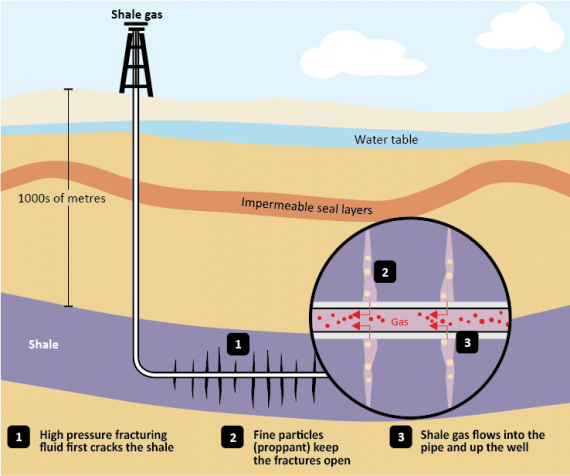
Hydraulic fracturing also known as "fracking"
Hydraulic fracturing, also known as “fracking”

A new study was reported in the Daily Signal.

Excerpt:

Hydraulic fracturing hasn’t contaminated groundwater in Texas, isn’t an earthquake hazard, and has been a boon for the state’s economy, according to a study released Monday.

The new study’s conclusions on drinking water are in line with multiple other studies of hydraulic fracturing, popularly known as fracking.

Hydraulic fracturing is the process of drilling into rock and injecting a high-pressure mixture of water, sand, and chemicals to obtain shale gas and oil, which is produced from fractured rock. Some environmentalists argue that it can harm water supplies.

The report initiated by the Academy of Medicine, Engineering and Science of Texas, based in Austin, asserted that “direct migration of contaminants from targeted injection zones is highly unlikely to lead to contamination of potential drinking water aquifers.”

[…]“In Texas and pretty much everywhere, hydraulic fracturing has not been proven to have an adverse impact on drinking water,” Christine Ehlig-Economides, a professor of petroleum engineering at the University of Houston who is chairwoman of the task force, told The Daily Signal.

But that’s not all:

The study also explored the impact of fracking in five other areas: geology and earthquake activity; land resources; air quality; the economy; and society. It found generally positive results for each.

However, in a sixth category, transportation, the report found that fracking produced a surge of trucks, damaging pavement at an estimated cost to state taxpayers of $1.5 billion to $2 billion per year.

Even so, the study concluded that fracking adds $473 billion to the Texas economy and created 3.8 million jobs.

This isn’t the first study this year that found that fracking is safe for the environment.

The radically leftist National Public Radio reported on another study out of Duke University earlier this year:

Fracking the Marcellus Shale did not pollute groundwater in northwestern West Virginia, but wastewater spills did contaminate surface water, according to a new study from Duke University.

[…]The study was unique in that it monitored drinking water wells and surface water over three years, a longer time period than previous research on the impact of fracking on drinking water. The study also used multiple methods of determining the source of the pollution, and was able to draw on baseline water quality data.

“Based on consistent evidence from comprehensive testing, we found no indication of groundwater contamination over the three-year course of our study,” said Avner Vengosh, professor of geochemistry and water quality at Duke’s Nicholas School of the Environment. ”

[…]The peer-reviewed study was published recently in Geochimica et Cosmochimica Acta, a European journal.

[…]Vengosh said the baseline data, gathered from drinking water wells before shale gas drilling occurred nearby, boosts their confidence in the results. A total of 112 water wells were sampled over three years, with 20 sampled before drilling or fracking occurred.

Now, I know that Democrats will not like this study, but the study was rigorous and thorough:

David Yoxtheimer, a hydrogeologist with Penn State’s Marcellus Center for Outreach and Research, who was not involved in the study, said the report is comprehensive in that it used a number of different tools to determine the source of contamination.

“This is a good example of an objective study,” said Yoxtheimer. “They kept their scientific glasses on and looked at it objectively. It’s the type of science we need more of out there. Collect data without motive and come back and report.”

Prior to this study, we had a peer-reviewed PNAS study:

Now comes a study, conducted by scientists at the University of Texas and published in the Proceedings of the National Academy of Sciences — and co-financed by one of the highest-profile environmentalists in the country — that shows much smaller amounts of methane emissions associated with fracking, far less than environmentalists and the Environmental Protection Agency have contended.

[…]The study, billed as the first to measure the actual emissions of methane from natural gas wells, finds these emissions were, in some cases, only about 2% of the most recent national estimate by the EPA in 2011. An upcoming EPA rule, effective January 2015, requires all methane to be captured when liquids are removed after drilling.

[…]“For those wells with methane capture or control, 99% of the potential emissions were captured or controlled,” the study notes.

[…]Thanks in large part to fracking, energy-related carbon dioxide emissions in 2012 were the lowest in the U.S. since 1994, at 5.3 billion metric tons. With the exception of 2010, emissions have declined every year since 2007.

Prior to that study, there was this report from the far-left EPA, also reported in the radically leftist National Public Radio.

Excerpt:

The Environmental Protection Agency says it finds no evidence that hydraulic fracturing — better known as fracking — has led to widespread pollution of drinking water. The oil industry and its backers welcome the long-awaited study while environmental groups criticize it.

“We found the hydraulic fracturing activities in the United States are carried out in a way that has not led to widespread systemic impacts on drinking water resources,” says Tom Burke, Science Advisor and Deputy Assistant Administrator of EPA’s Office of Research and Development. “In fact, the number of documented impacts to drinking water resources is relatively low when compared to the number of fractured wells,” he adds.

The EPA’s draft assessment was conducted at the request of Congress. “It is the most complete compilation of scientific data to date,” says Burke, “including over 950 sources of information, published papers, numerous technical reports, information from stakeholders and peer-reviewed EPA scientific reports.”

Fracking reduces air pollution and lowers energy costs for consumers and businesses that employ consumers. What’s not to like? People on the political right like fracking, because they are aware of the science in these studies. People on the left hate science, and so they hate fracking. They don’t let science inform their views.


Bible study: the importance of truth in religion

Bible study that hits the spot

Here’s an interesting passage of the Bible. What do you all think the practical value of this passage is?

1 In the second year of his reign, Nebuchadnezzar had dreams; his mind was troubled and he could not sleep.

2 So the king summoned the magicians, enchanters, sorcerers and astrologers to tell him what he had dreamed. When they came in and stood before the king,

3 he said to them, “I have had a dream that troubles me and I want to know what it means.”

4 Then the astrologers answered the king, “May the king live forever! Tell your servants the dream, and we will interpret it.”

5 The king replied to the astrologers, “This is what I have firmly decided: If you do not tell me what my dream was and interpret it, I will have you cut into pieces and your houses turned into piles of rubble.

6 But if you tell me the dream and explain it, you will receive from me gifts and rewards and great honor. So tell me the dream and interpret it for me.”

7 Once more they replied, “Let the king tell his servants the dream, and we will interpret it.”

8 Then the king answered, “I am certain that you are trying to gain time, because you realize that this is what I have firmly decided:

9 If you do not tell me the dream, there is only one penalty for you. You have conspired to tell me misleading and wicked things, hoping the situation will change. So then, tell me the dream, and I will know that you can interpret it for me.”

10 The astrologers answered the king, “There is no one on earth who can do what the king asks! No king, however great and mighty, has ever asked such a thing of any magician or enchanter or astrologer.

11 What the king asks is too difficult. No one can reveal it to the king except the gods, and they do not live among humans.”

12 This made the king so angry and furious that he ordered the execution of all the wise men of Babylon.

13 So the decree was issued to put the wise men to death, and men were sent to look for Daniel and his friends to put them to death.

14 When Arioch, the commander of the king’s guard, had gone out to put to death the wise men of Babylon, Daniel spoke to him with wisdom and tact.

15 He asked the king’s officer, “Why did the king issue such a harsh decree?” Arioch then explained the matter to Daniel.

16 At this, Daniel went in to the king and asked for time, so that he might interpret the dream for him.

17 Then Daniel returned to his house and explained the matter to his friends Hananiah, Mishael and Azariah.

18 He urged them to plead for mercy from the God of heaven concerning this mystery, so that he and his friends might not be executed with the rest of the wise men of Babylon.

19 During the night the mystery was revealed to Daniel in a vision. Then Daniel praised the God of heaven

20 and said:

“Praise be to the name of God for ever and ever;
wisdom and power are his.

21 He changes times and seasons;
he deposes kings and raises up others.
He gives wisdom to the wise
and knowledge to the discerning.

22 He reveals deep and hidden things;
he knows what lies in darkness,
and light dwells with him.

23 I thank and praise you, God of my ancestors:
You have given me wisdom and power,
you have made known to me what we asked of you,
you have made known to us the dream of the king.”

24Then Daniel went to Arioch, whom the king had appointed to execute the wise men of Babylon, and said to him, “Do not execute the wise men of Babylon. Take me to the king, and I will interpret his dream for him.”

25 Arioch took Daniel to the king at once and said, “I have found a man among the exiles from Judah who can tell the king what his dream means.”

26 The king asked Daniel (also called Belteshazzar), “Are you able to tell me what I saw in my dream and interpret it?”

27 Daniel replied, “No wise man, enchanter, magician or diviner can explain to the king the mystery he has asked about,

28 but there is a God in heaven who reveals mysteries. He has shown King Nebuchadnezzar what will happen in days to come. Your dream and the visions that passed through your mind as you were lying in bed are these:

29 “As Your Majesty was lying there, your mind turned to things to come, and the revealer of mysteries showed you what is going to happen.

30 As for me, this mystery has been revealed to me, not because I have greater wisdom than anyone else alive, but so that Your Majesty may know the interpretation and that you may understand what went through your mind.

This passage is interesting to me because it shows the kind of attitude that God answers. The King in this passage was tired of hearing man-made stories from his servants – stories that were undoubtedly influenced by the servants desire to survive the King’s wrath. The servants would only have told the King things that were vague and happy, so that they could never be proved wrong or found to be judgmental or offensive. But the King was tired of that. He wanted someone with authority to tell him the truth about the way the world was.

In the rest of the chapter, Daniel interprets the dream, and concludes by saying this: “The great God has shown the king what will take place in the future. The dream is true and its interpretation is trustworthy.”. The King replies: “Surely your God is the God of gods and the Lord of kings and a revealer of mysteries, for you were able to reveal this mystery.”

I think it is is going to be difficult for Christians living today to be able to tell people their dreams like that. But what we can do is talk about God’s miracles as revealed by science and history. We can study astrophysics, biochemistry and history and we can explain what God did in creating and fine-tuning the universe for life, in sequencing amino acids into functioning proteins, in creating brand new body plans in the Cambrian explosion, in raising Jesus from the dead as a matter of historical record, and so on. We have to show how great God is to people who do not even think he exists, and without assuming that they believe in the Bible. And we have to do it by focusing on what is true. 

Early last week, I got a message from a friend who was interested in a girl that he met on an online dating service. She claimed to be a Christian. My friend explained why he was so interested in some of the evidences I outlined above. She was not impressed. She said “I prefer to show people Christianity is true by not judging them, by being compassionate, by introducing them to a fun and affirming community”. There was no emphasis on truth in her approach. In fact, any religious group could do those things and “establish” their religion as true, by appealing to feelings. But this is clearly not what the God of the Bible intends for people who seek him. He is a God of truth, and truth is established by logical reasoning and supporting evidence.

There are still people out there like the King who are looking for someone who can speak to them with authority. All it takes from us is a little studying, and we can be like Daniel, too. But we have to know what God has done from science and history, and speak with authority about how we can know that God has acted supernaturally. Authority to speak comes from having knowledge about what we are talking about, and knowledge comes from studying and debating with people we disagree with. Nebuchadnezzar  was not a believer in the God of Israel, but he was still interested in truth. That won’t always be the case, but it is the case for some people.

The seven fatal flaws of moral relativism

I have a key that will unlock a puzzling mystery

Moral relativism is the view that moral values and moral duties do not exist in reality, but only exist as opinions in people’s minds. When you ask a moral relativist where the belief that stealing is wrong comes from, he may tell you that it is his opinion, or that it is the opinion of most people in his society. But he cannot tell you that stealing is wrong independent of what people think, because morality (on moral relativism) is just personal preference.

So what’s wrong with it?

I found this list of the seven flaws of moral relativism at the Salvo magazine web site.

Here’s the summary:

  1. Moral relativists can’t accuse others of wrongdoing.
  2. Relativists can’t complain about the problem of evil.
  3. Relativists can’t place blame or accept praise.
  4. Relativists can’t make charges of unfairness or injustice.
  5. Relativists can’t improve their morality.
  6. Relativists can’t hold meaningful moral discussions.
  7. Relativists can’t promote the obligation of tolerance.

Here’s my favorite flaw of relativism (#6):

Relativists can’t hold meaningful moral discussions. What’s there to talk about? If morals are entirely relative and all views are equal, then no way of thinking is better than another. No moral position can be judged as adequate or deficient, unreasonable, acceptable, or even barbaric. If ethical disputes make sense only when morals are objective, then relativism can only be consistently lived out in silence. For this reason, it is rare to meet a rational and consistent relativist, as most are quick to impose their own moral rules like “It’s wrong to push your own morality on others”. This puts relativists in an untenable position – if they speak up about moral issues, they surrender their relativism; if they do not speak up, they surrender their humanity. If the notion of moral discourse makes sense intuitively, then moral relativism is false.

I sometimes get a lot of flack from atheists who complain that I don’t let them make any moral statements without asking them first to ground morality on their worldview. And that’s because on atheism morality IS NOT rationally grounded, so they can’t answer. In an accidental universe, you can only describe people’s personal preferences or social customs, that vary by time and place. It’s all arbitrary – like having discussions about what food is best or what clothing is best. The answer is always going to be “it depends”. It depends on the person who is speaking because it’s a subjective claim, not an objective claim. There is no objective way we ought to behave.

So, practically speaking, everyone has to decide whether right and wrong are real – objectively real. If they are objectively real, that means that there is a right way for human beings to behave, and a wrong way for human beings to behave. It means that things that are really objectively wrong like rape are wrong for all times and all places, regardless of what individuals and societies might think of it. In order to rationally ground that kind of morality, you have to have a foundation for it – a cosmic Designer who decides for all times and places what the conduct of his creatures ought to be. And then our moral duties are duties that are owed to this Designer. It is like playing football or playing a boardgame – the person who invents the game decides the rules. But if there is no designer of the game, then there are no rules.

Without a designer of the universe, the question of how we ought to act is decided by people in different times and different places. It’s arbitrary and variable, and therefore it doesn’t do the job of prescribing behavior authoritatively. It’s very important not to get involved in any serious endeavor with another person or persons if they don’t have a sense of right and wrong being absolute and fixed. A belief in objective moral values is a necessary pre-requisite for integrity.