
What are the historical arguments for the empty tomb narrative?

Investigation in progress

I wanted to go over this article by William Lane Craig which includes a discussion of the empty tomb, along with the other minimal facts that support the resurrection.

The word resurrection means bodily resurrection

The concept of resurrection in use among the first converts to Christianity was a Jewish concept of resurrection. And that concept of resurrection is unequivocally in favor of a bodily resurrection. The body (soma) that went into the grave is the body (soma) that came out.

Craig explains what this means with respect to the fast start of Christian belief:

For a first century Jew the idea that a man might be raised from the dead while his body remained in the tomb was simply a contradiction in terms. In the words of E. E. Ellis, “It is very unlikely that the earliest Palestinian Christians could conceive of any distinction between resurrection and physical, ‘grave emptying’ resurrection. To them an anastasis without an empty grave would have been about as meaningful as a square circle.”

And:

Even if the disciples had believed in the resurrection of Jesus, it is doubtful they would have generated any following. So long as the body was interred in the tomb, a Christian movement founded on belief in the resurrection of the dead man would have been an impossible folly.

It’s significant that the belief in the resurrection started off in the city where the tomb was located. Anyone, such as the Romans or Jewish high priests, who wanted to nip the movement in the bud could easily have produced the body to end it all. They did not do so, because they could not do so, although they had every reason to do so.

There are multiple early, eyewitness sources for the empty tomb

Paul’s early creed from 1 Corinthians 15:3-7, dated to within 5 years of the crucifixion, implies the empty tomb.

Craig writes:

In the formula cited by Paul the expression “he was raised” following the phrase “he was buried” implies the empty tomb. A first century Jew could not think otherwise. As E. L. Bode observes, the notion of the occurrence of a spiritual resurrection while the body remained in the tomb is a peculiarity of modern theology. For the Jews it was the remains of the man in the tomb which were raised; hence, they carefully preserved the bones of the dead in ossuaries until the eschatological resurrection. There can be no doubt that both Paul and the early Christian formula he cites pre-suppose the existence of the empty tomb.

The dating of the resurrection as having occurred “on the third day” implies the empty tomb. The date specified for the resurrection would have been the date that the tomb was discovered to be empty.

The phrase “on the third day” probably points to the discovery of the empty tomb. Very briefly summarized, the point is that since no one actually witnessed the resurrection of Jesus, how did Christians come to date it “on the third day?” The most probable answer is that they did so because this was the day of the discovery of the empty tomb by Jesus’ women followers. Hence, the resurrection itself came to be dated on that day. Thus, in the old Christian formula quoted by Paul we have extremely early evidence for the existence of Jesus’ empty tomb.

A few quotes from atheist historians not from Dr. Craig’s article: (thanks to Eric of Ratio Christi OSU)

Michael Goulder (Atheist NT Prof. at Birmingham) “…it goes back at least to what Paul was taught when he was converted, a couple of years after the crucifixion.” [“The Baseless Fabric of a Vision,” in Gavin D’Costa, editor, Resurrection Reconsidered (Oxford, 1996), 48.]

Gerd Lüdemann (Atheist Prof of NT at Göttingen): “…the elements in the tradition are to be dated to the first two years after the crucifixion of Jesus…not later than three years… the formation of the appearance traditions mentioned in I Cor.15.3-8 falls into the time between 30 and 33 CE.” [The Resurrection of Jesus, trans. by Bowden (Fortress, 1994), 171-72.]

Robert Funk (Non-Christian scholar, founder of the Jesus Seminar): “…The conviction that Jesus had risen from the dead had already taken root by the time Paul was converted about 33 C.E. On the assumption that Jesus died about 30 C.E., the time for development was thus two or three years at most.” [Roy W. Hoover, and the Jesus Seminar, The Acts of Jesus, 466.]

The early pre-Markan burial narrative mentions the empty tomb. This source pre-dates Mark, the earliest gospel. The source has been dated by some scholars to the 40s. For example, the atheist scholar James Crossley dates Mark some time in the 40s. (See the debate below)

The empty tomb story is part of the pre-Markan passion story and is therefore very old. The empty tomb story was probably the end of Mark’s passion source. As Mark is the earliest of our gospels, this source is therefore itself quite old. In fact the commentator R. Pesch contends that it is an incredibly early source. He produces two lines of evidence for this conclusion:

(a) Paul’s account of the Last Supper in 1 Cor. 11:23-5 presupposes the Markan account. Since Paul’s own traditions are themselves very old, the Markan source must be yet older.

(b) The pre-Markan passion story never refers to the high priest by name. It is as when I say “The President is hosting a dinner at the White House” and everyone knows whom I am speaking of because it is the man currently in office. Similarly the pre-Markan passion story refers to the “high priest” as if he were still in power. Since Caiaphas held office from AD 18-37, this means at the latest the pre-Markan source must come from within seven years after Jesus’ death. This source thus goes back to within the first few years of the Jerusalem fellowship and is therefore an ancient and reliable source of historical information.

So we are dealing with very early sources for the empty tomb.

Lack of legendary embellishments

The empty tomb narrative in the gospels lacks legendary embellishments, unlike later 2nd century forgeries that originated outside of Jerusalem.

The eyewitness testimony of the women

This is the evidence that has been the most convincing to skeptics, and to me as well.

The tomb was probably discovered empty by women. To understand this point one has to recall two facts about the role of women in Jewish society.

(a) Woman occupied a low rung on the Jewish social ladder. This is evident in such rabbinic expressions as “Sooner let the words of the law be burnt than delivered to women” and “Happy is he whose children are male, but woe to him whose children are female.”

(b) The testimony of women was regarded as so worthless that they were not even permitted to serve as legal witnesses in a court of law. In light of these facts, how remarkable must it seem that it is women who are the discoverers of Jesus’ empty tomb. Any later legend would certainly have made the male disciples to discover the empty tomb. The fact that women, whose testimony was worthless, rather than men, are the chief witnesses to the empty tomb is most plausibly accounted for by the fact that, like it or not, they were the discoverers of the empty tomb and the gospels accurately record this.

The earliest response from the Jewish high priests assumes the empty tomb

This report from Matthew 28 fulfills the criteria of enemy attestation, although Matthew is not the earliest source we have. Oh, well.

In Matthew 28, we find the Christian attempt to refute the earliest Jewish polemic against the resurrection. That polemic asserted that the disciples stole away the body. The Christians responded to this by reciting the story of the guard at the tomb, and the polemic in turn charged that the guard fell asleep. Now the noteworthy feature of this whole dispute is not the historicity of the guards but rather the presupposition of both parties that the body was missing. The earliest Jewish response to the proclamation of the resurrection was an attempt to explain away the empty tomb. Thus, the evidence of the adversaries of the disciples provides evidence in support of the empty tomb.

Note how careful Craig is not to imply that the guard tradition is historical, because we can’t prove the guard as a “minimal fact”, since it doesn’t pass the standard historical criteria.

See it used in a debate

You can see the arguments made and defended from criticism in this debate with the atheist scholar James Crossley.

This my favorite resurrection debate.
Will Christine Ford be charged with perjury after her ex-boyfriend’s sworn testimony?

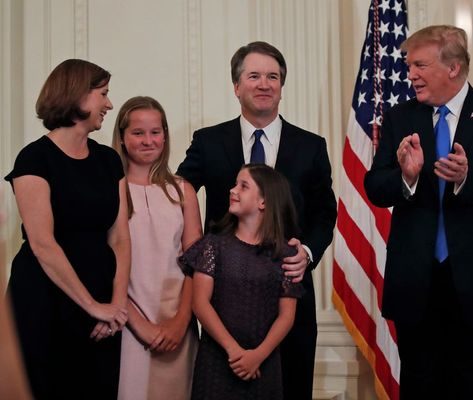
Brett Kavanaugh, his wife, and his two daughters

Christine Ford’s ex-boyfriend told the Senate Judiciary Committee under oath that he witnessed her coaching a friend on how to take a polygraph. So what? Well, Ford told the Senate Judiciary Committee that she “NEVER” (her words) coached anyone else about polygraphs. Looks like someone is going to be facing perjury charges all right, and not about farting or drinking beer!

First, The Federalist recalls how Ford answered questions about her polygraph at her Senate Judiciary Committee hearing:

At last week’s hearing, Ford was specifically asked by Rachel Mitchell, an experienced sex crimes prosecutor who was hired by the committee to question Ford and Kavanaugh, whether she had advised anyone on how to take a polygraph.

“Have you ever had discussions with anyone, beside your attorneys, on how to take a polygraph?” Mitchell asked.

“Never,” Ford responded.

“And I don’t just mean countermeasures,” Mitchell said, “but I mean just any sort of tips, or anything like that.”

“No,” Ford said.

“[H]ave you ever given tips or advice to somebody who was looking to take a polygraph test?” Mitchell continued.

“Never,” Ford replied again.

The Federalist article has the full statement.

The Wall Street Journal notes: (it’s pay-walled)

The statement was reviewed by The Wall Street Journal.

Dr. Ford’s lawyers didn’t respond to a request for comment.

The writer’s name was redacted. In the letter to the committee, the writer said that he dated Dr. Ford from 1992 to 1998, found her to be “truthful” and said he had no ill will toward her.

He wrote that she never told him she was a victim of sexual assault or mentioned Judge Kavanaugh’s name.

He said that while they were dating, Dr. Ford lived with a female friend. That person was interviewing for a federal job. The writer said he witnessed Dr. Ford help her friend prepare to take a lie-detector test.

Because of her background in psychology, the writer said, Dr. Ford was able to help her friend understand “what to expect, and how polygraphs worked,” putting her mind at ease about the forthcoming test.

In his letter, Sen. Grassley wrote that Dr. Ford’s testimony at the hearing “raises specific concerns about the reliability of her polygraph examination results. The Senate therefore needs this information.”

National Review adds:

The two dated for six years and Ford never expressed a fear of flying or closed spaces, traits she told the committee she struggles with, he said.

The man also claims Ford lied about and then admitted to charging a credit card they used to share for about $600 of merchandise.

Personally, I don’t believe her story, and now that we have evidence that she perjured herself, I’d like to see her face criminal charges and spend some time in prison.

And I’d like to see her lawyers investigated and disbarred, if they are found guilty. And I want them to explain who is paying their lawyer fees and for Ford’s polygraph. If Ford or Ford’s lawyers are linked to George Soros, then we can certainly do something about George Soros’ influence in America.

And we can have an FBI investigation of Diane Feinstein’s on-staff Chinese spy – and find out what he was doing working for her for 20 years. I’d like that investigation to last as long as the media took smearing Trump with Russia collusion nonsense.

But first, let’s confirm Kavanaugh. This week. I want all the Democrat senators in red states to go on the record on where they stand on Kavanaugh. I want it done before the mid-terms, so everyone in Indiana, Montana, West Virginia, North Dakota, and Missouri are very clear about who they should vote for in the mid-terms.

Note: at the time of writing (Tuesday night) this story had only been reported on National Review, The Federalist, the Washington Examiner, Fox News, the Daily Caller, and other right of center outlets. Not one far-left news media source, e.g. – CNN, MSNBC, ABC, NBC, CBS, NYT, WaPo, etc. had a thing to say about it. This failure to report happens ALL THE TIME (remember the Gosnell trial?) Remember that next time you are consuming fake news from the progressive mainstream news media. They lie.

William Lane Craig debates Daniel Came: Does God exist?

Dr. Craig's opening speech summary slide
Dr. Craig’s opening speech summary slide

The video of the debate was posted by ReasonableFaith.org – Dr. Craig’s organization. This debate occurred in March 2017 at the University of Dublin, in Ireland.

The video: (91 minutes)

My non-snarky summary is below.

Dr. Craig’s opening speech

Two claims:

1. There are good reasons to think that theism is true.
2. There are not comparably good reasons to think that atheism is true.

Five reasons for God’s existence:

1. The beginning of the universe
– actual infinite past is mathematically impossible
– BGV theorem: any universe that is on balance expanding in its history (like ours) cannot be past eternal

2. Fine-tuning of cosmic quantities and constants
– slight changes to quantities and constants prevent a universe from supporting complex embodied life
– the multiverse response of atheists conflicts with observations, e.g. the Boltzmann Brains problem

3. Objective moral values
– God’s existence is required to ground objective moral values and duties

4. Minimal facts case for the resurrection of Jesus
– there are good reasons to accept the most widely accepted facts about the historical Jesus (empty tomb, appearances, early widespread belief in the resurrection)
– the best explanation of these minimal facts is that God raised Jesus from the dead

5. Experience God directly
– in the absence of any defeaters to belief in God, a person can experience God directly

Dr. Daniel Came’s opening speech

1. The hiddenness of God
– if God wants a personal relationship with us, and a relationship with God would be the greatest good for us
– God ought to reveal himself to us, but he does not  reveal himself to many people, the “non-resistant non-believers”

2. The inductive problem of evil
– many evil events occur that are pointless – there is no morally sufficient reason why God would allow them to occur
– examples: animal suffering, children born with disease, tsunamis
– the theistic response to this is that humans are not in a position to know whether there are morally sufficient reasons, due to our limitations of knowing the consequences
– but this ripple effect defense has 4 possible outcomes, 3 of which don’t do the job of justifying

Dr. Craig’s first rebuttal

1. The hiddenness of God
– God’s goal is not to make his existence known, but to draw them into a love relationship
– it’s speculative that overt displays of God’s existence would draw people to him in a love relationship, they might resent his bullying
– atheist would have to prove that God could draw more people into a love relationship with him by revealing himself more overtly

2. The inductive problem of evil
– as humans, we are not in a position to know for certain that any apparently pointless evil really is pointless
– William Alston article: 6 limitations of human knowing make it impossible to judge that an evil is actually “pointless”
– Dr. Came says that there are 4 possibilities for the ripple effects, and since 3 are bad, it’s likely that there are not morally sufficient reasons for a apparently pointless evil
– it is logically fallacious to assert probability conclusions without knowing the probabilities of those 4 options
– there is actually an argument from evil: since the problem of evil requires an objective standard of good and evil by which to measure, and God is the only possible ground of objective morality, then pressing the problem of evil actually requires the atheist to assume God, in order to ground this objective moral standard

Dr. Came’s first rebuttal

3. Objective moral values
– there are naturalistic theories of moral realism where objective moral duties and objective moral values exist in a naturalistic universe
– I’m not saying that any of them are correct, but there are many theories about object morality in a naturalistic universe

There are naturalistic theories for all of the 5 arguments that Dr. Craig presented. It is Dr. Craig’s responsibility to present those naturalistic theories and prove that they are not as good as his explanations. I’m not going to defend (or even name!) a single naturalistic theory for any of these 5 arguments by Dr. Craig.

Dr. Craig’s explanations for the 5 evidences he gave can’t be admitted, because we have to know how God did something in naturalistic terms before we can know that God did it supernaturally. Explanations are only valid if they are naturalistic.

1. The beginning of the universe
– naturalism explains how the universe expands after it came into being, so that explains how it came into being
– the God explanation, that God created the universe out of nothing, is not admissible, because it is not naturalistic
– how does God, as an unembodied mind interact with the physical world?
– the only agency that we know about is human agents, and we have bodies, so how could God perform actions without having a body?

The theistic hypothesis does not make any predictions, but naturalism makes lots of testable predictions. God could do anything, so he is not constrained and is therefore untestable. We can’t infer God as an explanation in principle because we can’t predict what is more probable if God exists than if he does not.

2. Fine-tuning of cosmic quantities and constants
– the university was not set up to make embodied intelligence plausible, because the vast majority of the universe is hostile to life
– there are models of the multiverse that escape the Boltzmann Brains problem that Dr. Craig raised

Dr. Craig’s second rebuttal

Some of Dr. Craig’s arguments are deductive (e.g. – the beginning of the universe, objective moral values), so that the conclusion follows from the premises if the premises are true. The resurrection passes the standard tests for historical explanations.

1. The beginning of the universe
– the whole point of the argument is that there is no naturalistic explanation for an ultimate beginning of the universe

2. Fine-tuning of cosmic quantities and constants
– the whole point of the argument is that there is no naturalistic explanation for a design of the universe to support life
– he has to prove that intelligences has to be attached to bodies
– human beings are non-physical minds united to physical bodies
– naturalistic attempts to explain mental operations fail
– the arguments prove that unembodied minds exist
– the vast expanse of the universe is required in order to form the galaxies, stars and heavy elements needed for complex life
– why expect that the entire universe should be small, or that life would be everywhere?
– a non-fine-tuned world is more likely in the multiverse, and in a multiverse, we are more likely to have a Boltzmann brain world than a world with complex, embodied life
– Dr. Came has not advanced any naturalistic explanation for the fine-tuning

3. Objective moral values
– non-theistic ethical theories cannot account for the ontological foundations of objective moral values and duties
– atheistic theories of moral realism simply assume objective moral values out of thin air
– it is especially hard to find any basis for objective moral duties in the absence of God

Dr. Came’s second rebuttal

5. Religious experience
– Dr. Craig should not bring up religious experience in a debate where arguments and evidence are central
– people who have dreams, hallucinations and psychotic delusions could appeal to religious experience
– religious experience is by no means universal, and it is possible to doubt it

3. Objective moral values
– there are lots of atheists who hold to objective moral values
– Dr. Craig has to explain how God grounds objective moral values and duties
– Dr. Craig has to explain why atheist moral realist theories don’t work to ground objective moral values and duties

1. The beginning of the universe
– Dr. Craig claims that something can’t come from nothing, that’s not an argument
– there are numerous models that don’t require an absolute beginning of the universe
– Dr. Craig cites the BGV theorem, but Guth (one of the authors) says that only the inflation has a beginning, not the whole universe

Dr. Craig’s conclusion

1. The beginning of the universe
– on theism, there is an efficient cause, but no material cause, for the origin of the universe
– on atheism, there is neither an efficient cause nor a material cause, for the origin of the universe: that’s worse!
– if he thinks that there are models of the universe that don’t require a beginning, then let him name a viable eternal model of the universe
– he never refuted the mathematical argues against an infinite past

2. Fine-tuning of cosmic quantities and constants
– nothing to refute

3. Objective moral values
– God is a better ground for morality than humans, because he is ultimate, and not contingent and arbitrary
– God is a being who is worthy of worship, and therefore command his creatures with moral duties

4. Minimal facts case for the resurrection of Jesus
– nothing to refute

5. Religious experience
– only justified because there are no defeaters to it

1. The hiddenness of God
– atheist has to show that if God’s existence were more obvious, that it would result in more people being drawn to him

2. The inductive problem of evil
– Dr. Came’s argument was logically fallacious, and makes errors in probability theory

Dr. Came’s conclusion

Sometimes, people can’t prove something, but lack of evidence is a justification for doubting it, e.g. – werewolves.

If none of Craig’s arguments work, then it follows that it is not rational to believe that God exists, and it is rational to believe that God does not exist.

Atheists shouldn’t have a burden of proof for what they know, only theists have a burden of proof for what they know.

My thoughts

One quick point. If life were common everywhere then atheists would infer that God wasn’t involved in it. Period. “Life is everywhere, so it’s common, why do we need a designer?” they’d say. I agree with Dr. Came about denouncing religious experience in a formal debate. I don’t like when Dr. Craig brings this up, but I see why he does it – he’s an evangelist, and that’s a good thing, too. I just worry about how it looks to atheists, although it’s good for sincere seekers. I’m not the one on the stage, though, Dr. Craig is.

I think the point about more overt revealing by God would annoy people and make them turn away. Think of how gay people respond to the suggestion that there is anything wrong with them, with rage, vandalism, threats, coercion, attempts to get you to lose your job and business, and using government as a weapon to fine and imprison you. It’s really obvious to me that more God does not mean more love of God. For those who don’t want God, the hiddenness is respect for their choice to put pleasure above the search for truth. (I mean the gay activists – I have great sympathy for people who struggle with same-sex unwanted attractions because they were impacted by a failed bond with their parent of the same sex as they are).

Whenever I meet people like Dr. Came, I always urge them to keep investigating and pursuing truth, because they will find it if they are sincerely seeking after God. Some atheists do sincerely seek God, but I don’t know any who haven’t found him. I’m not sure if that’s because those atheists who claim to be non-resistant and rational are in fact resistant and non-rational, or what the real reason is. If you believe the Bible, all unbelief is non-rational and resistant (see Romans 1). Regarding the werewolves, we don’t have any good arguments for werewolves, we do have good arguments for God. Dr. Came didn’t refute the arguments that Craig raised, nor did his own arguments for atheism work. And there are many, many more arguments (origin of life, Cambrian explosion, habitability-discoverability, molecular machines) that Craig did not raise, too.