
More news from up north. (H/T Ben)
Excerpt:
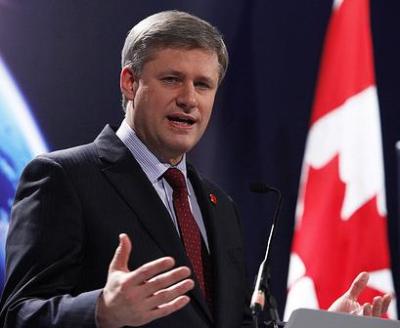
Federal government expenditures are set to fall next fiscal year by $16.5-billion, or 6.2%, with big cuts to regional development and environment programs, according to documents tabled Tuesday.
That would leave total expenditures for the 2011-12 year at $250-billion, with the bulk taken up by transfer payments to individuals and governments, and operating costs. Just over $30-billion of that expense is attributed to refinancing Canada’s debt.
The figures, contained in spending estimates provided by the Treasury Board, sees budget increases for departments entrusted with security and law enforcement – such as a 21% boost to jails — but cuts of roughly 20% to Environment Canada, Natural Resources Canada and Agriculture and Agri-Food Canada.
Government is supposed to be concerned with security and law enforcement, not with environmentalist wastefulness.
Here’s Paul Ryan. He would like to cut our budget by 6.2% – and maybe even more.
If Canada is cutting their government waste, then why can’t we?
There are a lot of programs that we could be cutting.
Excerpt:
The federal government could save billions in taxpayer dollars annually by consolidating duplicative government programs, according to a new report.
The newly-released report from the Government Accountability Office “makes us all look like jackasses,” Sen. Tom Coburn (R-Okla.) told reporters Monday night.
The conservative senator said the report — which identifies redundancies in more than 546 individual programs — reveals why the United States is $14 trillion in debt.
“Anybody who says we don’t look like fools up here hasn’t read the report,” he said.
[…]The GAO reviewed 34 areas (among them agriculture, defense and social services) where agencies, offices or initiatives have similar or overlapping objectives. The report also looked at 47 additional cost-saving opportunities related to more general government efficiency. For instance, the report said, “Improved corrosion prevention and control practices could help [the Defense Department] avoid billions in unnecessary costs over time.”
Addressing duplicative efforts on even a single issue could save billions, the report found. For instance, the GAO says the government could save up to $5.7 billion annually by addressing potentially duplicative policies designed to boost domestic ethanol production. Additionally, the Defense Department could save $460 million annually by making broader changes to the governance of its military health care system.
The report finds that there are 15 agencies involved in food safety, 80 programs involved in economic development and more than 100 involved in surface transportation. There are 10 agencies and 82 programs involved in teacher quality, and more than 20 agencies and about 56 programs involved in financial literacy efforts. There are about 2,300 investments across the Defense Department to modernize its business operations.
House Majority Leader Eric Cantor (R-Va.) said today that in order to foster long term economic growth, “we’re going to deal with the pressing issues of regulatory waste in our agencies, as well as long term issues facing our country with entitlement programs.”
This is why we have to stop giving private sector money to government. They don’t earn any money by making things or helping people – they don’t sell anything useful. They just steal money from the productive workers and businesses and then they waste it and run up trillion dollar deficits. This kind of corruption, fraud and waste would not survive in small businesses, and probably not even in big businesses. Business have to be efficient or they go bankrupt. They have to perform or their competitors will have them for lunch. The consumer is king in the private sector.
Related posts
- Stephen Harper’s Conservatives up to 43% in latest federal election poll
- Poll finds 68% of Canadians positive on Canadian economy
- Canada created twice the number of jobs as the United States in January
- Canadian prime minister Stephen Harper vows to end long-gun registry
- Stephen Harper makes a stand against North Korean aggression
- Fiscally conservative Canada campaigns against global bank tax
- Federal conservatives in Canada aim to cut spending and waste from budget
- Canada’s finance minister proposes changes to mortgage lending laws
- Supreme Court sides with Conservative Party against price-fixing monopoly
- Canadian prime minister Stephen Harper seeks increased trade with India
- Harper instructs foreign minister to denounce Libyan dictator
- Canadians to walk out of Ahmadinejad’s speech at UN
- Canada signs free trade deal with Panama
- Harper pays surprise visit to troops in Afghanistan
 WINTERY KNIGHT