Tag Archives: Unemployment

How many jobs have wind and solar power produced in Spain and Denmark?

The problem with the Obama administration is that they keep making policy based on their intentions, instead of known results. They’ve allocated nearly 39 billion for green energy subsidies – that’s as much money as the entire annual Minnesota state budget. That’s a lot of money being taken away from job creators in the private sector.

So what can we learn about “green energy” from other countries? Is it good value for the money?

Well, we know that in Spain, the green jobs programs failed.

Excerpt:

Subsidizing renewable energy in the U.S. may destroy two jobs for every one created if Spain’s experience with windmills and solar farms is any guide.

For every new position that depends on energy price supports, at least 2.2 jobs in other industries will disappear, according to a study from King Juan Carlos University in Madrid.

U.S. President Barack Obama’s 2010 budget proposal contains about $20 billion in tax incentives for clean-energy programs. In Spain, where wind turbines provided 11 percent of power demand last year, generators earn rates as much as 11 times more for renewable energy compared with burning fossil fuels.

The premiums paid for solar, biomass, wave and wind power – – which are charged to consumers in their bills — translated into a $774,000 cost for each Spanish “green job” created since 2000, said Gabriel Calzada, an economics professor at the university and author of the report.

“The loss of jobs could be greater if you account for the amount of lost industry that moves out of the country due to higher energy prices,” he said in an interview.

The Heritage Foundation cites a study from Denmark, which shows that wind power has also failed.

Excerpt:

But according to a new study from the Danish Centre for Political Studies (CEPOS), commissioned by the Institute for Energy Research, the road to increased wind power is less traveled for a reason. The study refutes the claim that Denmark generates 20 percent of its power from wind stating that its high intermittency not only leads to new challenges to balance the supply and demand of electricity, but also provides less electricity consumption than assumed. The new study says, “wind power has recently (2006) met as little as 5% of Denmark’s annual electricity consumption with an average over the last five years of 9.7%.” Furthermore, the wind energy Denmark exports to its northern neighbors, Sweden and Norway, does little to reduce carbon dioxide emissions because the energy it replaces is carbon neutral.

The study goes on to say that the only reason wind power exists in Denmark is “through substantial subsidies supporting the wind turbine owners. Exactly how the subsidies have been shared between land, wind turbine owners, labor, capital and its shareholders is opaque, but it is fair to assess that no Danish wind industry to speak of would exist if it had to compete on market terms.”

But there’s a cost involved. When government spends more money, it necessarily diverts labor, capital and materials from the private sector. Just like promises are made in the United States about green jobs creation, the heavily subsidized Danish program created 28,400 jobs. But “this does not, however, constitute the net employment effect of the wind mill subsidy. In the long run, creating additional employment in one sector through subsidies will detract labor from other sectors, resulting in no increase in net employment but only in a shift from the non-subsidized sectors to the subsidized sector.”

And because these resources are being diverted away from more productive uses (in terms of value added, the energy technology underperforms compared to industrial average), “Danish GDP is approximately $270 million lower than it would have been if the wind sector work force was employed elsewhere.”

And the libertarian Cato Institute doesn’t think that any renewal energy program will work.

Excerpt:

A multi-billion-dollar government crusade to promote renewable energy for electricity generation, now in its third decade, has resulted in major economic costs and unintended environmental consequences. Even improved new generation renewable capacity is, on average, twice as expensive as new capacity from the most economical fossil-fuel alternative and triple the cost of surplus electricity. Solar power for bulk generation is substantially more uneconomic than the average; biomass, hydroelectric power, and geothermal projects are less uneconomic. Wind power is the closest to the double-triple rule.

The uncompetitiveness of renewable generation explains the emphasis pro-renewable energy lobbyists on both the state and federal levels put on quota requirements, as well as continued or expanded subsidies. Yet every major renewable energy source has drawn criticism from leading environmental groups: hydro for river habitat destruction, wind for avian mortality, solar for desert overdevelopment, biomass for air emissions, and geothermal for depletion and toxic discharges.

Current state and federal efforts to restructure the electricity industry are being politicized to foist a new round of involuntary commitments on ratepayers and taxpayers for politically favored renewables, particularly wind and solar. Yet new government subsidies for favored renewable technologies are likely to create few environmental benefits; increase electricity-generation overcapacity in most regions of the United States; raise electricity rates; and create new “environmental pressures,” given the extra land and materials (compared with those needed for traditional technologies) it would take to significantly increase the capacity of wind and solar generation.

A recession is not the time to be making policies based on what sounds nice. We need to do what works in a recession.

An all-of-the-above, drill-here-drill-now policy would increase supply at a time when demand for oil is growing in India and China. Increasing domestic supply would create jobs and lower energy prices – an excellent thing to do in a recession. But Obama is busy putting in drilling moratoriums and subsidizing green energy, instead. We elected someone who thought that “climate change” was a justification for raising electricity rates would necessarily skyrocket. He is fine with electricity prices skyrocketing. And that’s what we’ve gotten from him.

Obama’s $1.5 trillion in taxes on the rich will hurt the middle class most

Sen. Jim Demint
Sen. Jim Demint

Consider this editorial from senator Jim DeMint.

Excerpt:

Here are the facts.

Americans who make $200,000 or more a year make up about 3 percent of the country. Those 3 percent earn roughly 30 percent of our national income and pay 52 percent of all income taxes.

Raising taxes on these top brackets would mean that nearly 40 percent of all new tax revenue would be taken from hundreds of thousands of small businesses. About half of the top 3 percent, around 750,000 Americans, report business income on their personal returns.

The president talks about Warren Buffett, but his planned tax hikes would hit Mom & Pop businesses that employ your friends and family.

It boils down to simple economics. If we want the millions of jobs that small businesses create, then we cannot confiscate an even greater share of the incomes that generate those jobs.

When politicians talk about “the rich,” they want to conjure an image in your mind of an idle, entitled elite somehow exploiting the rest of us.  (That actually sounds more like the U.S. Senate.)

But the real picture is more like that of a man or woman who owns a small, local business, who started with little but has done well, and who now has a handful of employees with decent incomes and health insurance.

The fiction behind the “tax the rich” ideology is that these folks have extra money just lying around, and that the government can take a big chunk of it without harming anyone.

What the liberals fail to recognize is that the money isn’t just lying around, stuffed in a mattress.  It’s out in the world, growing the economy.  Rich people, like everyone else, put their money to productive use.

The top 5 percent of American earners account for 37 percent of all consumer spending, about as much as the bottom 80 percent put together.

The top 10 percent of families hold 64 percent of all major investment assets. Those making over $200,000 give 36 percent of all charitable contributions.

This is the heart of the liberals’ misunderstanding.  Raising taxes on America’s job creators who spend, invest and donate will punish  the middle class, not the rich.  It will hurt the local businesses they patronize, the companies they invest in, and the charities they support.

Money that used to create jobs, wealth, and opportunity will instead be sucked into the economic black hole of the federal bureaucracy, never to return.

The Bureau of Labor Statistics estimates that it costs businesses about $63,000 to create one job.  Put another way, every $63,000 in new taxes risks an American job.  And every $100 billion in tax increases – on the rich or anyone else – could threaten nearly 1.6 million jobs.

Now, who do you think loses those jobs?  Will it be “the rich,” or will it be the clerk at their grocery store, the mechanic at their gas station, and the receptionist at their dentist’s office?

Make no mistake: When the taxman aims at “the rich,” he ends up hitting everyone else instead.

Obama keeps talking about making people pay “their fair share”, so he has plenty of money to hand out hundreds of millions of bailout dollars to solar power companies linked to his Democrat fundraisers. But nearly half the people in this country don’t pay federal taxes. Are they paying their fair share? Why isn’t Obama going after them? Well, if what DeMint says is true, he will be going after them – but most of them don’t realize it.

There’s a reason why companies are not hiring domestically, but are instead expanding operations abroad, where corporate taxes are lower and regulations are less of a burden. Companies create jobs where they can make a profit. If the Obama administration attacks their profit-making ability, they will stop creating jobs here and move their production and capital elsewhere. Obama’s rhetoric isn’t going to change the way the world works.

Republicans focus on job creation, abstinence education and tax reform

The Protecting Jobs From Government Interference Act

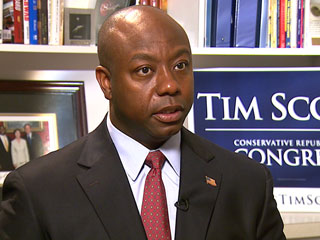
Rep. Tim Scott
Rep. Tim Scott

Limits on the NLRB = pro-jobs bill.

Excerpt:

In response to a series of controversial decisions by the National Labor Relations Board, the House of Representatives passed a bill curtailing the power of the NLRB Thursday afternoon.

The Protecting Jobs From Government Interference Act, H.R. 2587, passed the Republican-controlled House by a vote of 138-186. The bill would prohibit the National Labor Relations Board from ordering any employer to close, relocate, or transfer employment under any circumstance.

The NLRB has been the target of Republican ire since the board filed a complaint against Boeing in April for opening a plant in South Carolina, a right-to-work state. The NLRB said Boeing was punishing workers in Washington state with the decision.

Since then, the NLRB has handed down a spate of pro-union rules that have infuriated labor critics and Republican lawmakers.

Republican legislators say the board shouldn’t have power to dictate where private businesses locate. Union advocates claim the bill would strip the board’s ability to enforce labor laws.

The bill was sponsored by Republican Rep. Tim Scott of South Carolina and introduced in July.

“Today’s vote is important for our entire nation, as well as for my home district in South Carolina, where the NLRB is currently pursuing an agenda which, if successful, would kill thousands of jobs,” Scott said in a statement. “By removing the NLRB’s ability to dictate where private industry creates jobs, we are preventing an unelected, Presidentially-appointed government board from pitting state against state, inserting themselves into the business decisions of private companies, and scaring away investment in our nation.”

Scott has also introduced a bill rolling back several other rules recently passed by the NLRB.

By the way, I’ve been informed that something like 40% of union members vote Republican. It’s not the union members who are bad, it’s the unions. Imagine how those people feel about having dues taken out of their salaries to fund left-wing causes?

Abstinence Education Reallocation Act

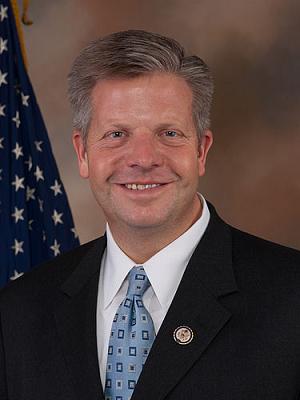
Rep. Randy Hultgren
Rep. Randy Hultgren

From Life News.

Excerpt:

Newly-proposed legislation in Congress would restore federal funding for abstinence education as the Obama administration continues to discriminate against grants to programs that promote abstinence over sex education.

Recently, the Department of Health and Human Services announced new funding opportunities for initiatives on the subject, but included a caveat that grants would no go to agencies promoting abstinence education. Applicants for the FOA must include a written statement, according to a National Catholic Register report, that abstinence education is not part of the program, because the Obama administration considers it an  “unallowable activity.”

Organizations receiving funding under the program must make a “commitment to not use funds for unauthorized activities, including, but not limited to, an abstinence-education program.” Some $75 million has been authorized under the Claims Resolution Act of 2010 for the programs.

[…]On Tuesday, legislation was announced on the floor of the House of Representatives that could change this and restore funding for abstinence education. The Abstinence-Centered Education Reallocation Act, sponsored by Rep. Randall Hultgren, an Illinois Republican, is a bill that will put a priority on the sexual risk avoidance message found in abstinence programs.

Abstinence education isn’t just about STIs, it’s about love and marriage. Marital stability is stronger when single men and women avoid premarital sex.

Pro-growth Tax Reform

This one is part of Paul Ryan’s “Path to Prosperity” plan. This time he is explaining his 3-step plan to reform the tax laws to promote job creation.

Here’s the transcript of the video above:

America’s economy has been hit really hard. A lot of people have lost their jobs. More borrowing and spending and higher taxes are not going to bring jobs back to America. The last thing we need to be doing is to complicate job creation in America with this complicated tax code that we have today.

A tax code should be fair, competitive and simple, and the US tax code fails on all three counts.  Here are common-sense ideas we’ve advanced before…ideas that have bipartisan support.

First, we have to make our tax code fair.

It’s full of deductions, credits and special carve-outs – otherwise known as “loopholes” – that let politically-connected companies avoid paying taxes. Every dollar that businesses spend lobbying for a better tax deal, is a dollar they’re not spending on making a better product.

And, since every dollar hidden in a loophole doesn’t get taxed – politicians make up for this lost revenue by increasing overall tax rates. So we need to close these loopholes.

But if we just close loopholes, then our federal corporate tax rate is 35 percent, which is really high.

Add in state and local taxes, the rate climbs to 39.2 percent – the second highest tax rate among developed countries.

On top of sending almost 40 cents out of every dollar earned, straight to the government, businesses pay investment taxes, payroll taxes, and a handful of other taxes our government makes job creators pay.

In the 21st century global economy – and when American families need jobs – this approach just doesn’t make any sense.

We need to make our tax code competitive.

The budget we passed in the House of Representatives calls for closing the loopholes and lowering the rates.

The President’s bipartisan Fiscal Commission proposed something similar.

Its plan would reduce the corporate tax rate to as low as 26 percent, and to lower the top individual rate that many small businesses pay to as low as 23 percent.

So if we lower tax rates, does that mean the wealthy pay less in taxes? Not if we do it by closing loopholes. Because the people who use most of the loopholes are those in the top tax brackets. For all the money that’s parked in these tax loopholes, all that money’s taxed at zero. Take away the tax loophole; lower everybody’s tax rates – that money’s now taxed. But its taxed at a fair more simple, more competitive way so the small business men and women who are out there striving and competing have a better tax rate so they can compete in this global economy.

Third, let’s make the tax code simple.

All together, individuals and businesses spend over six billion hours and 160 billion dollars, every year, just trying to understand and comply with the tax code.

Let’s simplify the code, not just by closing loopholes, but also by decreasing the number of different tax brackets taxpayers fall in.

Fewer brackets, along with lower individual rates, will make the tax code less complicated, and let more people keep more of the money they earn.

There’s a reason this approach has attracted bipartisan support: It’s Fair, It’s Competitive, and It’s Simple.

America’s been knocked down before. We’ve had tough recessions before, and we know that the secret to growing jobs and prosperity in America are through the ingenuity and the hard work of our businesses – of our small businesses, of our large businesses, of job creators. We don’t want a tax system that rewards people for coming to Washington and getting special favors. We want a tax system that rewards Americans for hard work, risk taking, entrepreneurship , investment and innovation. These are the kinds of things that have made America great in the past. And these are the kinds of ideas the we’re going to need if want to grow our economy in the future and compete in the 21st century global economy.

Imagine if the United States were the best place for companies to do business. Imagine the job growth that would stimulate.