Four years ago, North Carolina’s unemployment rate was above 10 percent and the state still bore the effects of its battering in the recession. Many rural towns faced jobless rates of more than 20 percent.
But in 2013, a combination of the biggest tax rate reductions in the state’s history and a gutsy but controversial unemployment insurance reform supercharged the state’s economy and has even helped finance budget surpluses.
As Wells Fargo’s Economics Group recently put it: “North Carolina’s economy has shifted into high gear. Hiring has picked up across nearly every industry.”
The tax cut slashed the state’s top personal income tax rate to 5.75 percent, near the regional average, from 7.75 percent, which had been the highest in the South. The corporate tax rate was cut to 5 percent from 6.9 percent. The estate tax was eliminated.
Next came the novel tough-love unemployment insurance reforms. The state became the first in the nation to reject “free” federal payments for extended unemployment benefits and reduce the weeks of benefits to 20 from 26. The maximum weekly dollar amount of payments, $535, which had been among the highest in the nation, was trimmed to a maximum of $350 a week. As a result, tens of thousands of Carolinians left the unemployment rolls.
[…]After a few months, the unemployment rate started to decline rapidly and job growth climbed. Not just a little. Nearly 200,000 jobs have been added since 2013 and the unemployment rate has fallen to 5.5 percent from 7.9 percent.
[…]Even with lower rates, tax revenues are up about 6 percent this year according to the state budget office. On May 6, Gov. McCrory announced that the state has a budget surplus of $400 million while many other states are scrambling to fill gaps.
[…]Because North Carolina built in a trigger mechanism that applies excess revenues to corporate rate cuts, the business tax has fallen to 5 percent from 6.9 percent, and next year it drops to 4 percent.
Although North Carolina is too liberal for me, it is nice to see them turning their economy around with tax cuts on job creators, and benefit cuts to those who choose not to work.
At the end of the day, the only real security that any of us has comes from the skills we have developed by working and the work experience we put on our resumes. The economy is in for some harsh conditions going forward. The more we can get Americans working, the better they will be able to weather the coming storm. A little kick in the ass might hurt, but in the long-term, it’s for the best.
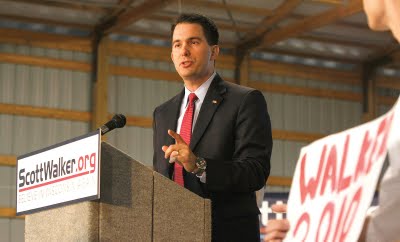
For the first time Thursday, Walker committed to drug testing recipients of BadgerCare Plus health coverage and also pledged free treatment and job training for those testing positive for drugs.
But the governor offered no details on how the state would cover the costs of that or the testing or whether he expected it to cost the state money overall, as a similar program did in Florida, or save tax dollars. The budget, he said in a statement, would also drop to four years from five the limit on how long a recipient could be in the Wisconsin Works, or W-2, program, the replacement in this state for traditional welfare.
“We know employers in Wisconsin have jobs available, but they don’t have enough qualified employees to fill those positions,” Walker said. “With this budget, we are addressing some of the barriers keeping people from achieving true freedom and prosperity and the independence that comes with having a good job and doing it well.”
The governor said the drug-testing proposal would apply only to able-bodied adults, not the elderly or children, and would include transitional jobs initiatives. Walker wants to test all FoodShare and BadgerCare applicants but limit the drug testing for unemployment benefits to certain applicants.
The idea expands on another requirement passed by Walker and Republicans in 2013 to make able-bodied FoodShare recipients receive job training.
Michigan Republican governor Rick Snyder has the same idea, and his bill was signed into law last month.
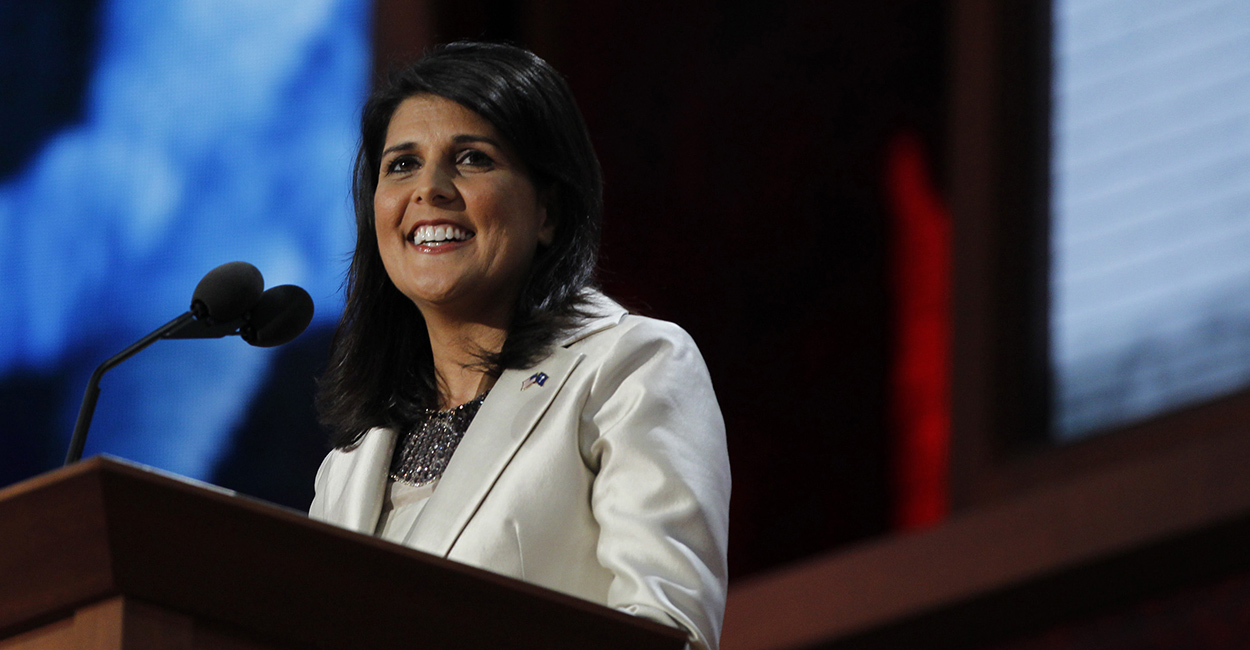
The Daily Signal reports on the latest effort by South Carolina Republican governor Nikki Haley to cut income taxes.
South Carolina Governor Nikki Haley
They write:
The governor of South Carolina has proposed lowering the state’s income tax rate from 7 percent to 5 percent, accompanied by a 10 cent hike in the state’s gas tax.
In her annual State of the State address on Wednesday, Gov. Nikki Haley, R-S.C., said the state’s income tax puts it at a competitive “disadvantage.”
“In order to keep the ball rolling in our economy, we must bring down our income tax,” Haley said.
She acknowledged that despite her desire to cut the income tax rate, South Carolina needs to invest in its infrastructure. Greenville Online reports that the South Carolina Department of Transportation “has rated almost half the state’s primary and secondary roads in poor condition.”
Haley proposed doing “three things at once that will be a win-win-win for South Carolina.”
The first would be lowering the income tax over the next decade, which amounts to a 30 percent reduction. The lower 5 percent rate would take South Carolina’s nationwide income tax ranking from 38th to 13th.
While the income tax rate would go down, the gas tax would increase by 10 cents over the next three years. Haley said that the revenue generated from this tax will go “entirely toward improving our roads.”
I have no problem with raising consumption taxes in exchange for cutting business and/or income taxes.
And here’s leftist ABC News discussing Kansas governor Sam Brownback latest proposal.
Kansas Governor Sam Brownback
They write:
Notable among them is a first-of-its-kind measure being drafted in Kansas, with the backing of the National Right to Life Committee, which would ban doctors from using forceps, tongs or other medical implements to dismember a living fetus in the womb to complete an abortion.
Proponents have titled the bill the Unborn Child Protection from Dismemberment Abortion Act and say it targets a procedure used in about 8 percent of abortions in Kansas.
“Dismemberment abortion kills a baby by tearing her apart limb from limb,” said National Right to Life’s director of state legislation, Mary Spaulding Balch, who hopes the Kansas bill will be emulated in other states.
Planned Parenthood of Kansas and Mid-Missouri has vowed to fight the bill “every step of the way.”
That article has a few more pro-life measures being pushed by Republicans in other states, although Democrat governors are threatening to veto them.
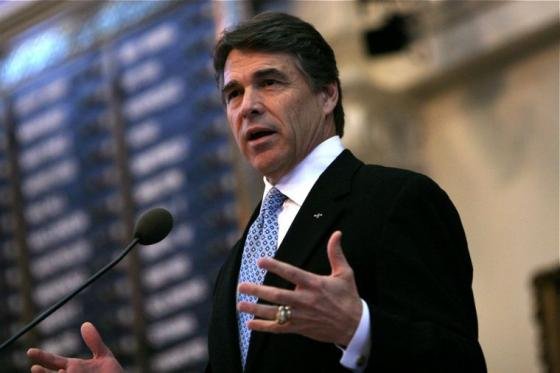
The American Enterprise Institute talks about the job creation juggernaut created by Republican governor Rick Perry in Texas.
Texas Governor Rick Perry
They write:
The Texas Workforce Commission released state employment data today for the month of December, and job growth in the Lone Star State continues to lead, and in fact carry the nation’s improving labor market as the chart above shows. Here are some highlights of the December employment report for Texas:
1. Texas ended the year with the state’s largest ever year-over-year payroll gain with the eye-popping addition of 457,900 new jobs between December 2013 and December 2014. That’s more than 1,700 new payroll jobs that were added every business day last year in the Lone Star State, and 220 new jobs every business hour or almost 4 new jobs added every minute!
2. In just the last month of December, which marked the 51st consecutive month of employment growth, Texas added 45,700 new payroll jobs, which was more than 2,000 jobs every business day, almost 260 jobs every hour, and more than 4 new jobs every minute! The strong job growth in December brought the state’s jobless rate down to 4.6%, the lowest Texas unemployment rate since May 2008.
[…]It’s a pretty impressive story of how job creation in just one state – Texas – has made such a significant contribution to the 1.169 million net increase in total US employment (+1,444,290 Texas jobs minus the 275,290 non-Texas job loss) in the seven year period between the start of the Great Recession in December 2007 and December 2014. The other 49 states and the District of Columbia together employ about 275,000 fewer Americans than at the start of the recession seven years ago, while the Lone Star State has added more than 1.25 million payroll jobs and more than 190,000 non-payroll jobs (primarily self-employed and farm workers).
So, what have we learned? We learned that if you like more job creation, fewer abortions, lower taxes and drug-testing welfare recipients, then you are a Republican. I’ll be doing posts like these regularly until the 2016 election, so that everyone understands what Republicans actually get done.
The White House move this week to torpedo a deal between House Republicans and Senate Democrats to extend dozens of expiring tax breaks suggests that the executive action legalizing 5 million unauthorized immigrants may have been no fluke: Compromise appears to be near the bottom of President Obama’s agenda for his last two years in office.
Despite — or perhaps because of — the Republican wave election that capsized Democrats’ Senate majority, Obama is tugging his party further left, which could make it harder for the GOP to govern effectively. A shift away from the center might seem counterintuitive, but it’s consistent with the Democrats’ post-mortem election analysis that put the blame on the party’s failure to focus enough on its economic agenda.
The White House’s veto threat, which apparently surprised dealmakers, was “really pretty stunning” considering that soon-to-be-demoted Majority Leader Harry Reid was its quarterback, said Chris Krueger, political analyst at Guggenheim Partners’ Washington Research Group.
In blowing apart the deal, estimated to cost $440 billion over 10 years, the White House lined up behind liberal Massachusetts Sen. Elizabeth Warren, who attacked it as “a massive handout to big corporations” that asks “working families to pick up the tab.”
The Obama administration used the same justification in explaining its threat to veto the bill if it reached the president’s desk: “It would provide permanent tax breaks to help well-connected corporations while neglecting working families.”
The centerpiece of the deal is a $160 billion provision to make permanent and expand a research and experimentation tax credit, an idea that the administration has supported. The next two biggest pieces, both about $73 billion over 10 years, would make permanent the American Opportunity tuition tax credit and an allowance for small businesses to write off capital investments permanently.
Individuals would be able permanently to deduct sales taxes instead of income taxes, important for residents of states like Florida and Texas, at a cost of $34 billion. Controversial wind production taxes would be extended but phased out over two years, costing $20 billion.
Other smaller pieces include extending a financial-crisis related provision to shield the value of written-down mortgage principal from taxation; making permanent an expanded deduction for users of mass transit; and making permanent tax-free charitable contributions from tax-protected retirement accounts.
That last point about being able to give away your retirement plan tax-free is huge for me, because that’s what I planned to do with my 401K when I retire, since it doesn’t look like I am going to ever get married. If that tax break on charitable deductions from retirement accounts is ever revoked, it would be bad news for the apologists and Christian scholars I donate to. But it’s in keeping with the leftist idea that individuals like me are only good for earning money, but it takes a big secular government to know how to spend it. They have other plans for my money, like free abortions, IVF and sex changes. Yay, big government!


 WINTERY KNIGHT