
Tag Archives: Socialist

Conservatives defeat socialists by a landslide in Spain election

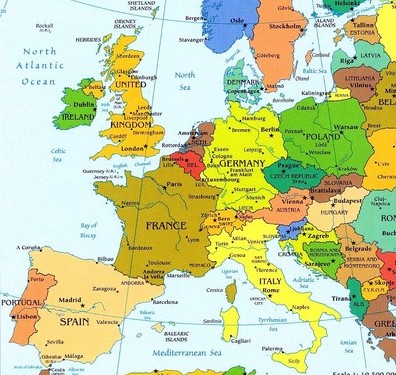
Political Map of Europe

The UK Telegraph explains.

Excerpt:

With almost 98 per cent of the vote counted the Popular Party won 186 seats in the 350 seat congress garnering a strong mandate to push through further austerity measures in an attempt to turn around an economy that risks being engulfed by the sovereign debt crisis.

[…]The socialists suffered their biggest defeat since Spain became a democracy more than 30 years ago, punished by an electorate for their perceived bungling of the economic crisis that has left 5 million unemployed.

[…]Alfredo Perez Rubalcaba, 60, the prime ministerial candidate who took the helm of the PSOE when Jose Luis Rodriguez Zapatero said he would not seek a third term, conceded defeat after the party won just 110 seats down from 169 in 2008.

“The Socialist Party did not have a good result. We clearly lost the elections,” he told party faithful in Madrid.

The conservatives won roughly 44 per cent of the votes and the Socialists took 29 per cent, according to official election results.

The Wall Street Journal analyzes the election result.

Excerpt:

Formerly a solid growth engine for the region’s economy, Spain today is grappling with a burst housing bubble, a 21% unemployment rate and borrowing costs near levels that triggered the international bailouts of several fiscally frail euro-zone peers.

Analysts said the election of Mariano Rajoy, the conservative leader who has committed to austerity and economic overhauls, could help improve investor sentiment toward Spain, but won’t fundamentally change perceptions that Spain and other peripheral nations are risky investments. For that, they said, European Union institutions will have to extend more support, possibly by converting the European Central Bank into a lender of last resort.

[…]The groundswell of support for Mr. Rajoy is chiefly the result of a deep economic crisis that has forced Socialist Prime Minister José Luis Rodríguez Zapatero to make unpopular budget cuts and economic overhauls. Earlier this year, Mr. Zapatero said he wouldn’t seek re-election and his party chose the veteran Mr. Pérez Rubalcaba to succeed him.

Analysts said the fact that change in Spain was coming via the ballot box was another sign of a better track record on governance, which has helped to keep Spanish borrowing costs below those of its fiscally frail peers.

Although Mr. Zapatero lacked a parliamentary majority, he was able to deliver all the measures he promised last year, including a public-sector wage cut, a pension freeze and a labor-market overhaul.

As a result, a clear victory for Mr. Rajoy, who has promised to take overhauls much further than his Socialist rivals, is widely expected to shore up confidence in the Spanish economy inside and outside the country.

Many recall the Popular Party-led governments of José María Aznar of 1996-2004 for their far-reaching moves that helped set the stage for a lengthy economic boom. Mr. Rajoy headed various ministries during that time.

At a polling station in Madrid’s Chamberí district, 18-year-old engineering student Diego Cubero said he had voted for the first time and chosen the Popular Party.

This is the end of a huge mistake made by the Spanish people in 2004 when they elected the socialists. Never, ever, ever elect socialists unless you want your economy to end up like Greece. That’s what socialists do to economies.

Why do conservatives accuse Obama of engaging in “class warfare”?

From the left-leaning Politico. (H/T Dennis Prager)

Excerpt:

Obama has characterized Republican votes against his jobs bill — which are predicated, at least in part, over concern that new, temporary spending financed by tax increases will not help the economy — as a rejection of the most wholesome of American workers.

“They said no to more jobs for teachers, no to more jobs for cops and firefighters,” Obama said during a speech Wednesday to the administration’s Forum on American Latino Heritage, “no to more jobs for construction workers and veterans, no to tax cuts for small-business owners and middle-class Americans.”

But in these same remarks, Obama also subtly suggested something far worse — that his opponents are racially biased.

“I ran for president for the same reason many people came to this country in the first place,” he explained. “Because I believe America should be a place where you can always make it if you try, a place where every child, no matter what they look like [or] where they come from should have a chance to succeed. I still believe in that America. I believe we can be that America again.”

The clear suggestion is that someone has made this country a place where what a child looks like can hinder them — and Obama is the one who can erase the discrimination that has been permitted to return.

First lady Michelle Obama made this point more explicitly at a Washington fundraiser the night before.

“Will we be a country where opportunity is limited to just the few at the top?” the first lady asked. “Or will we give every child — every child — a chance to succeed, no matter where she’s from, or what she looks like, or how much money her parents [have]? Who are we? That’s what’s at stake here.”

Her suggestion that “what’s at stake here” in the 2012 race is whether a child will be judged by color is an outrage, implying that a Republican victory would result in discrimination.

Obama’s rhetoric has become increasingly shrill. I find it very alarming that the President of the United States is somewhere to the left of celebrity blowhards like Michael Moore. How does he expect to negotiate with people in good faith when he is constantly impugning their motives and caricaturing their policies?

In other news, Herman Cain, who is black, leads by 8 points in the Iowa Caucuses. Wouldn’t it be funny to see Barack Obama, who is only half-black, take on Herman Cain in a debate, and accuse him of racism? The rich, pampered Ivy-league ACORN trainer against the businessman with a Masters in Computer science from Purdue, whose mother was a cleaning woman, and whose father worked three jobs.

Philosopher Ron Nash lectures on capitalism, morality and freedom

Watch the lecture. (H/T Luis)

Nash speaks from 0:06 to0:45. Then he takes questions.

His two favorite economists are… WALTER WILLIAMS and THOMAS SOWELL! Just like me!

Christianity isn’t something you do in church to have happy feelings, or to get along with your parents and friends. It’s a worldview. And the whole point of it is that is is true, and helps us to make sense of the world because it is true.

By the way, he even talks about how Jesus uses hyperbole to get people’s attention in the question and answer time. I blogged about that a while back because one of our Christian commenters told me that Jesus never uses hyperbole. (She is a Calvinist, so… you know… ). F.A. Hayek also comes up in the Q&A time. Hayek is my third favorite economist. I think all Christians should have favorite economists. I think we should think about how Christianity relates to every area, from science to history to philosophy to ethics to marriage and family. And to politics and economics, as with this lecture!

We should all have favorite scholars, just like non-Christians have favorite musicians and movie stars. Ron Nash is one of my favorite philosophers.

Who is Ron Nash?

I learned about economics by listening to all the lectures in this course taught by Dr. Nash. He presents a view of economics that is consistent with the laws of logic and the Bible. And this course is comprehensive. I’ve moved on from Dr. Nash’s course to read F. A. Hayek and Thomas Sowell, and then Walter Williams. And I found that Dr. Nash’s course was excellent preparation for these more advanced books.

Take a look at some of the topics:

  • the role of the government in regulating commerce
  • the meaning of justice
  • capitalism and socialism
  • interventionism vs free market capitalism
  • introduction to economics
  • marxism
  • wealth and poverty
  • liberation theology and the religious left
  • judicial activism vs legal positivism
  • pollution
  • public education

You can grab the lectures here.

A little blurb about Dr. Nash

Nash taught theology and philosophy for four decades at three schools. He was chairman of the department of philosophy and religion and director of graduate studies in humanities at Western Kentucky University, where he was on faculty from 1964-91. He was a professor at Reformed Theological Seminary from 1991-2002 and at Southern Baptist Theological Seminary from 1998-2005.

Nash wrote more than 35 books on philosophy, theology and apologetics, including “Faith & Reason: Searching for a Rational Faith,” “Life’s Ultimate Questions” and “Is Jesus the Only Savior?” Nash received his Ph.D. from Syracuse University; his master’s degree from Brown University; and his undergraduate degree from Barrington College.

From this Baptist Press article.

Related posts