Tag Archives: Small Business

Obama’s health care plan treats taxpayers like children

New video from the Acton Institute. (H/T Hot Air)

It’s a 4 minute video, and you will learn something new, guaranteed.

It’s important to understand what Democrats think of you. Do they trust you to earn your own money and to buy whatever you think is best for you? Or would they rather control you to keep you from misusing the freedoms they keep for themselves?

Consider this article by classical historian Victor Davis Hanson. (H/T Muddling Towards Maturity)

The article contrasts the public positions of elites with their own lifestyles:

  • environmentalists like Thomas Friedman and Al Gore
  • racism-hollerers like Henry Gates and Jeremiah Wright
  • socialists like John Edwards, Chris Dodd and Tom Daschle

This reminds me of historian Paul Johnson’s book “Intellectuals”, which was formative for me.

Learn more about health care with my previous posts on health care:

Bobby Jindal explains the right way to lower health care costs

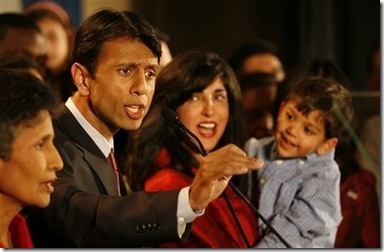
Bobby and Supriya Jindal

Governor Bobby Jindal is a wizard with health care policy!

Here he is writing in the Wall Street Journal about how to cut health care costs without rationing care:

Consumer choice guided by transparency. We need a system where individuals choose an integrated plan that adopts the best disease-management practices, as opposed to fragmented care. Pricing and outcomes data for all tests, treatments and procedures should be posted on the Internet. Portable electronic health-care records can reduce paperwork, duplication and errors, while also empowering consumers to seek the provider that best meets their needs.

Aligned consumer interests. Consumers should be financially invested in better health decisions through health-savings accounts, lower premiums and reduced cost sharing. If they seek care in cost-effective settings, comply with medical regimens, preventative care, and lifestyles that reduce the likelihood of chronic disease, they should share in the savings.

Medical lawsuit reform. The practice of defensive medicine costs an estimated $100 billion-plus each year, according to the American Academy of Orthopaedic Surgeons, which used a study by economists Daniel P. Kessler and Mark B. McClellan. No health reform is serious about reducing costs unless it reduces the costs of frivolous lawsuits.

Insurance reform. Congress should establish simple guidelines to make policies more portable, with more coverage for pre-existing conditions. Reinsurance, high-risk pools, and other mechanisms can reduce the dangers of adverse risk selection and the incentive to avoid covering the sick. Individuals should also be able to keep insurance as they change jobs or states.

Pooling for small businesses, the self-employed, and others. All consumers should have equal opportunity to buy the lowest-cost, highest-quality insurance available. Individuals should benefit from the economies of scale currently available to those working for large employers. They should be free to purchase their health coverage without tax penalty through their employer, church, union, etc.

Pay for performance, not activity. Roughly 75% of health-care spending is for the care of chronic conditions such as heart disease, cancer and diabetes—and there is little coordination of this care. We can save money and improve outcomes by using integrated networks of care with rigorous, transparent outcome measures emphasizing prevention and disease management.

Refundable tax credits. Low-income working Americans without health insurance should get help in buying private coverage through a refundable tax credit. This is preferable to building a separate, government-run health-care plan.

These are conservative solutions – they will preserve out liberty and prosperity.

Bobby Jindal is my pick for Secretary of Health and Human Services in 2012, if he isn’t elected President. So remember his name!

20 questions you won’t hear at Obama’s press conference tonight

From Keith Hennessey. He groups the questions into 4 categories, so I’ll excerpt one from each category below. The press conference is scheduled for Wednesday at 8 PM Eastern time.

Economy:

You proposed spending money from the TARP to prevent foreclosures, help small businesses, and to buy toxic assets from banks.  In June CBO said they had found no evidence that any money has been spent for any of these programs.  How many foreclosures have been prevented, how many small businesses have received loans from, and how many toxic assets have been purchased?

Health care:

Your Administration has said that health care reform is the key to addressing our long-term budget problem.  Yet you have adopted a lower standard, that health care reform legislation simply does not make our deficit problems worse.  If health care reform leaves the unsustainable budget situation unchanged, and since CBO says your budget would result in nine trillion dollars of new debt over the next decade, then how else do you propose to deal with the projected explosion of government debt over the long run?

Global Warming:

Does it make sense for the U.S. to impose higher energy costs on American workers and manufacturers if the two largest developing economies [India and China] are unwilling to slow their emissions growth?  Won’t that just disadvantage American workers with little reduction in future global temperatures?

Trade:

The top Democrat and Republican on the Senate Finance Committee have called for you to submit to Congress for their approval the signed Free Trade Agreements with U.S. allies Colombia, Panama and South Korea.  Why have you not submitted them to Congress?  When will you do so?

These questions really expose how things have gone awry with the Obama presidency.