Tag Archives: Scientist

NYT reports on new study showing no link between disasters and AGW

Click for larger image

Story here in the radically leftist New York Times.

Excerpt:

A new analysis of nearly two dozen papers assessing trends in disaster losses in light of climate change finds no convincing link. The author concludes that, so far, the rise in disaster losses is mainly a function of more investments getting in harm’s way as communities in places vulnerable to natural hazards grow.

The paper — “Have disaster losses increased due to anthropogenic climate change?” — is in press in the Bulletin of the American Meteorological Society. It was written by Laurens M. Bouwer, a researcher at Vrije University in Amsterdam focused on climate and water resources (and a lead author of a chapter in the 2001 assessment from the Intergovernmental Panel on Climate Change). You can read more about the paper at the blog of Roger Pielke, Jr., which drew my attention to this work.

Here’s more from from Roger Pielke’s blog post.

The Bulletin of the American Meteorological Society has just put online a review paper (peer reviewed) by Laurens Bouwer, of the Institute for Environmental Studies at  Vrije Universiteit in Amsterdam, titled, “Have disaster losses increased due to anthropogenic climate change?“.

Readers of this blog already know the answer to this question, and here is Bouwers’ conclusion:

The analysis of twenty-two disaster loss studies shows that economic losses from various weather related natural hazards, such as storms, tropical cyclones, floods, and small-scale weather events such as wildfires and hailstorms, have increased around the globe. The studies show no trends in losses, corrected for changes (increases) in population and capital at risk, that could be attributed to anthropogenic climate change. Therefore it can be concluded that anthropogenic climate change so far has not had a significant impact on losses from natural disasters.

Bouwers rightly acknowledges that there are uncertainties in such studies, and in particular, there will be a need to refine efforts to evaluate changing vulnerability and exposure in future such work, especially as the signal of greenhouse gas driven climate change is expected to become larger.  However, such uncertainties are not presently so large as to undercut Bouwers’ conclusion, e.g.,

A rigorous check on the potential introduction of bias from a failure to consider vulnerability reduction in normalization methods is to compare trends in geophysical variables with those in the normalized data. Normalized hurricane losses for instance match with variability in hurricane landfalls (Pielke et al. 2008). If vulnerability reduction would have resulted in a bias, it would show itself as a divergence between the geophysical and normalized loss data. In this case, the effects of vulnerability reduction apparently are not so large as to introduce a bias.

A pre-publication version of the paper is available here in PDF.

I hope this means that we can finally drill in Alaska now. Because I am tired of sending money and jobs overseas to people who really may not like us very much. We’re not going to explode the planet, and if we make our own energy here, not only do we get the jobs, but we can do it cleaner than they can.

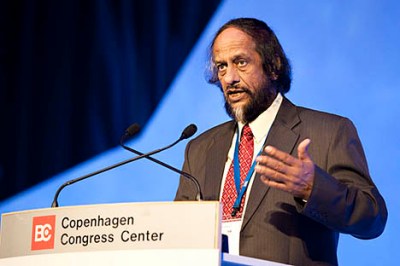
UN IPCC global warming alarmism based on student essay and magazine article

A source for the United Nations IPCC report on global warming

Story here in the UK Telegraph. (H/T Watts Up With That via ECM)

Excerpt:

The United Nations’ expert panel on climate change based claims about ice disappearing from the world’s mountain tops on a student’s dissertation and an article in a mountaineering magazine.

[…]In its most recent report, it stated that observed reductions in mountain ice in the Andes, Alps and Africa was being caused by global warming, citing two papers as the source of the information.

However, it can be revealed that one of the sources quoted was a feature article published in a popular magazine for climbers which was based on anecdotal evidence from mountaineers about the changes they were witnessing on the mountainsides around them.

The other was a dissertation written by a geography student, studying for the equivalent of a master’s degree, at the University of Berne in Switzerland that quoted interviews with mountain guides in the Alps.

Global warming alarmism is the official policy of Barack Obama and the Democrat party. And this is what global warming is based on.

A report that the UN IPCC Chairman lied about Himalayan glaciers

From the London Times. (H/T Neil Simpson, Watts Up With That via ECM)

Excerpt:

Dr Pachauri, who played a leading role at the summit, corrected the error last week after coming under media pressure. He told The Times on January 22 that he had only known about the error for a few days. He said: “I became aware of this when it was reported in the media about ten days ago. Before that, it was really not made known. Nobody brought it to my attention. There were statements, but we never looked at this 2035 number.”

Asked whether he had deliberately kept silent about the error to avoid embarrassment at Copenhagen, he said: “That’s ridiculous. It never came to my attention before the Copenhagen summit. It wasn’t in the public sphere.”

However, a prominent science journalist said that he had asked Dr Pachauri about the 2035 error last November. Pallava Bagla, who writes for Science journal, said he had asked Dr Pachauri about the error. He said that Dr Pachauri had replied: “I don’t have anything to add on glaciers.”

Why would scientists tell lies about the way the world really is? Science has been hijacked by ideologues of the secular left for non-scientific purposes. They see global warming as a way to help other countries catch up to the United States, to impose control on earning and spending by corporations and individuals, to enrich themselves, and to be viewed by others as being morally superior.

There are billions of dollars at stake

Check out this article from Climate Resistance. (H/T ECM)

Here’s the World Wildlife Fund:

Year Income ($US)
2003 370,245,000
2004 468,889,000
2005 499,629,000
2006 549,827,000
2007 663,193,000
TOTAL 2,551,783,000

That’s 2.5 BILLION dollars. And what about Greenpeace?

Year Income (US$) Income (Euros)
1994 137,358,000 —————-
1995 152,805,000 —————-
1996 139,895,000 —————-
1997 125,648,000 —————-
1998 —————- 110,833,000
1999 —————- 126,023,000
2000 —————- 143,646,000
2001 —————- 157,730,000
2005 —————- 173,464,000
2006 —————- 171,367,000
2007 —————- 204,982,000
2008 —————- 196,620,000
TOTAL 555,706,000 1,284,665,000

To put these crudely into the same terms, we make that $2,373,506,970 ($2.37 billion) at today’s euro to US dollar exchange rate.

And the UN’s IPCC cites non-scientific claims from the World Wildlife Fund.

It happened with Darwinism, too

In the case of evolution, I think the motivation there is to remove morality from the public square. So, scientists are enlisted by the secular left to push a theory that will marginalize traditional morality, which is rationally grounded in Judeo-Christian monotheism. They wanted things like pre-marital sex, not chastity, and evolution was the means that they used to attack theism and objective morality, and so to normalize things like pre-marital sex. But is evolution true? That’s the question that never gets debated.

If questions do get asked, careers start to end. They want to do this, and they don’t care what’s true. It’s the Catholic Church and Galileo all over again, only this time it’s the secular left that refuses to look through the telescope.

Related posts

How the UN’s IPCC cites non-scientific claims from the World Wildlife Fund

Rajendra Pachauri

Here’s an article from the BBC about the IPCC’s latest shenanigans. (H/T Neil Simpson‘s latest round-up)

Excerpt:

But the flood gates really opened after the IPCC had to withdraw its claim that the Himalayan glaciers would likely all have melted by 2035, maybe even sooner.

This turned out to have no basis in scientific fact, even though everything the IPCC produces is meant to be rigorously peer-reviewed, but simply an error recycled by the [World Wildlife Fund], which the IPCC swallowed whole….

Then at the weekend another howler was exposed. The IPCC 2007 report claimed that global warming was leading to an increase in extreme weather, such as hurricanes and floods. Like its claims about the glaciers, this was also based on an unpublished report which had not been subject to scientific scrutiny — indeed several experts warned the IPCC not to rely on it.

Now after Climate-gate, Glacier-gate and Hurricane-gate — how many “gates” can one report contain? — comes Amazon-gate. The IPCC claimed that up to 40 percent of the Amazonian forests were risk from global warming and would likely be replaced by “tropical savannas” if temperatures continued to rise.

This claim is backed up by a scientific-looking reference but on closer investigation turns out to be yet another non-peer reviewed piece of work from the WWF. Indeed the two authors are not even scientists or specialists on the Amazon: one is an Australian policy analyst, the other a freelance journalist for the Guardian and a green activist.

Got that? The United Nations’ Intergovernmental Panel on Climate Change is publicizing conclusions that are designed to re-organize our entire way of life, and their evidence for this is not rooted in any repeatable scientific study.

More details are emerging

Consider this article from the UK Daily Mail. (H/T Secondhand Smoke)

Excerpt:

The scientist behind the bogus claim in a Nobel Prize-winning UN report that Himalayan glaciers will have melted by 2035 last night admitted it was included purely to put political pressure on world leaders. Dr Murari Lal also said he was well aware the statement, in the 2007 report by the Intergovernmental Panel on Climate Change (IPCC), did not rest on peer-reviewed scientific research. In an interview with The Mail on Sunday, Dr Lal, the co-ordinating lead author of the report’s chapter on Asia, said: ‘It related to several countries in this region and their water sources. We thought that if we can highlight it, it will impact policy-makers and politicians and encourage them to take some concrete action. ‘It had importance for the region, so we thought we should put it in.’

And this one from the Vancouver Sun. (H/T Secondhand Smoke)

Excerpt:

In the 1970s, nearly 600 Canadian weather stations fed surface temperature readings into a global database assembled by the U.S. National Oceanic and Atmospheric Administration (NOAA). Today, NOAA only collects data from 35 stations across Canada. Worse, only one station — at Eureka on Ellesmere Island — is now used by NOAA as a temperature gauge for all Canadian territory above the Arctic Circle.

The Canadian government, meanwhile, operates 1,400 surface weather stations across the country, and more than 100 above the Arctic Circle, according to Environment Canada. Yet as American researchers Joseph D’Aleo, a meteorologist, and E. Michael Smith, a computer programmer, point out in a study published on the website of the Science and Public Policy Institute, NOAA uses “just one thermometer [for measuring] everything north of latitude 65 degrees.”

Is that science?

What counts as knowledge?

Plato, in his dialogue Theatetus, says that knowledge is justified, true belief. And one of the ways you know that you are justified in your belief is by listening to the best arguments from the best scholars who disagree with you.

The American Spectator writes:

Yep, this is the “scientific consensus” that Al Gore based his post-VP life upon; the imagined groundswell that so many politicians used to justify government growth; the nonexistent evidence that journalists cited to justify their alarmism activism. It’s the two words that every global warmist (whether lying or deceived themselves) threw in the face of skeptics in an attempt to intimidate. Didn’t work!

No wonder why hardly any of them wanted to debate and those who did got slaughtered. We tried to explain that the “consensus” was an illusion. You — yes, I’m talking about you, Society of Environmental Journalists — would have none of it.

If you can’t make a case against your own point of view by citing the best scholars on the other side respectfully, then you don’t have knowledge. You just have an opinion. Even scientism, empiricism and naturalism need to be justified in order to be counted as knowledge. You don’t have to agree with those opposing scholars, you just have to understand them, and you have to not hate them, and you have to not believe nonsense about their motives just because you hate them so much. The job of journalists and educators is to present EVERY claim to knowledge as a conflict between opposing views, regardless of whether it’s global warming, abortion, same-sex marriage, or Darwinism.

For my Christian readers, this epistemology comes straight from the Bible in Proverbs 18:17:

17 The first to present his case seems right, till another comes forward and questions him.

For God’s sake, please read that verse and think about it. Apply it to your lives. Find someone who disagrees with you and talk to them about why they believe what they believe. It’s OK to think you’re right, it’s OK to think you have the truth. But it’s not OK to be ignorant and dismissive of the best case against your view.