Tag Archives: Right to Work

Right-to-work states gained jobs three times faster than forced union states

Gallup poll on right-to-work, August 2014

This is from economist Stephen Moore writing in Investors Business Daily.

He writes:

Wisconsin is poised this week to become the 25th “right-to-work state,” ending forced unionization and allowing individual workers to decide if they want to join a union or not.

The Wisconsin Senate just recently passed right-to-work, and our sources in Madison say that the House, which is controlled by Republicans, will enact a similar law in the days ahead.

Republican Gov. Scott Walker, a leading presidential candidate, is sure to sign the bill when it gets to his desk. “This isn’t anti-union,” insists Walker. “It restores worker rights and brings jobs back to Wisconsin.”

Some 3,000 liberal protesters stormed the Capitol in Madison over the weekend to reverse the momentum for the new law. This isn’t Walker’s first dust-up with union bosses. Four years ago, nearly 100,000 activists grabbed nationwide headlines when they protested his reforms in Wisconsin’s collective bargaining process with public employee unions.

If the new law passes, Wisconsin would join two other blue-collar, industrial Midwestern states — Michigan and Indiana — to recently adopt right-to-work. “If you had told me five years ago that right-to-work would become law in Indiana, Michigan and Wisconsin, I wouldn’t have thought it was even remotely possible,” says economist Arthur Laffer.

Laffer and I have conducted substantial economic research showing three times the pace of jobs gains in right-to-work states than in the states with forced union rules that predominate in deep blue states such as California, New York and Illinois.

In the 2003-13 period, jobs were up by 8.6% in right-to-work states, and up only 3.7% in forced union states. Most of the southern states, with the exception of Kentucky, are right-to-work

Many auto jobs in recent decades have moved out of Michigan and Ohio and into states such as Texas, Alabama and South Carolina, due in part to right-to-work laws in Dixie.

But as union power recedes in the Midwestern states, many of the region’s governors see factory jobs returning to their backyards. “Right to work is already lowering unemployment in Indiana and causing a manufacturing revival here,” says Gov. Mike Pence.

Companies are more attracted to right-to-work states, and that means more jobs become available.

Here is Congressional testimony from James Sherk, senior policy analyst in labor economics at The Heritage Foundation. I really recommend bookmarking this article. Even though it is very long, it is up-to-date and comprehensive. I am linking to it because he responds to objections to right-to-work laws raised by unions.

Do right-to-work laws hurt the middle class?:

Union Strength and the Middle Class. Unions and their supporters frequently claim the opposite: that unions helped build the middle class and weaker unions hurt all workers—not just union members. To make this point they often juxtapose the decline of union membership since the late 1960s with the share of income going to the middle class. The Economic Policy Institute did exactly this when criticizing the possibility of RTW in Wisconsin. These comparisons suffer from two problems. First, the absolute standards of living for middle-class workers have risen substantially over the past generation. Inflation-adjusted market earnings rose by one-fifth for middle-class workers between 1979 and 2011. After-tax incomes rose at an even faster pace. Middle-class workers today enjoy substantially higher standards of living than their counterparts in the 1970s.

Secondly, these figures conflate correlation with causation. During the time period EPI examined union membership correlates well with their measure of middle-class income shares. Extending the graph back another two decades eliminates this correlation. U.S. union density surged in the late 1930s and during World War II. It peaked at about a third of the overall economy and private-sector workforce in the mid-1950s. During this time period America had few global competitors. From the mid-1950s onward global competition increased and U.S. union membership steadily declined. Between 1954 and 1970 union density dropped from 34.7 percent to 27.3 percent. Unions lost over a fifth of their support in just over a decade and a half.

During this period middle-class income and living standards grew rapidly. No one remembers the 1950s and 1960s as bad for the middle class, despite the substantial de-unionization that occurred. Over a longer historical period changes in U.S. union strength show little correlation with middle-class income shares. Liberal analysts come to their conclusion by looking only at the historical period in which the two trends align.

Do right-to-work states have lower wages?:

Unions Argue RTW Hurts Wages. In the same vein, unions argue that RTW laws lower wages. As the Wisconsin AFL-CIO recently claimed:

These anti-worker Right To Work laws just force all working families to work harder for lower pay and less benefits, whether they’re in a union or not. The average worker makes about $5,000 less and pensions are lower and less secure in Right to Work states.

This statement contains a degree of truth: average wages in right-to-work states are approximately that much lower than in non-RTW states. This happens because right-to-work states also have below-average costs of living (COL). Virtually the entire South has passed RTW, but no Northeastern states have passed an RTW law. The Northeast has higher COL and higher average wages; the South has lower living costs and lower wages.

[…]All but one right-to-work state has living costs at or below the national average. All ten of the states with the highest COL have compulsory union dues. Analyses that control for these COL differences have historically found that RTW has no deleterious effects on workers’ real purchasing power.

Recently the Economic Policy Institute has claimed that workers in RTW states make 3 percent less than workers without RTW protection, even after controlling for living costs. Heritage replicated this analysis and found that EPI made two major mistakes: it included improper control variables and did not account for measurement error in their COL variables. These mistakes drive their results. Correcting these mistakes shows that private-sector wages have no statistically detectable correlation with RTW laws. The supplement and the appendices to this testimony explain the technical details of this replication. Properly measured, RTW laws have no effect on wages in the private sector.

Although the history of unions shows that unions were a valuable and necessary check on the power of greedy corporations in times past, today unions are using the dues they collect from workers to elect Democrats. The vast majority of political contributions made by the big unions go to Democrats.

Here’s one example, using the Service Employees International Union numbers:

Service Employees International Union

(Click for larger image)

So if you oppose what Democrat politicians are doing, it makes sense to free workers from being forced to pay union dues for causes that are against their values. The average rank-and-file member of a union does not share Democrat values on things like abortion and gay marriage, in my opinion. Why should they be forced to pay union dues that go to elect politicians who oppose their values?
Republicans legislators pushing good bills forward and blocking bad bills

What kinds of bills do Republicans pass? Let’s take a look at a couple.

The first story is about North Dakota Republican Senator John Hoeven, and it’s from the Washington Times.

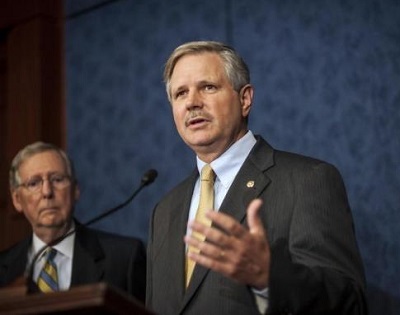
North Dakota Senator John Hoeven
North Dakota Senator John Hoeven (right)

Excerpt:

Senators approved the Keystone XL pipeline in a momentous vote Thursday as nine Democrats bucked their party leaders and joined Republicans in backing the long-stalled project, setting up an eventual showdown with President Obama, who has vowed a veto.

The vote marks the first major accomplishment for the Senate Republican majority, who carefully selected the pipeline to put at the top of the agenda in hopes of preparing Democrats for even bigger tests with Mr. Obama.

“This took a bipartisan effort to get done. That’s what the people want,” said Sen. John Hoeven, the North Dakota Republican who sponsored the legislation.

The 62-36 vote is a high-water mark for the pipeline, which had never before cleared the Senate on a binding vote, and just two months ago fell to a Democratic filibuster.

The bill still must be combined with a House version that passed the chamber this month before it heads to Mr. Obama.

This is a bill that creates jobs, lowers the price of gas, makes us less dependent on foreign sources of oil and it doesn’t harm the environment.

Having a job is good because when you earn your own success, you are usually happier than you would be receiving money from the government. Lower gas prices are good, because you can spend the money you safe on useful things, like date night with your wife, or maybe a gift for your mom or dad. Making us less dependent on foreign oil is good, because some of these nations we buy oil from don’t like us very much, and that’s putting it nicely. We really should not be buying oil from Venezuela, for example. And finally, it’s a good idea to conserve nature as it is, because we all like animals, trees, flowers, etc., and we should keep it all clean. A pipeline is safer for moving oil than using trains – fewer environmental disasters.

Next story is about Texas senator Ted Cruz, and it’s from the Daily Signal.

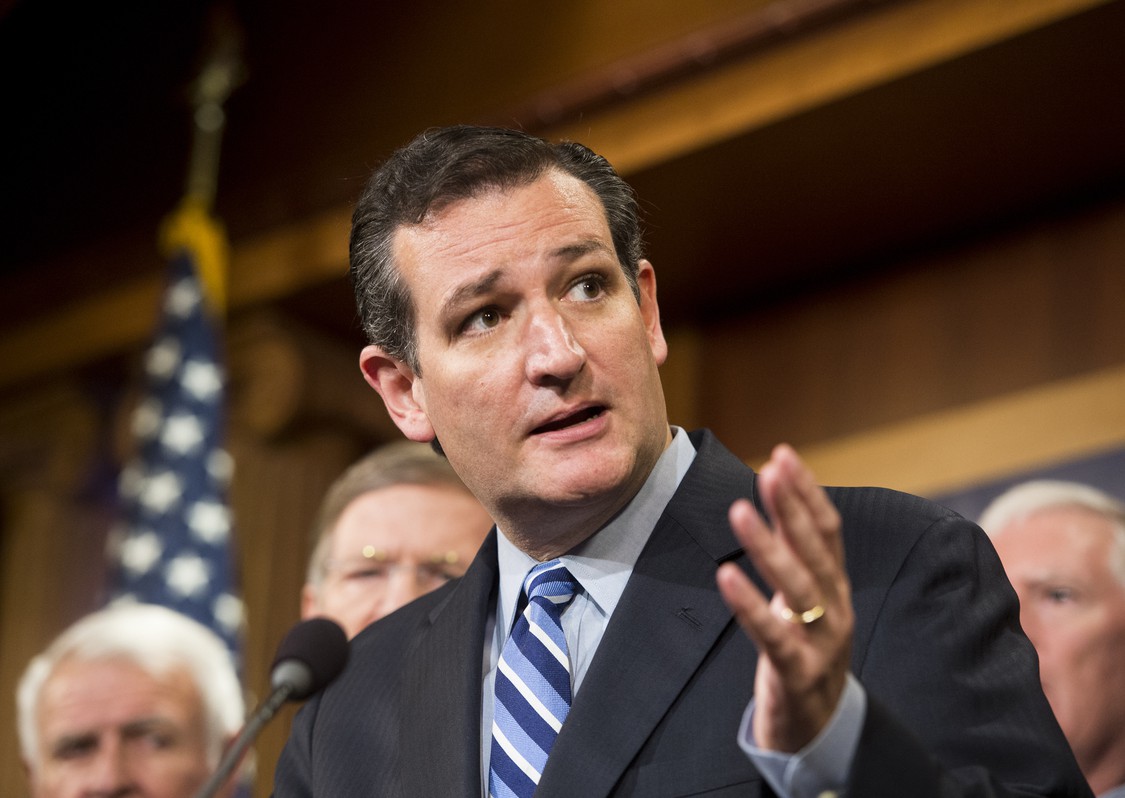
Texas Senator Ted Cruz

Excerpt:

Sen. Ted Cruz wants to protect taxpayers from political targeting by the Internal Revenue Service. The Texas Republican introduced legislation yesterday making it crime to engage in such behavior as questions still linger about the full extent of the IRS scandal.

This is not the first time Cruz has offered this type of legislation. In February 2014, he introduced amendments to the STOP Identity Theft Act. Those measures, however, were defeated by Democrats and did not make it out of the Senate Judiciary Committee.

“Free speech is not a partisan issue. The IRS has no business meddling with the First Amendment rights of Americans,” Cruz said during last year’s debate.

With a new Republican Senate majority, Cruz is hopeful that this time the language will pass independently as a bill. In a press release, Cruz blasted the lack of action by President Obama and his administration in response to the IRS scandal.

“In May 2013, President Obama declared the IRS’s illegal targeting of conservative groups ‘intolerable and inexcusable,’ yet to this date no one has been held accountable for it,” Cruz said in a statement.

Cruz’s bill would make it a crime for any IRS employee to willfully target anyone based solely on political beliefs. Any employee found in violation would be subject to a fine, up to 10 years in prison, or both.

“This is a well thought out amendment to the IRS code to try and deter and punish the type of naked political targeting engaged in by Lois Lerner and other IRS employees,” said Hans von Spakovsky, manager of the election law reform initiative and senior legal fellow at The Heritage Foundation.

I think it’s a good idea for government not to be used as a weapon to punish people who want less government and more freedom. Don’t you?

Last one is about Republican Congressman Steve King of Iowa, as reported by Doug Ross.

Iowa Congressman Steve King

Excerpt:

“We’re extremely pleased that Congressman King has introduced the National Right to Work Act, intensifying a growing debate about labor law and worker freedom in our country. This legislation would enshrine the common-sense principle – already enforced in nearly half of U.S. states – that no worker should be compelled to join or pay dues to a union just to get or keep a job.

“In an age of legislative overreach, this is one of the shortest bills ever introduced. A National Right to Work Act does not add a single word to federal law. It simply removes language in the National Labor Relations Act that gives union officials the power to extract dues from nonunion workers as a condition of employment.

“Voluntary association is a quintessential American ideal and the case for Right to Work has always rested on the principles of employee freedom, but passage of a National Right to Work law will also pay economic dividends. Studies demonstrate that workers in Right to Work states enjoy greater private sector job growth and higher disposable incomes than their counterparts in states without Right to Work protections.

“The Right to Work principle is also popular with the public. Polls consistently show that 80 percent of Americans and union members support the principle of voluntary unionism.

“A National Right to Work Act enshrines worker freedom while providing significant economic benefits for workers. The National Right to Work Committee is mobilizing its 2.8 million members to call on their Congressperson to support the National Right to Work Act.”

Evidence shows that right-to-work states are more attractive to job creators, which results in lower unemployment in states that adopt right-to-work.

Meanwhile, in Virginia, Republican legislators blocked three pro-abortion bills.

If you missed my recent post on four good things that Republican governors are doing, I recommend reading that as well.

Amazing: California teachers challenge forced payment of union dues

Dad sent me this article from the Washington Free Beacon. It’s good news!

Excerpt:

A group of California teachers is preparing for a Supreme Court battle to overturn forced union dues in a groundbreaking lawsuits filed in June.

For nearly three decades, the Supreme Court has allowed closed-shop unionism, in which public employees must pay dues to labor groups handling collective bargaining negotiations.

The Supreme Court established Beck Rights in 1988 allowing workers to opt out of union dues for political activities, while continuing to pay for union negotiating expenses. The teachers are hoping to take that battle one step further by putting an end to all coercive union dues.

Ten California schoolteachers are challenging California’s policy of forcing all public employees to pay union dues for collective bargaining. The Center for Individual Rights (CIR) is aiding their suit. The CIR views the issue through the lens of the Constitution, rather than as a contest of labor policy.

“Our efforts are not anti-union; we are trying to solidify the First Amendment rights of public employees to freely assemble,” CIR president Terry Pell said.

The plaintiffs filed a preliminary injunction on Tuesday asking the court to waive the teachers’ union dues during the ongoing trial. Pell is certain the motion will fail, which is all the better for the plaintiffs because it will “fast-track” the litigation to the 9th Circuit Court of Appeals and eventually the Supreme Court.

“This is a piece of strategic litigation—we’re trying to get the issue of compulsory union dues to the Supreme Court as quickly as possible,” he said. “We know that lower courts can’t overrule Supreme Court precedent, but this will expedite us through the system.”

The Roberts court opened the door to ending coercive unionism last year when it ruled 5-4 that Service Employees International Union improperly charged non-union members for political activities. Justice Samuel Alito, writing for the majority in Knox v. Service Employees International Union, said the forced dues on non-union members were “indefensible”

One of the biggest problems with California is the stranglehold that public sector unions have on the state. This would be a good first step to getting the state to turn around. Even liberals stop paying dues when it’s not mandatory, because they want to keep their own money just like anyone does.