Tag Archives: Regulation

CBO report: Obama’s proposed minimum-wage increase could kill 500,000 jobs

Three stories from Investors Business Daily, and one of them is about the dreaded stagflation.

First one, on the CBO report.

Excerpt:

On Tuesday, the Congressional Budget Office made another blockbuster pronouncement, this one concluding that the White House minimum wage hike to $10.10 an hour really does kill jobs.

The $10.10 option, when fully implemented, “would reduce total employment by about 500,000 workers, or 0.3%,” CBO says. Job losses could be as high as 1 million.

This followed last week’s CBO calculation that the impact of ObamaCare on the labor market will be about 2 million fewer workers over time, due to higher costs on employers and employees of mandated coverage and the availability of subsidized insurance to nonworkers.


Second article, about how the Democrats seem to be trying to create dependency in order to buy votes from people who cannot pay their own way.

Excerpt:

January’s labor report confirmed yet another month with over 100 million Americans not working. In fact, more than 100 million Americans have not been working in Obama’s workers’ paradise for all of 2012 and 2013, a unique achievement in American history.

[…]How has Obama managed to “liberate” so many workers from work? Through Social Security disability, which has increased by more than 21%, extending “unemployment” benefits to two years and by eliminating work requirements as a condition of receiving federal benefits.

The number of Americans on food stamps has soared by 50% under Obama to close to 50 million, largely because work requirements, asset checks and other restraints on abuse have been relaxed. Indeed, more than twice as many more Americans have gotten food stamps under Obama than have gotten jobs. Under ObamaCare, the same transformation is now under way for Medicaid.

Today, federal and state taxpayers pay a trillion dollars every year to the lowest 20% on the income ladder basically not to work. Under Obama total welfare spending has doubled since 2008. (Note that the administration is suing the state of Louisiana to turn over the names of everyone on welfare, precisely for Obama’s voter-turnout database.)

[…]CBO estimates that the slower economic growth from this reduced labor supply will mean $1.4 trillion less in federal tax revenue over the next 10 years. So ObamaCare will increase the deficit after all.

Third article, explaining that the failed policies of the Democrats have been tried before – by Carter.

Excerpt:

Since the Obama “recovery” started 4-1/2 years ago, inflation appears to have been relatively tame, with core prices climbing just 7% from June 2009 to December 2013.

But as CBS News discovered when it looked a little closer, the overall number is deceptive. In fact, it found food prices soaring.

The official inflation data confirm this. Overall, food prices are up 9% since June 2009, according to the Bureau of Labor Statistics. And the cost of many staples is skyrocketing. Pork prices have climbed 14%; poultry is up 12%; eggs, 27%; milk, 20%.

Meanwhile, energy prices have climbed 18% during the recovery, and the price of gasoline is up a whopping 31.5%. Then there’s college tuition, up 23%.

At the same time, wages aren’t budging. In fact, measured in real terms, the median household income is 4% below where it was four-1/2 years ago. And while the official unemployment rate is down, that’s due to millions quitting the workforce altogether.

Yes, the economy has created 6.6 million jobs since June 2009. But the ranks of those not in the labor force climbed nearly 11 million, driving the labor force participation rate down from 65.7% to today’s 63% — a level not seen since 1978.

You might remember from the Carter era that stagflation was the name given to describe a period of slow or stagnant economic growth, low labor force participation and high prices (inflation). The only solution to this is to raise interest rates, which is very painful. But the longer we keep interest rates low, and keep government spending high, and keep taxing and regulating businesses into oblivion, the worst the medicine is going to be when we are forced to take it.
Treasury Department threatens private companies for responding to Obamacare incentives

Investors Business Daily reports on how the Treasury Department is threatening private companies who lay off employees because of the costs imposed on them by Obamacare.

Excerpt:

In what may be considered an ObamaCare loyalty oath, the Treasury Department orders employers to attest that any employee layoffs are not due to its imposed costs under penalty of perjury.

The first rule of business is to stay in business, something which is accomplished by doing what government is incapable of doing — controlling costs and making a profit by giving customers a product or service they need or want.

ObamaCare is obviously a product neither business nor the individual wants, so coercion is necessary under penalty of law.

Enforced by the Internal Revenue Service, individuals must enroll in government-approved plans or be fined.

Individuals are not allowed, despite presidential promises, to keep the plans and doctors they like and can afford.

Instead, they must accept plans they don’t like and can’t afford, some getting subsidies extracted from other taxpayers or China. They must grin and bear their reduced health care choices and higher costs.

Even though ObamaCare’s employer mandate has once again been illegally and unconstitutionally extended by the president who would be king, business still faces ObamaCare’s punitive cost increases down the road and its own form of government coercion.

Layoffs are an unfortunate but sometimes necessary means for a business to control costs and stay in business.

On Monday, a Treasury Department unconcerned with the necessities of the free market said that businesses will need to “certify” that they are not shedding full-time workers simply to avoid the mandate and its costs.

Officials said employers will be told to sign a “self-attestation” on their tax forms affirming this, under penalty of perjury.

What happens when a government passes regulations that make it harder for employers to lay off workers if they are forced to? Well, companies stop hiring workers, and expand their operations elsewhere. That’s exactly what has happened in countries like France, where the government makes it nearly impossible to get rid of workers, even when circumstances warrant it. So the net effect of policies that reduce the freedom to hire/fire as needed is to raise unemployment.

Here’s the economist Aparna Mathur of the American Enterprise Institute to explain.

Excerpt:

Labor market regulations often take the form of employment protection rules that govern the hiring and firing of workers. These were originally introduced to enhance workers’ welfare; for instance, by reducing unfair dismissals. The same provisions that protect employees, however, translate into cost for employers, leading an employer to think twice (at least) before hiring a new employee.

Theoretical economic models have shown that, in general, the effect of such laws is to reduce job flows (broadly, the sum of jobs created and jobs destroyed). In my paper, I show that these reduced job flows could have negative effects on investments in education because they reduce the expected returns on a job search; and they lower the value of education as a signaling device.

Under rigid labor market regulations, employers have a stronger disincentive to create new jobs, so there are fewer available jobs on the market. As a result, one’s likelihood of earning a productive wage is reduced. Moreover, firings under a system of strong labor market regulations are less frequent than they would be otherwise, so even workers with jobs expect to face fewer opportunities to search for re-employment. As a result, they will have less use of education as a signaling device to secure their next job.

With flexible labor markets and higher job mobility, these conditions are reversed. Job flows are higher, leading to more vacancies per unemployed worker. This yields a higher expected return on a job search for educated workers since the likelihood of finding a job is higher. Further, workers are either fired or they quit more frequently (i.e., job destruction is higher), leading to a greater use (or need) of education as a signaling device.

Put simply, imagine a developing country with rigid labor markets leading to few vacancies. For a low-income worker, the cost of getting educated may outweigh the prospective benefits since the likelihood of finding a job in this scenario is fairly low. On the other hand, for the same worker, if the likelihood of finding a job goes up when labor market restrictions are removed, the incentive to invest in education may be higher since the returns to investing in this costly activity are higher. Countries such as France, Germany, and Italy, which consistently have strict labor regulations, would do well to heed these results (see figure). It is also true in general that developing countries have stricter labor regulations than the OECD economies.

All these regulations sound so good, but we have to think beyond stage one in order to see the real results of the happy-sounding speeches. These things are understood by economists, but we didn’t elect an economist.

American Spectator praises Australia’s bold new conservative leader

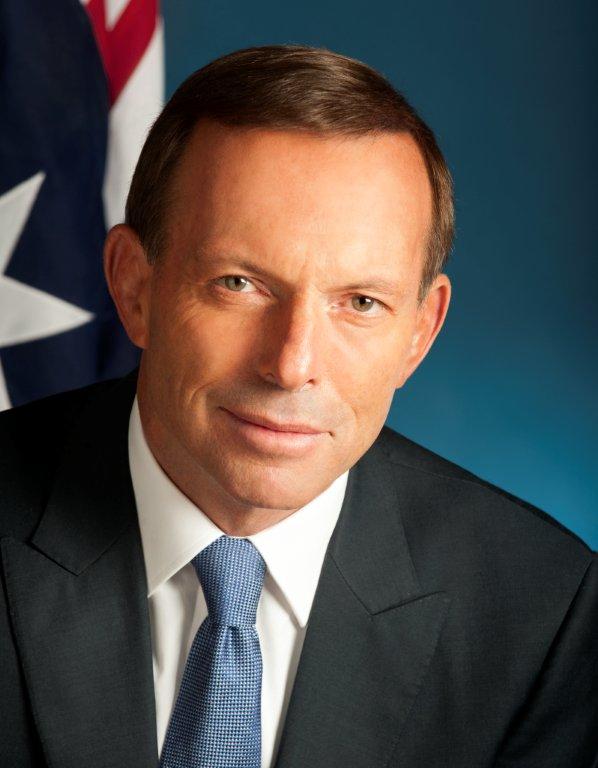
Tony Abbott, Prime Minister of Australia

Well, I think we can get some encouragement from this article from the American Spectator.

Let’s take a look at his policies and appointments:

On economic policy, his government has moved in the opposite direction of those who favor Dodd-Frank-like behemoth approaches to the financial industry. Instead it’s opted to simplify regulation. As the minister responsible for the reform bluntly pointed out, “no amount of legislation will ever be a guarantee against another Storm Financial.” Indeed it’s often excessive regulation that creates opportunities for financial shenanigans by industry insiders.

Regarding the welfare state, Abbott’s minister for Social Security, Kevin Andrews (another conservative politician-thinker), has announced a major overhaul of a welfare system that was starting to drift in a distinctly European-direction. Predictably the left are up in arms. But so too are those rent-seeking Australian businesses who now find themselves dealing with a government uninterested in subsidizing them. That’s nothing, however, to the fury that greeted Abbott’s disbanding of the climate-change bureaucracy established by the preceding Labor government.

[…]The first sign of Abbott’s seriousness about obstructing the left’s long march through the institutions was his government’s appointment of the policy-director of the center-right Institute of Public Affairs to the nation’s Human Rights Commission. This was widely seen as the beginning of an effort to re-balance an organization long criticized as monolithically left-wing. Since then Abbott has indicated that major changes are coming to the ABC: Australia’s government-funded institutional — and ideological — equivalent of the BBC.

[…]Along the same lines, Abbott’s education minister, Christopher Pyne, has initiated a review of the national curriculum implemented by the previous government. A moment’s glance at the curriculum’s treatment of history soon illustrates the extent to which it seeks to downplay Australia’s indisputably Western heritage. In the words of Sydney’s Cardinal George Pell, “Europe, Britain and the United States are mentioned 76 times, while Asia is referred to on more than 200 occasions.” This disparity is odd because although Australia is certainly in Asia, no objective observer could say that Australia is “of” Asia. Moreover, while Australian students learn about “Gaia” and other deep-green fantasies in grade 9, many Australian universities find they need to put the same students through remedial English classes once they begin college.

Then there are Abbott’s initial steps on the international stage. Take, for instance, his recent remarks at Davos. Much of the address was devoted to pushing a strong free trade agenda and insisting that governments should let business do what it does best: promote lasting economic growth. “After all,” Abbott said, “government doesn’t create wealth; people do, when they run profitable businesses.”

In the same speech, however, Abbott made the conservative point that economic prosperity and freedom can’t be sustained in a value-neutral world. Nor did Abbott shy away from relentlessly pressing one of the most important moral arguments for free trade articulated long ago by Adam Smith: that economic freedom, combined with the right institutions, radically reduces poverty faster than any other approach. “No country,” Abbott added, “has ever taxed or subsidized its way to prosperity.”

All in all, the address added up to a solid integration of sound economics with conservative principles. That’s what makes Abbott different from, say, Canada’s Stephen Harper or Spain’s Mariano Rajoy. Abbott happily engages in the indispensable task of moral suasion in favor of conservative positions. What’s more, he’s quite good at it. With his rare combination of plain-speaking and intellectual substance, Abbott makes conservative ideas sound, well, reasonable to the average voter.

Now, I personally thought that prime minister Stephen Harper of Canada was the best leader of any nation out there, but I had not been following Australian politics as much as I should be, and now I think I’ll give the crown to Abbott. He seems to have a good fusionist view that integrates economic policy and social policy, and that makes him better than Harper, in my view. I would like to see Abbott flex his muscles on foreign policy, as well. Something to look forward to.