Tag Archives: Reason

Is the presuppositionalist approach to apologetics Biblical?

Bible study that hits the spot

Here’s J.W. Wartick’s take from Always Have a Reason blog.

Excerpt:

Cornelius Van Til pioneered the field of “presuppositional apologetics” primarily through his works Christian Apologetics and The Defense of the Faith. His arguments are easily misunderstood as question begging or viciously circular. Herein, I have presented a brief outline and analysis which reveals that while the presuppositional approach may indeed have some logical faults, the overall system has a certain power to it and can be integrated into a total-apologetic system.

[…]The key to understand here is that Van Til does not accept that there is a neutral reason “out there” by which Christians and non-Christians can arbitrate the truth of Christianity; his point is that there is no neutral ground and that one’s presuppositions will determine one’s end point. Again, he writes, “this [apologetic method] implies a refusal to grant that any area or aspect of reality, any fact or any law of nature or of history, can be correctly interpreted except it be seen in the light of the main doctrines of Christianity” (Christian Apologetics, 124).

However, Van Til takes it even further and argues that one must presuppose the truth of Christianity in order to make sense of reality: ” What is the content of this presupposition, then? It is this: “I take what the Bible says about God and his relation to the universe as unquestionably true on its own authority” (The Defense of the Faith, 253); again, “The Bible is thought of as authoritative on everything of which it speaks. Moreover, it speaks of everything” (Christian Apologetics, 19). Thus, Van Til’s apologetic does not make Christianity the conclusion of an argument; rather, Christianity is the starting presupposition.

The presuppositional approach here cannot be stressed enough. For Van Til, one simply cannot grant to the non-Christian any epistemic point. “We cannot avoid coming to a clear-cut decision with respect to the question as to whose knowledge, man’s or God’s, shall be made the standard of the other. …[O]ne must be determinative and the other subordinate” (The Defense of the Faith 62-63).

What place is had for evidences in Van Til? At some points, he seems to be very skeptical of the use of Christian evidences. In particular, the fact that he argues there is no neutral evaluation grounds between the Christian and non-Christian seems to imply that  there can be no real evaluation of such arguments apart from Christianity. One of Van Til’s most famous illustrations of the use of evidences can be found in The Defense of the Faith pages 332 and following. He uses three persons, Mr. Black (non-Christian), Mr. Grey (Christian non-presuppositionalist), and Mr. White (presuppositional/reformed apologist):

Mr. Grey… says that, of course, the “rational man” has a perfect right to test the credibility of Scripture by logic… by experience… [Mr. Grey then takes Mr. Black a number of places to show him various theistic evidences. Mr. Black responds:] “you first use intellectual argument upon principles that presuppose the justice of my unbelieving position. Then when it it is pointed out to you that such is the case, you turn to witnessing [subjectively].

…At last it dawned upon Mr. White that first to admit that the principles of Mr. Black, the unbeliever, are right and then to seek to win him to the acceptance of the existence of God the Creator… is like first admitting that the United States had historically been a province of the Soviet Union but ought at the same time to be recognized as an independent and all-controlling power… If one reasons for the existence of God and for the truth of Christianity on the assumptions that Mr. Black’s principles of explanation are valid, then one must witness on the same assumption [which makes witnessing wholly subjective.] (p. 332-339)

It can be seen here that even evidences for Van Til must be based within a presupposition. There is no way to look at evidences in the abstract. One can either offer them within the presuppositions of Christianity or outside of Christianity. For Van Til, once one has agreed to offer evidences outside of Christianity, one has granted the presuppositions of the non-believer, and therefore is doomed to fail.

This would include using arguments like the cosmological argument, the fine-tuning argument, arguments from miracles, etc. – including the resurrection. That seems to be Van Til’s view. No evidence allowed – you have to presuppose Christianity is true in order to make sense of the world.

Now, I think we need to make a distinction between using questioning the pre-suppositions of our opponents, as with William Lane’s Craig’s moral argument, Plantinga’s epistemological argument for reason and Menuge’s ontological argument for reason. There are arguments for theism that question the pre-suppositions of an atheist. Certainly, non-theists cannot ground things like morality, free will, consciousness and rationality on atheism. But that’s not what Van Til is saying. He says that an atheist cannot be swayed by evidence unless he first becomes a Christian. I.e. – he is saying that atheist Anthony Flew is lying when he says that evidence caused him to turn to believe in God. On Van Til’s view, that’s impossible.

My view of presuppositional apologetics is that is as a system, it is circular reasoning. It assumes Christianity in order to prove Christianity. But there is an even worse problem with it. It’s not a Biblical way of doing apologetics. It’s man’s way of doing apologetics, not God’s. I think that the best way to understand Van Til’s apologetics is by saying that it really just a sermon disguised as apologetics. The problem is that Van Til’s sermon has no basis in the Bible. Wherever he is getting his view from, it’s not from the Bible. When I look the Bible, I don’t see any Biblical support for the view that pre-suppositional apologetics is the only approved way of defending the faith. Instead, the standard method seems to be evidentialism.

In Romans 1, Paul writes that people can learn about God’s existence from the natural world.

Romans 1:18-23:

18The wrath of God is being revealed from heaven against all the godlessness and wickedness of men who suppress the truth by their wickedness,

19since what may be known about God is plain to them, because God has made it plain to them.

20For since the creation of the world God’s invisible qualities—his eternal power and divine nature—have been clearly seen, being understood from what has been made, so that men are without excuse.

21For although they knew God, they neither glorified him as God nor gave thanks to him, but their thinking became futile and their foolish hearts were darkened.

22Although they claimed to be wise, they became fools

23and exchanged the glory of the immortal God for images made to look like mortal man and birds and animals and reptiles.

And in Acts, Peter appeals to eyewitness testimony for the resurrection, and Jesus’ miracles.

Acts 2:22-24, and 36:

22“Men of Israel, listen to this: Jesus of Nazareth was a man accredited by God to you by miracles, wonders and signs, which God did among you through him, as you yourselves know.

23This man was handed over to you by God’s set purpose and foreknowledge; and you, with the help of wicked men, put him to death by nailing him to the cross.

24But God raised him from the dead, freeing him from the agony of death, because it was impossible for death to keep its hold on him.

And finally from the same chapter:

36“Therefore let all Israel be assured of this: God has made this Jesus, whom you crucified, both Lord and Christ.”

Professor Clay Jones of Biola University makes the case that the use of evidence when preaching the gospel was standard operating procedure in the early church. (H/T Apologetics 315)

Intro:

In 1993 I started working for Simon Greenleaf University (now Trinity Law School) which offered an M.A. in Christian apologetics (Craig Hazen was the director). Much of my job was to promote the school and although I had studied Christian apologetics since my sophomore year in high school, I decided I needed to see whether an apologetic witness had strong Biblical precedence.

It does.

As I poured through the Scripture I found that Jesus and the apostles preached the resurrection of Christ as the sign of the truth of Christianity.

What follows are some of the passages which support the resurrection witness.

Here is my favorite verse from his massive list list of verses in favor of the evidential approach to Christian apologetics:

Mat. 12:39-40: A wicked and adulterous generation asks for a miraculous sign! But none will be given it except the sign of the prophet Jonah. For as Jonah was three days and three nights in the belly of a huge fish, so the Son of Man will be three days and three nights in the heart of the earth.

Jesus is saying that the resurrection was deliberately given as a sign to unbelievers to convince them. (“The Sign of Jonah” = the resurrection)

So, I see that God uses nature and miracles to persuade, which can be assessed using scientific and historical methods. Can anyone find me a clear statement in the Bible that states that only pre-suppositional arguments should be used? I could be wrong, and I am willing to be proven wrong. I think we should use the Biblical method of apologetics, not the fallen man’s method of apologetics.

Positive arguments for Christian theism

Is the definition of atheism “a lack of belief in God”?

I have a key that will unlock a puzzling mystery

First, let’s see check with the Stanford University Encyclopedia of Philosophy:

‘Atheism’ means the negation of theism, the denial of the existence of God.

Stanford University is one of the top 5 universities in the United States, so that’s a solid definition. To be an atheist is to be a person who makes the claim that, as a matter of FACT, there is no intelligent agent who created the universe. Atheists think that there is no God, and theists think that there is a God. Both claims are objective claims about the way the world is out there, and so both sides must furnish forth arguments and evidence as to how they are able to know what they are each claiming.

Philosopher William Lane Craig has some thoughts on atheism, atheists and lacking belief in God in this reply to a questioner.

Question:

In my discussions with atheists, they  are using the term that they “lack belief in God”. They claim that this is different from not believing in God or from saying that God does not exist. I’m not sure how to respond to this. It seems to me that its a silly word-play and is logically the same as saying that you do not believe in God.
What would be a good response to this?
Thank you for your time,

Steven

And here is Dr. Craig’s full response:

Your atheist friends are right that there is an important logical difference between believing that there is no God and not believing that there is a God.  Compare my saying, “I believe that there is no gold on Mars” with my saying “I do not believe that there is gold on Mars.”   If I have no opinion on the matter, then I do not believe that there is gold on Mars, and I do not believe that there is no gold on Mars.  There’s a difference between saying, “I do not believe (p)” and “I believe (not-p).”   Logically where you place the negation makes a world of difference.

But where your atheist friends err is in claiming that atheism involves only not believing that there is a God rather than believing that there is no God.

There’s a history behind this.  Certain atheists in the mid-twentieth century were promoting the so-called “presumption of atheism.” At face value, this would appear to be the claim that in the absence of evidence for the existence of God, we should presume that God does not exist.  Atheism is a sort of default position, and the theist bears a special burden of proof with regard to his belief that God exists.

So understood, such an alleged presumption is clearly mistaken.  For the assertion that “There is no God” is just as much a claim to knowledge as is the assertion that “There is a God.”  Therefore, the former assertion requires justification just as the latter does.  It is the agnostic who makes no knowledge claim at all with respect to God’s existence.  He confesses that he doesn’t know whether there is a God or whether there is no God.

But when you look more closely at how protagonists of the presumption of atheism used the term “atheist,” you discover that they were defining the word in a non-standard way, synonymous with “non-theist.”  So understood the term would encompass agnostics and traditional atheists, along with those who think the question meaningless (verificationists).  As Antony Flew confesses,

the word ‘atheist’ has in the present context to be construed in an unusual way.  Nowadays it is normally taken to mean someone who explicitly denies the existence . . . of God . . . But here it has to be understood not positively but negatively, with the originally Greek prefix ‘a-’ being read in this same way in ‘atheist’ as it customarily is in . . . words as ‘amoral’ . . . . In this interpretation an atheist becomes not someone who positively asserts the non-existence of God, but someone who is simply not a theist. (A Companion to Philosophy of Religion, ed. Philip Quinn and Charles Taliaferro [Oxford:  Blackwell, 1997], s.v. “The Presumption of Atheism,” by Antony Flew)

Such a re-definition of the word “atheist” trivializes the claim of the presumption of atheism, for on this definition, atheism ceases to be a view.  It is merely a psychological state which is shared by people who hold various views or no view at all.  On this re-definition, even babies, who hold no opinion at all on the matter, count as atheists!  In fact, our cat Muff counts as an atheist on this definition, since she has (to my knowledge) no belief in God.

One would still require justification in order to know either that God exists or that He does not exist, which is the question we’re really interested in.

So why, you might wonder, would atheists be anxious to so trivialize their position?  Here I agree with you that a deceptive game is being played by many atheists.  If atheism is taken to be a view, namely the view that there is no God, then atheists must shoulder their share of the burden of proof to support this view.  But many atheists admit freely that they cannot sustain such a burden of proof.  So they try to shirk their epistemic responsibility by re-defining atheism so that it is no longer a view but just a psychological condition which as such makes no assertions.  They are really closet agnostics who want to claim the mantle of atheism without shouldering its responsibilities.

This is disingenuous and still leaves us asking, “So is there a God or not?”

So there you have it. We are interested in what both sides know and what reasons and evidence they have to justify their claim to know. We are interested in talking to people who make claims about objective reality, not about themselves, and who then go on to give reasons and evidence to support their claims about objective reality. There are atheists out there that do make an objective claim that God does not exist, and then support that claim with arguments and evidence. Those are good atheists, and we should engage in rational conversations with them. But clearly there are some atheists who are not like that. How should we deal with these “subjective atheists”?

Dealing with subjective atheists

How should theists respond to people who just want to talk about their psychological state? Well, my advice is to avoid them. They are approaching religion irrationally and non-cognitively – like the person who enters a physics class and says “I lack a belief in the gravitational force!”.  When you engage in serious discussions with people about God’s existence, you only care about what people know and what they can show to be true. We don’t care about a person’s psychology.

Dealing with persistent subjective atheists

What happens when you explain all of that to a subjective atheist who continues to insist that you listen to them repeat over and over “I lack a belief in God, I lack a belief in God”? What if you tell them to make the claim that God does not exist, and then support it with arguments and evidence, but instead they keep leaving comments on your blog telling you again and again about their subjective state of mind: “I lack a belief in cupcakes! I lack a belief in icebergs!” What if they keep e-mailing you and threatening to expose you on Twitter for refusing to listen to them, or denounce you via skywriting: “Wintery Knight won’t listen to me! I lack a belief in crickets!”. I think at this point you have to give up and stop talking to such a person.

And that’s why I moderate and filter comments on this blog. There are uneducated people out there with access to the Internet who want attention, but I am not obligated to give it to them. And neither are you. We are not obligated to listen to abusive people who don’t know what they are talking about. I do post comments from objective atheists who make factual claims about the objective world, and who support those claims with arguments and evidence. I am not obligated to post comments from people who refuse to make objective claims or who refuse to support objective claims with arguments and evidence. And I’m not obligated to engage in discussions with them, either.

Positive arguments for Christian theism

Atheist Jerry Coyne explains why morality is impossible for atheists

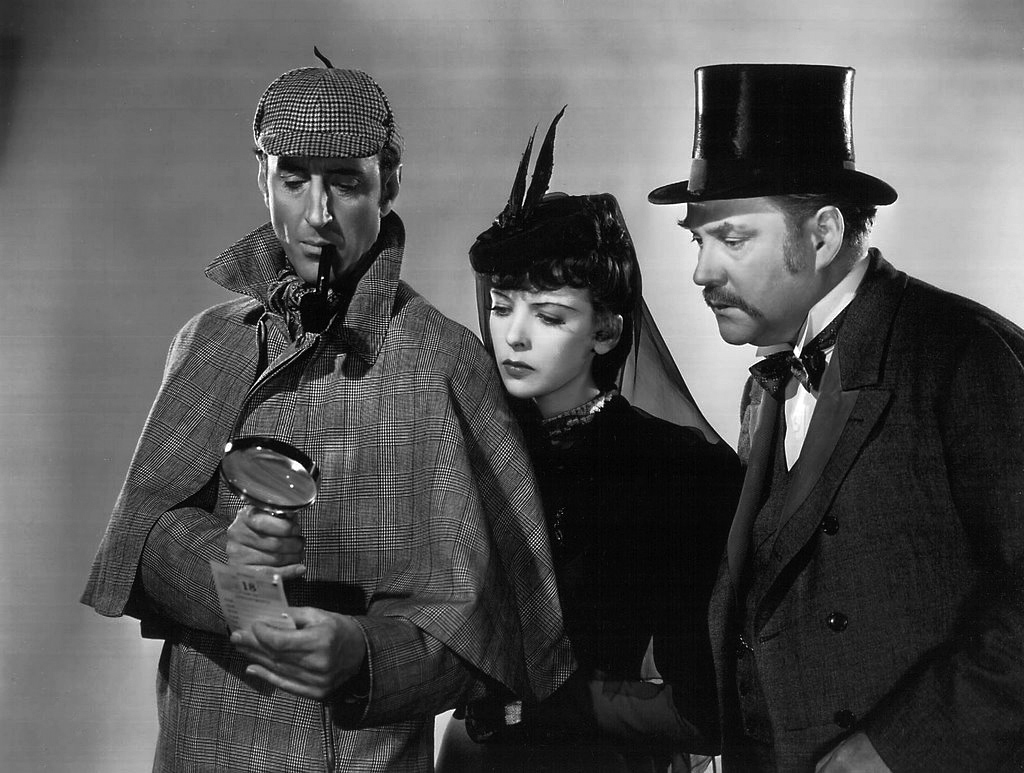
Sherlock Holmes and John Watson about to do philosophy

Let’s review what you need in your worldview in order to have a rationally grounded system of morality.

You need 5 things:

1) Objective moral values

There needs to be a way to distinguish what is good from what is bad. For example, the moral standard might specify that being kind to children is good, but torturing them for fun is bad. If the standard is purely subjective, then people could believe anything and each person would be justified in doing right in their own eyes. Even a “social contract” is just based on people’s opinions. So we need a standard that applies regardless of what people’s individual and collective opinions are.

2) Objective moral duties

Moral duties (moral obligations) refer to the actions that are obligatory based on the moral values defined in 1). Suppose we spot you 1) as an atheist. Why are you obligated to do the good thing, rather than the bad thing? To whom is this obligation owed? Why is rational for you to limit your actions based upon this obligation when it is against your self-interest? Why let other people’s expectations decide what is good for you, especially if you can avoid the consequences of their disapproval?

3) Moral accountability

Suppose we spot you 1) and 2) as an atheist. What difference does it make to you if you just go ahead and disregard your moral obligations to whomever? Is there any reward or punishment for your choice to do right or do wrong? What’s in it for you?

4) Free will

In order for agents to make free moral choices, they must be able to act or abstain from acting by exercising their free will. If there is no free will, then moral choices are impossible. If there are no moral choices, then no one can be held responsible for anything they do. If there is no moral responsibility, then there can be no praise and blame. But then it becomes impossible to praise any action as good or evil.

5) Ultimate significance

Finally, beyond the concept of reward and punishment in 3), we can also ask the question “what does it matter?”. Suppose you do live a good life and you get a reward: 1000 chocolate sundaes. And when you’ve finished eating them, you die for real and that’s the end. In other words, the reward is satisfying, but not really meaningful, ultimately. It’s hard to see how moral actions can be meaningful, ultimately, unless their consequences last on into the future.

Theism rationally grounds all 5 of these. Atheism cannot ground any of them.

Let’s take a look at #4: free will and see how atheism deals with that.

Atheism and free will?

Here’s prominent atheist Jerry Coyne’s editorial in USA Today to explain why atheists can’t ground free will.

Excerpt:

And that’s what neurobiology is telling us: Our brains are simply meat computers that, like real computers, are programmed by our genes and experiences to convert an array of inputs into a predetermined output. Recent experiments involving brain scans show that when a subject “decides” to push a button on the left or right side of a computer, the choice can be predicted by brain activity at least seven seconds before the subject is consciously aware of having made it. (These studies use crude imaging techniques based on blood flow, and I suspect that future understanding of the brain will allow us to predict many of our decisions far earlier than seven seconds in advance.) “Decisions” made like that aren’t conscious ones. And if our choices are unconscious, with some determined well before the moment we think we’ve made them, then we don’t have free will in any meaningful sense.

If you don’t have free will, then you can’t make moral choices, and you can’t be held morally responsible. No free will means no morality.

Here are some more atheists to explain how atheists view morality.

William Provine says atheists have no free will, no moral accountability and no moral significance:

Let me summarize my views on what modern evolutionary biology tells us loud and clear — and these are basically Darwin’s views. There are no gods, no purposes, and no goal-directed forces of any kind. There is no life after death. When I die, I am absolutely certain that I am going to be dead. That’s the end of me. There is no ultimate foundation for ethics, no ultimate meaning in life, and no free will for humans, either.

Richard Dawkins says atheists have no objective moral standards:

In a universe of blind physical forces and genetic replication, some people are going to get hurt, other people are going to get lucky, and you won’t find any rhyme or reason in it, or any justice. The universe that we observe has precisely the properties we should expect if there is, at bottom, no design, no purpose, no evil and no good, nothing but blind, pitiless indifference… DNA neither knows nor cares. DNA just is. And we dance to its music. (Richard Dawkins, River Out of Eden: A Darwinian View of Life (1995))

When village atheists talk about how they can be moral without God, it’s important to ask them to justify the minimum requirements for rational morality. Atheists may act inconsistently with their worldview, believing in free will, expecting praise and blame for complying with the arbitrary standards of their peer group, etc. But there is nothing more to morality on atheism that imitating the herd – at least when the herd is around to watch them. And when the herd loses its Judeo-Christian foundation – watch out. That’s when the real atheism comes out – the atheism that we’ve seen before in countries that turned their backs on God, and the moral law. When God disappears from a society, anything is permissible.