
Tag Archives: Putin

Scott Walker discusses foreign policy and national security with Hugh Hewitt

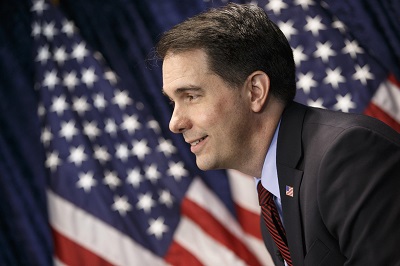
Wisconsin Governor Scott Walker

Hugh Hewitt is a horrible RINO Republican establishment guy (backed Romney), but I sometimes listen to his show.

I got this audio and transcript from Hugh Hewitt’s blog.

The MP3 file is here. (19 minutes)

And here are the relevant parts of the transcript:

HH: You mentioned today, you called it “the safety issue,” not the “national security issue,” that sort of brings, explain to people why you use that terminology.

SW: I do, because I think it’s come to the forefront not so much because “national security,” that, to me, as I said [at lunch], is on page 6A of the newspaper where only a handful of us read into that. But when people see the videos, when they see the Jordanian burned alive in a cage, when they see the Egyptian Christians who were beheaded, when they see some of these other folks from around the world, including James Foley, who went to Marquette University where my son’s a junior, and suddenly, that becomes very real to everyday Americans.

HH: One of the beheaded Islamic State videos.

SW: Absolutely, whose parents are actually from New Hampshire, not far from where I was at a weekend ago, and you just realize, you can see it on your phone, you can see it on your iPad. You don’t need the filter of the network news or the daily newspaper to tell you how bad this is. It suddenly becomes an issue of safety, because that’s not something, national security, foreign policy is something over there. Safety is something you feel inside your chest, you feel in your heart. And I think increasingly, Americans feel a sense of concern that particularly if they have family members or loved ones that ever want to travel again, they see France, they see Canada, they see other places around the world, not just the Middle East, and it’s a safety issue. And they, and then I would just add to this, as they look at this more closely, they see a president whose drawn a line in the sand and crossed it, who called ISIS just a year ago the “jayvee squad,” who called Yemen last fall a success story, who calls Iran now a place where we can do business. Think about how screwed up that is. I remember the movie in the 80s, Trading Places…

HH: Right.

SW: …you know, with Dan Akroyd and Eddie Murphy, it’s like Iran and Israel are trading places in the sequel. In the eyes of this president, our ally is supposed to be Israel. Our adversary has been historically Iran. And yet this administration completely does it the other way around. We need to call radical Islamic terrorism for what it is, and a commander-in-chief who’s willing to act.

HH: Now I asked maybe one of your potential competitors yesterday, Senator Marco Rubio, who I know is a friend of yours.

SW: Good guy, yeah.

HH: I asked him yesterday would you disown and agreement that this president signs with Iran that leaves Iran uranium enrichment. What’s Scott Walker think about the deal, because that’s the outline, it appears?

SW: Absolutely.

HH: Would you reject that deal if you took the Oval Office?

SW: Absolutely, on Day One. I mean, to me, it is, the concept of a nuclear Iran is not only problematic for Iran, and certainly for Israel, but it opens the doors. I mean, the Saudis are next. You’re going to have plenty of others in the region. People forget that even amongst the Islamic world, there is no love lost between the Saudis and the Iranians. And so they’re going to want to have a nuclear weapon if the Iranians have a nuclear weapon. This is something that just escalates right before our eyes. And the fact that this administration began these discussions essentially conceding that they’re going to allow enrichment to go forward with the Iranians just shows you that they don’t have the same level of concern that I think I and Senator Rubio and many others out there have, that a nuclear Iran is a problem for the entire world, not just for Israel.

HH: Does the rising of these headlines, Saudi Arabia may be going to war with Yemen before this broadcast is over, if some of these Reuters reports are true.

SW: Right.

HH: And the Quds Force general is in Tikrit, right? So the world’s on fire. Does this hurt a governor’s claim to the presidency and elevate perhaps senators who have been there or other people who have been abroad and done that sort of thing? Or does it help you?

SW: Well, I think leadership is the fundamental ingredient that’s important in anything, particularly when it comes to foreign policy. And I won’t belittle any of the other would-be candidates. I would say, though, that my lifetime, the most significant president when it comes to foreign policy was a former governor, Ronald Reagan. The most faulty president, I would argue, when it comes to foreign policy and national security is a first term senator by the name of Barack Obama, who was on the Foreign Affairs Committee. And so, just those qualifications alone aren’t enough. Now again, I think Senator Rubio and I are very much aligned on these issues. I agree with a number of my other colleagues who might be prospective candidates should I and others get into the race in the future. What people need to look at is what do you bring to the table, who do you surround yourself with, what kind of leadership style do you have, and people, I think in this case in particularly, not just in the travels and the studies, need to know how you think. In this case, I think Americans more than anything want a commander-in-chief of the future who does a couple of things – 1) calls out radical Islamic terrorism for what it is, and says we will do whatever it takes to take the fight to them before they bring the fight to us, because unlike the Cold War, when containment was enough, when the Soviet Union and the United States could have leaders like Gorbachev and Reagan talking about containment, that’s not enough. When you have, not only with ISIS and al Qaeda, but you have an Iran, you have other places around the world groups that that want to not only annihilate Israel, but annihilate us in America, it’s like a virus. You’ve got to eradicate it. You can’t take out part of it, or it will come back.

HH: You also have people like Putin, Governor Walker…

SW: Absolutely.

HH: …who are pushing everywhere, and we’ve got Baltic allies. And people are wondering whether or not we’d actually come to their defense if Putin pushes into Estonia or Latvia or Lithuania. What do you think?

SW: We absolutely have to. I mean, NATO is the strongest military alliance we’ve had in history. It was part of, through Reagan’s leadership, but certainly part of the ingredient that allowed us to win the Cold War without firing a shot. If we don’t defend NATO members in a scenario like that, now I think we preempt that by showing strength in even dealing with Ukraine, which is not a NATO member, but is very much geographically aligned with what we’re talking about. Remember, Putin isn’t just aggressive for the sake of being aggressive. He’s a nationalist. He believes in the history of Russia and the old Soviet Union. Part of what you see here is the old Lenin adage that you probe with bayonets. If you find mush, you proceed. If you find steel, you withdraw. Well, in Ukraine, he’s found mush, and he’s found mush not only from the United States, but from others like, others and NATO partners out there. If it were to extend, and my belief is we need a president who’s going to act aggressively by giving lethal force to the Ukrainians and others to try to preempt that from happening. But a couple of weeks ago, I met with the president of Estonia. Certainly, we saw a week ago the Lithuanian leadership is literally giving out literature telling their own citizens what to do if Russians invade. Latvia, I just talked to someone the other day whose mother immigrated here from Latvia, and in each of those Baltic states, there are real serious concerns about what happens if we don’t deal with this in Ukraine. We need American leadership not just for America’s sake, but for the world.

If you find that interesting, listen to the whole thing or read the transcript. He also talks about education reform, if you’re into that. I am.

We don’t talk much about foreign policy as Christians, but it is important for us to understand it in order to promote the good, and achieve good results. We can’t just be led by our feelings, we have to do what works, and that requires understanding how the world works.

Was Stalin an atheist? Is atheism or communism responsible for mass murders?

Let’s take a look at what Josef Stalin did during his rule of Russia in the 1920s and 1930s.

The Library of Congress offers this in their “Soviet Archives exhibit”:

The Soviet Union was the first state to have as an ideological objective the elimination of religion. Toward that end, the Communist regime confiscated church property, ridiculed religion, harassed believers, and propagated atheism in the schools. Actions toward particular religions, however, were determined by State interests, and most organized religions were never outlawed.

The main target of the anti-religious campaign in the 1920s and 1930s was the Russian Orthodox Church, which had the largest number of faithful. Nearly all of its clergy, and many of its believers, were shot or sent to labor camps. Theological schools were closed, and church publications were prohibited. By 1939 only about 500 of over 50,000 churches remained open.

Let’s see more from a peer-reviewed journal article authored by Crispin Paine of the University College, London:

Atheist propaganda and the struggle against religion began immediately after the Bolsheviks seized power in 1917. While social change would, under Marxist theory, bring religion to disappear, Leninists argued that the Party should actively help to eradicate religion as a vital step in creating ‘New Soviet Man’. The energy with which the Party struggled against religion, though, varied considerably from time to time and from place to place, as did its hostility to particular faith groups. The 1920s saw the closure of innumerable churches and synagogues (and to a lesser extent mosques) and the active persecution of clergy and harassment of believers. From 1930, though, Stalin introduced a less aggressive approach, and wartime support for the government earned for the Russian Orthodox Church, at least, a level of toleration which lasted until Stalin’s death. Under Khrushchev antireligious efforts resumed, if spasmodically, and they lasted until the end of the Soviet Union.

An article from the pro-communism Marxist.com web site says this about Stalin:

During the ultra-left period of forcible collectivisation and the Five Year Plan in Four an attempt was made to liquidate the Church and its influence by government decree. Starting in 1929 churches were forcibly closed and priests arrested and exiled all over the Soviet Union. The celebrated Shrine of the Iberian Virgin in Moscow – esteemed by believers to be the “holiest” in all Russia was demolished – Stalin and his Government were not afraid of strengthening religious fanaticism by wounding the feelings of believers as Lenin and Trotsky had been! Religion, they believed, could be liquidated, like the kulak, by a stroke of the pen. The Society of Militant Atheists, under Stalin’s orders, issued on May 15th 1932, the “Five Year Plan of Atheism” – by May 1st 1937, such as the “Plan”, “not a single house of prayer shall remain in the territory of the USSR, and the very concept of God must be banished from the Soviet Union as a survival of the Middle Ages and an instrument for the oppression of the working masses.”!

Now, if all you read were atheist web sites, you’d think that Stalin loved religion and wasn’t opposed to Christianity at all. An atheist I know told me that Stalin was a Christian because that’s what he was as a child at one point. Funny sort of way to carry out your Christian faith, isn’t it? If you read atheist web sites, you’d expect Stalin to have had the career of a William Lane Craig or a J.P. Moreland. And yet in the fever swamp of atheist web sites, this is what they tell themselves. They believe it because they want to believe it. They have to believe it, in order to keep God at bay.

Now, if you were going to pick a hero of the Christian faith, you’d probably pick a real fundamentalist like William Wilberforce, who freed the slaves – because of his evangelical Christian convictions. Wilberforce took Christianity seriously – he believed every verse of the Bible, he tried to convert people to his faith, and he pushed his faith on others by passing laws. He was the worst nightmare of atheism – a politically active Evangelical Christian.

But who is a great atheist who was politically active? When I think of a great atheist, someone who really did the most to oppose the “lie” of God’s existence, I think of Josef Stalin. So what kind of morality can we expect from someone who takes the message of Richard Dawkins and Dan Barker seriously and has the political power to really do something about it?

The Ukraine Famine

Take a look at this UK Daily Mail article about a great achievement of the atheist Josef Stalin, which occurred in 1932-1933.

Excerpt:

Now, 75 years after one of the great forgotten crimes of modern times, Stalin’s man-made famine of 1932/3, the former Soviet republic of Ukraine is asking the world to classify it as a genocide.

The Ukrainians call it the Holodomor – the Hunger.

Millions starved as Soviet troops and secret policemen raided their villages, stole the harvest and all the food in villagers’ homes.

They dropped dead in the streets, lay dying and rotting in their houses, and some women became so desperate for food that they ate their own children.

If they managed to fend off starvation, they were deported and shot in their hundreds of thousands.

So terrible was the famine that Igor Yukhnovsky, director of the Institute of National Memory, the Ukrainian institution researching the Holodomor, believes as many as nine million may have died.

[…]Between four and five million died in Ukraine, a million died in Kazakhstan and another million in the north Caucasus and the Volga.

By 1933, 5.7 million households – somewhere between ten million and 15 million people – had vanished. They had been deported, shot or died of starvation.

This is what follows when you believe that the universe is an accident, that there is no objective good and evil, that human beings are just animals, that no God will hold us accountable, and that human beings are not made in the image of God for the purpose of freely choosing to come into a relationship with him. The Ukrainian famine is an action that came from a man whose worldview was passionate atheism.

Atheism today

You might think that today’s atheists are much different than Josef Stalin, but understand that according to a recent survey of atheists conducted by atheists, 97% of atheists are pro-abortion. How many people have been killed by abortion? 56 million in the United States alone. Atheists in a society like ours, founded on Judeo-Christian values, are obviously going to live a lot better than Stalin. For one thing, they don’t have the power that Stalin had to eradicate theism, although you can see Stalinism in the anti-Christian activities of groups like the Freedom From Religion Foundation. But take away the Judeo-Christian foundations of this society, and what would you see atheists doing?

Remember the words of Richard Dawkins:

The total amount of suffering per year in the natural world is beyond all decent contemplation. During the minute that it takes me to compose this sentence, thousands of animals are being eaten alive, many others are running for their lives, whimpering with fear, others are slowly being devoured from within by rasping parasites, thousands of all kinds are dying of starvation, thirst, and disease. It must be so. If there ever is a time of plenty, this very fact will automatically lead to an increase in the population until the natural state of starvation and misery is restored. In a universe of electrons and selfish genes, blind physical forces and genetic replication, some people are going to get hurt, other people are going to get lucky, and you won’t find any rhyme or reason in it, nor any justice. The universe that we observe has precisely the properties we should expect if there is, at bottom, no design, no purpose, no evil, no good, nothing but pitiless indifference.

(“God’s Utility Function,” Scientific American, November, 1995, p. 85)

Now, having said that, I readily admit that many atheists adopt Judeo-Christian values if their society is saturated with them, but they are acting better than their worldview requires. They are acting inconsistently with what atheism really teaches. It’s good for us that they do, but for how long?

Was Stalin an atheist? Is atheism or communism responsible for mass murders?

Let’s take a look at what Josef Stalin did during his rule of Russia in the 1920s and 1930s.

The Library of Congress offers this in their “Soviet Archives exhibit”:

The Soviet Union was the first state to have as an ideological objective the elimination of religion. Toward that end, the Communist regime confiscated church property, ridiculed religion, harassed believers, and propagated atheism in the schools. Actions toward particular religions, however, were determined by State interests, and most organized religions were never outlawed.

The main target of the anti-religious campaign in the 1920s and 1930s was the Russian Orthodox Church, which had the largest number of faithful. Nearly all of its clergy, and many of its believers, were shot or sent to labor camps. Theological schools were closed, and church publications were prohibited. By 1939 only about 500 of over 50,000 churches remained open.

Let’s see more from a peer-reviewed journal article authored by Crispin Paine of the University College, London:

Atheist propaganda and the struggle against religion began immediately after the Bolsheviks seized power in 1917. While social change would, under Marxist theory, bring religion to disappear, Leninists argued that the Party should actively help to eradicate religion as a vital step in creating ‘New Soviet Man’. The energy with which the Party struggled against religion, though, varied considerably from time to time and from place to place, as did its hostility to particular faith groups. The 1920s saw the closure of innumerable churches and synagogues (and to a lesser extent mosques) and the active persecution of clergy and harassment of believers. From 1930, though, Stalin introduced a less aggressive approach, and wartime support for the government earned for the Russian Orthodox Church, at least, a level of toleration which lasted until Stalin’s death. Under Khrushchev antireligious efforts resumed, if spasmodically, and they lasted until the end of the Soviet Union.

An article from the pro-communism Marxist.com web site says this about Stalin:

During the ultra-left period of forcible collectivisation and the Five Year Plan in Four an attempt was made to liquidate the Church and its influence by government decree. Starting in 1929 churches were forcibly closed and priests arrested and exiled all over the Soviet Union. The celebrated Shrine of the Iberian Virgin in Moscow – esteemed by believers to be the “holiest” in all Russia was demolished – Stalin and his Government were not afraid of strengthening religious fanaticism by wounding the feelings of believers as Lenin and Trotsky had been! Religion, they believed, could be liquidated, like the kulak, by a stroke of the pen. The Society of Militant Atheists, under Stalin’s orders, issued on May 15th 1932, the “Five Year Plan of Atheism” – by May 1st 1937, such as the “Plan”, “not a single house of prayer shall remain in the territory of the USSR, and the very concept of God must be banished from the Soviet Union as a survival of the Middle Ages and an instrument for the oppression of the working masses.”!

Now, if all you read were atheist web sites, you’d think that Stalin loved religion and wasn’t opposed to Christianity at all. An atheist I know told me that Stalin was a Christian because that’s what he was as a child at one point. Funny sort of way to carry out your Christian faith, isn’t it? If you read atheist web sites, you’d expect Stalin to have had the career of a William Lane Craig or a J.P. Moreland. And yet in the fever swamp of atheist web sites, this is what they tell themselves. They believe it because they want to believe it. They have to believe it, in order to keep God at bay.

Now, if you were going to pick a hero of the Christian faith, you’d probably pick a real fundamentalist like William Wilberforce, who freed the slaves – because of his evangelical Christian convictions. Wilberforce took Christianity seriously – he believed every verse of the Bible, he tried to convert people to his faith, and he pushed his faith on others by passing laws. He was the worst nightmare of atheism – a politically active Evangelical Christian.

But who is a great atheist who was politically active? When I think of a great atheist, someone who really did the most to oppose the “lie” of God’s existence, I think of Josef Stalin. So what kind of morality can we expect from someone who takes the message of Richard Dawkins and Dan Barker seriously and has the political power to really do something about it?

The Ukraine Famine

Take a look at this UK Daily Mail article about a great achievement of the atheist Josef Stalin, which occurred in 1932-1933.

Excerpt:

Now, 75 years after one of the great forgotten crimes of modern times, Stalin’s man-made famine of 1932/3, the former Soviet republic of Ukraine is asking the world to classify it as a genocide.

The Ukrainians call it the Holodomor – the Hunger.

Millions starved as Soviet troops and secret policemen raided their villages, stole the harvest and all the food in villagers’ homes.

They dropped dead in the streets, lay dying and rotting in their houses, and some women became so desperate for food that they ate their own children.

If they managed to fend off starvation, they were deported and shot in their hundreds of thousands.

So terrible was the famine that Igor Yukhnovsky, director of the Institute of National Memory, the Ukrainian institution researching the Holodomor, believes as many as nine million may have died.

[…]Between four and five million died in Ukraine, a million died in Kazakhstan and another million in the north Caucasus and the Volga.

By 1933, 5.7 million households – somewhere between ten million and 15 million people – had vanished. They had been deported, shot or died of starvation.

This is what follows when you believe that the universe is an accident, that there is no objective good and evil, that human beings are just animals, that no God will hold us accountable, and that human beings are not made in the image of God for the purpose of freely choosing to come into a relationship with him. The Ukrainian famine is an action that came from a man whose worldview was passionate atheism.

Atheism today

You might think that today’s atheists are much different than Josef Stalin, but understand that according to a recent survey of atheists conducted by atheists, 97% of atheists are pro-abortion. How many people have been killed by abortion? 56 million in the United States alone. Atheists in a society like ours, founded on Judeo-Christian values, are obviously going to live a lot better than Stalin. For one thing, they don’t have the power that Stalin had to eradicate theism, although you can see Stalinism in the anti-Christian activities of groups like the Freedom From Religion Foundation. But take away the Judeo-Christian foundations of this society, and what would you see atheists doing?

Remember the words of Richard Dawkins:

The total amount of suffering per year in the natural world is beyond all decent contemplation. During the minute that it takes me to compose this sentence, thousands of animals are being eaten alive, many others are running for their lives, whimpering with fear, others are slowly being devoured from within by rasping parasites, thousands of all kinds are dying of starvation, thirst, and disease. It must be so. If there ever is a time of plenty, this very fact will automatically lead to an increase in the population until the natural state of starvation and misery is restored. In a universe of electrons and selfish genes, blind physical forces and genetic replication, some people are going to get hurt, other people are going to get lucky, and you won’t find any rhyme or reason in it, nor any justice. The universe that we observe has precisely the properties we should expect if there is, at bottom, no design, no purpose, no evil, no good, nothing but pitiless indifference.

(“God’s Utility Function,” Scientific American, November, 1995, p. 85)

Now, having said that, I readily admit that many atheists adopt Judeo-Christian values if their society is saturated with them, but they are acting better than their worldview requires. They are acting inconsistently with what atheism really teaches. It’s good for us that they do, but for how long?