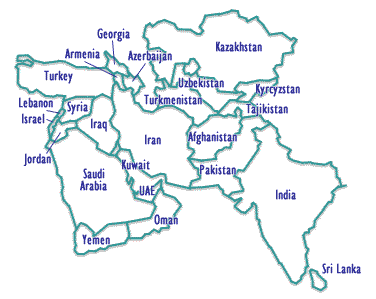
Members of the Obama administration have been pointing out how hard it would be to destroy Iran’s nuclear facilities, now that they have been built deep underground and dispersed.
That would have been something to consider during the time when President Obama was taking leisurely and half-hearted measures to create the appearance of trying to stop the Iranian nuclear program, while vigorously warning Israel not to take military action.
Time was never on our side. The risks go up exponentially the longer we wait. When the Iranian nuclear program was just getting started, it could have been destroyed before it became so big, so dispersed, and so deeply dug in underground. Now, if we wait till they actually have nuclear bombs, the same kinds of arguments for inaction will carry even more weight, when the price of an attack on Iran could be the start of a nuclear Holocaust.
Nor should we assume that we can remain safe by throwing Israel to the wolves, once the election is over, as might well happen if Obama is reelected and no longer has any political reasons to pretend to be Israel’s friend.
That kind of cynical miscalculation was made by France back in 1938, when it threw its ally, Czechoslovakia, to the wolves by refusing to defend it against Hitler’s demands, despite the mutual defense treaty between the two countries. Less than two years later, Hitler’s armies were invading France — using, among other things, tanks manufactured in Czechoslovakia.
This was just one of the expedient miscalculations that helped bring on the bloodiest and most destructive war the world has ever known. Dare we repeat such miscalculations in a nuclear age?
At the end of the Second World War, Winston Churchill said, “There never was in all history a war easier to prevent by timely action than the one which has just desolated such great areas of the globe.” It might even have been prevented “without the firing of a single shot,” Churchill said.
Those who do not learn the lessons of history are doomed to repeat them.
Biopic of aircraft designer R.J. Mitchell whose Spitfire became one of the mainstays of the RAF in World War II. Mitchell worked for Supermarine who specialized for many years on developing seaplanes. He enjoyed a good deal of success winning prestigious air races with the help of his test pilot Geoffrey Crisp. Money was always in short supply however and the government was always hesitant to invest. When Supermarine is bought out by Vickers, Mitchell has a bit more leeway. After a visit to Germany in the 1930s, he sees the Nazi threat first-hand and decides to design a fighter with a completely new engine. The result was the famed Spitfire.
What does the title of the movie refer to? It’s from a speech by the Conservative prime minister of Britain during the war – Sir Winston Churchill.
Excerpt:
The great air battle which has been in progress over this Island for the last few weeks has recently attained a high intensity. It is too soon to attempt to assign limits either to its scale or to its duration. We must certainly expect that greater efforts will be made by the enemy than any he has so far put forth. Hostile air fields are still being developed in France and the Low Countries, and the movement of squadrons and material for attacking us is still proceeding. It is quite plain that Herr Hitler could not admit defeat in his air attack on Great Britain without sustaining most serious injury. If after all his boastings and bloodcurdling threats and lurid accounts trumpeted round the world of the damage he has inflicted, of the vast numbers of our Air Force he has shot down, so he says, with so little loss to himself; if after tales of the panic-stricken British crushed in their holes cursing the plutocratic Parliament which has led them to such a plight-if after all this his whole air onslaught were forced after a while tamely to peter out, the Fuhrer’s reputation for veracity of statement might be seriously impugned. We may be sure, therefore, that he will continue as long as he has the strength to do so, and as long as any preoccupations he may have in respect of the Russian Air Force allow him to do so.
On the other hand, the conditions and course of the fighting have so far been favorable to us. I told the House two months ago that, whereas in France our fighter aircraft were wont to inflict a loss of two or three to one upon the Germans, and in the fighting at Dunkirk, which was a kind of no-man’s-land, a loss of about three or four to one, we expected that in an attack on this Island we should achieve a larger ratio. This has certainly come true. It must also be remembered that all the enemy machines and pilots which are shot down over our Island, or over the seas which surround it, are either destroyed or captured; whereas a considerable proportion of our machines, and also of our pilots, are saved, and soon again in many cases come into action.
[…]The gratitude of every home in our Island, in our Empire, and indeed throughout the world, except in the abodes of the guilty, goes out to the British airmen who, undaunted by odds, unwearied in their constant challenge and mortal danger, are turning the tide of the World War by their prowess and b~ their devotion. Never in the field of human conflict was so much owed by so many to so few.
But before you can have “the few” fighter pilots who saved Britain, you have to have the fighter! That’s why R.J. Mitchell, the inventor of the fighter, is the First of the Few.
It’s very important that we in the West understand the importance of investing in defense research, so we can develop new weapons, so that we can deter aggression. This is the doctrine of peace through strength.
WESTMORELAND: O that we now had here
But one ten thousand of those men in England
That do no work to-day!
KING HENRY V: What’s he that wishes so?
My cousin Westmoreland? No, my fair cousin;
If we are mark’d to die, we are enow
To do our country loss; and if to live,
The fewer men, the greater share of honour.
God’s will! I pray thee, wish not one man more.
By Jove, I am not covetous for gold,
Nor care I who doth feed upon my cost;
It yearns me not if men my garments wear;
Such outward things dwell not in my desires.
But if it be a sin to covet honour,
I am the most offending soul alive.
No, faith, my coz, wish not a man from England.
God’s peace! I would not lose so great an honour
As one man more methinks would share from me
For the best hope I have. O, do not wish one more!
Rather proclaim it, Westmoreland, through my host,
That he which hath no stomach to this fight,
Let him depart; his passport shall be made,
And crowns for convoy put into his purse;
We would not die in that man’s company
That fears his fellowship to die with us.
This day is call’d the feast of Crispian.
He that outlives this day, and comes safe home,
Will stand a tip-toe when this day is nam’d,
And rouse him at the name of Crispian.
He that shall live this day, and see old age,
Will yearly on the vigil feast his neighbours,
And say ‘To-morrow is Saint Crispian.’
Then will he strip his sleeve and show his scars,
And say ‘These wounds I had on Crispian’s day.’
Old men forget; yet all shall be forgot,
But he’ll remember, with advantages,
What feats he did that day. Then shall our names,
Familiar in his mouth as household words-
Harry the King, Bedford and Exeter,
Warwick and Talbot, Salisbury and Gloucester-
Be in their flowing cups freshly rememb’red. This story shall the good man teach his son; And Crispin Crispian shall ne’er go by, From this day to the ending of the world, But we in it shall be remembered- We few, we happy few, we band of brothers;
For he to-day that sheds his blood with me
Shall be my brother; be he ne’er so vile,
This day shall gentle his condition;
And gentlemen in England now-a-bed
Shall think themselves accurs’d they were not here,
And hold their manhoods cheap whiles any speaks
That fought with us upon Saint Crispin’s day.
In the Middle East, where U.S. military involvement and diplomacy are most closely watched, President Obama is held in lower regard in the Arab world than President Bush was in the last year of his presidency.
Obama is not only less liked than the supposedly hated Bush, he can’t even hold a candle to Iran’s grubby, menacing Mahmoud Ahmadinejad. Zogby reports that in Egypt, 31% of Egyptians agree with Iran’s policies compared with 3% for Obama’s, with similar figures in Jordan. Among Egyptians, just 5% hold a favorable attitude toward the U.S. compared with 9% in 2008.
[…]Clinton will do no better in bilateral talks with the Turks — a nation that has moved so far away from its long alliance with the U.S. it can only be called a former ally — on Syria, Iran and Israel/Palestine.
In these countries, Obama’s policy can be summed up in a litany of ineffectual maneuvers.
On Syria, the first move was to succor, then to scold as the dictatorship indifferently sheds streams of blood in the streets of Damascus — showing the fundamental disconnect between what the brutal Syrian regime is and what the Obama administration thinks it is.
After throwing Tunisia and Egypt, two pro-Western allies, overboard, the administration ineffectually grasps a problem in Syria as the bodies pile up.
On Iran, Obama policy shows even more weakness. The president wasted two years coddling the monster regime that threatens a region of more than a billion people. He missed a chance to support a student uprising in 2009 and now watches as Iran’s illegal nuclear program speeds ahead with little fear of consequences, more brazen and closer to realization.
Whatever this learning-curve policy amounts to, it garners no international respect.
Then there’s the stance the White House has taken on Israel, abusively telling its ally to retreat to 1967 borders. It emboldened provocations from Palestinian terrorist groups and showed the rest of the Arab world that it pays more to be America’s enemy than its friend. Now the Arab League is moving to recognize Palestine.
It turns out that what foreign powers respect is strength, not weakness.


 WINTERY KNIGHT