
Tag Archives: Panama

Panama seizes shipment of missile guidance equipment from Cuba bound for North Korea

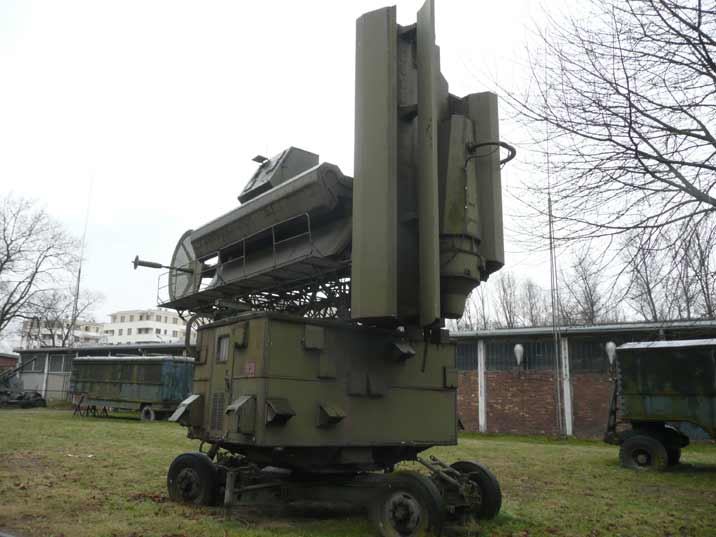
RSN-75 Radar for SA-2 SAM

From Investors Business Daily.

Excerpt:

Cuba, long derided in international policy circles as a basket case and no threat to the U.S., has been caught smuggling weapons of war to North Korea in blatant violation of U.N. sanctions. This is a wake-up call.

Sharp-eyed Panamanian authorities, watching the North Korean freighter Chong Chon Gang since June, received intelligence it might be shipping illegal drugs, something it had been caught doing before.

As the vessel lumbered into the Atlantic side of the Panama Canal from Cuba, Panamanian authorities cornered the 450-foot rust-bucket, battled a maniacally violent crew who slashed ship lines to make it hard to unload the ship, and then watched as the ship’s captain tried to kill himself before having a heart attack.

After subduing the crew, the Panamanians found no drugs buried beneath sloppily packed brown sugar, but did find defensive RSN-75 “Fan Song” fire-control radar equipment for SA-2 surface-to-air missiles.

The discovery, and the crew’s behavior, were signs of something big the North Koreans didn’t want known — weapons smuggling, a violation of both United Nations sanctions prohibiting all sales of weapons to North Korea and Panama’s own laws governing the canal.

“You cannot go around shipping undeclared weapons of war through the Panama Canal,” declared Panamanian President Ricardo Martinelli, a U.S. ally, who tweeted a photo of the illegal shipment for the world to see.

It’s significant that the enabler of this violation of international law was none other than Cuba, which has worked hard to convince the Obama administration to drop all travel and trade sanctions against it — and which is currently negotiating a migration pact with the U.S. It’s time to stop that right now, and sanction Cuba further.

The brazen shipment of Russian-made weapons through Panama signaled that little has changed in Cuba — a state sponsor of global terror that has in fact been trying to destroy the U.S. since 1962.

“This is a serious and alarming incident that reminds us that the North Korean regime continues to pursue its nuclear and ballistic programs, and will stop at nothing in that pursuit,” said House Foreign Affairs Subcommittee Chairwoman Ileana Ros-Lehtinen. “It also illustrates that the Castro tyranny continues to aid and abet America’s enemies and continues to pose a national security threat to the United States so long as the Castro apparatchik holds control over the island.”

It’s also the work of a rogue state. And at just 90 miles away, one that is as chillingly close to our shores as it is warm and friendly to North Korea.

[…]Although it’s unknown why North Korea, a major weapons exporter, is importing weapons from Cuba right now, defense analysts speculate that the weapons may be making their way back to Pyongyang for an upgrade and return to Cuba.

That would be worrisome given that North Korea has said it means to strike the U.S. on its own home turf. What better launching pad could it ask for than Cuba?

Two weeks ago, North Korea’s military commander visited Cuba to a red-carpet welcome. The visit raises questions as to what the two discussed — and, given the threat we see now, whether U.S. intelligence was aware of it.

If there is one thing that the United States definitely should not do, it’s dropping sanctions against Cuba.
FARC terrorist leader Alfonso Cano killed by Colombian armed forces

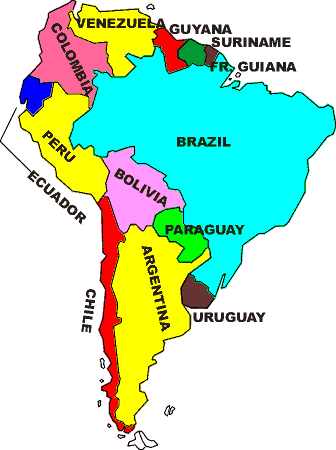
Map of South America

From the Heritage Foundation.

Excerpt:

The armed forces of Colombia have scored a major battlefield victory. They finally hunted down, confronted, and killed the leader of the narco-terrorist Revolutionary Armed Forces of Colombia (FARC), Guillermo Leon Saenz, widely known by his alias Alfonso Cano.

A guerrilla for decades, Cano assumed the top leadership of the FARC following the natural death of founder Manuel Marulanda (2008) and the elimination of senior figures Raul Reyes (2008) and Jorge Briceno (aka Mono Jojoy, 2010).

Seen by some as a modern-day version of the “good revolutionary,” Cano—a life-long advocate of armed violence and terrorism—fell in combat with the Colombian armed forces as they rappelled their way into his secret jungle hideout. Cano was also indicted in a U.S. court for drug trafficking along with dozens of other FARC leaders and had a $5 million price on his head.

FARC is a Marxist terrorist group.

The Economist reports that the Colombian economy is also doing well.

Excerpt:

WHEN the figures are finally tallied, Colombia may prove to have weathered the world recession better than any other of the larger Latin American countries. After a slight contraction at the end of 2008, the economy has been growing modestly this year. This resilience stems from continued foreign investment, an increase in government spending on public works and easier money: since December the central bank has cut interest rates by six percentage points, to 4%, a steeper drop than anywhere in the region outside Chile.

[…]President Álvaro Uribe’s security policies have helped to restore confidence. Investment soared, from 15% of GDP in 2002 to 26% last year, says Mr Zuluaga. Private business has retooled. After many delays, the government has issued licences to expand several ports; this month it hopes to award a contract for the first of four big road schemes, costing a total of $7.5 billion over four years. It hopes for investment of up to $50 billion in mining and oil over the next decade.

And liberal MSNBC has more on the booming Colombian economy.

Excerpt:

…Colombia’s revival is benefiting U.S. economic and political rivals as much as or more than the U.S. itself.

The long delay in signing the treaty allowed Latin America’s fourth-largest economy to strengthen ties with China. It also damaged U.S. credibility in the region, says Eric Farnsworth, vice-president of the Council of the Americas in Washington. “The delay in passing this called into question the United States’ reliability as a partner,” Farnsworth says. “There’s a strategic component to this. It’s not just about economics and trade.”

[…]As talks between the U.S. and Colombia dragged on, Colombia and China forged plans for a rail link between the Pacific and Caribbean that could draw freight away from the Panama Canal. Colombian President Juan Manuel Santos aims for a trade deal with South Korea. To tighten his connections to high-growth Asia, he’s also seeking membership in the Asia-Pacific Economic Cooperation group. “While Washington was debating whether the accord with Colombia was opportune, we advanced in our foreign policy strategy,” says Trade Minister Sergio Diaz-Granados.

Santos has cooperated more with his South American neighbors, organizing a meeting of finance ministers to discuss ways to protect their currencies and economies from the debt crisis in the U.S. and Europe. He supports a stock trading platform with Colombia, Chile, and Peru and wants to bring Mexico and Panama on board. Exports to Brazil have surged tenfold. While the U.S. remains Colombia’s biggest export market, with $16.8 billion in 2010 sales, up 30 percent from a year earlier, sales to China more than doubled last year, to $1.2 billion. Sales to the European Union are also rising, to $5.4 billion this year through August, more than in all of 2010. An EU trade accord could come next year.

The government has reduced cocaine cultivation 37 percent and halved the number of insurgents to about 8,000. Improved security has spurred enough growth to win an investment-grade credit rating from Standard & Poor’s as well as investment from billionaires. Colombia’s victories over the guerrillas opened up swathes of countryside to exploration for oil, gold, and coal. Mexican billionaire Carlos Slim’s push into crude has helped fuel foreign investment that the government says may reach a record $12 billion this year. The economy grew 5.2 percent in the second quarter.

The U.S. faces more competition from Colombia’s neighbors and Canada. In 2010, U.S. agricultural exports to Colombia fell more than 50 percent from 2008, to $827 million, as Argentina’s more than doubled, to $1 billion, according to a report by Senator Richard Lugar’s staff. Diaz-Granados attributes the U.S. setback to the delay in the free-trade agreement.

An August accord reduces or ends Colombian tariffs on Canadian wheat, paper, and machinery. Bank of Nova Scotia, Canada’s third-largest lender, agreed in October to buy 51 percent of Banco Colpatria Red Multibanca Colpatria for about $1 billion—Scotiabank’s largest international takeover. “This is not the Colombia of old,” says Brian J. Porter, group head of international banking for Scotiabank. “The more we looked at Colombia, the more excited we got about the economic potential.”

We really should have signed that trade deal 3 years ago – it would have helped out economy a lot.  But unions got Obama elected, and the unions decided that the trade deal needed to be held up for 3 years. And that’s one of the reasons why we’ve had over 9% unemployment. Our economic policy is being set by unions, not by economists. But in Colombia, economic policy is set by economists, not unions.

House passes free trade deals with Colombia, South Korea and Panama

From Investors Business Daily.

Excerpt:

The biggest free-trade pacts since NAFTA were passed by the House Wednesday night, with the Senate likely to follow. As a result, America will reap 250,000 jobs and $13 billion in exports. Where are the celebrations?

The strangest aspect of the passage of free trade treaties with Colombia, South Korea and Panama, with final votes taken after five long years, is the disconnect between the big economic gains expected for the U.S., and the reticence of congressional Democrats and the White House, both of which finally got something right on the economy.

As we went to press, the pacts had been passed by the House, with the Senate expected to vote soon. With bipartisanship like that, lawmakers should be cheering loudly for a true “jobs bill” that costs nothing.

Yet as a Democratic aide told Roll Call on Wednesday, “Republicans don’t want to give the president a victory, Democrats are split and everyone is distracted.”

Excuse us, but this is some of the best economic news in three years. It deserves a victory dance.

It’s a fact these treaties will bring new orders for factories, save family farms, strengthen strategic alliances with countries well worth having as allies, and open up breathtaking new opportunities in fast-growing markets. It needs to be acknowledged.

[…]President Obama paid lip service to the treaties, but wasted nearly three years attaching protectionist amendments and dithering. It harmed the economy and never changed this fact: Free trade had to pass if there was to be a real recovery.

Economist Greg Mankiw of Harvard University lists free trade as the #2 top item that economists of all ideological stripes agree on. This is a no-brainer.

Passing the free trade deals is important because it would make up for other anti-business policies of the Obama administration.

Excerpt:

Obama appointees at the National Labor Relations Board (NLRB) have not only blocked Boeing from making planes in South Carolina, but they have greased the speed of union elections, made decertification votes impossible, changed the requirement that a majority of workers vote for a union, and required almost every workplace in America to put posters up advising workers of their unionization rights.

The Obama Administration claims to want to double exports and support free trade, but it took it nearly three years to send the pending trade agreements with Panama, Colombia and South Korea to Congress. Which means that in all this time American companies have been paying higher tariffs for exports.

The Obama Administration has proposed 219 new rules affecting industries, each of which will cost at least $100 million to comply. While the Washington legal business is growing, every industry and business is affected, scared, and confused by the massive new proposals. Small businesses are especially overwhelmed and must hire lawyers to understand and comply with the massive amount of new regulation.

The Obama crown-jewel “achievements” of the new health care and Dodd-Frank financial laws adversely affect almost every American business, totaled almost 3,000 pages of statutory language, and will result in huge costs on employers.

Let’s hope the Senate passes these deals and Obama signs it. We need lower priced goods in a recession, and we need more markets to sell into. If this passes, it will be the first pro-growth action taken by the administration in three years.