Cancer patient Tony Angran has quite the fighting spirit: he is battling Stage 3 cancer and trying desperately to find funds to pay for his new Obamacare plan.
Angran… was diagnosed with stage 3 cancer of the esophagus had insurance, but due to a previous heart condition, the insurance did not cover the treatments he needed for his cancer. He was notified of his insurance plan’s limitations just moments before receiving life-saving chemotherapy.
“One of the workers came and said, ‘I need to talk to you,’ and so I went and talked to her and she says, ‘We found out that your insurance does not include chemo,’” Angran told WHO-IA.
Over the past two months, the Angrans have depleted their savings account and accrued $50,000 in debt to pay for his treatments.
They signed up for Obamacare in hopes of finding better, less expensive coverage, but have been dismayed with the price of the health insurance offered by the exchange. It will cost them more than $800 a month.
The insurance plan they enrolled in will not begin for another two weeks, leaving them essentially hanging by a thread.
Tony Angran has since lost the ability to swallow, now eating through a feeding tube, and he is no longer able to take his necessary heart medicine.
A Pastor, Angran has dedicated his life to the services others and has shown compassion through his ministry. He says that Obamacare, which promises to alleviate the financial burden associated with health insurance and aims to provide quality care for Americans, lacks compassion.
“I’m sitting here with Stage 3 Esophageal Cancer, and they’re taking me to the finance person and saying, ‘How are you going to pay for this?’” he said.
The Angrans have until the start of April to pay $7000- their copay under their new Obamacare health insurance plan.
If you remember, Obamacare works by forcing young people (especially young men) to pay for care they don’t need and won’t use. This lowers the costs of health care for younger women and especially for older, sicker people. The target is 2.7 million enrollments of people from age 18-34. But are young people signing up for this plan in numbers like that?
Data through five months of the open-enrollment period show that slightly fewer than 10% of eligible 18- to 34-year-olds have signed up for coverage. Among young men, roughly 1 in 12 has signed up.
The Kaiser Family Foundation puts the ObamaCare-eligible population at 28.6 million, with 40%, or about 11.4 million, in the 18-to-34 age group.
Compared to the size of the potential market, the first-year target of 7 million enrollees, including about 2.8 million young adults, was relatively modest.
Yet it’s now clear that the initial target is well out of reach. The Avalere Health consultancy projected that sign-ups — paid and unpaid — will end March at around 5.4 million.
Through February, not quite 1.1 million young adults had selected an exchange plan. Among this group, the male-female breakdown was about 45% vs. 55%. That matters because women at child-rearing age are more likely to run up big medical bills.
In February, 268,000 18- to 34-year-olds signed up, so a decent upsurge in March could lift the total close to 1.4 million. But that’s before winnowing out the people who don’t pay.
Anecdotal reports from a handful of states and large insurers now point to a paid rate of about 85%, possibly lower.
While that could improve before the March 31 deadline, there’s reason to suspect that the paid percentage might lag among young adults, since they are showing more reticence about signing up in the first place.
Once the unpaid group is subtracted, it appears likely that young-adult enrollees will fall at least 50% below the first-year target The White House had initially set that target at 2.7 million.
[…]The age mix is important because the exchanges charge younger people higher premiums relative to pre-ObamaCare individual market insurance, so that older people can be charged less without negating insurer profits.
If young adults make up just 25% of the ObamaCare exchange population, it would wipe out much, but not all, of the 3% to 4% profit margin insurers typically allow for in setting premiums, Kaiser Family Foundation experts figure.
Yet that calculation assumes the health status of those who do sign up is about average. In general, an insured pool comprising a smaller share of the eligible group raises concern that the covered group will be costlier than average.
So they are expecting 2.7 million, but even with a late surge of enrollments, they are only going to get 1.4 million young people. That’s bad for Democrats, but I am happy that young men are not signing up for this law. They have nothing to gain from it. Maybe this whole mess will be worth it if young men understand that big government rides on the backs of young men. They are expected to pay the taxes, but without getting any of the benefits. Sex changes? IVF? Maternity? Well woman exam? Birth control pills? We don’t use that. We don’t mind paying for that for our wives, but we don’t want to pay for it for complete strangers.
An editorial by Arthur Brooks appeared today in the leftist New York Times. His topic is the shift from optimism to envy, why it is happening, and whether envy makes us happier than optimism.
Excerpt: (links removed)
The Irish singer Bono once described a difference between America and his native land. “In the United States,” he explained, “you look at the guy that lives in the mansion on the hill, and you think, you know, one day, if I work really hard, I could live in that mansion. In Ireland, people look up at the guy in the mansion on the hill and go, one day, I’m going to get that bastard.”
[…]Unsurprisingly, psychologists have found that envy pushes down life satisfaction and depresses well-being. Envy is positively correlated with depression and neuroticism, and the hostility it breeds may actually make us sick. Recent work suggests that envy can help explain our complicated relationship with social media: it often leads to destructive “social comparison,” which decreases happiness. To understand this, just picture yourself scrolling through your ex’s wedding photos.
My own data analysis confirms a strong link between economic envy and unhappiness. In 2008, Gallup asked a large sample of Americans whether they were “angry that others have more than they deserve.” People who strongly disagreed with that statement — who were not envious, in other words — were almost five times more likely to say they were “very happy” about their lives than people who strongly agreed. Even after I controlled for income, education, age, family status, religion and politics, this pattern persisted.
It’s safe to conclude that a national shift toward envy would be toxic for American culture.
Unfortunately, in the wake of the Great Recession, such a shift may well be underway, given the increasing anxiety about income inequality and rising sympathy for income redistribution. According to data from the General Social Survey, the percentage of Americans who feel strongly that “government ought to reduce the income differences between the rich and the poor” is at its highest since the 1970s. In January, 43 percent of Americans told the Pew Research Center that government should do “a lot” to “reduce the gap between the rich and everyone else.”
Why the shift? The root cause of increasing envy is a belief that opportunity is in decline. According to a 2007 poll on inequality and civic engagement by the Maxwell School of Citizenship and Public Affairs at Syracuse University, just 30 percent of people who believe that everyone has the opportunity to succeed describe income inequality as “a serious problem.” But among people who feel that “only some” Americans have a shot at success, fully 70 percent say inequality is a major concern.
People who believe that hard work brings success do not begrudge others their prosperity. But if the game looks rigged, envy and a desire for redistribution will follow.
This is the direction we’re heading. According to Pew, the percentage of Americans who feel that “most people who want to get ahead” can do so through hard work has dropped by 14 points since about 2000. As recently as 2007, Gallup found that 70 percent were satisfied with their opportunities to get ahead by working hard; only 29 percent were dissatisfied. Today, that gap has shrunk to 54 percent satisfied, and 45 percent dissatisfied. In just a few years, we have gone from seeing our economy as a real meritocracy to viewing it as something closer to a coin flip.
There is a good lesson in this for people who want what is best for the poor. Simply receiving money from others is not going to make poor people happy. What we need to focus on is providing the poorest people with opportunities. For example, we need to reduce barriers that employers face to hire them, and we need to make the school system focus more on skill-building and less on indoctrination in leftist ideology.
Democrats like to give lots of speeches on income inequality, stoking the fires of envy, while doing nothing to help people learn useful skills in school and to help employers hire people more easily, setting them on the path of lifelong independence. For example, Democrats oppose school choice, as when they killed the D.C. voucher program that helped poor black students. Less school choice helps public schools to be insulated from competition, so that they can focus on what they want (bigger government, so they get paid more) rather than what parents want (bad teachers fired, students to learn useful skills, more male teachers in the classroom, a focus on vocational skills rather than ideology). Just this past week, the ultra-leftist mayor of New York city kicked charter schools out of the city. Why? Because if children learn useful skills in better schools, then they will be less dependent on government, and less responsive to “envy rhetoric”.
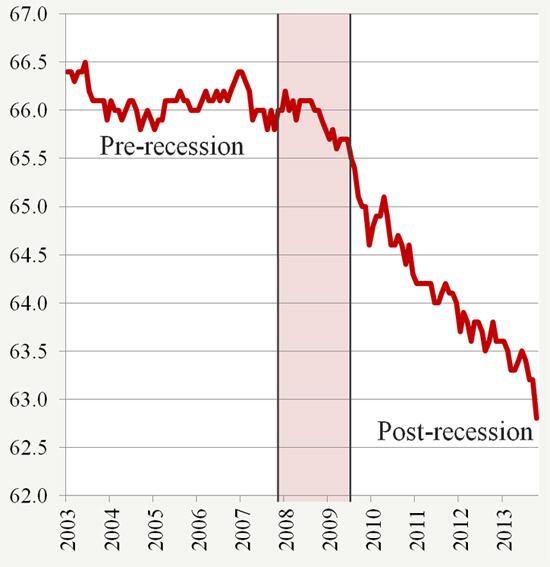
Democrats also passed Obamacare, which punishes businesses with taxes if they allow part-time workers to work for more than 30 hours a week. Many jobs were lost because of this, and many people are now struggling to pay higher premiums for plans with higher deductibles and co-pays. Now the Democrats are talking about raising the minimum wage, which is going to put even more pressure on employers to lay off workers, because they can’t afford to pay them more for the same work. For Democrats, this is all to the good, though. Because if the poor don’t have jobs, or can’t work enough hours, they start to see the economic game as “rigged” and they are more responsive to “envy rhetoric”.
What we need to see is that it’s not the Democrats’ objective to help people find jobs. They gain when people become more envious, like in European countries, and start to vote to grow the size and power of government to redistribute wealth. Speeches about income inequality never have the goal of giving people jobs. None of Obama’s policies aim to do that. That’s why he won’t build the Keystone XL pipeline, or boost domestic energy development here at home. Instead, they want to extend unemployment benefits and pass the costs on to the next generation. Their goal is to get you unemployed or on disability or on welfare, so that you will vote for the government to continue to take your neighbor’s money. That manufactured envy is what keeps the Democrats in power.

 WINTERY KNIGHT