Tag Archives: Nuclear

IAEA report expected to show that Iran now has the ability to build a nuclear bomb

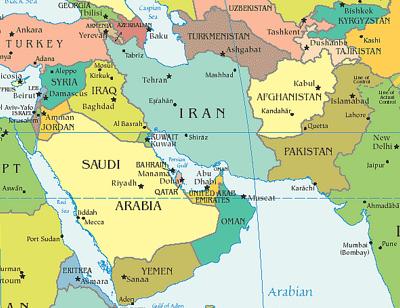
Map of the Middle East

From Fox News.

 Pakistan, North Korea and a former weapons scientist from the Soviet Union reportedly all helped Iran with its nuclear weapons quest, according to an impending U.N. nuclear watchdog report expected to show the Islamic regime has mastered the science of building a bomb.

The International Atomic Energy Agency’s report due out this week will lay out findings collected over years of intelligence gathering. It is expected to reinforce concerns that Iran didn’t actually abandon its weapons-related research in 2003, as indicated by a 2007 National Intelligence Estimate given to then-President George W. Bush.

U.S. intelligence agencies reported in 2007 that they believed Tehran halted its experiments in response to international and domestic pressures. But an ongoing investigation by the Fox News Specials Unit concludes that more than 600 entities were working inside Iran to support its program, and at least 40 sites where the work is taking place are suspected to exist across the country.

For British, French and American investigators, one of the most concerning sites is the Qom uranium enrichment construction site, hidden deep in the mountains. The latest intelligence shows that security walls have doubled around the site. Its scale cannot be explained by any known civilian nuclear energy use.

David Albright, a former IAEA official and president of the Washington-based Institute for Science and International Security who reviewed the intelligence files, told The Washington Post that Iran’s nuclear weapons program “never really stopped” and also concluded that Iran “has sufficient information to design and produce a workable implosion nuclear device.”

Western diplomats and nuclear experts briefed on the findings in the IAEA report also told the Post that foreign scientists offered assistance in overcoming key technical hurdles.

The documents reportedly show that a former Soviet weapons scientist named Vyacheslav Danilenko allegedly tutored Iranians for several years on building high-precision detonators needed to trigger a nuclear chain reaction. The Post reported that Pakistani and North Korean officials also gave to Iran mathematical formulas and codes as well as a so-called neutron initiator, which shoots a stream of atomic particles into the weapon’s fissile core at the start of the chain reaction.

There are two things to point out about this story. The first thing is that it was a strategic disaster for us to back out of Iraq, because that’s where we need to be to be able to gather intelligence, mount covert ops, run interdiction on attempts to transfer WMDs to Syria, etc. We really need to be in theater in order to deal with Iran, Syria and groups like Hezbollah, Iran’s Quds force and Muqtada Al Sadr’s Mahdi Army.

Unfortunately, I think that David Axelrod is running our national security now, which is why Obama pulled out forces out of Iraq.

Excerpt:

Three years, two abject failures. The first was the administration’s inability, at the height of American post-surge power, to broker a centrist nationalist coalition governed by the major blocs — one predominantly Shiite (Maliki’s), one predominantly Sunni (Ayad Allawi’s), one Kurdish — that among them won a large majority (69 percent) of seats in the 2010 election.

Vice President Biden was given the job. He failed utterly. The government ended up effectively being run by a narrow sectarian coalition where the balance of power is held by the relatively small (12 percent) Iranian-client Sadr faction.

The second failure was the SOFA [Status of Forces Agreement] itself. U.S. commanders recommended nearly 20,000 troops, considerably fewer than our 28,500 in Korea, 40,000 in Japan and 54,000 in Germany. The president rejected those proposals, choosing instead a level of 3,000 to 5,000 troops.

A deployment so risibly small would have to expend all its energies simply protecting itself — the fate of our tragic, missionless 1982 Lebanon deployment — with no real capability to train the Iraqis, build their U.S.-equipped air force, mediate ethnic disputes (as we have successfully done, for example, between local Arabs and Kurds), operate surveillance and special-ops bases, and establish the kind of close military-to-military relations that undergird our strongest alliances.

The Obama proposal was an unmistakable signal of unseriousness. It became clear that he simply wanted out, leaving any Iraqi foolish enough to maintain a pro-American orientation exposed to Iranian influence, now unopposed and potentially lethal. Message received. Just this past week, Massoud Barzani, leader of the Kurds — for two decades the staunchest of U.S. allies — visited Tehran to bend a knee to both President Mahmoud Ahmadinejad and Ayatollah Ali Khamenei.

The second thing to point out is the question of what we should be doing to restrain Iran’s nuclear ambitions. Click here for a run-down of some of our options. There are a lot of things we could do short of all-out war, but that would require that we had a statesman in the White House – someone who takes foreign policy seriously and treats it as more than a political issue.

A previous post I wrote showed how arms that China sells to Iran make their way to Hezbollah to be used against Israeli assets. That’s what we can expect will happen with nuclear weapons that Iran develops. Are we willing to accept that? There is also the matter of the Mexican drug cartels, the Quds force, Hugo Chavez in Venezuela and our porous border with Mexico. Are we willing to risk that?

We need to take the gloves off our national security agencies, especially the CIA, and do what has to be done.
Iran, the Zetas drug cartel and our porous Southern border

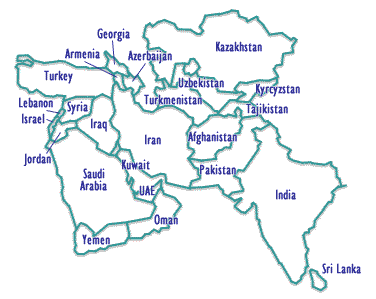
Map of the Middle East

Here’s an excellent assessment of the threat from the American Enterprise Institute.

Excerpt:

The revelation that the Iranian Revolutionary Guards Corps and its Quds Force had plotted to kill Saudi Arabia’s ambassador to the United States–by blowing him up as he dined at a Washington restaurant–is a stark reminder of the nature of the Tehran regime and its ambitions. But perhaps the most disturbing aspect of the story is that Iran’s thugs are developing a strategic partnership with Mexico’s most violent thugs: Los Zetas may only be the second-largest drug cartel in the Drug Enforcement Administration’s rankings, but they’re probably the most lethal. The gang is said to have formed around a platoon’s worth of deserters from Mexico’s special operations forces, and became the elite troops of another Mexican drug organization, the Gulf Cartel. The leader of that cartel got himself arrested, and the Zetas moved out on their own.

[…]The alliance with the Zetas is only the tip of the Iranian iceberg in Latin America. As Roger Noriega and Jose Cardenas have recently written, “Iran has made the Western Hemisphere a priority….The real game changer has been the alliance developed between Iran’s Mahmoud Ahmedinejad and Venezuela’s Hugo Chavez.” In addition to the Quds Force, Iran often operates through Hezbollah, which has established networks in the Lebanese communities that have long-standing enclaves in the trading and port cities of South America. In addition to Chavez, Iran has established closer ties to the Bolivian government of Evo Morales’s and Rafael Correa’s regime in Ecuador.

[…]We underestimate the Quds-Zeta partnership at our peril. The distinction between law enforcement and warfare is increasingly blurred; the Mexican government claims it had a hand in exposing the plot and it was a DEA agent who foiled the attack. While the Obama administration was right to bring charges against the operatives who plotted to kill the Saudi ambassador, this is a response to symptoms, not the disease. The larger problem is the maturing anti-America coalition governments and extremely rich, powerful, and violent groups; thinking of these organizations simply as criminals obscures their political interests–in keeping governments like Mexico’s or Colombia’s weak, in securing sanctuary, in access to the “international commons,” and the like. An appropriate response demands an integrated strategy. The biggest danger is not “militarizing” U.S. policy but in failing to address the fundamental security issues at stake.

The Obama administration’s lack of concern about border security is very disturbing, but they don’t dare to offend their open-borders constituency for a little thing like national security. Even so, the best defense might be a good offense – but is Obama willing to go on the offensive? Not so much. Instead, Obama seems to be resigned to letting Iran have nuclear weapons.

Excerpt:

Khamenei probably approved a strike in Washington because he no longer fears American military might. Iran’s advancing nuclear-weapons program has undoubtedly fortified his spine, as American presidents have called it “unacceptable” yet done nothing about it. And neither George W. Bush nor Barack Obama retaliated against Iran’s murderous missions in Iraq and Afghanistan.

President Obama has clearly shown he wants no part—or any Israeli part—in a preventive military strike against Iran’s nuclear sites. And Mr. Obama has pulled almost all U.S. troops out of Iraq and clearly wants to do the same in Afghanistan. Many Americans may view that as a blessing, but it is also clearly a sign that Washington no longer has the desire to maintain hegemony in the Middle East.

That’s an invitation to someone like Khamenei to push further, to attack both America and Iran’s most detested Middle Eastern rival, the virulently anti-Shiite Saudi Arabia. In the Islamic Republic’s conspiracy-laden world, the Saudis are part of the anti-Iranian American Arab realm, which is currently trying to down Iran’s close ally, Bashar al-Assad’s Syria, and squash the Shiites of Bahrain. Blowing up the Saudi ambassador in Washington would be an appealing counterstroke against the two foreign forces that Khamenei detests most.

The Obama administration will be tempted to respond against Iran with further unilateral and multilateral sanctions. More sanctions aren’t a bad idea—targeted sanctions against the Revolutionary Guards and the sale of gasoline made from Iranian crude can hurt Tehran financially. But they will not scare it. The White House needs to respond militarily to this outrage. If we don’t, we are asking for it.

The longer Obama leaves this, the worse the eventual war in the Middle East is going to be. We should at the very least be pursuing aggressive covert operations against Syrian and Iranian targets. I hope everyone remembers the slap on the wrist that Obama is giving Iran now, so that when we get attacked more and more, with more dangerous weapons, the correct people get the blame.

$737 million green jobs loan given to Nancy Pelosi’s brother-in-law

Does Obama give taxpayer money millionaires and billionaires?

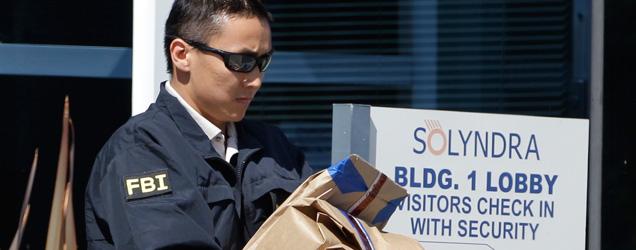
As if Solyndra’s $535 million loan wasn’t enough, now we find out about where more of the stimulus spending went.

Story from the Daily Caller.

Excerpt:

Companies like First Solar, SolarReserve, SunPower Corporation and Abengoa SA have already, collectively, received billions in loans through Obama administration stimulus programs to build solar power plants in the southwestern United States.

Yet each, with the exception of the privately held SolarReserve, has seen its stock price hammered at the same time it was lobbying the Obama administration and Congress for billions in loan guarantees.

The Hill newspaper reported Wednesday that the Santa Monica, Calif.-based SolarReserve has secured a $737 million loan guarantee from the Department of Energy for a Nevada solar project.

That company has ties to George Kaiser, the Oklahoma billionaire who raised $53,500 for President Obama’s campaign in 2008. Through his Argonaut Private Equity firm, Kaiser holds a majority stake in Solyndra.

Argonaut has a voting stake on SolarReserve’s board of directors in the person of Steve Mitchell, who also serves on Solyndra’s board of directors.

Additionally, Federal Election Commission records made available by the Center for Responsive Politics show that SolarReserve board member James McDermott has contributed $61,500 to various Democratic campaigns since 2008, including $30,800 to Obama’s presidential election campaign.

McDermott’s U.S. Renewable Energy Group has a significant financial stake in SolarReserve, and has drawn scrutiny for its ties with Senate Majority Leader Harry Reid — and for reportedly driving green jobs to China.

And Lee Bailey, a fellow SolarReserve board member and U.S. Renewables Group investor, has donated $21,850 since 2008 to Democratic candidates including President Obama, Senate Majority Leader Harry Reid, California Sen. Barbara Boxer and then-presidential candidate Hillary Clinton.

SolarReserve’s board of directors also includes Jasandra Nyker of Pacific Corporate Group Asset Management, where former Speaker of the House Nancy Pelosi’s brother-in-law, Ronald Pelosi, holds a leadership position.

Other data from the Center for Responsive Politics show that SolarReserve paid $100,000 in lobbying fees in 2009 to the Podesta Group. That firm’s principal, Tony Podesta, is the brother of John Podesta — who ran Barack Obama’s presidential transition team.

I hope everyone is now very clear on what we got for these three trillion-and-a-half trillion dollar deficits. And very clear on why unemployment went up and not down.