Tag Archives: New Testament

What are undesigned coincidences, and how are they used in apologetics?

Air Force TACPs confirm target locations with their map

When you’re reading the Bible, you may find passages in one book that are mysterious on their own, but then they make sense if you add missing details from a parallel account from a different source inside or even outside the Bible. I think these “undesigned coincidences” are helpful for answering the question of that skeptics often ask: “is the Bible history or myth?” Let’s see some examples.

So, there are two kinds of undersigned coincidences. In the “internal” kind, the clearing up is done by another source in the same book. In the external kind, the clearing up is done by a source outside the same book.

Here’s an article from Apologetics UK with some internal examples:

In John 6:1-7, we are told:

Some time after this, Jesus crossed to the far shore of the Sea of Galilee (that is, the Sea of Tiberias), and a great crowd of people followed him because they saw the signs he had performed by healing the sick. Then Jesus went up on a mountainside and sat down with his disciples. The Jewish Passover Festival was near.When Jesus looked up and saw a great crowd coming toward him, he said to Philip, “Where shall we buy bread for these people to eat?” He asked this only to test him, for he already had in mind what he was going to do.Philip answered him, “It would take more than half a year’s wages to buy enough bread for each one to have a bite!”

Now, Philip is a fairly minor character in the New Testament. And one might, naturally, be inclined to wonder why Jesus hasn’t turned to someone a little higher in the pecking order (such as Peter or John). A partial clue is provided in John 1:44: “Philip, like Andrew and Peter, was from the town of Bethsaida.” Likewise, John 12:21 refers to “Philip, who was from Bethsaida in Galilee”

And what is so significant about Philip being from the town of Bethsaida? We don’t learn this until we read the parallel account in Luke’s gospel (9:10-17). At the opening of the account (verses 10-11) we are told, “When the apostles returned, they reported to Jesus what they had done. Then he took them with him and they withdrew by themselves to a town called Bethsaida, but the crowds learned about it and followed him. He welcomed them and spoke to them about the kingdom of God, and healed those who needed healing.”

And so, we are informed by Luke that the event was actually taking place in Bethsaida — the town from which Philip was from! Jesus thus turns to Philip, whom, he believed, would be familiar with the area. Notice too that Luke does not tell us that Jesus turned to Philip.

But it gets even more interesting still. In Matthew 11, Jesus denounces the unrepentant cities, saying, “Woe to you, Chorazin! Woe to you, Bethsaida! For if the miracles that were performed in you had been performed in Tyre and Sidon, they would have repented long ago in sackcloth and ashes.” The reader is left wondering what miracles were performed in these cities. We are not told in Matthew’s gospel. It is only in light of Luke’s account of the feeding of the five thousand (chapter 9), in which we are told of the event’s occurrence in Bethsaida, that this statement begins to make sense!

This one is pretty clever:

In Matthew 2 6:67-68, we read, “Then they spat in His face and beat Him; and others struck Him with the palms of their hands, saying, “Prophesy to us, Christ! Who is the one who struck You?”” This raises the natural question, why are they asking “Who hit you?” It is not until we read the parallel account in Luke’s gospel (22:64) that we learn that they had blindfolded him, thereby making sense of their taunts “Who hit you?”

Another one:

In Luke 23:1-4, w e read,
Then the whole assembly rose and led him off to Pilate. And they began to accuse him, saying, “We have found this man subverting our nation. He opposes payment of taxes to Caesar and claims to be Messiah, a king.”

So Pilate asked Jesus, “Are you the king of the Jews?”

“You have said so,” Jesus replied.

Then Pilate announced to the chief priests and the crowd, “I find no basis for a charge against this man.”
On the surface, this seems to be a rather strange declaration to make. Jesus has just declared Himself to be a King, and has been charged with subverting the nation and opposing paying taxes to Caesar. Why has Pilate found no basis for a charge against him?

The answer lies in the parallel account in John’s gospel (18:33-38):

Pilate then went back inside the palace, summoned Jesus and asked him, “Are you the king of the Jews?”

“Is that your own idea,” Jesus asked, “or did others talk to you about me?”
“Am I a Jew?” Pilate replied. “Your own people and chief priests handed you over to me. What is it you have done?”

Jesus said, “My kingdom is not of this world. If it were, my servants would fight to prevent my arrest by the Jewish leaders. But now my kingdom is from another place.”

“You are a king, then!” said Pilate.

Jesus answered, “You say that I am a king. In fact, the reason I was born and came into the world is to testify to the truth. Everyone on the side of truth listens to me.”

“What is truth?” retorted Pilate. With this he went out again to the Jews gathered there and said, “I find no basis for a charge against him.

It is only when you read John’s account that you learn that Jesus had told Pilate that “My kingdom is not of this world. If it were, my servants would fight to prevent my arrest by the Jewish leaders. But now my kingdom is from another place.”

And the same article has some external undesigned coincidences:

In Matthew 2:22, we are told:

But when [Joseph] heard that Archelaus was reigning in Judea in place of his father Herod, he was afraid to go there. Then after being waned by God in an dream, he left for the regions of Galilee…

Josephus’ Antiquities 17.3.1 tells us that the domain of Herod the Great was divided among his sons, with Archelaus having authority in Judea but not in Galilee, which was governed by his younger brother, Herod Antipas.

We also know that Archelaus had acquired quite a bloody reputation (e.g. Antiquities 17.13.1-2 and 17.9.3). The latter of these references describes how Archelaus slaughtered 3,000 Jews at Passover. Thus, Joseph decides not to return to Judea and, instead, goes further north to the regions of Galilee, governed by Herod Antipas.

And another one:

In Matthew 2:22, Archeleaus is reigning as king in Judea; in Matthew 27:2, Pilate is governor of Judea; in Acts 12:1, Herod is king of Judea; and in Acts 23:33, Felix is governor of Judea. This becomes extremely confusing.

But here’s the thing: Josephus attests to the accuracy of every one of these titles. Herod the Great was made King of Judea by Mark Anthony. Archelaus was deposed in the year 6 A.D., after only a ten-year reign, and a series of procurators ruled over Judea (of whom Pilate was fifth). The Herod of Acts 12 is Agrippa I. He was made king by Claudius Caesar. After his death, Judea was, once again, placed under the government of procurators (one of them being Felix).

And another one:

When Luke tells us of the riot in Ephesus, he reports that the city clerk tells the crowd that “There are proconsuls”. A proconsul is a Roman authority to whom a complaint may be taken. Normally, there was only one proconsul. Just at that particular time, however, there seems to have been two as a result of the assassination of Silanus (the previous proconsul) by poisoning in the Fall of AD 54, by the two imperial stewards at the urging of Nero’s mother. This event is independently documented by Tacitus in his Annals (13.1). Indeed, Luke’s accuracy has allowed historians to date the event which Luke narrates with incredible precision since we know when Silanus was poisoned.

If you think that these are clever, then share this post, and encourage your non-Christian friends and family to consider one of the many reasons why so many scholars have considered the New Testament books to be so reliable.

I wish that Christian parents and pastors were more thoughtful about how they present the Bible to young people. Instead of just saying “the Bible says” and praising blind faith acceptance of the Bible, why don’t we think a little harder, and look for some confirmation of the Bible from historical methods like undesigned coincidences, and from non-Biblical authors, and from archaeology, etc.? Surely adding more evidence for taking the Bible seriously is the right approach, if the goal is to be persuasive? It’s not like we’re see good results from the current “blind faith” approach to raising Christian children, right?
What do ancient non-Christian sources tell us about the historical Jesus?

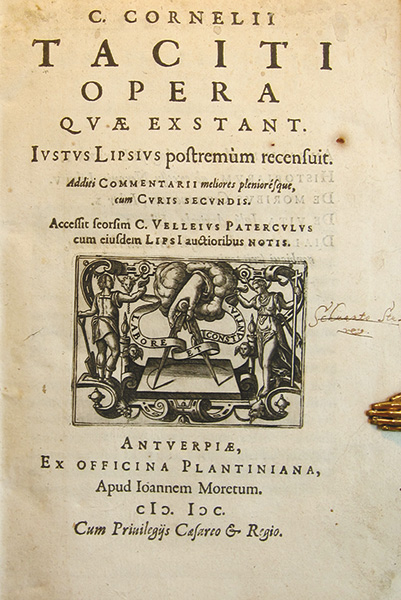
The Annals, by Roman historian Tacitus

This article from Biblical Archaeology covers all the non-Christian historical sources that discuss Jesus.

About the author:

Lawrence Mykytiuk is associate professor of library science and the history librarian at Purdue University. He holds a Ph.D. in Hebrew and Semitic Studies and is the author of the book Identifying Biblical Persons in Northwest Semitic Inscriptions of 1200–539 B.C.E. (Atlanta: Society of Biblical Literature, 2004).

Here are the major sections:

  • Roman historian Tacitus
  • Jewish historian Josephus
  • Greek satirist Lucian of Samosata
  • Platonist philosopher Celsus
  • Roman governor Pliny the Younger
  • Roman historian Suetonius
  • Roman prisoner Mara bar Serapion

And this useful excerpt captures the broad facts about Jesus that we get from just the first two sources:

We can learn quite a bit about Jesus from Tacitus and Josephus, two famous historians who were not Christian. Almost all the following statements about Jesus, which are asserted in the New Testament, are corroborated or confirmed by the relevant passages in Tacitus and Josephus. These independent historical sources—one a non-Christian Roman and the other Jewish—confirm what we are told in the Gospels:31

1. He existed as a man. The historian Josephus grew up in a priestly family in first-century Palestine and wrote only decades after Jesus’ death. Jesus’ known associates, such as Jesus’ brother James, were his contemporaries. The historical and cultural context was second nature to Josephus. “If any Jewish writer were ever in a position to know about the non-existence of Jesus, it would have been Josephus. His implicit affirmation of the existence of Jesus has been, and still is, the most significant obstacle for those who argue that the extra-Biblical evidence is not probative on this point,” Robert Van Voorst observes.32 And Tacitus was careful enough not to report real executions of nonexistent people.

2. His personal name was Jesus, as Josephus informs us.

3. He was called Christos in Greek, which is a translation of the Hebrew word Messiah, both of which mean “anointed” or “(the) anointed one,” as Josephus states and Tacitus implies, unaware, by reporting, as Romans thought, that his name was Christus.

4. He had a brother named James (Jacob), as Josephus reports.

5. He won over both Jews and “Greeks” (i.e., Gentiles of Hellenistic culture), according to Josephus, although it is anachronistic to say that they were “many” at the end of his life. Large growth
in the number of Jesus’ actual followers came only after his death.

6. Jewish leaders of the day expressed unfavorable opinions about him, at least according to some versions of the Testimonium Flavianum.

7. Pilate rendered the decision that he should be executed, as both Tacitus and Josephus state.

8. His execution was specifically by crucifixion, according to Josephus.

9. He was executed during Pontius Pilate’s governorship over Judea (26–36 C.E.), as Josephus implies and Tacitus states, adding that it was during Tiberius’s reign.

Some of Jesus’ followers did not abandon their personal loyalty to him even after his crucifixion but submitted to his teaching. They believed that Jesus later appeared to them alive in accordance with prophecies, most likely those found in the Hebrew Bible. A well-attested link between Jesus and Christians is that Christ, as a term used to identify Jesus, became the basis of the term used to identify his followers: Christians. The Christian movement began in Judea, according to Tacitus. Josephus observes that it continued during the first century. Tacitus deplores the fact that during the second century it had spread as far as Rome.

I remember reading the 1996 book by Gary Habermas entitled “The Historical Jesus: Ancient Evidence for the Life of Christ“. This book is a little before the time of most of you young Christian apologists, but back before the time of Lee Strobel and J. Warner Wallace, this is the stuff we all read. Anyway, in the book he makes a list of all that can be known about Jesus from external sources. And fortunately for you, you don’t have to buy the book because you can read chapter 9 of it right on his web site.

From Tacitus he gets this:

From this report we can learn several facts, both explicit and implicit, concerning Christ and the Christians who lived in Rome in the 60s A.D. Chronologically, we may ascertain the following information.

(1) Christians were named for their founder, Christus (from the Latin), (2) who was put to death by the Roman procurator Pontius Pilatus (also Latin), (3) during the reign of emperor Tiberius (14 37 A.D.). (4) His death ended the “superstition” for a short time, (5) but it broke out again, (6) especially in Judaea, where the teaching had its origin.

(7) His followers carried his doctrine to Rome. (8) When the great fire destroyed a large part of the city during the reign of Nero (54 68 A.D.), the emperor placed the blame on the Christians who lived in Rome. (9) Tacitus reports that this group was hated for their abominations. (10) These Christians were arrested after pleading guilty, (11) and many were convicted for “hatred for mankind.” (12) They were mocked and (13) then tortured, including being “nailed to crosses” or burnt to death. (14) Because of these actions, the people had compassion on the Christians. (15) Tacitus therefore concluded that such punishments were not for the public good but were simply “to glut one man’s cruelty.”

And from Josephus he gets this:

(1) Jesus was known as a wise and virtuous man, one recognized for his good conduct. (2) He had many disciples, both Jews and Gentiles. (3) Pilate condemned him to die, (4) with crucifixion explicitly being mentioned as the mode. (5) The disciples reported that Jesus had risen from the dead and (6) that he had appeared to them on the third day after his crucifixion. (7) Consequently, the disciples continued to proclaim his teachings. (8) Perhaps Jesus was the Messiah concerning whom the Old Testament prophets spoke and predicted wonders. We would add here two facts from Josephus’ earlier quotation as well. (9) Jesus was the brother of James and (10) was called the messiah by some.

So when you are reading the New Testament, these facts are the framework that you read within. It’s a good starting point when dealing with people who have never looked into who Jesus was and what he taught and what his followers believed about him, right from the start.

Is the text of the Bible we have today different from the originals?

Sherlock Holmes and John Watson: let's take a look at the facts
Sherlock Holmes and John Watson: let’s take a look at the facts

I thought it might be a good idea to write something about whether the Bible is generally reliable as a historical document. Lots of people like to nitpick about things that are difficult to verify, but the strange thing is that even skeptical historians accept many of the core narratives found in the Bible. Let’s start with a Christian historian, then go to a non-Christian one.

First, let’s introduce New Testament scholar Daniel B. Wallace:

Daniel B. Wallace
Senior Research Professor of New Testament Studies

BA, Biola University, 1975; ThM, Dallas Theological Seminary, 1979; PhD, 1995.

Dr. Wallace… is a member of the Society of New Testament Studies, the Institute for Biblical Research, the Society of Biblical Literature, the American Society of Papyrologists, and the Evangelical Theological Society (of which he was president in 2016). He has been a consultant for several Bible translations. He has written, edited, or contributed to more than three dozen books, and has published articles in New Testament Studies, Novum Testamentum, Biblica, Westminster Theological Journal, Bulletin of Biblical Review, the Journal of the Evangelical Theological Society, and several other peer-reviewed journals. His Exegetical Syntax of the New Testament is the standard intermediate Greek grammar and has been translated into more than a half-dozen languages.

Here is an article by Dr. Wallace that corrects misconceptions about the transmission and translation of the Testament.

He lists five in particular:

  • Myth 1: The Bible has been translated so many times we can’t possibly get back to the original.
  • Myth 2: Words in red indicate the exact words spoken by Jesus of Nazareth.
  • Myth 3: Heretics have severely corrupted the text.
  • Myth 4: Orthodox scribes have severely corrupted the text.
  • Myth 5: The deity of Christ was invented by emperor Constantine.

Let’s look at #4 in particular, where the argument is that the text of the New Testament is so riddled with errors that we can’t get back to the original text.

It says:

Myth 4: Orthodox scribes have severely corrupted the text.

This is the opposite of myth #3. It finds its most scholarly affirmation in the writings of Dr. Bart Ehrman, chiefly The Orthodox Corruption of Scripture and Misquoting Jesus. Others have followed in his train, but they have gone far beyond what even he claims. For example, a very popular book among British Muslims (The History of the Qur’anic Text from Revelation to Compilation: a Comparative Study with the Old and New Testaments by M. M. Al-Azami) makes this claim:

The Orthodox Church, being the sect which eventually established supremacy over all the others, stood in fervent opposition to various ideas ([a.k.a.] ‘heresies’) which were in circulation. These included Adoptionism (the notion that Jesus was not God, but a man); Docetism (the opposite view, that he was God and not man); and Separationism (that the divine and human elements of Jesus Christ were two separate beings). In each case this sect, the one that would rise to become the Orthodox Church, deliberately corrupted the Scriptures so as to reflect its own theological visions of Christ, while demolishing that of all rival sects.”

This is a gross misrepresentation of the facts. Even Ehrman admitted in the appendix to Misquoting Jesus, “Essential Christian beliefs are not affected by textual variants in the manuscript tradition of the New Testament.” The extent to which, the reasons for which, and the nature of which the orthodox scribes corrupted the New Testament has been overblown. And the fact that such readings can be detected by comparison with the readings of other ancient manuscripts indicates that the fingerprints of the original text are still to be seen in the extant manuscripts.

Here is the full quote from the appendix of Misquoting Jesus:

“Bruce Metzger is one of the great scholars of modern times, and I dedicated the book to him because he was both my inspiration for going into textual criticism and the person who trained me in the field. I have nothing but respect and admiration for him. And even though we may disagree on important religious questions – he is a firmly committed Christian and I am not – we are in complete agreement on a number of very important historical and textual questions. If he and I were put in a room and asked to hammer out a consensus statement on what we think the original text of the New Testament probably looked like, there would be very few points of disagreement – maybe one or two dozen places out of many thousands. The position I argue for in ‘Misquoting Jesus’ does not actually stand at odds with Prof. Metzger’s position that the essential Christian beliefs are not affected by textual variants in the manuscript tradition of the New Testament.”

Finally, I think that the discovery of the Dead Sea Scrolls shows us that religious texts don’t change as much as we think they do over time.

Look:

The Dead Sea Scrolls play a crucial role in assessing the accurate preservation of the Old Testament. With its hundreds of manuscripts from every book except Esther, detailed comparisons can be made with more recent texts.

The Old Testament that we use today is translated from what is called the Masoretic Text. The Masoretes were Jewish scholars who between A.D. 500 and 950 gave the Old Testament the form that we use today. Until the Dead Sea Scrolls were found in 1947, the oldest Hebrew text of the Old Testament was the Masoretic Aleppo Codex which dates to A.D. 935.{5}

With the discovery of the Dead Sea Scrolls, we now had manuscripts that predated the Masoretic Text by about one thousand years. Scholars were anxious to see how the Dead Sea documents would match up with the Masoretic Text. If a significant amount of differences were found, we could conclude that our Old Testament Text had not been well preserved. Critics, along with religious groups such as Muslims and Mormons, often make the claim that the present day Old Testament has been corrupted and is not well preserved. According to these religious groups, this would explain the contradictions between the Old Testament and their religious teachings.

After years of careful study, it has been concluded that the Dead Sea Scrolls give substantial confirmation that our Old Testament has been accurately preserved. The scrolls were found to be almost identical with the Masoretic text. Hebrew Scholar Millar Burrows writes, “It is a matter of wonder that through something like one thousand years the text underwent so little alteration. As I said in my first article on the scroll, ‘Herein lies its chief importance, supporting the fidelity of the Masoretic tradition.'”{6}

A significant comparison study was conducted with the Isaiah Scroll written around 100 B.C. that was found among the Dead Sea documents and the book of Isaiah found in the Masoretic text. After much research, scholars found that the two texts were practically identical. Most variants were minor spelling differences, and none affected the meaning of the text.

One of the most respected Old Testament scholars, the late Gleason Archer, examined the two Isaiah scrolls found in Cave 1 and wrote, “Even though the two copies of Isaiah discovered in Qumran Cave 1 near the Dead Sea in 1947 were a thousand years earlier than the oldest dated manuscript previously known (A.D. 980), they proved to be word for word identical with our standard Hebrew Bible in more than 95 percent of the text. The five percent of variation consisted chiefly of obvious slips of the pen and variations in spelling.”{7}

Despite the thousand year gap, scholars found the Masoretic Text and Dead Sea Scrolls to be nearly identical. The Dead Sea Scrolls provide valuable evidence that the Old Testament had been accurately and carefully preserved.

I hope that this post will help those who think that we can’t get back to the text of the original New Testament documents.