Tag Archives: Michael Licona

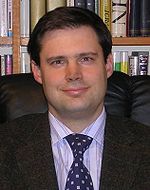
Mike Licona lectures on historical methods and the New Testament

Here’s a quick overview of Michael Licona’s latest book on the resurrection, entitled “The Resurrection of Jesus“.

60 minutes of lecture, 20 minutes of Q&A.

Summary:

  • Dr. Licona’s background and education
  • The definition of history and philosophy of history
  • Postmodern approaches to history
  • Historical bedrock: facts that are historically demonstrable
  • Historical criterion 1: Explanatory scope
  • Historical criterion 2: Explanatory power
  • Historical criterion 3: Plausibility
  • Historical criterion 4: Ad Hoc / Speculation / non-evidenced assumptions
  • Inference to the best explanation
  • Investigating miracle claims: is it possible? How?
  • Objection of James D.G. Dunn
  • Objection of Bart Ehrman
  • New Testament sources: Gospels and Paul’s letters
  • The Gnostic gospels: are they good sources?
  • The minimal facts
  • The hallucination hypothesis
  • The best explanation

While watching this lecture, it struck what good preparation it was for understanding debates. This lecture is more about historical methods, but if you’re interested in Mike’s minimal facts case for the resurrection, here’s a video on that:

This is the case he uses in his debates with Richard Carrier, Dale Allison, Bart Ehrman, etc.

Mike Licona’s ministry is here: Risen Jesus, and I noticed that the most popular article on the site is on the comological argument, which is not surprising at all, since he co-edited a book on 50 evidences for God from many differences with William Dembski. He likes evidence from every discipline you can think of, and then some.

If you are looking for a good book to read on the resurrection of Jesus, the best introductory book on the resurrection is “The Case for the Resurrection of Jesus” and the best comprehensive book is “The Resurrection of Jesus“.

Peter J. Williams lectures on the historical reliability of the gospel narratives

Peter J. Williams
Peter J. Williams

This is a lecture I found from British historian Dr. Peter J. Williams.

Here’s the main lecture: (54 minutes)

And here’s the Q&A: (9 minutes)

About Peter Williams:

Peter J. Williams is the Warden (CEO) of Tyndale House and a member of the Faculty of Divinity in the University of Cambridge. He received his MA, MPhil and PhD, in the study of ancient languages related to the Bible from Cambridge University. After his PhD, he was on staff in the Faculty of Divinity, Cambridge University (1997–1998), and thereafter taught Hebrew and Old Testament there as Affiliated Lecturer in Hebrew and Aramaic and as Research Fellow in Old Testament at Tyndale House, Cambridge (1998–2003). From 2003 to 2007 he was on the faculty of the University of Aberdeen, Scotland, where he became a Senior Lecturer in New Testament and Deputy Head of the School of Divinity, History and Philosophy. In July 2007 he became the youngest Warden in the history of Tyndale House. He also retains his position as an honorary Senior Lecturer in Biblical Studies at the University of Aberdeen.

Summary of the lecture:

  • What if the stories about Jesus are legendary?
  • were the gospels transmitted accurately?
  • were the gospels written in the same place as where the events happened?
  • do the gospel authors know the customs and locations where the events happened?
  • do the gospels use the right names for the time and place where the events took place?
  • do the gospels disambiguate people’s names depending on how common those names were?
  • how do the New Testament gospels compare to the later gnostic gospels?
  • how do the gospels refer to the main character? How non-Biblical sources refer to Jesus?
  • how does Jesus refer to himself in the gospels? do the later Christians refer to him that way?
  • how does Jesus teach? do later Christians teach the same way?
  • why didn’t Jesus say anything about early conflicts in the church (the Gentiles, church services)?
  • did the writers of the gospels know the places where the events took place?
  • how many places are named in the gospels? how about in the later gnostic gospels?
  • are the botanical details mentioned in the gospels accurate? how about the later gnostic gospels?

And here are the questions from the audience:

  • how what about the discrepancies in the resurrection narratives that Bart Ehrman is obsessed with?
  • what do you think of the new 2011 NIV translation (Peter is on the ESV translation committee)?
  • how did untrained, ordinary men produce complex, sophisticated documents like the gospels?
  • is oral tradition a strong enough bridge between the events and the writers who interviewed the eyewitnesses?
  • what does the name John mean?
  • why did the gospel writers wait so long before writing their gospels?
  • do you think that Matthew and Luke used a hypothetical source which historians call “Q”?
  • which gospel do critical historians trust the least and why?

I really enjoyed watching this lecture. He’s getting some of this material from Richard Bauckham’s awesome book “Jesus and the Eyewitnesses”, so if you aren’t familiar with it, you can get an idea of what’s in it. Peter Williams is a lot of fun to listen to – an excellent speaker.

You can read an interview with Peter Williams here on Between Two Worlds.

And you can listen to the Peter Williams vs Bart Ehrman debate. That link contains a link to the audio of the debate as well as my snarky summary. It’s very snarky.

And Apologetics 315 also posted Peter Williams’ assessment of Bart Ehrman’s “Misquoting Jesus”.

Can naturalistic theories account for the minimal facts about Jesus’ resurrection?

Here’s a neat post from Ichtus77 on her blog of the same name. She lists 12 facts that are admitted by the majority of New Testament scholars across the broad spectrum of worldviews, including atheistic scholars.

Excerpt:

I am studying “the twelve facts” and want to get down what I’ve got so far. After the facts are displayed, we’re going to turn the whole thing into a logic puzzle.

Here are the 12 Facts:

  1. Jesus died by Roman crucifixion.
  2. He was buried, most likely in a private tomb.
  3. Soon afterwards the disciples were discouraged, bereaved and despondent, having lost hope.
  4. Jesus’ tomb was found empty very soon after his interment.
  5. The disciples had experiences that they believed were the actual appearances of the risen Christ.
  6. Due to these experiences, the disciples lives were thoroughly transformed. They were even willing to die for their belief.
  7. The proclamation of the Resurrection took place very early, from the beginning of church history.
  8. The disciple’s public testimony and preaching of the Resurrection took place in the city of Jerusalem, where Jesus had been crucified and buried shortly before.
  9. The gospel message centered on the preaching of the death and resurrection of Jesus.
  10. Sunday was the primary day of worshiping and gathering.
  11. James, the brother of Jesus and a skeptic before this time, became a follower of Jesus when he believed he also saw the risen Jesus.
  12. Just a few years later, Paul became a believer, due to an experience that he also believed was an appearance of the risen Jesus.

These are the facts that you see admitted in debates by atheistic historians, like in the debate between James Crossley and William Lane Craig. These facts are admitted even by most atheist historians because they pass standard historical criteria, like early dating, embarrassing to the author, appears in multiple sources, and so on. Secular historians don’t accept everything that the Bible says as historical, but they will give you a minimum list of facts that pass their historical tests.

The resurrection puzzle is like a Sherlock Holmes mystery. People deduce what happened from the evidence that is considered to be unimpeachable. The “minimal facts” that EVERYONE accepts. You can even see secular historians assenting to these facts in academic debates like the one I linked above.

So the approach is like this:

1) Use historical tests to get a small number of undeniable historical facts
2) Try to explain the undeniable historical facts with a hypothesis that accounts for all of them

Like Sherlock Holmes says: “…when you have eliminated the impossible, whatever remains, however improbable, must be the truth.”

It’s the Sherlock Holmes method of doing history.

So, Ichtus77 lists the minimal facts, and in the rest of the post she surveys the following naturalistic hypotheses to see how well they can account for the minimal facts listed above.

Here are the naturalistic theories:

  • The Unknown Tomb theory
  • The Wrong Tomb theory
  • The Twin theory
  • The Hallucination theory
  • The Existential Resurrection and the Spiritual Resurrection theories
  • The Disciples Stole Body theory
  • The Authorities Hid Body theory
  • The Swoon theory
  • The Passover Plot theory

The main way that scholars argue for the resurrection is to list the minimal facts, and defend them on historical grounds, then show that there is no naturalistic hypothesis that explains them all. The naturalistic theories are impossible. Once you have eliminated them because they don’t account for the minimal facts, you are left with the resurrection hypothesis. Elementary, Watson, elementary.