Tag Archives: Marriage

Do atheists have a lower divorce rate than Christians?

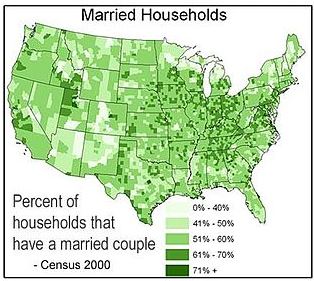
Map of marriage rate by state

Here is an article from USA Today that comments on the notion that atheists have a lower divorce rate than Christians.

Excerpt:

It’s been proclaimed from pulpits and blogs for years — Christians divorce as much as everyone else in America.

But some scholars and family activists are questioning the oft-cited statistics, saying Christians who attend church regularly are more likely to remain wed.

“It’s a useful myth,” said Bradley Wright, a University of Connecticut sociologist who recently wrote “Christians Are Hate-Filled Hypocrites … and Other Lies You’ve Been Told.”

“Because if a pastor wants to preach about how Christians should take their marriages more seriously, he or she can trot out this statistic to get them to listen to him or her.”

The various findings on religion and divorce hinge on what kind of Christians are being discussed.

Wright combed through the General Social Survey, a vast demographic study conducted by the National Opinion Research Center at the University of Chicago, and found that Christians, like adherents of other religions, have a divorce rate of about 42%. The rate among religiously unaffiliated Americans is 50%.

When Wright examined the statistics on evangelicals, he found worship attendance has a big influence on the numbers. Six in 10 evangelicals who never attend had been divorced or separated, compared to just 38% of weekly attendees.

[…]Brad Wilcox, director of the National Marriage Project at the University of Virginia, agrees there’s been some confusion.

“You do hear, both in Christian and non-Christian circles, that Christians are no different from anyone else when it comes to divorce and that is not true if you are focusing on Christians who are regular church attendees,” he said.

Wilcox’s analysis of the National Survey of Families and Households has found that Americans who attend religious services several times a month were about 35% less likely to divorce than those with no religious affiliation.

Nominal conservative Protestants, on the other hand, were 20% more likely to divorce than the religiously unaffiliated.

“There’s something about being a nominal ‘Christian’ that is linked to a lot of negative outcomes when it comes to family life,” Wilcox said.

Here’s a quote from an Oklahoma State University study that confirms the Wright and Wilcox conclusions:

History of Divorce and Religious Involvement

Those who say they are more religious are less likely, not more, to have already experienced divorce. Likewise, those who report more frequent attendance at religious services were significantly less likely to have been divorced. This pattern of findings held using various analytic techniques that test which variables differentiate persons who have been divorced from persons who have not been divorced, while controlling for other variables that might affect the interpretation of the data, such as age, age of first marriage, income, and gender. When both the global rating of religiousness and the item assessing fiequency of attendance at religious services are entered into the same analysis, the attendance item remains significantly associated with divorce history but the global religiousness item does not. This suggests that a key aspect of how religious faith affects marital relationships may be through involvement with a community of faith.

So, please do bookmark this information for the next time you hear an atheist make this argument. Obviously, you can’t expect people who are not serious about their religion to be bound by the moral duties imposed by that religion. People who attend church regularly are probably more serious about their religion, and also probably more informed about what their holy book says. If their holy book is the Bible, then there are few options for divorce.

An article from Focus on the Family by Amy Tracy explains when divorce is allowed according to the Bible.

God is very clear, however, that He hates divorce (Malachi 2:16). He also says, “So they are no longer two, but one. Therefore what God has joined together, let man not separate” (Matthew 19:6). According to the New Testament, there are two justifications for divorce: infidelity (Matthew 5:32) and desertion (1 Corinthians 7:15).

So divorce is not something a Bible believing Christian can do for frivolous reasons, unless he wants to be in rebellion against God.

The future of marriage in the church

In my own case, I learned about chastity and sobriety and courting outside the church, and in my case that means that I am still a virgin, that I don’t drink more than a beer a year, and that when I like a girl, I court her. I do think that people in the church are generally more moral than people outside the church, but that’s more because of convention rather than conviction. I don’t think it’s going to last, in other words. Church is not the place where reasons and evidence are given that help people to resist peer pressure when they enter hostile environments, like the university. And often, parents are too busy working to understand the issues and communicate them to their children.

I’ve never been in a church where they explained the hormones that are released during sex that cause you to bond to the person you’re having sex with. You would have to look in books or listen to lectures in order to understand the problem with having sex with someone you are not committed to – how it causes you to hold back your emotions for fear of a break-up. The church doesn’t have much to say about the social effects of single motherhood by choice or the effects of gay parenting on children. Nor do they have any positive vision to offer men about how they can serve God by marrying carefully.

Christians who participate in a church community will adopt some of these values, especially if they stay clear of popular culture, the university, etc. Especially if they don’t work in a very secular environment, like a high-tech company or in Hollywood. But unless Christian communities get serious about grounding their values in evidence, I wouldn’t expect this situation to go on, and you can already see young people falling away from church in record numbers when they get to university as a result of this refusal to engage. We’re doing well now, but we should move to secure our gains.

New study: children of divorced parents are less likely to be religious

A family praying and reading the Bible

This is from the leftist Washington Post, of all places.

Excerpt:

Two widely recognized trends in American society might have something to do with each other.

Divorce rates climbed to the highest levels ever in the 1980s, when about half of all marriages ended in divorce.

And in the present day, Americans are rapidly becoming less religious. Since 1972, the share of Americans who say they do not adhere to any particular religion has increased from 5 percent of the population to 25 percent.

Could those two trends be related? A new study from the Public Religion Research Institute says yes. The children of divorced parents have grown up to be adults of no religion.

People whose parents divorced when they were children are significantly more likely to grow up not to be religious as adults, the study found. Thirty-five percent of the children of divorced parents told pollsters they are now nonreligious, compared with 23 percent of people whose parents were married when they were children.

[…]Cox said his team found that even children of divorced parents who are religious are less religious than their peers. Thirty-one percent of them go to services every week, compared with 43 percent of religious people whose parents were married when they were growing up.

This part about Protestant pastors wimping out of thorny issues is very interesting:

Andrew Root, a professor at Luther Seminary who has written a book about the spiritual consequences of divorce for children, was not surprised to hear about the study’s findings.

“Everything in a divorce gets divided. Literally everything. Parents’ friends get divided. Relatives get divided. Everyone takes sides,” Root said. “Even religion takes sides. The church gets divided. Dad leaves Mom’s faith, or vice versa. Negotiating those worlds becomes difficult.”

Root said churches are not doing enough to speak directly to the concerns of children in those situations, so the kids lose faith in the ability of the church to help them. He said that when the divorce rate climbed in the 1980s, many members of the clergy, especially mainline Protestant pastors, stopped speaking out against divorce so as not to alienate struggling congregants. But by going silent on the subject, they didn’t offer any comfort to the kids.

As adults, Root said, those same people do not believe the church will respond to their adult problems. “They’re now thinking, ‘I’m dealing with depression.’ Or, ‘I’m dealing with my own marital troubles.’ The church must not have anything to say to me, because when I was 8 and dealing with divorce, my Sunday-school teacher didn’t even say, ‘Man, Amanda, that must be really complicated for you’,” Root said.

I get e-mails all the time from people who are suffering from the effects of the Sexual Revolution, which was put in place by selfish adults so they could do whatever they wanted. Children suffered a lot from this. Obviously, the painful of experience of their parents divorcing hurt their view of God. But divorce also hurts a child’s ability to know what a man loving a woman in a stable commitment looks like, and what a woman loving a man in a stable commitment looks like. I mean – what does love between sexes look like when the “in love” feeling has worn off, and all that remains is the commitment to build something together? I think that a lot is riding on the stability of the relationship between the child’s mother and father.

Should we have expected Brad Pitt and Angelina Jolie to divorce?

Marriage and family
Marriage and family

This article from Family Studies indicates four reasons why we should have expected Brad and Angelina to divorce.

Excerpt:

The Brangelina break-up is like the big earthquake that seismologists missed. Angelina Jolie serving Brad Pitt with divorce papers just two years into their marriage has sent shock waves through the entertainment and parenting press, inspiring panicked headlines like, “If Brad Pitt And Angelina Jolie Can’t Make It, Who Can?”But should we be so surprised?

The unfortunate truth is that if fans of the A-list couple had consulted family and marriage experts, this real-life plot twist might have looked fairly likely, if not predictable. In other words, it was more a matter of when than if.

[…]For starters, Britain’s Marriage Foundation recently conducted a study of 488 A-list celebrities. They found “that celebrities divorce at roughly twice the rate of the rest of us. . . . In the early years of their marriages, divorce among celebs is a lot more than twice as commonplace. During the first three years—as with Brad Pitt and Angelina Jolie—some 7 percent of celebs had divorced compared to 2 percent for [the rest of] us.”

Jolie and Pitt also match at least three of the individual risk factors for divorce that University of Denver research professor Scott Stanley, Ph.D., lists on his blog, Sliding vs Deciding. These include: being a child of divorce (as in Jolie’s case), both stars having had “a prior marriage that ended” (this will be Brad’s second divorce, and Jolie’s third), and “[p]rior to marrying, having sex with or cohabiting with someone other than your mate,” which looks applicable to the couple as well. They also match two other divorce risk factors for couples, including “having a child together before marriage,” and cohabiting “before either being married or at least engaged.”

Now, I’ve talked to women about these studies, and I’ve got two different responses from two different groups.

One group of those women says that the research is entirely correct, and that their future decisions need to be guided by the best practices shown in the research. They like that there is some data there that will help them to act in line what the Bible says. One lady I mentored who had an abortion actually started to mistrust her emotions when it came to choosing men and making decisions about whether to commit. We talked through my objectives, then she evaluated men using the best practices from the research. She wanted to make better decisions, and she thought that the problem was her – specifically, her feelings ruining her decision-making. She’s married to a super guy now, and doing great. Her view on emotions now, and I’m quoting, is “emotions are data, but you shouldn’t let them influence your decision-making more than reason and evidence”. Also, her husband is totally spoiled.

Another group of women expressed support for the Bible teachings and but their response to the best practices contained in the research studies is that they are “too strict” and that they only work “within a narrow scope”. And their past usually shows evidence of this habit they have of dismissing moral rules and best practices. Note: converting to Christianity doesn’t automatically change reckless, self-centered behavior. The talk could improve, but the actions could still be irresponsible and narcissistic. The truth is that some women just love to let their emotions control them, and it’s going to cause problems in a marriage if they don’t have self-control. I see a lot of women like this delaying marriage into their early and mid-30s, with no idea about how this affects their value to men. (They seem not to care about what men want from them, or from the marriage, and don’t see investing early in marriage to be a good way to make a difference, because it’s not fun). Marriages are most stable when the marriage takes place in the late 20s – not the mid 30s.

One last point. I have a male friend who also dismisses all the studies, and defends irresponsible Christian women who break all the rules and delay marriage for fun and thrills and travel. “She’s a Christian” he says. “She’s much better than most women I know” he says. “What does it matter if she marries at 40? Maybe she doesn’t want to have kids?” I show him the study about marriages succeeding when the woman is in her mid to late 20s, and he says “Who cares?” I showed him the study about credit score being connected to marital stability, and he dismissed that one, too. “How many of those women in the study are Christians?” he said. And finally “you can’t apply studies to individuals”. I don’t think that he should dismiss the studies like this – I think it will hurt him. For every divorce that happens, and for every case of sex-withholding, there was a man who first said “the studies don’t apply to me”.

The rules really do matter. You can’t dismiss the research studies and escape the consequences of doing so. And don’t assume that a person has learned her lesson just because she has become a Christian – it’s very possible for her to be saying responsible things while doing the same wild, irresponsible decision-making that she was doing as a non-Christian. One woman I know who had plans to literally marry an unemployed, penniless graduate student in his late 20s, told me that “men do have a provider role, and women should prefer men who work and have savings”. She literally introduced him to her parents – that’s how serious she was. Not one dime in his bank account, not one job on his resume. Her words say complementarian, but her actions say radical feminist rebellion against traditional male roles.

So, don’t believe the words, believe the actions. Show the candidate the studies, and look for actions that are in line with the best practices in the studies.