
Tag Archives: Manuscript

Is the text of the Bible we have today different from the originals?

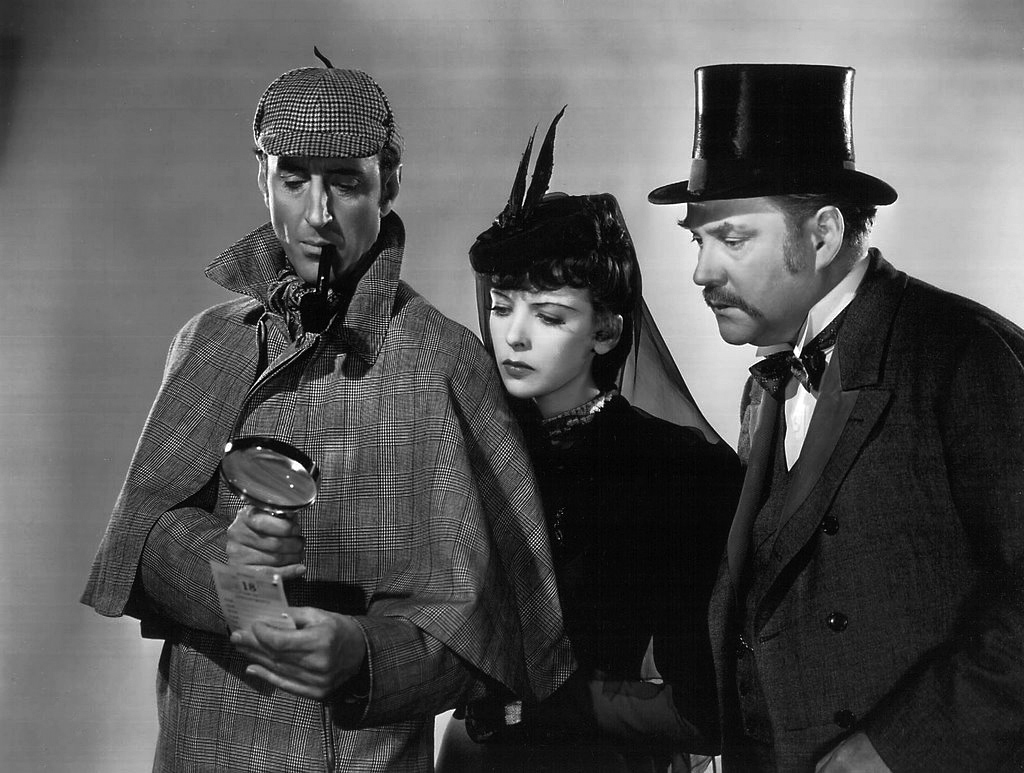
Sherlock Holmes and John Watson: let's take a look at the facts
Sherlock Holmes and John Watson: let’s take a look at the facts

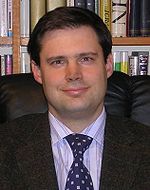
First, let’s introduce New Testament scholar Daniel B. Wallace:

Daniel B. Wallace, Professor of New Testament Studies at Dallas Theological Seminary

B.A., Biola University, 1975; Th.M., Dallas Theological Seminary, 1979; Ph.D., 1995.

Dr. Wallace influences students across the country through his textbook on intermediate Greek grammar. It has become the standard textbook in the English-speaking world on that subject. He is a member of the Society of New Testament Studies, the Institute for Biblical Research, the Society of Biblical Literature, and the Evangelical Theological Society.

[…]He has been a consultant on four different Bible translations.

[…] He works extensively in textual criticism, and has founded The Center for the Study of New Testament Manuscripts (csntm.org), an institute with an initial purpose of preserving Scripture by taking digital photographs of all known Greek New Testament manuscripts.

[…]His postdoctoral work includes work on Greek grammar at Tyndale House in Cambridge, textual criticism studies at the Institut für neutestamentliche Textforschung in Münster, and the Universität Tübingen, Germany.

Eric Chabot, who blogs at Think Apologetics, found this interview that addresses the charge you often hear about how you can’t get back to the original New Testament documents.

It talks about:

  • textual criticism
  • number of New Testament manuscripts
  • earliest New Testament manuscripts
  • the number and impact of textual variants
  • responding to the “telephone game” objection
  • responding to the scribes tampered with the text objection

And here is an article by Dr. Wallace that corrects other misconceptions about the transmission and translation of the Testament.

He lists five in particular:

  • Myth 1: The Bible has been translated so many times we can’t possibly get back to the original.
  • Myth 2: Words in red indicate the exact words spoken by Jesus of Nazareth.
  • Myth 3: Heretics have severely corrupted the text.
  • Myth 4: Orthodox scribes have severely corrupted the text.
  • Myth 5: The deity of Christ was invented by emperor Constantine.

Finally, a quote from skeptical historian Bart Ehrman, as reproduced in this post on the Christian Apologetics Alliance blog:

The curious thing about Bart Ehrman is that the views he articulates in his popular-level work are not the same as those he espouses in his professional/scholarly publications. Indeed, readers may find this curious and very telling quotation, taken from the appendix (p. 252) of Misquoting Jesus, of interest:

“Bruce Metzger is one of the great scholars of modern times, and I dedicated the book to him because he was both my inspiration for going into textual criticism and the person who trained me in the field. I have nothing but respect and admiration for him. And even though we may disagree on important religious questions – he is a firmly committed Christian and I am not – we are in complete agreement on a number of very important historical and textual questions. If he and I were put in a room and asked to hammer out a consensus statement on what we think the original text of the New Testament probably looked like, there would be very few points of disagreement – maybe one or two dozen places out of many thousands. The position I argue for in ‘Misquoting Jesus’ does not actually stand at odds with Prof. Metzger’s position that the essential Christian beliefs are not affected by textual variants in the manuscript tradition of the New Testament.” [Emphasis added]

Finally, I think that the discovery of the Dead Sea Scrolls shows us that religious texts don’t change as much as we think they do over time.

Look:

The Dead Sea Scrolls play a crucial role in assessing the accurate preservation of the Old Testament. With its hundreds of manuscripts from every book except Esther, detailed comparisons can be made with more recent texts.

The Old Testament that we use today is translated from what is called the Masoretic Text. The Masoretes were Jewish scholars who between A.D. 500 and 950 gave the Old Testament the form that we use today. Until the Dead Sea Scrolls were found in 1947, the oldest Hebrew text of the Old Testament was the Masoretic Aleppo Codex which dates to A.D. 935.{5}

With the discovery of the Dead Sea Scrolls, we now had manuscripts that predated the Masoretic Text by about one thousand years. Scholars were anxious to see how the Dead Sea documents would match up with the Masoretic Text. If a significant amount of differences were found, we could conclude that our Old Testament Text had not been well preserved. Critics, along with religious groups such as Muslims and Mormons, often make the claim that the present day Old Testament has been corrupted and is not well preserved. According to these religious groups, this would explain the contradictions between the Old Testament and their religious teachings.

After years of careful study, it has been concluded that the Dead Sea Scrolls give substantial confirmation that our Old Testament has been accurately preserved. The scrolls were found to be almost identical with the Masoretic text. Hebrew Scholar Millar Burrows writes, “It is a matter of wonder that through something like one thousand years the text underwent so little alteration. As I said in my first article on the scroll, ‘Herein lies its chief importance, supporting the fidelity of the Masoretic tradition.'”{6}

A significant comparison study was conducted with the Isaiah Scroll written around 100 B.C. that was found among the Dead Sea documents and the book of Isaiah found in the Masoretic text. After much research, scholars found that the two texts were practically identical. Most variants were minor spelling differences, and none affected the meaning of the text.

One of the most respected Old Testament scholars, the late Gleason Archer, examined the two Isaiah scrolls found in Cave 1 and wrote, “Even though the two copies of Isaiah discovered in Qumran Cave 1 near the Dead Sea in 1947 were a thousand years earlier than the oldest dated manuscript previously known (A.D. 980), they proved to be word for word identical with our standard Hebrew Bible in more than 95 percent of the text. The five percent of variation consisted chiefly of obvious slips of the pen and variations in spelling.”{7}

Despite the thousand year gap, scholars found the Masoretic Text and Dead Sea Scrolls to be nearly identical. The Dead Sea Scrolls provide valuable evidence that the Old Testament had been accurately and carefully preserved.

I hope that this post will help those who think that we can’t get back to the text of the original New Testament documents.
Peter J. Williams lectures on the historical reliability of the gospel narratives

Peter J. Williams
Peter J. Williams

Here’s the main lecture: (54 minutes)

And here’s the Q&A: (9 minutes)

About Peter Williams:

Peter J. Williams is the Warden (CEO) of Tyndale House and a member of the Faculty of Divinity in the University of Cambridge. He received his MA, MPhil and PhD, in the study of ancient languages related to the Bible from Cambridge University. After his PhD, he was on staff in the Faculty of Divinity, Cambridge University (1997–1998), and thereafter taught Hebrew and Old Testament there as Affiliated Lecturer in Hebrew and Aramaic and as Research Fellow in Old Testament at Tyndale House, Cambridge (1998–2003). From 2003 to 2007 he was on the faculty of the University of Aberdeen, Scotland, where he became a Senior Lecturer in New Testament and Deputy Head of the School of Divinity, History and Philosophy. In July 2007 he became the youngest Warden in the history of Tyndale House. He also retains his position as an honorary Senior Lecturer in Biblical Studies at the University of Aberdeen.

Summary of the lecture:

  • What if the stories about Jesus are legendary?
  • were the gospels transmitted accurately?
  • were the gospels written in the same place as where the events happened?
  • do the gospel authors know the customs and locations where the events happened?
  • do the gospels use the right names for the time and place where the events took place?
  • do the gospels disambiguate people’s names depending on how common those names were?
  • how do the New Testament gospels compare to the later gnostic gospels?
  • how do the gospels refer to the main character? How non-Biblical sources refer to Jesus?
  • how does Jesus refer to himself in the gospels? do the later Christians refer to him that way?
  • how does Jesus teach? do later Christians teach the same way?
  • why didn’t Jesus say anything about early conflicts in the church (the Gentiles, church services)?
  • did the writers of the gospels know the places where the events took place?
  • how many places are named in the gospels? how about in the later gnostic gospels?
  • are the botanical details mentioned in the gospels accurate? how about the later gnostic gospels?

And here are the questions from the audience:

  • how what about the discrepancies in the resurrection narratives that Bart Ehrman is obsessed with?
  • what do you think of the new 2011 NIV translation (Peter is on the ESV translation committee)?
  • how did untrained, ordinary men produce complex, sophisticated documents like the gospels?
  • is oral tradition a strong enough bridge between the events and the writers who interviewed the eyewitnesses?
  • what does the name John mean?
  • why did the gospel writers wait so long before writing their gospels?
  • do you think that Matthew and Luke used a hypothetical source which historians call “Q”?
  • which gospel do critical historians trust the least and why?

I really enjoyed watching this lecture. He’s getting some of this material from Richard Bauckham’s awesome book “Jesus and the Eyewitnesses”, so if you aren’t familiar with it, you can get an idea of what’s in it. Peter Williams is a lot of fun to listen to – an excellent speaker.


Bart Ehrman debates the reliability of the gospels with Craig Evans

Sherlock Holmes and John Watson

This is the first debate ever between these two top-ranked scholars. Both Evans and Ehrman are probably 2 of the 10 most recognized historical Jesus scholars.

The MP3 audio and a link to the video is here. (From Brian Auten at Apologetics 315)

Speakers

Bart Ehrman

Dr. Ehrman, is a graduate of Wheaton College (Illinois), Professor Ehrman received both his Masters of Divinity and Ph.D. from Princeton Theological Seminary, where his 1985 doctoral dissertation was awarded magna cum laude. Since then he has published extensively in the fields of New Testament and Early Christianity, having written or edited twenty-one books, numerous scholarly articles, and dozens of book reviews. Among his fields of scholarly expertise are the historical Jesus, the early Christian apocrypha, the apostolic fathers, and the manuscript tradition of the New Testament.

Craig Evans

Dr. Evans received his B.A. degree in History and Philosophy from Claremont McKenna College, his M.Div. degree from Western Baptist Seminary in Portland, Oregon, and his M.A. and Ph.D. degrees in Biblical Studies from Claremont Graduate University in southern California. Author and editor of more than fifty books and hundreds of articles and reviews, Professor Evans has given lectures at Cambridge, Durham, Oxford, Yale, and other universities, colleges, seminaries, and museums, such as the Field Museum in Chicago and the Canadian Museum of Civilization in Ottawa.

Note: This is a very snarky summary, and I am just paraphrasing things to be silly and funny. Reader discretion is advised.

Summary

Snarky things I made up are in italics.

Question 1: are the gospels historically reliable?

Bart Ehrman opening speech:

  • I used to be an ignorant fundamentalist like you!
  • but then I went to Princeton, and now I know better
  • to Craig: are there errors in the Bible
  • the gospels have some reliable and some unreliable info
  • only careless readers don’t see contradictions in the gospels
  • contradictions in the genealogies
  • contradictions in timing of recognizing Jesus as the Messiah
  • contradiction about when Jesus died
  • contradiction about when the stone was rolled away
  • contradiction about who was at the empty tomb
  • contradiction about when the disciples went to Galilee
  • contradictions in minor details means the gospels are unreliable

Craig Evans opening speech:

  • the question is “do the gospels tell us enough about Jesus for faith?”
  • the gospels don’t tell us everything, but they tell enough for faith
  • the extremely early creed in 1 Cor 15:3-7 has an outline of the gospel
  • it contains the burial, the appearances to eyewitnesses
  • and it agrees with the early sermons of Peter in Acts 2
  • the gospels agree with these extremely early summaries
  • the gospels are based on earlier sources
  • the gospels are corroborated by the Jewish historian Josephus

Question 2: Do the gospels accurately preserve the teachings of Jesus Christ?

Bart Ehrman

  • are there any discrepancies in the gospels?
  • the gospels have things Jesus said, and things he didn’t say
  • if the Bible is inaccurate in some minor details, then it’s all unreliable
  • in the latest gospel, John, Jesus calls himself God and sees himself as divine
  • but these high-Christology statements are not in the synoptics
  • therefore, Jesus really didn’t say these things
  • why didn’t the synoptics record these claims to divinity
  • the author of John changed the words of Jesus and John the Baptist?

Craig Evans

  • E.P. Sanders (a non-Christian scholar) says we can know what Jesus taught
  • cites E.P.’s list of Jesus’ core teachings that are agreed on by most scholars
  • Jesus’ focus was talking about the Kingdom of God – the rule of God
  • Jesus’ followers were expected to record and understand the words of Jesus
  • It is permissible for the followers of Jesus to have some editorial license

Question 3: Do the gospels accurately preserve the activities of Jesus Christ?

Bart Ehrman

  • E.P. Sanders agrees with me that there are discrepancies in the gospels
  • E.P. Sanders agrees with me that there are mistakes in the gospels
  • If Jesus’ followers changed his words a little, then we can’t know anything he said
  • If the author changes the story a little, then the story was changed a lot
  • If there not 100% accurate, then they’re not accurate at all
  • contradiction of the ordering of Jesus’ temptations
  • contradiction of the number of animals Jesus rode into Jerusalem
  • contradiction of whether Jesus spoke or didn’t speak in some instance
  • contradiction of what Jesus said on the cross
  • contradiction of the number of robbers who speak to Jesus
  • Jesus can only say ONE THING when he’s on the cross
  • the gospel writers have to be in complete agreement

Craig Evans

  • E.P. Sanders (non-Christian) lists 7 virtually indisputable facts about Jesus
  • just because there are discrepancies, doesn’t mean there are no minimal facts
  • in additional to E.P. Sanders, there are other facts that are widely-accepted
  • many assertions in the gospels are embarrassing to the author
  • many liberal scholars think that Jesus was a healer and an exorcist
  • all scholars agree on the crucifixion
  • most scholars accept the “King of the Jews” placard placed over the cross
  • this means that Jesus was viewed by his followers as the Messiah

Question 4: Do the gospels contain eyewitness tradition?

Bart Ehrman

  • I used to be an ignorant uninformed fundie, like you all
  • but then I started to study seriously, not like Craig Evans
  • I changed my mind based on intense research, not peer pressure
  • My apostasy has nothing to do with the problem of evil and suffering!
  • I use my brain, and Craig Evans and you fundies don’t use your brains
  • the gospels don’t claim to be written by eyewitnesses
  • the titles of the gospels were added later
  • the gospels don’t claim to be written by the authors attributed to them
  • the gospels were written anonymously
  • the gospels only had names attached in 120-140 AD
  • even if gospels were written by eyewitnesses, they are not always accurate
  • written 40-60 years after Jesus died
  • written in Greek, not Aramaic
  • written in different countries
  • based on stories that were told and retold and changed over time

Craig Evans

  • Richard Bauckham says the gospels are largely based on eyewitness accounts
  • the gospels were written while there were still eyewitnesses alive
  • the people who met Jesus were there to correct the written accounts
  • there were many disputes about things in the early church, so if the early church invented sayings, then why not invent sayings of Jesus to resolve the disputes?
  • there is no evidence of things being invented wholesale by the early church
  • Pappias says that he talked to Christians who knew the eyewitnesses to Jesus

Question 5: Do archaeologists and historians use the gospels as sources?

Bart Ehrman

  • archaeologists do not use the gospels, they just dig things up
  • historians do use gospels
  • Jesus is not mentioned by any Greek or Roman non-Christian source for 80 years after Jesus’ death
  • The earliest Jewish source is Josephus, writing 60 years after Jesus’ death
  • Paul is the earliest source, but says nothing about Jesus’ words and deeds
  • the earliest sources for words and deeds are the discrepancy-filled gospels
  • the gospels are based on telling and re-telling of the stories

Craig Evans

  • James Charlesworth has a 700-book about archaeology and the Bible
  • the book contains hundreds of references to the four gospels
  • the four gospels and Acts are viewed as the best sources for archaeologists
  • they provide accurate information about the way things were
  • the gospels and Acts helps archaeologists to know where to dig for things
  • the Biblical sources are early and based on eyewitnesses
  • the gospels and Acts fit well in the first century culture
  • the gospels and Acts talk about real events and real places and real customs
  • the gospels and Acts talk about real buildings and real public figures and real groups
  • the language of the gospels traces back nicely to Aramaic
  • the gospels talk about geography and climate
  • archaeologists discover many things discussed in the gospels

Question 6: Have the gospels been accurately preserved done through the centuries

Bart Ehrman

  • if God inspired the Bible without error, he should have preserved it without error
  • but the originals have NOT been preserved without error
  • so I no longer accept the inerrancy of the autographs (the originals)
  • we don’t have the originals
  • we only have copies of copies… of copies… of copies… of copies
  • and the copiers all made mistakes
  • the first manuscripts are decades later
  • and the manuscripts we have are different from one another
  • the earliest copies have the most mistakes
  • even if we have many copies, they are late, so we don’t know what the original said
  • we don’t have early manuscripts

Craig Evans

  • we know where the discrepancies in the manuscripts are
  • the discrepancies are marked in your Bible
  • the discrepancies affect peripheral issues
  • some discrepancies are supported by other verses
  • Mark doesn’t have the appearances, but 1 Cor 15 does, and it’s earlier
  • the errors are things like spelling and grammar errors, typos, etc.
  • we have fragments that are earlier than the full manuscripts
  • some early manuscripts have errors, but other early manuscripts are correct

Question 7: Do scribal errors and textual variants significantly impact any teaching of Jesus or any important Christian teaching?

Bart Ehrman

  • the woman caught in adultery is a late addition
  • the ending of Mark is a late addition
  • can we handle snakes or can’t we?
  • did Jesus sweat blood or didn’t he?
  • some manuscripts have errors – that should not be allowed by God
  • some scribes are careless – that should not be allowed by God
  • we have to have perfect copies of the originals, or I won’t believe!
  • if God really inspired it, it all has to be perfect! Perfect! I was lied to!!!!
  • if the snake-handling verse isn’t there, then the whole Bible is lies! Lies!

Craig Evans

  • no variants impact any teaching of Jesus or significant Christian teaching
  • the vast majority of the manuscripts agree on 98-99% of the text
  • often, the theology gives rise to a variant, which is introduced later
  • variants aren’t central enough to affect any theological doctrines

And then there are concluding speeches by each speaker.

I made this summary based on the video, which is here on Apologetics 315.