Tag Archives: Lebanon

IAEA report expected to show that Iran now has the ability to build a nuclear bomb

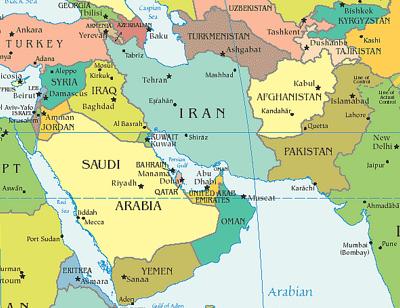
Map of the Middle East

From Fox News.

 Pakistan, North Korea and a former weapons scientist from the Soviet Union reportedly all helped Iran with its nuclear weapons quest, according to an impending U.N. nuclear watchdog report expected to show the Islamic regime has mastered the science of building a bomb.

The International Atomic Energy Agency’s report due out this week will lay out findings collected over years of intelligence gathering. It is expected to reinforce concerns that Iran didn’t actually abandon its weapons-related research in 2003, as indicated by a 2007 National Intelligence Estimate given to then-President George W. Bush.

U.S. intelligence agencies reported in 2007 that they believed Tehran halted its experiments in response to international and domestic pressures. But an ongoing investigation by the Fox News Specials Unit concludes that more than 600 entities were working inside Iran to support its program, and at least 40 sites where the work is taking place are suspected to exist across the country.

For British, French and American investigators, one of the most concerning sites is the Qom uranium enrichment construction site, hidden deep in the mountains. The latest intelligence shows that security walls have doubled around the site. Its scale cannot be explained by any known civilian nuclear energy use.

David Albright, a former IAEA official and president of the Washington-based Institute for Science and International Security who reviewed the intelligence files, told The Washington Post that Iran’s nuclear weapons program “never really stopped” and also concluded that Iran “has sufficient information to design and produce a workable implosion nuclear device.”

Western diplomats and nuclear experts briefed on the findings in the IAEA report also told the Post that foreign scientists offered assistance in overcoming key technical hurdles.

The documents reportedly show that a former Soviet weapons scientist named Vyacheslav Danilenko allegedly tutored Iranians for several years on building high-precision detonators needed to trigger a nuclear chain reaction. The Post reported that Pakistani and North Korean officials also gave to Iran mathematical formulas and codes as well as a so-called neutron initiator, which shoots a stream of atomic particles into the weapon’s fissile core at the start of the chain reaction.

There are two things to point out about this story. The first thing is that it was a strategic disaster for us to back out of Iraq, because that’s where we need to be to be able to gather intelligence, mount covert ops, run interdiction on attempts to transfer WMDs to Syria, etc. We really need to be in theater in order to deal with Iran, Syria and groups like Hezbollah, Iran’s Quds force and Muqtada Al Sadr’s Mahdi Army.

Unfortunately, I think that David Axelrod is running our national security now, which is why Obama pulled out forces out of Iraq.

Excerpt:

Three years, two abject failures. The first was the administration’s inability, at the height of American post-surge power, to broker a centrist nationalist coalition governed by the major blocs — one predominantly Shiite (Maliki’s), one predominantly Sunni (Ayad Allawi’s), one Kurdish — that among them won a large majority (69 percent) of seats in the 2010 election.

Vice President Biden was given the job. He failed utterly. The government ended up effectively being run by a narrow sectarian coalition where the balance of power is held by the relatively small (12 percent) Iranian-client Sadr faction.

The second failure was the SOFA [Status of Forces Agreement] itself. U.S. commanders recommended nearly 20,000 troops, considerably fewer than our 28,500 in Korea, 40,000 in Japan and 54,000 in Germany. The president rejected those proposals, choosing instead a level of 3,000 to 5,000 troops.

A deployment so risibly small would have to expend all its energies simply protecting itself — the fate of our tragic, missionless 1982 Lebanon deployment — with no real capability to train the Iraqis, build their U.S.-equipped air force, mediate ethnic disputes (as we have successfully done, for example, between local Arabs and Kurds), operate surveillance and special-ops bases, and establish the kind of close military-to-military relations that undergird our strongest alliances.

The Obama proposal was an unmistakable signal of unseriousness. It became clear that he simply wanted out, leaving any Iraqi foolish enough to maintain a pro-American orientation exposed to Iranian influence, now unopposed and potentially lethal. Message received. Just this past week, Massoud Barzani, leader of the Kurds — for two decades the staunchest of U.S. allies — visited Tehran to bend a knee to both President Mahmoud Ahmadinejad and Ayatollah Ali Khamenei.

The second thing to point out is the question of what we should be doing to restrain Iran’s nuclear ambitions. Click here for a run-down of some of our options. There are a lot of things we could do short of all-out war, but that would require that we had a statesman in the White House – someone who takes foreign policy seriously and treats it as more than a political issue.

A previous post I wrote showed how arms that China sells to Iran make their way to Hezbollah to be used against Israeli assets. That’s what we can expect will happen with nuclear weapons that Iran develops. Are we willing to accept that? There is also the matter of the Mexican drug cartels, the Quds force, Hugo Chavez in Venezuela and our porous border with Mexico. Are we willing to risk that?

We need to take the gloves off our national security agencies, especially the CIA, and do what has to be done.
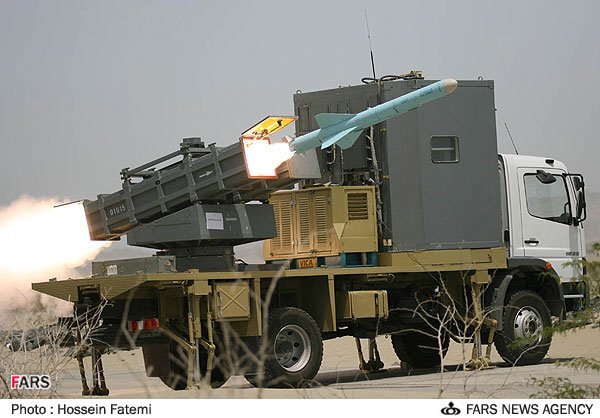
China continues to sell advanced anti-ship cruise missiles to Iran

Firing a Chinese-manufactured C-802 anti-ship cruise missile

The Washington Times reports.

Excerpt:

China is continuing to provide advanced missiles and other conventional arms to Iran and may be doing so in violation of U.N. sanctions against the Tehran regime, according to a draft report by the congressional U.S.-China Commission. “China continues to provide Iran with what could be considered advanced conventional weapons,” the report of the U.S.-China Economic and Security Review Commission says. According to the report, which will be made public Nov. 16, China sold $312 million worth of arms to Iran, second only to Russia, after Congress passed the Iran Freedom Support Act in 2006 that allows the U.S. government to sanction foreign companies that provide advanced arms to Iran. The report also noted that, after Russia began cutting back arms transfers to Iran in 2008, China became the largest arms supplier to the Iranian military. Most of the weapons transfers involved sales of Chinese anti-ship cruise missiles, including C-802 missiles that China promised the United States in 1997 would not be exported to Iran. China also built an entire missile plant in Iran last year to produce the Nasr-1 anti-ship cruise missile.

The Nasr-1 has a range of 19 miles. The C-802 has a range of 75 miles. That means that the C-802 has about the same range as a Harpoon SSM. Not good. I am not worried about the Nasr-1, but the C-802 is a problem. These weapons could be used by terrorists to attack allied naval vessels. In fact, the New York Times reported that Hezbollah, a terrorist group linked to Iran, used the C-802 missile to sink an Israeli Saar 5 corvette back in 2006.

Excerpt:

The power and sophistication of the missile and rocket arsenal that Hezbollah has used in recent days has caught the United States and Israel off guard, and officials in both countries are just now learning the extent to which the militant group has succeeded in getting weapons from Iran and Syria.

While the Bush administration has stated that cracking down on weapons proliferation is one of its top priorities, the arming of Hezbollah shows the blind spots of American and other Western intelligence services in assessing the threat, officials from across those governments said.

American and Israeli officials said the successful attack last Friday on an Israeli naval vessel was the strongest evidence to date of direct support by Iran to Hezbollah. The attack was carried out with a sophisticated antiship cruise missile, the C-802, an Iranian-made variant of the Chinese Silkworm, an American intelligence official said.

At the same time, American and Israeli officials cautioned that they had found no evidence that Iranian operatives working in Lebanon launched the antiship missile themselves.

But neither Jerusalem nor Washington had any idea that Hezbollah had such a missile in its arsenal, the officials said, adding that the Israeli ship had not even activated its missile defense system because intelligence assessments had not identified a threat from such a radar-guided cruise missile.

[…]Officials said it was likely that Iran trained Hezbollah fighters on how to successfully fire and guide the missiles, and that members of Iran’s Al Quds force — the faction of the Revolutionary Guards that trains foreign forces — would not necessarily have to be on the scene to launch the C-802.

At the same time, some experts said Iran was not likely to deploy such a sophisticated weapon without also sending Revolutionary Guard crews with the expertise to fire the missile.

Note that this is the same Quds force that likely trained Iraqi terrorists in the use of IEDs and is suspected of being involved with the recent attack on the Saudi ambassador on American soil. I have no idea why we were dicking around in Libya and Egypt when we have major problems with Iran, and, by extension, Syria and Lebanon.

Meanwhile, the Obama administration sends $47 million a year to China for foreign aid.

Exceptional speech on foreign policy by Tim Pawlenty

Tim Pawlenty delivered this must-read speech on foreign policy to the Council on Foreign Relations today.

Excerpt:

President Obama has failed to formulate and carry out an effective and coherent strategy in response to these events.  He has been timid, slow, and too often without a clear understanding of our interests or a clear commitment to our principles.

And parts of the Republican Party now seem to be trying to out-bid the Democrats in appealing to isolationist sentiments.  This is no time for uncertain leadership in either party.  The stakes are simply too high, and the opportunity is simply too great.

No one in this Administration predicted the events of the Arab spring – but the freedom deficit in the Arab world was no secret.  For 60 years, Western nations excused and accommodated the lack of freedom in the Middle East.  That could not last.  The days of comfortable private deals with dictators were coming to an end in the age of Twitter, You Tube, and Facebook.  And history teaches there is no such thing as stable oppression.

President Obama has ignored that lesson of history.  Instead of promoting democracy – whose fruit we see now ripening across the region – he adopted a murky policy he called “engagement.”

“Engagement” meant that in 2009, when the Iranian ayatollahs stole an election, and the people of that country rose up in protest, President Obama held his tongue.  His silence validated the mullahs, despite the blood on their hands and the nuclear centrifuges in their tunnels.

While protesters were killed and tortured, Secretary Clinton said the Administration was “waiting to see the outcome of the internal Iranian processes.”  She and the president waited long enough to see the Green Movement crushed.

“Engagement” meant that in his first year in office, President Obama cut democracy funding for Egyptian civil society by 74 percent.  As one American democracy organization noted, this was “perceived by Egyptian democracy activists as signaling a lack of support.”  They perceived correctly.  It was a lack of support.

“Engagement” meant that when crisis erupted in Cairo this year, as tens of thousands of protesters gathered in Tahrir Square, Secretary Clinton declared, “the Egyptian Government is stable.”  Two weeks later, Mubarak was gone.  When Secretary Clinton visited Cairo after Mubarak’s fall, democratic activist groups refused to meet with her.  And who can blame them?

The forces we now need to succeed in Egypt — the pro-democracy, secular political parties — these are the very people President Obama cut off, and Secretary Clinton dismissed.

The Obama “engagement” policy in Syria led the Administration to call Bashar al Assad a “reformer.”  Even as Assad’s regime was shooting hundreds of protesters dead in the street, President Obama announced his plan to give Assad “an alternative vision of himself.”  Does anyone outside a therapist’s office have any idea what that means?  This is what passes for moral clarity in the Obama Administration.

By contrast, I called for Assad’s departure on March 29; I call for it again today.  We should recall our ambassador from Damascus; and I call for that again today.  The leader of the United States should never leave those willing to sacrifice their lives in the cause of freedom wondering where America stands.  As President, I will not.

I blogged quite a bit about the peaceful protestors in Iran. Remember Neda Soltan who was shot down in the streets? And yet Obama had almost nothing to say about the pro-democracy movements. And Obama was on the wrong side in the Honduras election, as well – he backed Manuel Zelaya. It’s good that Tim Pawlenty has something to say about it.

And a bit more  of his speech:

The third category consists of states that are directly hostile to America.  They include Iran and Syria.  The Arab Spring has already vastly undermined the appeal of Al Qaeda and the killing of Osama Bin Laden has significantly weakened it.

The success of peaceful protests in several Arab countries has shown the world that terror is not only evil, but will eventually be overcome by good.  Peaceful protests may soon bring down the Assad regime in Syria.  The 2009 protests in Iran inspired Arabs to seek their freedom.  Similarly, the Arab protests of this year, and the fall of regime after broken regime, can inspire Iranians to seek their freedom once again.

We have a clear interest in seeing an end to Assad’s murderous regime.  By sticking to Bashar al Assad so long, the Obama Administration has not only frustrated Syrians who are fighting for freedom—it has demonstrated strategic blindness.  The governments of Iran and Syria are enemies of the United States.  They are not reformers and never will be.  They support each other.  To weaken or replace one, is to weaken or replace the other.

The fall of the Assad mafia in Damascus would weaken Hamas, which is headquartered there.  It would weaken Hezbollah, which gets its arms from Iran, through Syria.  And it would weaken the Iranian regime itself.

To take advantage of this moment, we should press every diplomatic and economic channel to bring the Assad reign of terror to an end.  We need more forceful sanctions to persuade Syria’s Sunni business elite that Assad is too expensive to keep backing.  We need to work with Turkey and the Arab nations and the Europeans, to further isolate the regime.  And we need to encourage opponents of the regime by making our own position very clear, right now:  Bashar al-Assad must go.

When he does, the mullahs of Iran will find themselves isolated and vulnerable.  Syria is Iran’s only Arab ally.  If we peel that away, I believe it will hasten the fall of the mullahs.  And that is the ultimate goal we must pursue.  It’s the singular opportunity offered to the world by the brave men and women of the Arab Spring.

The march of freedom in the Middle East cuts across the region’s diversity of religious, ethnic, and political groups.  But it is born of a particular unity.  It is a united front against stolen elections and stolen liberty, secret police, corruption, and the state-sanctioned violence that is the essence of the Iranian regime’s tyranny.

So this is a moment to ratchet up pressure and speak with clarity.  More sanctions.  More and better broadcasting into Iran.  More assistance to Iranians to access the Internet and satellite TV and the knowledge and freedom that comes with it.  More efforts to expose the vicious repression inside that country and expose Teheran’s regime for the pariah it is.

And, very critically, we must have more clarity when it comes to Iran’s nuclear program.  In 2008, candidate Barack Obama told AIPAC that he would “always keep the threat of military action on the table to defend our security and our ally Israel.”  This year, he told AIPAC “we remain committed to preventing Iran from acquiring nuclear weapons.”  So I have to ask: are all the options still on the table or not?  If he’s not clear with us, it’s no wonder that even our closest allies are confused.

The Administration should enforce all sanctions for which legal authority already exits.  We should enact and then enforce new pending legislation which strengthens sanctions particularly against the Iranian Revolutionary Guards who control much of the Iranian economy.

Here’s a clip from the discussion with CFR after the speech:

You know, I was listening to a fiscal conservative being interviewed on the radio the other day and the person was saying that he had more fear of Obama’s foreign policy than of Obama’s economic policy. This was after he had laid out a gloomy economic picture.