Tag Archives: Jobs

Conservatives defeat socialists by a landslide in Spain election

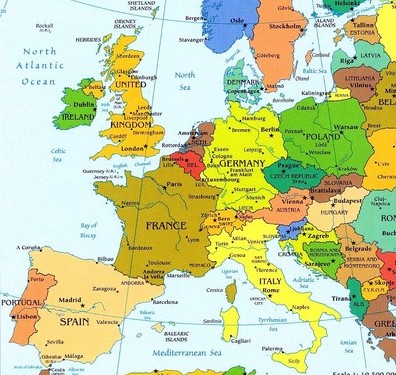
Political Map of Europe

The UK Telegraph explains.

Excerpt:

With almost 98 per cent of the vote counted the Popular Party won 186 seats in the 350 seat congress garnering a strong mandate to push through further austerity measures in an attempt to turn around an economy that risks being engulfed by the sovereign debt crisis.

[…]The socialists suffered their biggest defeat since Spain became a democracy more than 30 years ago, punished by an electorate for their perceived bungling of the economic crisis that has left 5 million unemployed.

[…]Alfredo Perez Rubalcaba, 60, the prime ministerial candidate who took the helm of the PSOE when Jose Luis Rodriguez Zapatero said he would not seek a third term, conceded defeat after the party won just 110 seats down from 169 in 2008.

“The Socialist Party did not have a good result. We clearly lost the elections,” he told party faithful in Madrid.

The conservatives won roughly 44 per cent of the votes and the Socialists took 29 per cent, according to official election results.

The Wall Street Journal analyzes the election result.

Excerpt:

Formerly a solid growth engine for the region’s economy, Spain today is grappling with a burst housing bubble, a 21% unemployment rate and borrowing costs near levels that triggered the international bailouts of several fiscally frail euro-zone peers.

Analysts said the election of Mariano Rajoy, the conservative leader who has committed to austerity and economic overhauls, could help improve investor sentiment toward Spain, but won’t fundamentally change perceptions that Spain and other peripheral nations are risky investments. For that, they said, European Union institutions will have to extend more support, possibly by converting the European Central Bank into a lender of last resort.

[…]The groundswell of support for Mr. Rajoy is chiefly the result of a deep economic crisis that has forced Socialist Prime Minister José Luis Rodríguez Zapatero to make unpopular budget cuts and economic overhauls. Earlier this year, Mr. Zapatero said he wouldn’t seek re-election and his party chose the veteran Mr. Pérez Rubalcaba to succeed him.

Analysts said the fact that change in Spain was coming via the ballot box was another sign of a better track record on governance, which has helped to keep Spanish borrowing costs below those of its fiscally frail peers.

Although Mr. Zapatero lacked a parliamentary majority, he was able to deliver all the measures he promised last year, including a public-sector wage cut, a pension freeze and a labor-market overhaul.

As a result, a clear victory for Mr. Rajoy, who has promised to take overhauls much further than his Socialist rivals, is widely expected to shore up confidence in the Spanish economy inside and outside the country.

Many recall the Popular Party-led governments of José María Aznar of 1996-2004 for their far-reaching moves that helped set the stage for a lengthy economic boom. Mr. Rajoy headed various ministries during that time.

At a polling station in Madrid’s Chamberí district, 18-year-old engineering student Diego Cubero said he had voted for the first time and chosen the Popular Party.

This is the end of a huge mistake made by the Spanish people in 2004 when they elected the socialists. Never, ever, ever elect socialists unless you want your economy to end up like Greece. That’s what socialists do to economies.

How did the Reagan tax cuts and Bush tax cuts affect unemployment?

Consider this article by the Cato Institute, a libertarian think tank, which discusses how the Reagan tax cuts affected the unemployment rate.

Excerpt:

In 1980, President Carter and his supporters in the Congress and news media asked, “how can we afford” presidential candidate Ronald Reagan’s proposed tax cuts?

Mr. Reagan’s critics claimed the tax cuts would lead to more inflation and higher interest rates, while Mr. Reagan said tax cuts would lead to more economic growth and higher living standards. What happened? Inflation fell from 12.5 percent in 1980 to 3.9 percent in 1984, interest rates fell, and economic growth went from minus 0.2 percent in 1980 to plus 7.3 percent in 1984, and Mr. Reagan was re-elected in a landslide.

[…]Despite the fact that federal revenues have varied little (as a percentage of GDP) over the last 40 years, there has been an enormous variation in top tax rates. When Ronald Reagan took office, the top individual tax rate was 70 percent and by 1986 it was down to only 28 percent. All Americans received at least a 30 percent tax rate cut; yet federal tax revenues as a percent of GDP were almost unchanged during the Reagan presidency (from 18.9 percent in 1980 to 18.1 percent in 1988).

What did change, however, was the rate of economic growth, which was more than 50 percent higher for the seven years after the Reagan tax cuts compared with the previous seven years. This increase in economic growth, plus some reductions in tax credits and deductions, almost entirely offset the effect of the rate reductions. Rapid economic growth, unlike government spending programs, proved to be the most effective way to reduce unemployment and poverty, and create opportunity for the disadvantaged.

The conservative Heritage Foundation describes the effects of the Bush tax cuts. (H/T The Lonely Conservative)

Excerpt:

President Bush signed the first wave of tax cuts in 2001, cutting rates and providing tax relief for families by, for example, doubling of the child tax credit to $1,000.

At Congress’ insistence, the tax relief was initially phased in over many years, so the economy continued to lose jobs. In 2003, realizing its error, Congress made the earlier tax relief effective immediately. Congress also lowered tax rates on capital gains and dividends to encourage business investment, which had been lagging.

It was the then that the economy turned around. Within months of enactment, job growth shot up, eventually creating 8.1 million jobs through 2007. Tax revenues also increased after the Bush tax cuts, due to economic growth.

In 2003, capital gains tax rates were reduced. Rather than expand by 36% as the Congressional Budget Office projected before the tax cut, capital gains revenues more than doubled to $103 billion.

The CBO incorrectly calculated that the post-March 2003 tax cuts would lower 2006 revenues by $75 billion. Revenues for 2006 came in $47 billion above the pre-tax cut baseline.

Here’s what else happened after the 2003 tax cuts lowered the rates on income, capital gains and dividend taxes:

  • GDP grew at an annual rate of just 1.7% in the six quarters before the 2003 tax cuts. In the six quarters following the tax cuts, the growth rate was 4.1%.
  • The S&P 500 dropped 18% in the six quarters before the 2003 tax cuts but increased by 32% over the next six quarters.
  • The economy lost 267,000 jobs in the six quarters before the 2003 tax cuts. In the next six quarters, it added 307,000 jobs, followed by 5 million jobs in the next seven quarters.

The timing of the lower tax rates coincides almost exactly with the stark acceleration in the economy. Nor was this experience unique. The famous Clinton economic boom began when Congress passed legislation cutting spending and cutting the capital gains tax rate.

Those are the facts. That’s not what you hear in the media, but they are the facts.

Obama-connected General Electric paid no taxes on $14 billion profit

From the Weekly Standard, a possible explanation of why GE CEO Jeffrey Immelt is tightly linked to Barack Obama.

Excerpt:

General Electric, one of the largest corporations in America, filed a whopping 57,000-page federal tax return earlier this year but didn’t pay taxes on $14 billion in profits. The return, which was filed electronically, would have been 19 feet high if printed out and stacked.

The fact that GE paid no taxes in 2010 was widely reported earlier this year, but the size of its tax return first came to light when House budget committee chairman Paul Ryan (R, Wisc.) made the case for corporate tax reform at a recent townhall meeting. “GE was able to utilize all of these various loopholes, all of these various deductions–it’s legal,” Ryan said. Nine billion dollars of GE’s profits came overseas, outside the jurisdiction of U.S. tax law. GE wasn’t taxed on $5 billion in U.S. profits because it utilized numerous deductions and tax credits, including tax breaks for investments in low-income housing, green energy, research and development, as well as depreciation of property.

“I asked the GE tax officer, ‘How long was your tax form?'” Ryan said. “He said, ‘Well, we file electronically, we don’t measure in pages.'” Ryan asked for an estimate, which came back at a stunning 57,000 pages. When Ryan relayed the story at the townhall meeting in Janesville, there were audible gasps from the crowd.

Meanwhile, Obama’s General Motors bailout is going to cost taxpayers at least $23.6 billion dollars.

Excerpt:

The Treasury Department dramatically boosted its estimate of losses from its $85 billion auto industry bailout by more than $9 billion in the face of General Motors Co.’s steep stock decline.

In its monthly report to Congress, the Treasury Department now says it expects to lose $23.6 billion, up from its previous estimate of $14.33 billion.

The Treasury now pegs the cost of the bailout of GM, Chrysler Group LLC and the auto finance companies at $79.6 billion. It no longer includes $5 billion it set aside to guarantee payments to auto suppliers in 2009.

Obama’s millionaires and billionaires get another bailout and taxpayers get the bill.

Related posts