
Tag Archives: Jobs

A closer look at Obama’s three-point plan to create American jobs

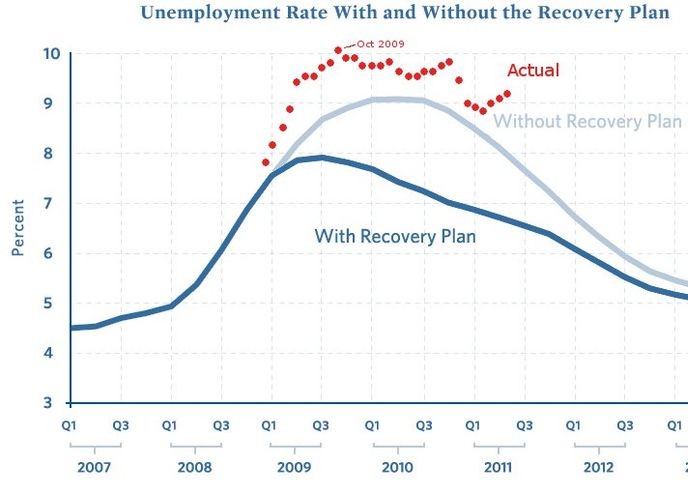
Unemployment rate chart 2011
Democrats take over the House and Senate in January 2007

The Heritage Foundation outlines three of Obama’s job creation plans.

Excerpt:

This week, President Obama is again set to make a pitch for his latest plan to stimulate the economy, but meanwhile he is turning his back on projects that would put tens or even hundreds of thousands of Americans to work. And he’s doing it all to appease his left-wing, environmentalist base at the expense of domestic energy production.

Heritage’s Rob Bluey reported last week on a new finding by a New Orleans-based group that the Obama administration is approving just 35 percent of the oil drilling plans for the Gulf of Mexico so far this year. It is also taking an average of 115 days — nearly four months — to secure approval from the Bureau of Ocean Energy Management, Regulation and Enforcement. Those numbers are a sharp drop from previous years, well below the historical average 73.4 percent approval rate and 61 days it takes to approve plans. And for plans that require drilling activity, the numbers are even worse with an average approval time of 222 days.

That’s bad news for job creation. One deepwater rig alone can create 700 jobs locally. But slowing down oil drilling in the Gulf isn’t the only way the President is blocking jobs. Earlier this month, the Obama Administration announced it would delay the construction of the $7 billion Keystone XL pipeline that would bring in more than 700,000 barrels of oil per day from Alberta, Canada, to the Texas Gulf coast–and could have produced upwards of 20,000 jobs. Heritage’s Nicolas Loris explains the impact:

What this delay really means is that President Obama is putting off an important election year decision in which two of his largest supporters–labor unions and environmentalists–are split on the issue. This tactic allows the decision to be delayed until after the 2012 elections.

More importantly, this means a delay in access to easy imports from our northern neighbor, the creation of thousands of jobs, and the generation of revenue for the states where the pipeline passes. Montana, South Dakota, Kansas, Oklahoma, Nebraska, and Texas are collectively projected to collect $5.2 billion in property tax revenue as a result of building the pipeline.

As if that weren’t enough, the White House made another decision blocking energy-related jobs in the United States. In mid-November, the Obama Administration delayed a mineral lease sale in Ohio’s Wayne National Forest for oil and gas drilling. Apart for providing Americans access to affordable energy, the project could have had a tremendous impact in the state, including the creation of an estimated 200,000 jobs, an overall wage and personal-income boost of $12 billion by 2015, and a billion-dollar boon to Ohio landowners, schools, businesses, and communities.

So Obama has three plans to create more American jobs:

  1. Block drilling in the Gulf of Mexico
  2. Block the construction of the Keystone XL pipeline
  3. Block drilling for oil and gas in Ohio

I don’t think Obama’s three job creation plans are working.

Maybe he just just do the opposite: 1) more drilling in the Gulf, 2) build the Keystone XL pipeline, and 3) allow development of the Ohio oil shale. And while he’s at it, 4) drill for oil in Alaska. That would create real jobs.
Canada’s economic boom: low tariffs, low corporate tax and more oil drilling

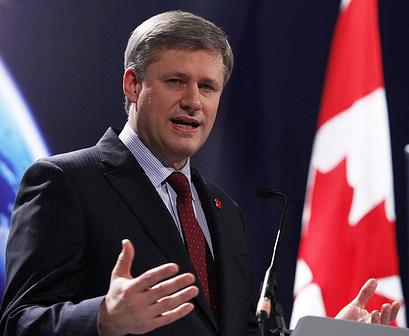
Prime Minister Stephen Harper

From Canoe.

Excerpt:

Finance Minister Jim Flaherty announced Sunday the government will scrap 70 tariff items to save Canadian businesses about $32 million a year.

“This builds on our government’s commitment in Budget 2010 to make Canada a tariff-free zone for industrial manufacturers,” Flaherty said in a statement. “By lowering costs for these businesses, we are enhancing their ability to compete in domestic and foreign markets and helping them invest and create jobs here at home.”

Various sectors — including food processing, apparel, electrical equipment and furniture — will benefit from the move.

The Conservatives had previously eliminated the duty on imported machinery and equipment in an attempt to make Canada a tariff-free zone for industrial manufacturers by 2015.

The Tories say that since 2009 they have eliminated more than 1,800 tariff items and have provided more than $435 million in annual tariff relief to Canadian businesses.

According to the leftist CTV news, Canada also has lower corporate taxes.

Excerpt:

The study released Wednesday by KPMG International found Canada’s corporate tax rate has dropped by more than 16 per cent over the last 11 years.

Canadian companies are actually paying less than their American counterparts.

On average, Canadian companies pay 28 per cent of their income in federal and provincial tax, well below the 40 per cent paid by American companies.

But Canada’s corporate tax rate is higher than Europe’s 20 per cent and the OECD average of 26 per cent.

Canadian corporate taxes fell three per cent in 2011, from 31 per cent in 2010.

“Canada’s corporate tax rate falls around the middle of the pack among the OECD countries,” said Elio Luongo, KPMG’s Canadian Managing Partner for Tax.

“But Canada’s general corporate tax rate is anticipated to continue to fall in 2012, when the federal tax rate will be 15 per cent, versus 16.5 per cent in 2011.”

I’ve written before about how Democrats oppose the job creation that would occur if the United States developed energy in Alaska, the Gulf of Mexico and the Ohio shale. Additionally, Obama has also opposed building the Keystone XL pipeline, which would have created 20,000 jobs paid for by a Canadian company. But Canada has no problems with developing their own energy resources, because their government operates independently of the environmentalist left.

Excerpt:

As world leaders gather in South Africa to discuss climate change this week and next, Canada’s environment minister says he plans to defend Alberta’s oilsands and is willing to argue they are an “ethical” and reliable energy source.

Heading into the 17th Conference of the Parties meeting, Environment Minister Peter Kent says he will not sign on to any deals that mandate some countries reduce greenhouse gas emissions while others don’t — as his government argues was the case under the Kyoto Protocol. He is also unequivocal in his defence of northern Alberta’s bitumen production, a position he expects will be supported by Alberta Environment Minister Diana McQueen when she joins him at the end of the week.

“We still need to — and the industry needs to and our provincial partners need to — be aggressive in ensuring international friends and neighbours and customers recognize Alberta’s heavy oil is no different from heavy oil produced in any number of other countries which don’t receive nearly the negative attention or criticism,” he says. “It is a legitimate resource.”

Kent has made headlines in the last year by arguing that Alberta’s oil is “ethical.”

“We talk about this on quite a regular basis,” Kent says. “I think it’s important we correct where we find … misunderstanding, misinformation or deliberate ignorance to demonize, to criticize and to attempt … to create a boycott.”

In January, on his second day as environment minister, Kent referred to Alberta’s oilsands product as “ethical oil” during an interview with a newspaper reporter.

Reports immediately linked Kent’s comments to the title of conservative activist Ezra Levant’s recent book, Ethical Oil: The Case for Canada’s Oil Sands.

The book essentially compares Canada’s human rights record to those of other oil-producing countries, and argues Canada’s “ethical oil” is preferable to “conflict oil” produced in countries with poor human rights records, such as Sudan, Venezuela, Saudi Arabia or Iran. The argument removes environmental issues, such as greenhouse gas emissions, from the equation, though Levant notes Alberta’s data on environmental issues is more transparent than information shared by other countries.

So in total I’ve presented three reasons why the Canadian economy is booming, while the American economy is stuck in neutral. Obama opposes free trade, lower corporate taxes and domestic energy production. When you elect a socialist lawyer, you get a Greece/Spain economy. When you elect a capitalist economist, you get Canada’s booming economy, and consequently, a lower unemployment rate. Recall that our recession began exactly when we elected Nancy Pelosi to the House leadership and Harry Reid to the Senate leadership in 2007. Democrats wreck economies. There is no reason why America cannot be more prosperous than Canada, but we have to not elect an abject buffoons as our leaders.

Has Obama succeeded in spreading the wealth around?

Obama Economic Record November 2011

From Investors Business Daily.

Excerpt:

According to an IBD review of various economic data, while corporations and Wall Street investors have made significant gains under Obama’s economic leadership, average Americans have seen their fortunes steadily decline.

Since the start of the Obama administration, corporate profits have climbed 68% (about 59% after inflation), and are now 19% above their pre-recession peak, according to the latest Commerce Department data out Tuesday morning.

Meanwhile, companies are sitting on a pile of cash that’s grown 38% from Q1 2009 to Q2 2011, according to the Federal Reserve’s quarterly “Flow of Funds” report.

And since Obama’s inauguration, the Dow Jones Industrial Average has climbed 45%.

However, these solid gains haven’t translated into prosperity down the economic ladder.

Since Obama took office, median weekly earnings have dropped almost 5% after inflation, according to the Bureau of Labor Statistics. Home prices are below their January 2009 levels; unemployment is higher, as is the inflation rate. Gas prices alone have more than doubled since January 2009.

[…]Household income: Since the recovery started, household income has fallen 6.7%, according to a study by former Census Bureau officials. That’s a bigger decline than during the 18-month recession, when income fell 3.2%.

Jobs: Despite job growth since the recession ended, there are still 1.4 million fewer private sector jobs today than when Obama was sworn in, according to the Bureau of Labor Statistics. And the pace of growth — 1.6 million new jobs over the past two years — is far below what’s needed just to keep up with growth in the labor force.

Income inequality: After remaining essentially flat under President Bush, the gap between rich and poor has climbed in each of Obama’s first two years, according to the Census Bureau.

Consumer confidence: The Consumer Confidence Index dropped to 39.8 in October, down almost 10 points from when the recession ended, and almost right where it stood when Obama took office.

Misery Index: This index, which combines the unemployment rate with the inflation rate and is meant as a proxy of middle class pain, is 60% higher than when Obama took office, and it’s at a level not seen since mid-1983.

Home prices: The median price for existing home sales has dropped 4.6% since January 2009, according to monthly National Association of Realtors data. And the number of underwater mortgages is up, according to Core Logic.

Union membership: The share of private sector workers who belong to a union fell to 6.9% in 2010, compared with 7.6% the year before Obama took office, according to the Bureau of Labor Statistics.

The article explains why Obama’s rhetoric differs from reality – it turns out that the very policies he enacted created the poverty he claims he was going to reduce. Because he’s not an economist. He’s trying to do things that sound good so that people will like him. But those things don’t work.